
Deschampsia cespitosa ssp. holciformis
This native bunchgrass makes its home on windswept coastal bluffs from Central CA north to British Columbia. The tidy, evergreen clumps of foliage reach 6 – 12 inches tall and get at least as wide. Stiff, green leaf blades can give plants a spiky appearance, but also make this variety look more symmetrical than many native grasses. The narrow Inflorescences can reach up to 2 ft tall. Does best with full sun near the coast, but enjoys some afternoon shade in hotter areas, where moderate irrigation is recommended. Grows well with iris, seaside daisies and other coastal species. Deer resistant.
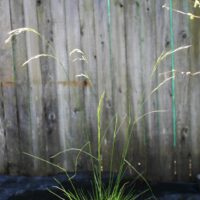
Deschampsia elongata
Graceful fine-textured perennial bunch grass, native to partly shaded, seasonally moist areas in California. Features bright green blades and gently arching flower stalks 12-18 inches tall. Yellowish-green in spring, turns soft gold in summer. Deer resistant.
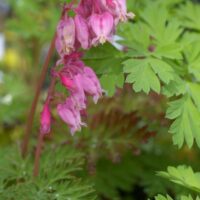
Dicentra formosa
Ferny foliage makes a lacy groundcover in shady areas. Clusters of pendulous, pink, heart-shaped flowers in spring and into summer. Will spread rapidly when happy, enjoying moist but not soggy woodland conditions. Tolerates dry shade where it goes dormant with drought. Early nectar source for hummingbirds and bumble bees. Deer resistant.
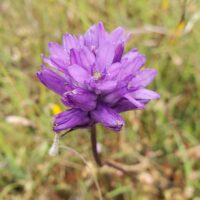
Dichelostemma congestum
A perennial wildflower with rounded, purple flower clusters held atop slender, naked stems. In late spring and early summer, the cheerful floral umbels rise 2 to 3 feet above low, grass-like leaves. Native to hillside grasslands and mountain meadows throughout western North America, this wild hyacinth species is taller than its Brodiaea relatives, with larger inflorescences than the similar blue dick. Usually spreads slowly by corms and seed to form colonies. An excellent nectar plant for the dry borders of pollinator gardens, alongside other native bulbs, and in meadow plantings. Plant in full sun to light shade with decent drainage. Water minimally and leave dry during summer dormancy.
Dichondra donelliana
Dichondra is a small genus of flowering plants in the morning glory family that form a thick, mat-like ground cover of rounded leaves, once popular as lawn substitutes. This native species is uncommon in the nursery trade and in gardens, but has potential worth exploring. Native to California coastal plant communities on open slopes and moist grasslands, it forms a flat, perennial ground cover with tidy, rounded leaves, densely packed along creeping stems. The flowers are tiny and greenish-white, not real showy but interesting. An obvious application would be a small scale ground cover or meadow planting in areas with some moisture. Could be a candidate for green roofs or walls, where a low and spreading plant is the ticket. Plant in full sun on the immediate coast, otherwise light shade is necessary. Moderate summer water.
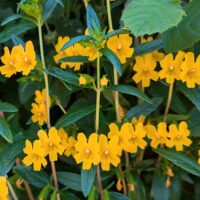
Diplacus (Mimulus) aurantiacus
Sticky monkeyflower is the native monkeyflower species that brightens the hills and coast around Sonoma County. From spring through summer, its profuse yellow-orange tubular flowers decorate evergreen foliage reaching 2-4 feet tall and wide. An unbeatable habitat plant that is highly attractive to hummingbirds. Give it good drainage and keep on the dry side. Thrives in full sun near coast with light shade inland, and benefits from light annual trimming. A larval food source for the common checkerspot and buckeye butterflies. Deer resistant.
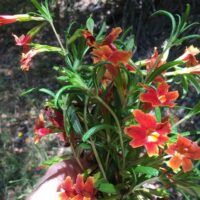
Diplacus (Mimulus) aurantiacus ‘Freezeout Creek’
This stand-out form of our local native monkeyflower was found growing on a slope near a lush redwood forest in western Sonoma County. Instead of the more typical yellow-orange, the trumpet-shaped flowers of 'Freezeout Creek' are larger and boast velvety red petals edged with gold. Monkeyflowers are evergreen sub-shrubs, that grow 2 -4 ft. tall, and bloom profusely in the late spring and into summer. Plant in full sun on the coast to light shade inland and give it decent drainage. Drought tolerant once established but responds to occasional summer water, especially when blooming. Benefits from annual pruning and pinching. The flowers are pollinated by bees and hummingbirds and are a host plant for checkerspot and buckeye butterflies. Deer resistant.
Diplacus (Mimulus) aurantiacus ‘Rodeo Gold’
This form of sticky monkeyflower offers warm yellow tubular flowers with a golden throat, rather than the more usual orange flowers. This Cal Flora Nursery selection was found in southern coastal Marin County. Evergreen foliage grows roughly 3 ft. tall and wide. Benefits from pinching back of older stems to keep it denser. Plant in full sun on the coast to part shade insland, and provide with occasional summer water. Monkeyflowers are attractive to hummingbirds, butterflies and other pollinators. The checkerspot and buckeye butterflies use it as a larval food source. Deer resistant.
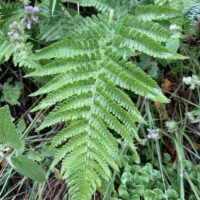
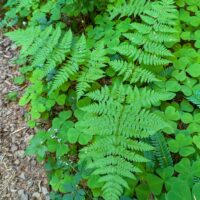
Dryopteris expansa
A very elegant native fern, with soft, bright green, finely divided fronds and a gently arching form. Rarely offered in California nurseries. Mature plants reach up to 3’ tall and wide, make them suitable for most garden spaces. Grows in moist, shady woodlands, mostly along our coast, from the Central Coast north to Alaska. Winter deciduous. Very similar to the lady fern, but with triangular-shaped fronds, not diamond-shaped. Said to be deer resistant.
Dryopteris filix-mas
The male fern is a beautiful, large, deciduous fern, native to much of Europe, Asia as well as North America, where it is uncommon in California. Large and slightly arching, the medium green fronds can reach 3 ft. tall and form a sizable clump. This fern increases slowly from stout rhizomes making it a fine choice for containers. An excellent addition to the woodland garden where it is easy to grow in part to full shade. Prefers humusy soil, rich in organic matter, though it is adaptable and accommodating. Best with regular to moderate watering. Rabbit and deer resistant.
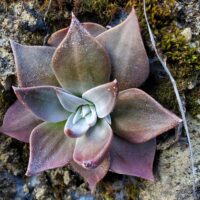
Dudleya cymosa
This charming succulent is in native to California where it grows in between rocks on inland cliffs in sun or bright shade. Best in the garden in a rock wall or terra-cotta pot with some afternoon shade. Height in flower is under one foot. The yellow to orange flowers are attractive to hummingbirds. Occasional to infrequent water in the ground. In pots, let dry out between waterings.
Dudleya farinosa
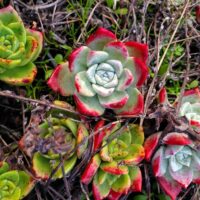
Native to sea bluffs in central and northern California. Rosettes of fleshy leaves are chalky grey or bright green and often red tipped. Candelabra-like clusters of light yellow flowers on thick stalks appear in summer. Provide part shade away from the coast. Excellent for rock garden, walls or containers, where good drainage and a little summer water can be provided.
Elymus (Leymus) triticoides
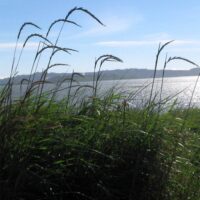
Spreading, turf forming, perennial grass found in somewhat moist areas in many plant communities throughout California. An important restoration species, useful for holding soil and enhancing wildlife habitat value. Growing 2-4 ft. tall and spreading widely with an extensive network of rhizomatous roots which both hold soil and help prevent exotic weed establishment within their dense mats of roots and foliage. Slender blue-green blades are topped with narrow flower spikes 4-6 inches long. Excellent for seasonally moist bottom land and riparian areas where it can grow in full sun to light shade and tolerates many soil types. Will tolerate some drought in heavier soils. May spread too vigorously for small gardens.
Elymus californicus
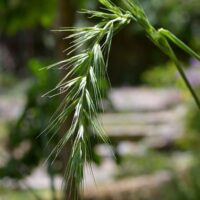
California bottlebrush grass is a tall robust grass with broad, bright green blades and nodding brushlike flower spikes. Uncommon in the wild it can be found in coastal counties on shaded banks and wooded areas, including redwood forests. Displays 3 - 6 ft. tall flower stalks with low foliage up to 1 ft. high. Provide moderate to infrequent irrigation. Deer resistant.
Elymus elymoides
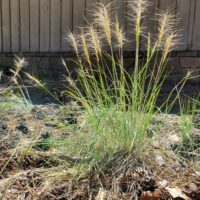
A species of wild rye, this tough, native, widespread, perennial grass, sports distinctive seed heads with a bottlebrush or squirrel tail appearance. Super adaptable and willing to withstand a wide range of soil types and depths. Even tolerates serpentine soils. Able to make a living in full sun where it is extremely drought tolerant. Grows one foot to 18 inches tall with shimmering, purple-toned flower spikes that age to beige, bristly, seed heads. A dependable re-seeder, perfect for sunny, low water using landscapes and erosion control. Host plant for a number of butterfly and moth species including the woodland skipper. Deer resistant.
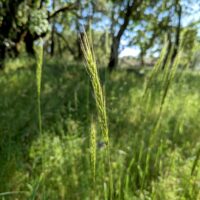
Elymus glaucus
A stiffly upright, clump-forming grass with blue-green blades, native to much of the western U. S.. The flowers form bristle-tipped, narrow, vertical spikes, rising 2-4 feet tall. Easy to grow and a strong reseeder for full sun to light shade. Summer water keeps plants green longer, but will go dormant with drought. This very adaptable grass is excellent for bank stabilization in challenging soils. Deer resistant.
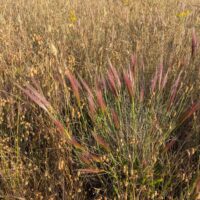
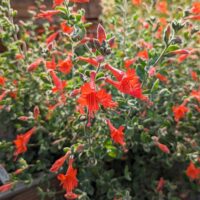
Epilobium canum ‘Calistoga’
Phil Van Soelen’s selection of California fuchsia from the Palisades east of Calistoga. Forms a spreading mat of unusually wide, fuzzy, gray leaves. The flowers are the typical hummingbird attracting orange-red trumpet shape and appear on stalks reaching up to 18 inches high. For sunny areas. Flowers best with occasional deep watering. Pruning plants down to a few inches in late autumn helps to rejuvenate them for the following year.
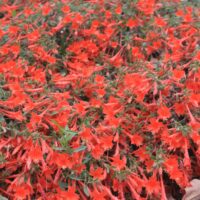
Epilobium canum ‘Cloverdale’
This form of California fuchsia was selected by U.C. Santa Cruz Arboretum from along the Russian River north of Cloverdale. Low, slightly mounding fuzzy olive-green foliage with an abundance of orangey-red tubular flowers the hummingbirds love. Usually stays bellow one ft. in height. 'Cloverdale' is one of the most orange selections of California fuchsia. Plant in full sun. Flowers best with occasional deep watering. Pruning plants down to a few inches in late autumn helps to rejuvenate them for the following year.
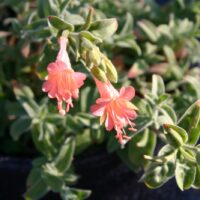
Epilobium canum ‘Marin Pink’
California fuchsias are appreciated for their abundant tubular flowers that bloom in late summer and fall, predominantly in different shades of orange-red. This unusual selection has beautiful PINK tubular flowers produced on sage green mounds of foliage to about 2 ft. tall and spreading by underground rhizomes. Vigorous and easy to grow in full sun to very light shade. Touted as drought tolerant, they will survive dry conditions but will thrive with occasional summer water. Beautiful against a rock wall, in dry stream beds, or naturalistic plantings where they have some room to spread. Hummingbird favorite. Pruning plants down to a few inches in late autumn helps to rejuvenate them for the following year.

Epipactis gigantea
Here’s a native orchid that’s easy in cultivation. In time it will form a colony producing many flower stems. Each stem holds several interesting orchid blossoms of subtle orange, coral and green tones 12 - 18 inches tall. Dies back to the ground in winter. Best with decent drainage and regular to moderate moisture (NOT soggy soils) and dappled shade part of the day. Wonderful addition to the woodland garden, around pond or near streams. Good in containers too.
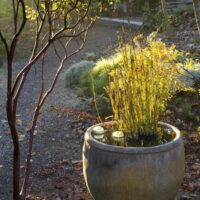
Equisetum hyemale v. robustum
Horsetail’s wonderful, erect form can be very useful in the landscape BUT BEWARE of its invasive nature. Best confined to containers where its slender, hollow, segmented stems can rise 4 ft. tall or more. Provide sun to medium shade and regular water. Deer resistant.
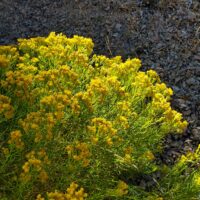
Ericameria arborescens
Native to chaparral regions throughout California, this tall, billowy shrub stands out with its soft and narrow, bright green leaves and, in the summer and early fall, clusters of small yellow flowers. Goldenfleece reaches 6 ft. or more tall with a width of around 4 ft. A wonderful accent plant for the dry garden, especially when combined with dark-foliaged plants such as ceanothus, toyon and manzanitas. Prefers full sun and excellent drainage. Very drought tolerant once established. Excellent for bees and butterflies. Deer resistant.
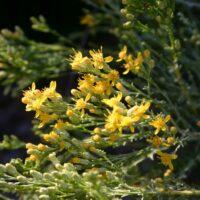
Ericameria ericoides
Native to sand dunes from Long Beach north to Bodega Bay, this low shrub resembles a heather, covered with clusters of small yellow daisies in late summer and fall. Reaching a height of up to 3 feet and spreading to 4 feet, making it an ideal shrub for the smaller garden. Needs occasional water in interior locations and full sun to light shade. Requires well-draining soil. Plant with Ceanothus, low manzanitas and pacific reed grass for a taste of the coast in your own garden. Excellent late season nectar source for bees and butterflies. A light winter pruning will help keep it dense and compact. Said to be deer resistant.
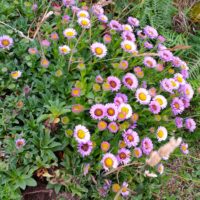
Erigeron glaucus
Low growing native perennial to 1 ft. tall with lovely, lavender, daisy-like flowers blooming over a long part of the year. Native to coastal dunes and bluffs, but does well inland with some afternoon shade and a little extra summer water. A natural along the coast where it thrives with little to no summer water and tolerates wind and salt spray. Good nectar source for butterflies and many different pollinators. Their seeds are favored by juncos and finches.
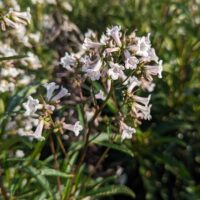
Eriodictyon californicum
Uncommon in the nursery trade, this aromatic, evergreen shrub is native to dry habitats of chaparral and mixed evergreen forest plant communities in North and Central California and into Oregon. An opportunist, this shrub stump sprouts after fires and grows with renewed vigor after any soil disturbance. The dark green, leathery leaves are covered in a shiny, fragrant, resin and are sticky to touch. The common name means, holy herb, and the pungent leaves have a long history of medicinal uses. Grows 3 - 5 ft. tall and spreads by underground roots to form a colony. Late spring brings clusters of small, trumpet-shaped flowers of pale lavender, sometimes white or pale blue, which are highly attractive to butterflies, hummingbirds and bees. Plant in full sun with good drainage and little water once established. Deer resistant.
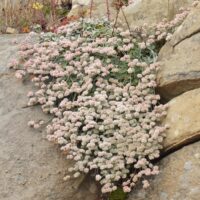
Eriogonum latifolium
Native to our coastal bluffs, this perennial forms neat mounds of silvery white foliage under 1 ft. tall. Flowers develop in dense pom-poms and are creamy white to pinkish. Tolerates sun, wind and drought once established but needs decent drainage. Provide occasional summer irrigation to keep them looking their best. Buckwheats have substantial wildlife value, providing pollen and nectar for bees and butterflies, larval food for butterflies, seeds for birds and cover for many creatures. Deer resistant.
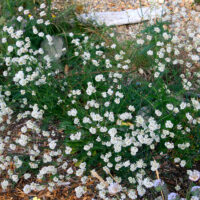
Eriogonum nudum
Few natives are as excellent a source of nectar for bees and butterflies as the buckwheats. This widely distributed species is known for its elegant flower displays on naked stems rising one to three feet above low mounds of grey-green leaves. Naked buckwheat has flower pom-poms ranging in color from white to pink set on slender stems in open clusters up to twelve inches wide. Blooms from late spring into early autumn. Provide full sun to very light shade in soil with decent drainage. Drought tolerant once established. Generally deer resistant.
Eriogonum umbellatum
Intense yellow flowers in flat-topped clusters sit atop short stems above grey to green foliage. Ranging in height from 10 to 18 inches, this highly variable and widely distributed California native is an excellent addition to the drought tolerant garden. Provide decent drainage and occasional to no irrigation once established. Full sun to light shade. Just like all buckwheats, this species is loved by bees and butterflies. The foliage is deer resistant but they may nibble the flowers.