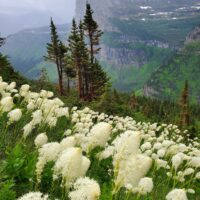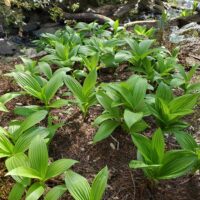
Veratrum fimbriatum
From moist, coastal areas of Sonoma and Mendocino County comes this very rare lily relative. A cousin of the high mountain cornlily, this threatened species features large, pleated leaves which emerge in late winter and are followed in the autumn by icy-white flowers with fringed edges. After its long bloom period is over, the plant will go dormant through the winter. Surprisingly tolerant of shade, but will accept full sun along the coast with ample moisture. A choice plant for woodland gardens and will also thrive in a container. This plant is POISONOUS when consumed. Deer and gopher resistant.
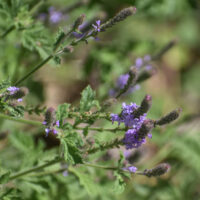
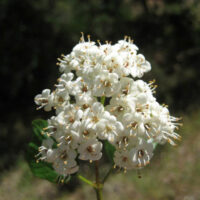
Viburnum ellipticum
Loosely branched deciduous shrub 6-10 feet tall. Common in Washington and Oregon and rare in California where it can be found in chaparral and coniferous forests generally on north facing slopes. Soft reddish new growth makes way for the neat deep green oval leaves with a serrated edge. Small white flowers in terminal clusters followed by shiny black fruits which are enjoyed by birds. Attractive reddish fall color. Best with some shade and a little summer water. A candidate for the high banks of creeks, margins of wetlands or edges of forests.
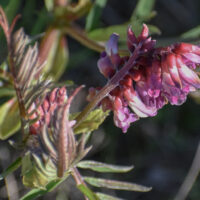
Vicia gigantea
This native pea-relative is a climbing perennial with delicate, arching clusters of magenta flowers. Leaves are dense rows of narrow leaflets culminating in tendrils that help it vine over shrubs, fences or up trellises. With its slender but vigorous stems, giant vetch can spread or climb 3 to 7 feet. This species has a primarily coastal range from San Luis Obispo up to Alaska and does best in temperate or moist areas with moderate water. Grows in full sun but prefers part shade inland. Its rich reddish-purple blooms attract butterflies and other pollinators, and roots fix nitrogen in the soil. A host for a number of butterfly and moth species that use plants in the pea family.
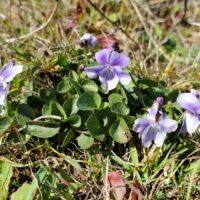
Viola adunca
Native to both coastal and mountain plant communities, this violet can be seen locally blooming in coastal meadows and bluffs. Forms low-growing, slowly creeping, neat clumps of heart-shaped leaves. Sweetly fragrant, nodding, blue to purple flowers with white interiors and purple nectar guides bloom in the spring. This pretty little wildflower is visited by bees and other pollinators and is a host plant for a number of butterflies, some of which are rare and endangered. Grows in sun along the coast and light shade inland with moderate summer water. Can reseed if happy.
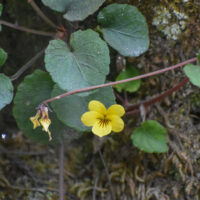

Vitis californica
California wild grape is a vigorous deciduous vine, native to watercourses in California and Oregon. Lush foliage on woody vines create leafy draperies in riparian areas. Useful in the garden for trellises, arbors, fences or to spill down a bank. Round green leaves take on nice yellow tones in the autumn. Flowers are very attractive to bees.Fruits are small and seedy but tasty. Excellent habitat value providing food and cover for wildlife.
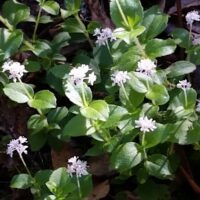
Whipplea modesta
The common name “modesty” fits this unassuming evergreen creeper. Though not super showy, one has to admire its ability to thrive on difficult sites. A good stabilizer native to forests of the Coast Ranges where it tolerates dry shady situations. Will appreciate a little summer water, but it is drought tolerant once established. Numerous tiny white flowers in late spring. Deer seem to leave it alone.
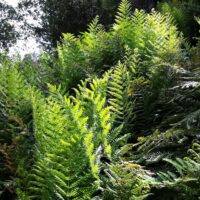
Woodwardia fimbriata
The evergreen giant chain fern is the largest American fern, with striking fronds 4 - 6 ft. tall. Prefers part shade but will accept darker conditions. Will grow in open, somewhat sunny areas within the fog belt, as long as it has access to moisture. Great in moist woodland gardens near a stream or against a shady wall. Keep in mind, this fern likes some moisture but does not want to be kept wet. Allowing it to dry out just a little between waterings can be beneficial. To keep it looking fresh and vigorous, cut back to the ground in late winter just before the new fiddleheads begin to emerge. Deer resistant.
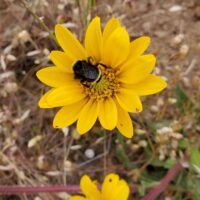
Wyethia angustifolia
Few hikers can resist the bright, golden-yellow flowers of this showy native sunflower relative. The large, 2” - 3” wide flowers perch atop stems 1.5 - 3 ft. tall in the spring. Bright green, lance-shaped leaves form low rosettes at the base of the flower stalks. This mule ears grows in sunny meadows and at the edges of woodlands. Perhaps the most garden tolerant of all of the mule’s ears, accepting occasional irrigation once established but not requiring it. Does not mind soils with poor drainage. A great plant for bees, butterflies and birds. Will go dormant once it finishes flowering but will re-emerge after the rain returns.
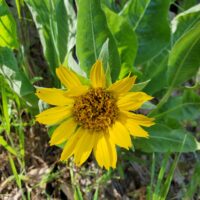
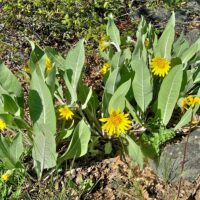
Wyethia helenioides
One of our less common native Wyethia, gray mule ears is a special find in nurseries. Strikingly large, upright leaves frame flower stalks that resemble little sunflowers with their wide golden discs and halo of yellow ray petals. Endemic to California, this radiant perennial wildflower is a welcome sight in woodland meadows of the Northern and Central Coast Ranges. A covering of silvery hairs on the broad, erect leaves gives the species its name. Lush, gray-green foliage emerges mid-winter followed by a spring floral display from March through early summer. Low-growing at up-to 2 feet tall and wide, it makes an impression greater than its stature. Eventually goes dormant as fall approaches. Does well in the garden if given decent drainage, good light, and minimal water once established. Bees and butterflies adore the flowers.