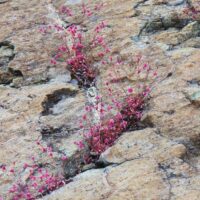
Eriogonum vimineum
Here is an ANNUAL buckwheat found throughout much of California, growing on gravely and volcanic soils. Summer brings showy domes of rose-pink flowers held on wiry stems 18 inches above small clumps of basal leaves. Buckwheats are excellent for attracting beneficial insects providing pollen and nectar for bees and butterflies and seeds for birds. Plant in full sun with little water once established. Good container plant too.
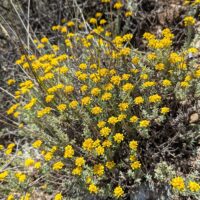
Eriophyllum confertiflorum
Native to dry sites in many plant communities of California. Forms a mound of pale green, finely cut foliage with woolly undersides 12-24 inches tall. Late spring and summer brings domes of bright golden yellow daisies in dense heads. Tough little shrublet for the dry garden in full sun where its interesting fine-textured foliage provides a useful contrast to grasses and bold-leaved shrubs and perennials. The flowers provide nectar to bees and butterflies. Needs good drainage.
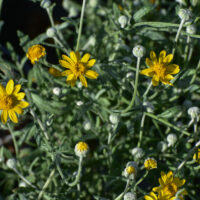
Eriophyllum lanatum – inland form
A cheerful native perennial with yellow, daisy-like flowers from spring to fall. While the species varies in size and habit, our seed-grown strains are upright, reaching around 1.5-3 feet tall and wide when in full bloom. The woolly foliage tends to be silvery, but comes in shades of green, and is most lush and dense around the base. Woolly sunflower is found in a range of plant communities from Central California through the Pacific Northwest, thriving in sun to part-shade. Our seed-grown plants come from hot, inland sites where they grow on dry, rocky slopes and bluffs. Tolerates various soil types with good drainage and minimal irrigation once established. The sunny, 2-in. blossoms are butterfly favorites and attractive to bees and other pollinators. A good choice for rock and habitat gardens. Deer and gopher resistant.
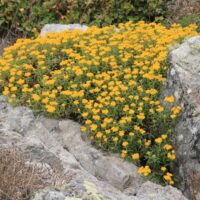
Eriophyllum staechadifolium
This native perennial is perfect for coastal environments where it tolerates full sun, wind, salt spray and drought. Forms leafy mounds 2 - 3 ft. tall and at least as wide. The foliage is grey-green above and silvery beneath with flower heads densley packed with tiny golden-yellow daisies from May through August. Drought tolerant but appreciates occasional summer waterings, especially when grown away from the coast. Excellent for pollinators. Tip pruning helps keep the mounds tidy. Annual pruning back will refresh.
Erysimum franciscanum
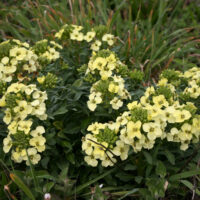
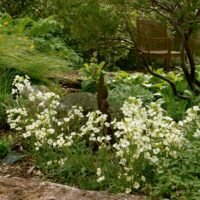
This rare and threatened species makes its home in the sand dunes and hills of the San Francisco Bay area. Development has seriously impacted its native habitat. Fragrant, four-petaled flowers ranging in color from creamy white to yellow rise up to 18” above dark green foliage in the spring and early summer. Thrives with good drainage and occasional water once established. Plant this special wallflower in full sun with other small perennials such as buckwheats, checkermallows and coyote mint. Attractive to butterflies.
Erysimum menziesii
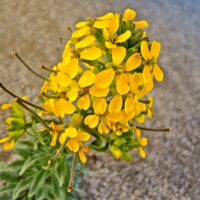
A rare species native to sand dunes along the north coast of California. Forms tight mounds of narrow leaves 8-12 inches tall and wide. Bright-yellow fragrant flowers bloom in late spring and will continue into summer with a little additional summer watering. The fragrant flowers are butterfly favorites. Adaptable and can seed about if happy, though not weedy. Requires good drainage, full sun, to light shade inland, with moderate to occasional summer water. Said to be deer tolerant.
Erythranthe (Mimulus) cardinalis
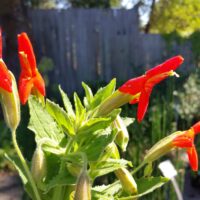
Native to wet areas throughout the West, this robust perennial can easily grow to more than 2 ft. tall and wide. Tubular scarlet flowers are a hummingbird favorite and are very showy. Plant in sun to part shade with ample water. Perfect beside a pond, stream or water feature. Trim as needed to keep tidy. The flowers provide nectar for hummingbirds.
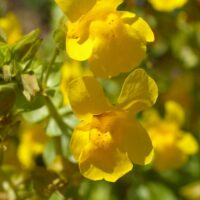
Erythranthe (Mimulus) guttata
This charming monkeyflower is native to wet places throughout the west. Forms mats of bright green foliage topped with flowering stems of cheerful, bright yellow, tubular flower. Needs regular moisture and full sun to light shade. Seeds about when happy. The flowers provide nectar for hummingbirds. Works great in a swale, combined with rushes, Helenium and bee plant.
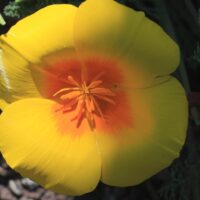
Eschscholzia californica var. maritima
This is the perennial, coastal form of California poppy. Low growing and spreading with beautiful, finely cut, blue-gray foliage. Abundant flowers are golden yellow with orange centers, blooming over a long period, especially in mild climates. Plants retreat to leafy rosettes in winter. Best in full sun where they are drought tolerant, but a little summer water can extend their bloom period. Seeds about if happy.
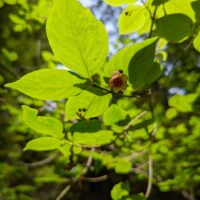
Euonymus occidentalis
Native to moist canyons, the uncommon western burning bush features small, burgundy flowers in the spring followed by dangling orangey-red fruits. The subtle appeal of this medium sized, deciduous shrub will please those native plant enthusiasts looking for a rare find. Reaches a height and width of about 8 ft. in most garden settings and is amenable to pruning. Plant in part shade to full shade. Enjoys moist situations but may become tolerant of drought in shadier locations. Needs good drainage.
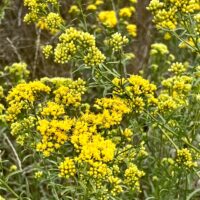
Euthamia occidentalis
This little known, native goldenrod is a pollinator powerhouse, supporting bees, as well as a wide array of butterflies, including the Monarch, who are drawn to the nectar. In late summer and autumn, small, golden-yellow flowers form rounded clusters at the tops of tall, vertical branches, 4’ to 6’ high, clothed in long, slender, leaves. Grows naturally in sunny, low-lying areas which stay at least somewhat moist into early summer, but may be dry later in the year. Spreads quickly by underground rhizomes, especially in areas with perennial moisture, making it good for erosion control, but not suitable for small gardens. In two years, plants should reach about 4’ wide. Great in containers in smaller spaces.
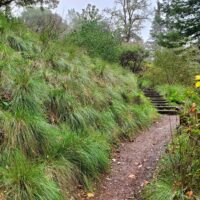
Festuca californica
California fescue is a beautiful native bunchgrass often seen cascading down oak studded slopes. Blue-green leaf blades 1 1/2 ft. tall with graceful, airy flower stalks rising another 2 ft. above the foliage. A natural for under native oaks where they receive light shade and little summer water. Accepts full sun near the coast. They are drought tolerant once established. Deer resistant.
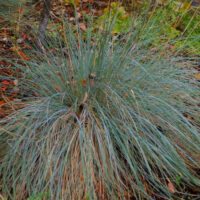
Festuca californica ‘Phil’s Silver’
A bunch grass selected from seedlings grown from seed collected almost within sight of the ocean (Shell Beach area, Sonoma Coast). Gray-green in spring, it turns more silver-gray as the dry season progresses. Relatively dense (2 ft. X 2 ft.) foliage with unusually stout and heavy grass-flowers, this robust clone holds up well throughout the season. Its cultivar name is a pun for baby boomers that watched the 50’s show The Phil Silver’s Show, starring Phil Silvers. It prefers good drainage and bright shade inland with little to occasional summer water. Deer resistant.
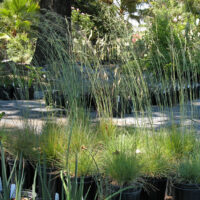
Festuca idahoensis
A modest sized native bunchgrass with beautiful green to blue-green, fine-textured foliage. The blades grow eight inches to 1 ft. tall with flower stems 18 inches to 2 ft. tall. Grow in full sun to light shade. Appreciates some protection from hot afternoon sun, especially inland. Drought tolerant, though a little water in hot regions is helpful. Deer resistant.
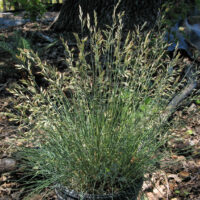
Festuca idahoensis ‘Tomales Bay’
This attractive blue-green selection of our native bunchgrass was discovered in the Nicasio area of Marin County. The soft foliage reaches a height of up to a foot and a width of about 1 1/2 ft.. The inflorescences are smaller than is typical for this species and can grow up to 18 inches tall. Best with full sun near the coast and light afternoon shade inland. Prefers moderate to occasional water. Deer resistant.

Festuca occidentalis
Western fescue has a wide distribution in western north America, largely found in low to mid elevations of Central California north to British Columbia. Native to conifer, oak and mixed evergreen woodlands where it grows in light shade. Forms dense tufts of fine evergreen foliage 6-12 inches tall. Delicate flower panicles on stems rise 2 ft. or so above the blades in early spring or summer. A nice accent in lightly shaded areas with decent drainage and some summer moisture. Deer resistant.
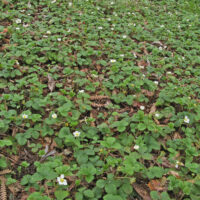
Fragaria vesca
This native woodland strawberry is a great colonizer and can cover a lot of ground in a hurry. Pretty little white flowers are followed by small, tasty, red berries. Tolerates drought but best with a little summer water. Well suited for under oaks and conifers. Said to be deer resistant.
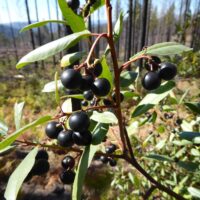
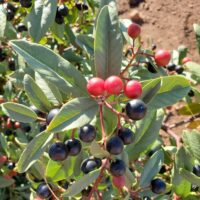
Frangula (Rhamnus) californica – large, inland form
Handsome native evergreen shrub with small greenish-yellow flowers followed by showy dark-colored berries. The propagation material for this this crop was collected from tall, upright shrubs on a hot inland site. Growing 8 ft. or more tall, coffeeberries thrive in full sun to light shade. They are drought tolerant once established, but would appreciate occasional deep summer waterings. A good choice for hedgerows and habitat gardens, coffeeberry provides food and nectar for a wide array of beneficial insects, birds and wildlife.
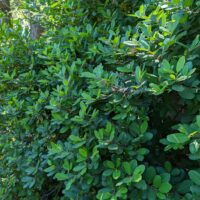
Frangula (Rhamnus) californica ‘Olema’
We discovered this large, dense form of our native coffeeberry near the town of Olema in coastal Marin County. While it reached up to around 15 ft. tall and wide in nature, it has been a little slow to do so in the ground here at the nursery. After about 4 years, it’s reached a height of about 9 ft. This selection of coffeeberry is ideal for a tall hedge or screen where an evergreen shrub is needed to create privacy. Grows well in full sun somewhat near the coast but will need a little shade in hot, inland sites. Occasional to infrequent irrigation once established. Coffeeberries are some of the best habitat plants. The small, yellowish flowers are adored by bees in spring and summer, while the plump, purple fruits that follow are relished by birds.
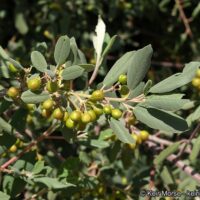
Frangula (Rhamnus) californica ssp. tomentella
This distinctive species of coffeeberry features blue-grey leaves with velvety, silver undersides and grey, fuzzy stems. The somewhat open form grows 6 to 10 ft tall and wide. Clusters of small cream-colored flowers appear from winter through spring and are a favorite of bees. The deep purple fruits which follow are highly prized by birds. While native to serpentine soils, this coffeeberry should thrive anywhere with decent drainage. Provide full sun to light shade and give occasional irrigation once established. The grey stems contrast beautifully with the shiny, dark green leaves of Ceanothus ‘Yankee Point’.
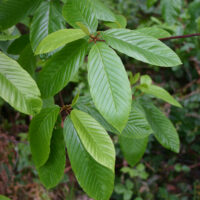
Frangula (Rhamnus) purshiana
Native to moist places from Mendocino County northwards and throughout the Sierra Nevadas, this medium sized deciduous tree is distinctive for its shiny, green leaves with strong venation. Ranges in height from 15 to 30 ft. tall. Bees are attracted to the clusters of small, cream-colored flowers and birds enjoy the dark purple berries which follow. Plant in riparian zones or in areas where it can receive regular moisture. Give full sun to part shade. Requires protection from the afternoon sun in the hottest areas.
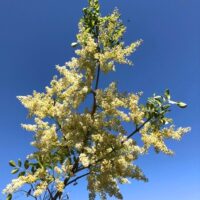
Fraxinus dipetala
This is our only native ash with showy flowers. A large shrub or multi-trunked tree native to slopes, canyons and stream banks in hot interior regions of the state. Grows 7 to 25 ft. tall with pinnately compound leaves. The creamy white flowers are produced on dangling racemes in mid to late spring, followed by pendulous clusters of samara fruits. Like the California buckeye, it loses its leaves early to evade the long dry summer. Grows in sun to partial shade. Drought tolerant once established.
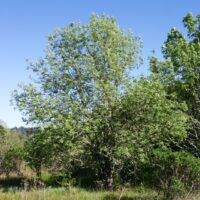
Fraxinus latifolia
Fast growing hardwood tree, native to stream and river banks or other wetland habitats from San Diego to British Columbia. Growing 30 - 70 ft. tall, this deciduous tree has medium green compound leaves. Male and female flowers occur on separate trees and are not particularly showy. They bloom just as the spring foliage is leafing out. Fruits occur on the female trees and are paddle-shaped, single samara-style fruits in drooping clusters. Birds and mammals eat its seed, but probably used more as a nesting site for birds. Plant in sun to light shade with regular to moderate water.
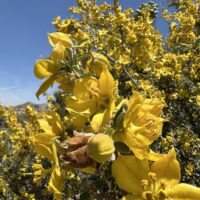
Fremontodendron californicum
In late spring, this evergreen shrub makes for a stunning display along dry foothill slopes as masses of bright yellow blooms cover its stems. Its leathery, fuzzy leaves all but disappear among the showy, cupped flowers. Of the three Fremontodendron species, all native to California, this flannel bush has the widest distribution, mostly in the western Sierra foothills and Southern California. Its range is limited to sites with well-draining, sandy or rocky soil, and it can be sensitive to garden irrigation and heavy soils. Best planted in full sun with similarly low-water species where it receives minimal direct water once established. When happy, it is fast-growing to 15 or more feet, making it a good all-season hedge. Flowers are wildly popular with bees and other pollinators.
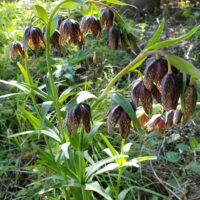
Fritillaria affinis
Charming, spring blooming, bulbous plant in the lily family, with beautiful, pendulous, bell-shaped flowers. This is California's most common fritillary and the most variable, in both size and flower color. Flowers vary greatly and can be yellow-green to purple-brown and may be beautifully checkered with brown and green, sometimes red-purple patterns. Can grow 12 inches - 3 ft tall depending on the habitat and substrate. Native to grasslands, woodlands and chaparral plant communities including serpentine soils. The easiest of the fritillaries to grow, preferring light, well drained soils, sun along the coast to light shade in hotter areas. Plants accept water in their growing season, but should be allowed to go dry once dormant. Protect from gophers, slugs and deer.
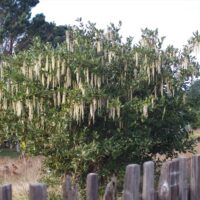
Garrya elliptica
Garryas are grown primarily for their winter flower catkins. The longer, pendulous male catkins have traditionally been the most sought after with selections like 'James Roof' and 'Evie'. Male and female flowers occur on separate plants and both must be present for the female to produce their lovely grapelike clusters of fruit. These plants are seed grown so males and females are of equal probability. All plants feature larger, evergreen leaves on multitrunked shrubs reaching 10 - 15 ft tall and wide. Very amenable to pruning. Plant in full sun or partial shade. Provide moderate irrigation inland, but established plants will be drought tolerant near the coast where they occur naturally. Somewhat deer resistant.
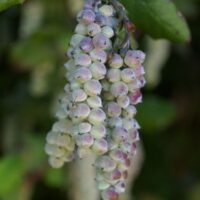
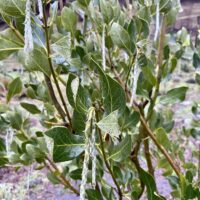
Garrya fremontii
Evergreen shrub with leathery leaves and handsome dangling catkins in late winter and early spring. The male and female flowers occur on separate plants. Native to the west coast where it grows in mixed evergreen forest and chaparral plant communities. This species is a good choice for summer-hot interior sites with well drained soils. Grows 8 - 10 ft. tall and wide in full sun to light shade and is drought tolerant once established. A good specimen shrub or candidate for hedgerow or screen where it provides cover and food for birds and small mammals. Somewhat deer resistant.