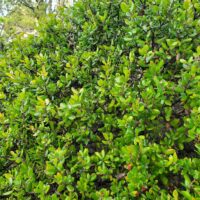
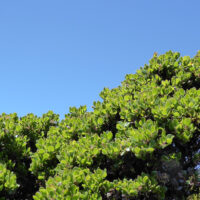
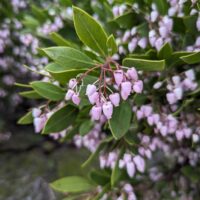
Arctostaphylos stanfordiana
One of the most beautiful of manzanitas with handsome dark mahogany bark, dense shiny green leaves and flowers ranging in color from intense pink to white. Its upright form ranges in height from 4 to 8 ft with a somewhat narrower width. Native to warmer areas of northern California's Coast Range, this species requires excellent drainage, full sun and NO water once established.
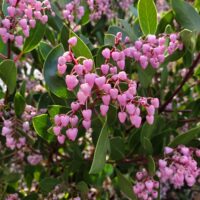
Arctostaphylos stanfordiana ‘Sonoma’
Masses of deep pink flowers and glossy, deep green leaves are an enticing feature of this uncommon selection. But what really distinguishes this cultivar from other Stanford manzanitas is the fact that it actually survives in the garden! Most other selections of this species are notoriously challenging to keep alive in cultivation. While fairly slow growing, the dense foliage mounds up over time to reach a height and width of about 5 ft. The striking burgundy-red trunks contrast nicely with the green leaves. Needs full sun and excellent drainage. No summer water once established.
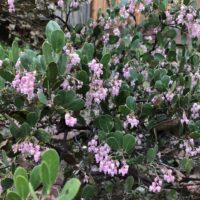
Arctostaphylos stanfordiana ssp. decumbens
A Sonoma County endemic, this rare manzanita is from Rincon Ridge east of Santa Rosa. Low growing mounding shrub to as much as 4 ft tall by more than 6 ft. wide. Charming pink urn-shaped flowers in early spring. Handsome, rugged and drought tolerant. Best in full sun with good drainage, no water necessary once established. A good choice for lean soils, summer heat and drought.
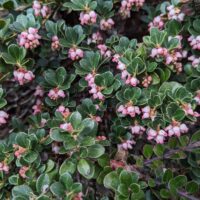
Arctostaphylos uva-ursi ‘Point Reyes’
An unusual selection of our native bearberry discovered near the Point Reyes lighthouse in Marin County. Dark green, leathery leaves form distinctive whorls along the stems with pale pink, urn-shaped flowers emerging in early winter. The showy red berries contrast nicely with the dark green leaves. Reaching a height of about 18” and a width of at least 6 ft., this groundcover works well in a rock garden or mixed with other low shrubs and grasses from our coastal areas. Give moderate water in interior locations and protect from the hot afternoon sun.
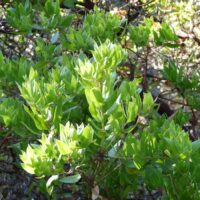
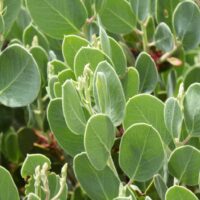

Aristolochia californica
Dutchman’s pipe vine is an interesting vine native to river, stream side and woodland habitats. Soft heart-shaped leaves and unusual purplish pipe-shaped flowers bloom in early spring. This deciduous twining plant will need some support if you wish it to grow upwards. Adaptable, but best with a little shade and moderate water. Slow to establish, we offer this adage to encourage patience: “The first year it sleeps, the second year it creeps and the third year it leaps”. Once established it will put on ample growth, easily covering a trellis or chain link fence. THE larval food source for the pipevine swallowtail butterfly. Deer resistant.
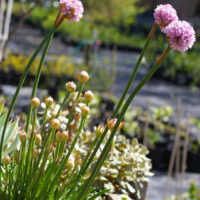
Armeria maritima ssp. californica
Grown from northern California seed source, this coastal native is a sturdy perennial with grass-like blades in compact clumps. Pink pompom flowers on long stems bloom spring into summer. A natural along the coast where it grows in full sun, needing a little shade in hotter regions. Moderate to little water with decent drainage. Excellent for rock gardens. Deer resistant.
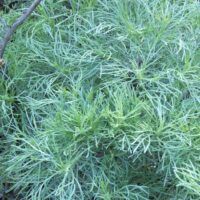
Artemisia californica
Native to coastal regions from Northern California to Baja. Densely branched shrub with finely divided gray-green scented foliage. Grows 2 - 6 ft. tall and wide. Light pruning or pinching help keep it dense. Grown for its wonderful texture and foliage color, flowers are inconspicuous. Requires decent drainage and full sun. Thrives in coastal environments, but has performed well inland, especially on slopes where cold air and winter wet drains away. Drought and deer tolerant.
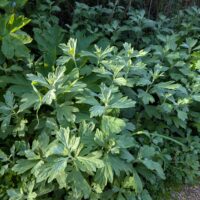
Artemisia douglasiana
Mugwort is native to many plant communities where there is at least some year round moisture: streams and riverbanks, road cuts, ditches, and moist meadows. A stout, rhizomatous perennial with aromatic foliage that is green on top and silvery beneath. The flowers are small and not particularly showy. The foliage is beautiful and fragrant with a long history of medicinal uses. Plant in sun to light shade where it will grow 3 ft. tall and spreading to form a colony. Well watered plants can grow even taller. Provides excellent cover and seeds for birds. Deer resistant.
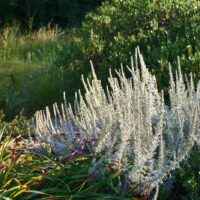
Artemisia suksdorfii
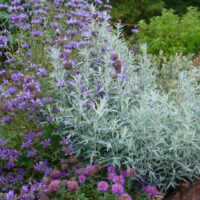
Rhizomatous perennial with sturdy upright stems of whitish-gray felted foliage. Native to coastal California where it grows in seasonal drainages near the ocean. Growing 1 1/2 ft. to 3 ft. tall and spreading to form colonies of beautiful wooly foliage with a pleasant sage scent. The tiny flowers are not particularly showy but are attractive to pollinators. Useful in informal gardens for sunny areas with some summer moisture. Probably best in areas with some coastal influence. Cut to the ground annually to freshen and make room for new spring growth. Deer resistant.
Asarum caudatum
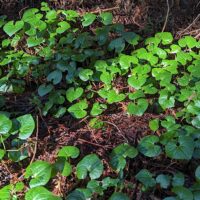
Native to the deep shade of forest floors, this evergreen perennial forms a handsome low groundcover. The large, deep green, heart-shaped leaves appear to hover over the ground, creating a lush, almost tropical effect. The unusual flowers which nestle under the leaves are normally maroon, but occasionally white, with long spidery tails. Thrives in the deep shade under redwoods, competing well with the aggressive roots and dense duff. The ginger scented leaves are deer resistant.
Asclepias eriocarpa
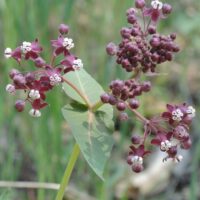
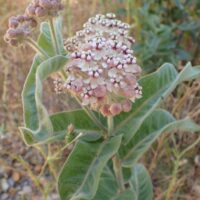
More diminutive than showy milkweed at 1-3 feet, this long-blooming species has similar broad, greyish leaves and creamy, pink-accented flower clusters. Like other milkweeds, it is a larval host for the monarch butterfly. A great choice for habitat gardens in dry, sunny areas, providing nectar for a wide array of pollinators from late spring into fall. Usually found in rocky soils throughout parts of Southern California and in foothill areas north of the San Francisco Bay. Spreads to form colonies with minimal supplemental water. Deer resistant.
Asclepias fascicularis
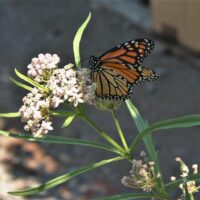
Our most common native milkweed is found in meadows and on the banks above ponds. Its flowers are held in umbels of a pale mauve color. They form at the top of 1 - 3 ft. tall slender stems that die back in winter to a perennial rootstock. Its wandering roots form small colonies. Drought tolerant, it prefers seasonally moist soils and likes moderate water in the garden. The narrow leaves are the preferred larval food for the Monarch Butterfly. Full sun to part shade. Unlikely to be bothered by deer.
Asclepias speciosa
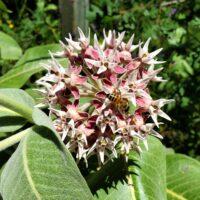
Bold and beautiful native milkweed that forms a large patch of tall stems with broad pale green leaves. Fragrant clusters of pinkish-purple flowers, followed by interesting seed pods. Spreads by underground shoots. Great in semi-dry naturalistic plantings. Host to Monarch butterflies. Deer resistant.
Athyrium filix-femina
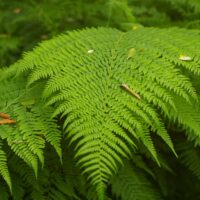
Native to much of North America, lady fern grows in moist shady places. The newly emerging fiddleheads in the spring are particularly attractive. The graceful, delicate looking fronds grow 3 foot or more tall by 3 ft. or more wide. Lovely in a forest setting, as a background plant, or around a pond. Goes dormant in the winter. Plant in full to part shade with regular water.
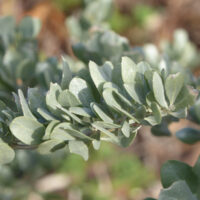
Atriplex lentiformis
This native bird favorite is a tough and useful shrub with beautiful silvery gray foliage. Growing 5 ft. or more tall and spreading widely, quail bush is valued for its ability to deal with difficult sites where it tolerates wind, salt spray, saline and alkaline soils. A terrific habitat plant, providing food and cover for a wide array of birds and mammals. Native from the coast to the desert. Excellent for erosion control and is fire resistant. Benefits from annual shearing and occasional aggressive pruning to rejuvenate. Plant in full sun with occasional to little summer water.
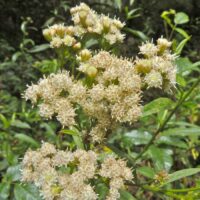
Baccharis glutinosa (douglasii)
This native perennial is a powerhouse for pollinators, luring small butterflies, predatory wasps and other beneficial insects to its dense, white, flat-topped, nectar rich flower heads. Found in wetland and riparian habitats such as salt marshes and stream edges along the coast and interior valleys of California. An erect perennial, growing 3 ft. or more tall, with long, lance-shaped, resinous, leaves and spreading by rhizomes. Blooming in late summer to early fall, the flowers lack petals and are dioecious, with male and female disc flowers occurring on separate plants. Plant in full sun to light shade with moderate to regular water. Deer resistant.
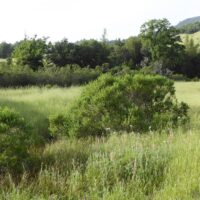
Baccharis pilularis
This is the upright form of coyote bush, growing 4 - 8 ft. tall and wide. Valued for its ability to flourish in a wide range of conditions. Also valued as an excellent habitat plant offering food and cover to a wide variety of wildlife. Flowers are not showy and the male and female flowers are borne on separate shrubs. This crop of plants are a mix of males and females and one can’t tell until they bloom. Plant in sunn or light shade. Not fussy about soils. Quite drought tolerant once established. Responds well to pruning or shearing, working well as a screen. Deer resistant.
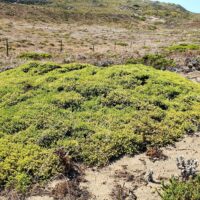
Baccharis pilularis – Bodega Dunes form
Coyote bush is a tough, native, evergreen shrub, forming mounds of dense foliage that hold soil and provide food and cover for birds and mammals. Flowers are small and cream-colored and appear in the autumn. This crop is grown from seed collected in the Bodega Bay Dunes from parents that were under two feet tall and around 6 ft or so wide. Time will reveal the exact form and sex of each plant in this crop. Both male and female plants have significant habitat value, with their combined contributions of abundant pollen, nectar and copious seed late in the season. It will be a surprise as well as a useful addition to the habitat garden. Plant in full sun, though a little shade is helpful in hotter sites. Shear occasionally to renovate and keep dense. Drought tolerant on the coast, but best with occasional water inland. Deer resistant.
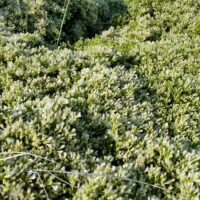
Baccharis pilularis – female
Upright form of coyote brush, growing 4 - 8 ft. tall and wide. Valued for its ability to flourish in a wide range of conditions. Also valued as an excellent habitat plant offering food and cover to a wide variety of wildlife. Flowers are not showy and the male and female flowers are borne on separate shrubs. Theses plants are FEMALE and will produce seed (when male plants are present). An abundance of pollinators and beneficial insects use Baccharis flowers and birds love their seeds. Plant in sun to light shade. Not fussy about soils. Quite drought tolerant once established. Responds well to pruning or shearing and is useful as a screen. Deer resistant.
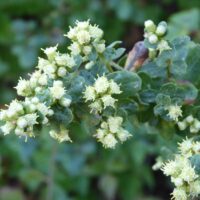
Baccharis pilularis – male
Upright form of coyote brush, growing 4 - 8 ft. tall and wide. Valued for its ability to flourish in a wide range of conditions. Also valued as an excellent habitat plant offering food and cover to a wide variety of wildlife. Flowers are not showy and the male and female flowers are borne on separate shrubs. These plants are MALE and produce ivory colored flowers with pollen and nectar. An abundance of pollinators and beneficial insects use Baccharis flowers. Plant in sun to light shade. Not fussy about soils. Quite drought tolerant once established. Responds well to pruning or shearing and is useful as a screen. Deer resistant.
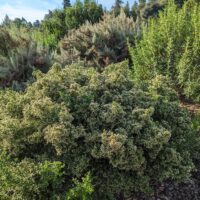
Baccharis pilularis ‘Mayacama Mound’
This dense, bright green, gumdrop-shaped coyote bush only reaches about 3 ft tall and spreads a wider. We discovered this heat and drought tolerant selection in a batch of seedlings from inland Sonoma Co.. A great alternative for the ubiquitous ‘Twin Peaks’, which is a coastal selection and less suitable for hot, dry sites. Plant in full sun to light shade where mature plants won’t need supplemental water, but an infrequent deep soak will keep them looking fresh. The small, whitish flowers are relished by pollinators in the early autumn. This selection is female, so the late autumn seeds provide an important food source for birds. A sturdy, low, evergreen shrub for tough situations.
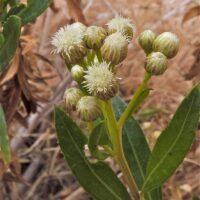
Baccharis salicifolia
This native shrub looks something like a willow in foliage and is found in similar habitats in California and the southwest US. Not a willow at all, but a member of the aster family, this evergreen shrub blooms nearly year round, making it a powerhouse for pollinators. The profusion of small, creamy white, fuzzy flowers, tinged with pink or red are highly attractive to butterflies, bees and other beneficial insects. Extremely tough and easy to grow in full sun with summer water, where it will grow 6 - 10 feet tall and wide with rich, green foliage. Able to survive drier conditions than a willow could handle, but it will look rough if it gets too dry. Responds well to pruning and can be cut down to six inches to refresh. Excellent screen, windbreak and for soil stabilization. Stellar for attracting pollinators.

Berberis (Mahonia) aquifolium
This attractive, western native evergreen has a long history in cultivation for good reason. Erect stems rise 4 to 7 feet or more tall and wide, spreading slowly by underground rhizomes to form dense clumps. Bronzy-red new growth gives way to dark-green, glossy leaves with spiny margins that are prickly to the touch. Cold winters can darken the foliage with purple-red tones. Late spring brings clusters of bright yellow, sweetly scented flowers. Edible blue-black fruits follow and are pretty and tasty. A useful and adaptable shrub in a hedge or a shrubby border. Takes full sun to part shade. Performs best with some afternoon shade in hot areas and moderate to infrequent water. A great habitat plant which provides cover, nectar rich flowers and fruits relished by all. Deer resistant.