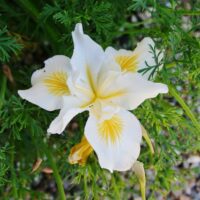
Iris douglasiana ‘Canyon Snow’
A dependable and floriferous selection of the native Douglas iris, with springtime flowers that are pure white with yellow markings on the falls. Broad shiny blades are mostly evergreen and grow a foot or more tall and form compact clumps. Plant in sun to part shade, particularly in hot inland areas, with moderate to little summer water. Prefers good drainage but will grow well on clay soils provided they are mounded up. Too much summer water on heavy soils will prove fatal. Deer resistant.
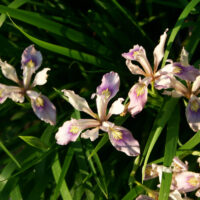
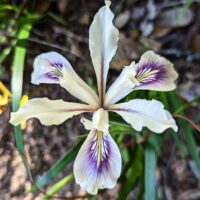
Iris douglasiana v. major
This rare form of the Douglas iris occurs throughout Marin County, offering a rainbow of possible flower colors, including blue-purple, mauve, creamy yellow and white, with all sorts of gradations in between. Since these are seed grown, the color will be a surprise when they bloom. The spring blossoms often have striking venation, and are held on stalks 1’ – 2’ high. Foliage clumps generally reach about a foot tall and spread to form extensive colonies of evergreen, strap like leaves. Plant in full sun in cooler areas, but provide some shade in hotter zones. Plants require little water once established, and are perhaps a little more drought and heat tolerant than the straight species. Deer and gopher resistant.
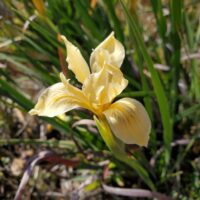
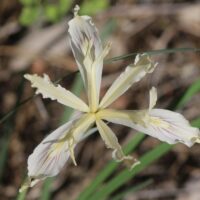
Iris fernaldii
Rarely offered in nurseries, the creamy-white to soft, buttery-yellow flowers of Iris fernaldii brighten up any dry shade to part-sun, inland garden in April. The flowers rise a foot above the evergreen, narrow, strap-like, deep-green foliage. This patch-forming Iris can be found in the more inland canyons of Northwestern California, from the Santa Cruz mountains, throughout inland Sonoma County, to Lake, Colusa, and Glenn counties. Fernald’s iris is well adapted to both extreme heat and cold, but can also perform well in full sun on the coast. Native bees and butterflies are attracted to the cheery flowers of this iris. This species prefers decent drainage and is drought tolerant and deer resistant once established.

Iris innominata
A choice iris with slender, glossy, dark-green leaves and dainty flowers in late spring. Flower color can be from brilliant yellows to shades of purple. Native to the Siskiyou Mountains in Del Norte County, California, into southern Oregon where it forms low, dense, evergreen clumps in openings of woodlands or coniferous forests. This species does better in hot, inland areas than the Douglas iris. Requires good drainage and some summer water. This Del Norte County iris has been used in hybridization programs to produce the popular Pacific Coast Hybrid Iris. Deer resistant.
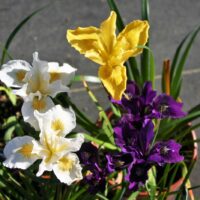
Iris Pacific Coast hybrid
A diverse group bred from the native irises with wonderful coloration, patterning, flower form variation....ranging from soft pastels to mahogany, maroon and midnight purple. Evergreen foliage, about 1 to 2 ft. high. Can eventually form sizable clumps. Full sun to light shade. Often do well as an understory for oaks that needs no summer water. Drought tolerant, moderate to little water when established. Deer don’t seem to eat flowers or foliage.
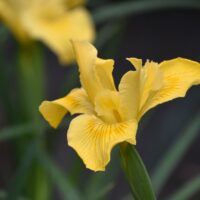
Iris Pacific Coast hybrid ‘Canyon Sunshine’
One of a diverse group of hybrid native irises, this butter-yellow selection with a lemony center is the result of a cross with Iris douglasiana 'Canyon Snow.' The evergreen foliage grows about 1 - 2 feet tall and spreads by rhizomes to form clumps up to 3 feet wide. Tolerates full sun on the coast but does best with afternoon shade inland. Occasional water keeps it looking nice in summer. A good plant for the understory of oaks, where it will require little irrigation once established. Drought tolerant and deer resistant.
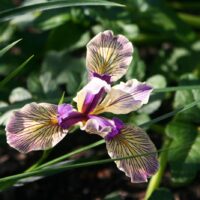
Iris Pacific Coast hybrid ‘Sebastopol’
A diverse group bred from the native irises with wonderful coloration, patterning, flower form variation....ranging from soft pastels to mahogany, maroon and midnight purple. Evergreen foliage, about 1 to 2 ft. high. Can eventually form sizable clumps. Full sun to light shade. Often do well as an understory for oaks that needs no summer water. Drought tolerant, moderate to little water when established. Deer don’t seem to eat flowers or foliage.
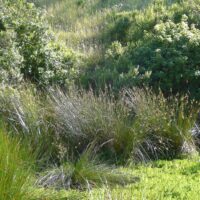
Juncus effusus
Striking plant with bright green, erect, cylindrical blades that arch somewhat toward the tips. Creamy-gold, tassel-like flowers appear near the tips in spring and early summer. Grows 3 ft. or more tall and wide. Native to moist habitats in temperate regions of the world. Can grow in full sun to light shade with regular to moderate water. A natural for water features, making a great foliage accent for pools, ponds, or streamsides. Can grow in shallow water. Great in containers too. Deer resistant.
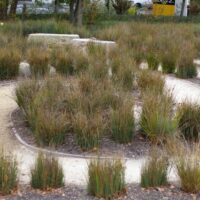
Juncus patens
This handsome evergreen rush provides a striking vertical accent 1-1/2 to 2-1/2 ft. tall with grey-green to grey-blue foliage. Brownish-yellow, tassel-like flowers appear in the spring and early summer. Very adaptable, tolerating a wide range of conditions. Enjoys sun with moisture, but will tolerate dry conditions once established. Accepts moderate shade. Robust root systems are excellent for soil stabilization. Deer resistant.
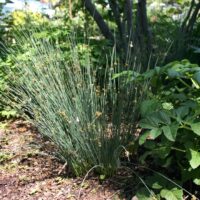
Juncus patens ‘Elk Blue’
Introduced by San Marcos Growers, this form of Juncus patens was selected from the hills southeast of the town of Elk in Mendocino County. Features exceptionally blue foliage and and a vigorous spreading habit. This selection is shorter than the typical grey rush only reaching about 18 inches tall. An adaptable species, will thrive in moist soils, even shallow water but once established tolerates dry conditions too. Grows in sun to moderate shade. An excellent accent plant with its stiff, vertical foliage. Deer resistant.
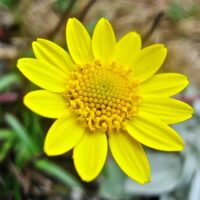
Lasthenia californica ssp. macrantha
Native along the immediate coast of California and just into Oregon, where it forms low, tight mounds of deep green succulent foliage. Cheerful, bright yellow daisies bloom over a long period. Best in full sun with some summer water and good drainage. Long blooming, open faced flowers are excellent sources of nectar and pollen for butterflies, bees and other pollinators.
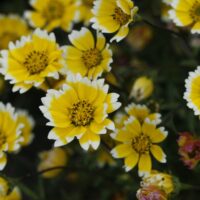
Layia chrysanthemoides
Light up your plantings or containers with this cheerful, ANNUAL wildflower. Boasting clear, bright yellow daisies with pure white-tipped petals, providing a spectacular springtime display. Similar to the common tidy tips, this species is a little smaller, though the flower heads are equally large. Mostly found in the northern part of the state where it is native to vernal pools, grasslands, and valley bottoms, growing in heavy soils and full sun. Attractive to pollinators, especially butterflies. Birds relish the seeds.
Layia platyglossa
Easy to grow native ANNUAL for open sunny areas. Cheerful lemon-yellow daisies with pure white tipped petals entice bees and butterflies. Foliage grows 6-12 inches tall in lean soils and taller with more fertility. Wide distribution, from the coast to inland valleys, Mendocino County to Baja. Birds love the seeds. A knock-out mixed with blues and purples of lupines or baby blue eyes. Does not need water once established.
Lewisia cotyledon
Named for Meriwether Lewis, this attractive succulent is native to higher elevations in Northern California and Southern Oregon, typically granite outcrops. The flowers which usually emerge in spring and summer, can range in color from yellow to orange to pink to red. These frost hardy plants form evergreen rosettes, approx. 8 - 10” tall by a foot or so wide. Lewisias need very good, sharp drainage, are heavy feeders, and love a granite rock mulch. They like to be grown sideways, in rock walls, where their crown can drain any moisture away. Plant somewhat high in a fast draining mix and feed every now and then. Morning sun, afternoon shade is best inland. Water as you would any succulent, sparingly, and keep the crown high and dry.
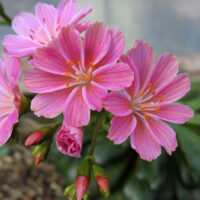
Lewisia cotyledon – Sunset Strain
Named for Meriwether Lewis, this attractive and showy succulent is native to higher elevations in Northern California and Southern Oregon, typically on granite outcrops. Abundant floral sprays arise in spring and summer on stalks reaching 6-10" above evergreen foliage. This seed strain has produced a rainbow of flower colors, including: yellow, white, orange, pink and red. The frost hardy rosettes grow to approx. 8-10” tall by a foot or so wide. Lewisias need very good, sharp drainage, and love a granite rock mulch. They like to be grown sideways, in rock walls, where excess moisture drains away. Plant somewhat high in a fast-draining mix and feed every now and then. Morning sun with afternoon shade is best inland. Water sparingly, as you would any succulent, and keep the crown dry.
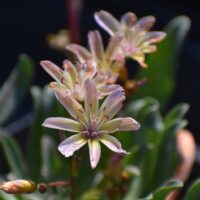
Lewisia longipetala ‘Little Peach’
Large flowers with long petals colored peachy apricot make this selection of our native cliff maids a knockout in the garden. Round clusters of narrow, succulent leaves form patches up to about 8 inches wide. The irresistible flowers emerge en masse from between the leaves on slender stalks up to about 10 inches high. A very long bloomer, beginning in spring and often re-blooming in summer. Works really well in a container with lean, fast draining soil, placed in bright partial shade. Water sparingly. For best results, mulch with granite chips and fertilize occasionally. Lewisias are native to the mountains of California and beyond, where they grow in rock cliffs. An excellent choice for the rock garden.
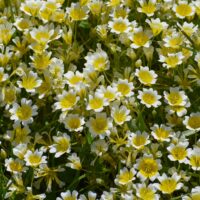
Limnanthes douglasii
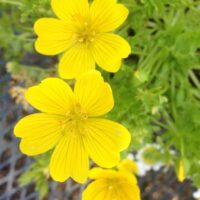
California native ANNUAL occurring in grasslands and vernal pools throughout California. Low growing, shiny green foliage is topped with a profusion of sweetly fragrant, cup shaped, bright yellow blossoms with white tips. An excellent choice for low, winter wet areas, drainage swales, retention basins or seasonally dry stream beds. Thrives in heavy soils where it often naturalizes. Plant in full sun to part shade with regular water through the growing season. Fabulous container plant too. Meadowfoam is excellent for encouraging native pollinators, bees and butterflies.
Limnanthes douglasii ssp. sulphurea
Pure yellow flowering form of meadowfoam, rare in the wild but easy to grow in the garden. This native ANNUAL favors seasonally moist areas in full sun. Low growing foliage is topped with a profusion of pure yellow, cup-shaped, fragrant flowers. Useful in low areas, drainage swales, retention basins or seasonally dry stream beds. Thrives in heavy, water retentive soils. Wonderful in containers too. Meadowfoam is excellent for encouraging pollinators and other beneficial insects.

Lomatium californicum
Native to lightly shaded banks or brushy slopes, this interesting native forms clumps of beautiful, ferny, blue-green leaves. The foliage has a pungent celery flavor and grows 1 ft. or so tall. The yellow-green flowers form broad umbels that reach up to 4 ft. high. Good for brightly lit woodlands that go summer dry. Plant with Heucheras, California fescue and Iris. A larval food source for the Anise Swallowtail butterfly.
Lomatium dasycarpum
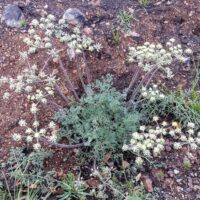
Native to chaparral, grassland and open woodland throughout much of California, this dainty little member of the carrot family produces flat-topped clusters of fuzzy flowers, yellow in bud and creamy-white when open. The fern-like leaves are gray-green and hairy. Blooms in early spring. A larval food source for the Anise Swallowtail butterfly. Needs well-drained soil and full sun to part shade. Do not water once established. Summer dormant.
Lomatium dissectum
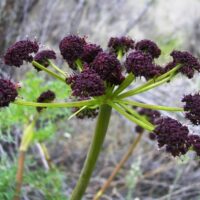
This carrot relative features clusters of small burgundy or yellow flowers held in round clusters in open umbels. Tall, slender stalks about 3 - 4 ft high support the blossoms above broad, finely dissected leaves. Pollinators love the flowers and the anise and indra swallowtail butterflies depend on the leaves as a food source for the developing caterpillars. Grows throughout much of California in hot, inland areas. Plant in full sun to light shade and provide little to no water once established. Needs excellent drainage. A rarity in nurseries.
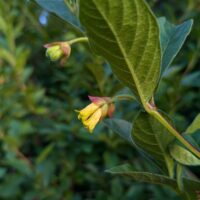
Lonicera involucrata
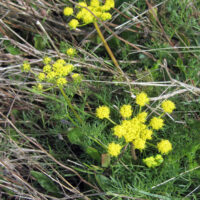
An interesting native shrub that grows along streams and other moist places. The tubular, red and yellow flowers are borne in pairs on bright red bracts and are hummingbird favorites. Two black shiny fruits follow the flower and are very showy set against the red bracts, making them attractive to birds. Reaches 6 - 10 ft. tall and wide, this neatly branched shrub loses its leaves in the winter. A great addition to the habitat garden in full sun to light shade with regular to occasional deep summer water. Orioles love the fruits. Needs afternoon shade in hot, inland areas. Deer resistant.
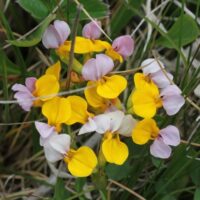
Lotus (Hosackia) formosissimus (gracilis)
A low growing native perennial found in seasonally moist meadows, ditches and seeps along California's coast, north to British Columbia. Small, neat leaves form a pretty, low ground cover spreading up to 2 ft. wide. Pea-like flowers have a bright yellow upper petal and deep pink lower petals which bloom in the spring then sporadically through the summer. Plant in full sun to light shade with regular moisture. Makes a nice container plant, too. Flowers visited by bees and other pollinators. Thought to be the larval food source for the possibly extinct lotus blue butterfly.
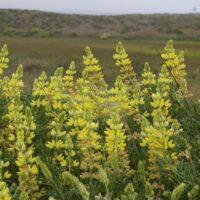
Lupinus arboreus – yellow flowered form
Native to coastal plant communities from Sonoma County south to Ventura County. Showy, fragrant, clear-yellow flowers in long, dense spikes in mid spring and into summer. A fast-growing, floriferous shrub, 3-6 ft. tall and wide. Excellent choice for coastal areas in full sun with good drainage. Not suggested for gardens in coastal Mendocino County due to its ability to quickly naturalize and take over fragile plant communities. Drought and wind tolerant. Lupines have great habitat value, offering nectar for pollinators and nourishing seeds for birds. Great for hummingbirds and a larval food source for various butterflies. Deer resistant.
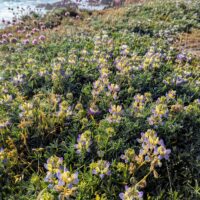
Lupinus littoralis var. variicolor
Often found nestled amid rocks and sand, this low-growing, perennial lupine is native to the beaches and dunes of coastal California. Forms a clump or mat of silver-green foliage under 18 inches tall, with jewel-like flower spikes. Blooms in a subtle range of colors, typically shades of purple-blue with white to pale yellow banners. Makes for an excellent addition to a rock garden. Formerly known as Lupinus variicolor, it is currently considered a variety of bluff lupine that is endemic to the Bay Area from Sonoma County down to the Peninsula. It attracts pollinators, and is one of the few hosts for the rare Mission Blue butterfly. Accepts various watering regimens from regular to occasional so long as it gets excellent drainage. Drought tolerant once established.
Lupinus stiversii
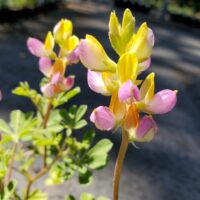
A striking ANNUAL lupine, endemic to California, with a disjunct distribution in the Sierra foothills and separate mountain ranges in Southern California. Instead of the more typical blue or purple flowers, this lupine sports beautiful, bicolored flowers of yellow and pink, on low foliage 6 - 18 inches tall. Grows in open, exposed areas, in full sun with good drainage, and is extremely drought tolerant. Blooms in the spring and offers excellent pollinator value, attracting a variety of insects, and a larval food source for a number of butterfly and moth species. Deer resistant.
Luzula parviflora
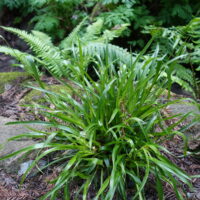
This tidy native woodrush forms grass-like clumps 8 - 10 inches tall and a little wider with broad, bright green leaf blades. The small yellowish flowers occur on the tips of arching flowering stems in late spring. Occurs over a wide range of the Western U.S. and up into Canada, across and down into the northeastern states. Perfect for the woodland garden with moderate moisture. Will seed around if the conditions are right, but we have not found it to be weedy. Deer resistant.