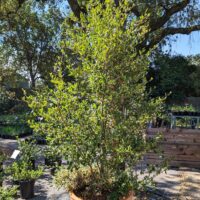
Cercocarpus betuloides var. blancheae
This rare and beautiful variety of our native mountain mahogany offers larger, birch-like leaves with fuzzy and whitish undersides. The highly useful from generally reaches 8 – 15 ft. tall, but only spreads to about 6 ft. wide, making it ideal for narrow locations where a screening, evergreen, fast-growing bush is needed. Small, disk-like, creamy flowers appear in the spring, followed in summer by seed pods with hairy, grey tails which curl upwards, giving the plant a silver halo. Over time, the trunks are covered in a smooth, grey bark. The Island mountain mahogany typically grows much more rapidly than our local variety and is tolerant of moist or dry soils once established and part shade to full sun. Heat isn’t an issue. A great candidate for a container, where it is very amenable to pruning.
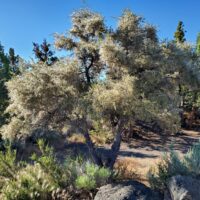
Cercocarpus ledifolius
Large shrub or small, multitrunked, evergreen tree, 6 - 30 ft. tall, native to arid mountains of the western US. Often takes on a gnarled, picturesque form depending on the conditions it is growing in. Adapted to dry, rocky slopes where it weathers drought, extreme heat and cold, wind and snow. Slow growing, densely branching, with dark green, leathery leaves with curled under edges and silvery undersides. Trunks develop beautiful, red-brown bark with silvery new growth. The flowers are similar to our local mt. mahogany species, small, greenish- yellow, smelling of honey, and attractive to pollinators. The fruits are long, silvery, plumes that glow when back lit. Plant in full sun to light shade with good drainage where it will blend well with other dryland shrubs and perennials and requires little input. Fixes nitrogen. Interesting container or bonsai subject.
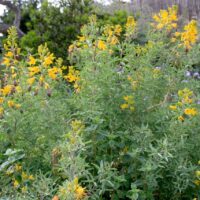
Cleomella (Isomeris) arborea
This distinctive small shrub from Southern California features clusters of golden-yellow flowers with long stamens, giving them a delicate, airy quality. The flowers are followed by papery, lantern-like seed pods which can become almost translucent with age. While this species blooms strongest in the spring, flowers can be seen year-round. Bladderpod has a loose, rounded habit, reaching 4 to 6 ft. tall and wide. If your plant becomes too lanky, simply cut it to the ground to rejuvenate it. Plant in full sun with good drainage and provide infrequent to zero irrigation once established. A great nectar source for hummingbirds, bees and butterflies. Deer resistant.
Previously known as: Peritoma arborea

Cornus sessilis
Native to moist ravines and stream banks of the coast ranges and the Sierra Nevada Mts, this deciduous shrub or small tree grows 5-10 ft. or more tall and wide. Beautiful shiny, jade green leaves with prominent lateral veining decorate the graceful green barked stems. Small, yellow flowers appear early as it leafs out in the spring and are followed by oval fruits. Fruit color changes as it matures from greenish-white to yellow, red and finally shiny black which attract a wide range of fruit eating birds. Foliage can take on pretty tones of yellow and red in the autumn. Thrives in moist shady locations, but will grow well with just part shade and moderate to occasional summer water once established.
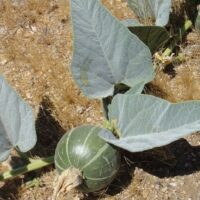
Cucurbita foetidissima
Found in valley grasslands and coastal scrub environments of Central and Southern California, the buffalo gourd is a deciduous perennial ground cover or vine that is sure to grab attention. In late winter and early spring, this vigorously spreading gourd emerges from a tuberous root, potentially spreading to 20’ feet or more, producing big, triangular, gray-green fuzzy leaves, followed by large, showy, orange-yellow, bell-shaped flowers in summer which attract bees. The round fruits, about 4 inches across, are green-striped when young, maturing to yellow. As the fruit matures, it is too bitter for humans to eat. The mature fruit is used by native peoples for decorative purposes or for making musical rattles. Plant in full sun. Drought-tolerant once established.
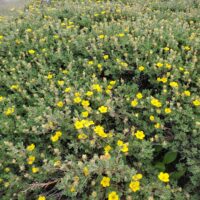
Dasiphora (Potentilla) fruticosa
A popular landscape subject, valued for its long bloom period, hardiness and carefree nature. A member of the rose family, this deciduous shrub can be found across the northern hemisphere, often growing at higher elevations. Here in California, it ocurrs in the Sierras, the Klamath Mountains and the Warners. Grows 2 -3 ft tall and wide with handsome, pinnately compound leaves. Cheerful, rich-yellow, saucer-shaped flowers bloom over a long period, summer into fall. Plant in full sun to light shade with moderate watering. Drought tolerant once established. Attracts bees and butterflies. Great in a pot. Deer resistant.
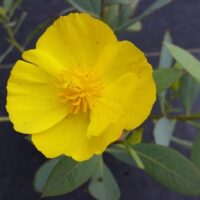
Dendromecon harfordii
A beautiful and much sought after shrub native to California’s Channel Islands. Growing 6 - 10 ft. tall with bluish-gray foliage and a showy display of brilliant yellow poppy blossoms - spring into early summer, with scattered flowers throughout the year in mild climates. Requires full sun, good drainage, and little to no irrigation once established.
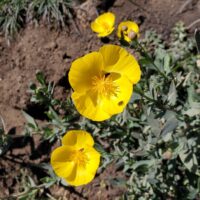
Dendromecon rigida
This is our local bush poppy, growing 4 - 8 ft. tall with bluish-gray foliage and a showy display of brilliant yellow poppy blossoms from spring into early summer. Scattered flowers may be seen throughout the year in mild climates. The leaves are narrower than those of the island bush poppy and the plant has a more open form. Requires full sun, good drainage, and little to no irrigation once established.
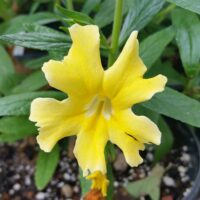
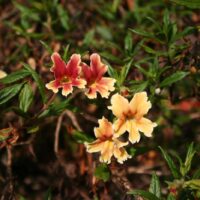
Diplacus (Mimulus) ‘Changeling’
This charming hybrid monkeyflower offers a beautiful blend of soft orange, red, and cream hues on ruffly-edged, trumpet-shaped blossoms. As the mottled colors mellow with age, each bloom looks a little different from the next, adding to the appealing "changeling" effect. Foliage is evergreen and grows to 3 ft. tall and wide. Plant in full sun on the coast to light shade inland and give it well drained soil. Drought tolerant once established, but some occasional summer water is helpful. Bees, butterflies and hummingbirds work the flowers and the painted lady and checkerspot butterflies use it as a larval food source. Deer resistant.
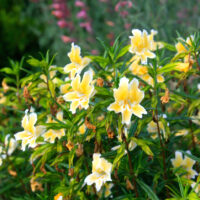
Diplacus (Mimulus) ‘Eleanor’
The ‘Eleanor’ monkeyflower selection, introduced by Yerba Buena Nursery, offers an abundance of soft citrusy-yellow blossoms edged in white. Monkeyflowers are evergreen, floriferous subshrubs that bloom spring through the summer. This hybrid form grows to around 3-foot tall and wide. Best with good drainage, light shade, and occasional deep watering once established. Avoid drip irrigation. Pinching older stems helps produce a fresh, dense habit for these profusely blooming plants. Monkeyflowers are deer resistant, and are a larval food source for the painted lady and checkerspot butterflies.
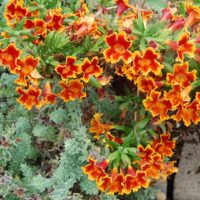
Diplacus (Mimulus) ‘Fiesta Marigold’
Selected for its large, frilly, brick-red blossoms with orange edging, this striking monkeyflower hybrid comes from horticulturalist Richard Persoff. It is also a relatively compact form at 18 inches to 2 feet tall and wide. Valued for their long bloom season, monkeyflowers perform best with good drainage and sun to light shade. Drought tolerant, but some occasional summer water is helpful. Monkeyflowers benefit from pinching to produce a nice shape and strong structure to hold the abundant blossoms. Highly attractive to bees and hummingbirds. Deer resistant.
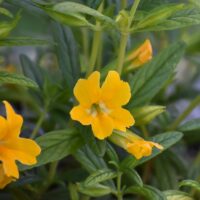
Diplacus (Mimulus) ‘Jelly Bean Gold’
This cheerful monkeyflower boasts impressive displays of sunny yellow flowers throughout most of the year. One of Richard Persoff’s hybrid selections known for their vibrant color and profuse, long-lasting blooms. The lush, evergreen foliage is a compact 2-feet tall and wide, and with periodic pinching back of stems, stays dense and bushy. Monkeyflowers are drought tolerant, but provide them with afternoon shade and occasional summer water to extend the blooming season. Grows even in poor soils so long as it has good drainage. A favorite nectar plant for hummingbirds, bees, and butterflies. The painted lady and checkerspot butterflies use it as a larval food source.
Diplacus (Mimulus) ‘Jelly Bean Lemon’
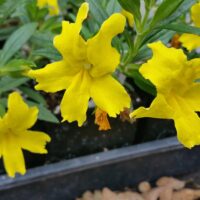
A selection from the Jelly Bean series of hybrid monkeyflowers with glowing, lemon-yellow, frilly flowers that decorate the branch tips over a long period. Dark green compact foliage grows 18 inches to 2 ft. tall and wide. Valued for their long bloom period, monkeyflowers perform best with good drainage and sun to light shade. Drought tolerant, but some occasional summer water is helpful. Benefits from pinching to produce a nice shape and strong structure to hold the abundant blossoms. Nice in containers too. Highly attractive to bees and hummingbirds. Deer resistant. Formerly: Mimulus 'Jelly Bean Lemon.'
Diplacus (Mimulus) ‘Pamela’
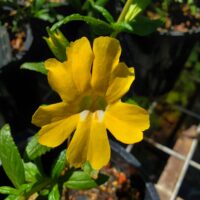
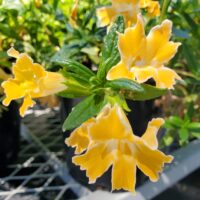
This monkeyflower hybrid offers striking, golden-yellow flowers with white edging. Monkeyflowers are shrubby perennials, beloved for their showy displays of frilly, trumpet-shaped flowers from mid spring through summer. This selection comes from Susan Ashley, a Bay Area grower and instructor of plant propagation. Relatively compact, it will grow 1 to 2 foot tall by 2 foot wide, with narrow, shiny, dark-green foliage. Plant in full sun on the coast to light shade inland, with good drainage. Drought tolerant once established, but occasional deep watering extends the bloom period. Pinching stems helps produce a sturdy structure to hold its abundant blossoms. Highly attractive to bees and hummingbirds, and a larval food source for painted lady and checkerspot butterflies. Deer resistant.
Diplacus (Mimulus) ‘Willits Apricot’
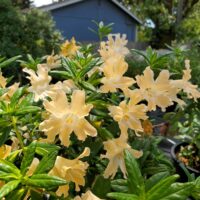
A chance seedling, this apricot-yellow monkeyflower appeared in a Willits garden near plantings of other hybrids. The large, trumpet-like flowers are elegant and buttery-soft in tone. A vigorous and willing grower, the evergreen foliage reaches up to 3 ft. tall and wide. Does well in full sun on the coast to light shade inland, and prefers good drainage. Best with occasional deep watering in the summer and pinching to form good support for the abundant flowers. Bees, butterflies and hummingbirds work the flowers and the painted lady and checkerspot butterflies use it as a larval food source. Deer resistant.
Diplacus (Mimulus) aurantiacus ‘Rodeo Gold’
This form of sticky monkeyflower offers warm yellow tubular flowers with a golden throat, rather than the more usual orange flowers. This Cal Flora Nursery selection was found in southern coastal Marin County. Evergreen foliage grows roughly 3 ft. tall and wide. Benefits from pinching back of older stems to keep it denser. Plant in full sun on the coast to part shade insland, and provide with occasional summer water. Monkeyflowers are attractive to hummingbirds, butterflies and other pollinators. The checkerspot and buckeye butterflies use it as a larval food source. Deer resistant.
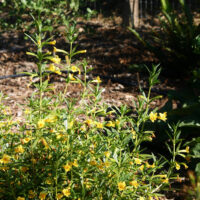
Diplacus (Mimulus) aurantiacus ‘Ted’s Yellow’
Grows 2 - 3 ft. tall with yellow tubular flowers. Full sun near coast, light shade inland. Good drainage, keep on the dry side and fertilize minimally. Benefits from annual trimming. Larval food source for the common checkerspot and buckeye butterflies. The flowers provide nectar for hummingbirds. Deer resistant.
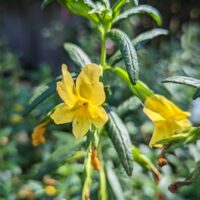
Diplacus (Mimulus) calycinus
From central and southern California, this species is similar to our local sticky monkeyflower but has large, creamy-yellow, trumpet-shaped flowers. Grows 2 - 3 ft tall, and at least as wide, and flowers from late spring through summer. For sun to light shade with good-draining soils and occasional summer water. Flowers attract hummingbirds, bees and butterflies and it is a larval food source for checkerspot and painted lady butterflies. Deer resistant. Previously: Mimulus longiflorus ssp. calycinus.
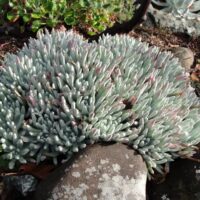
Dudleya ‘Frank Reinelt’
The beautiful and rarely offered Dudleya will form dense mounds 6" - 8" tall with silvery, finger-like leaves, sometimes developing a purple-red blush. Slender stalks appear in late spring and display star-like flowers of soft yellow up to a foot above the foliage. They make handsome specimens in a rock garden or perform as a striking groundcover up to 2' wide mixed with other coastal bluff plants like red buckwheat, seaside daisy, and sea thrift. Great in a container or planted under manzanitas amongst rocks. Needs good drainage and little water once established. Full sun near the coast, but light shade inland.
Dudleya ‘Seedlings from ‘Frank Reinelt’
These seedlings from the beautiful Dudleya ‘Frank Reinelt’ will form dense mounds 6 - 8 inches tall with silvery finger-like leaves. They make handsome specimens in a rock garden or perform as a striking groundcover in mass plantings mixed with other coastal bluff plants like red buckwheat, seaside daisy, and sea thrift. Avoid over-watering and control snails. Full sun to light shade with good drainage.
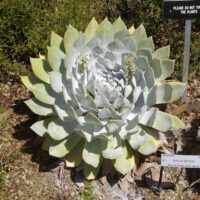
Dudleya brittonii
A Baja California native. Useful and very dramatic in containers or well-drained rock gardens. Likes a protected and sunny microclimate where cold air and winter wet can drain away. Enjoys a little afternoon shade in hotter climates. Develops up to 1 1/2 ft. wide rosettes with fleshy chalk-covered leaves. Yellow flowers sit atop tall stalks in late spring and early summer.
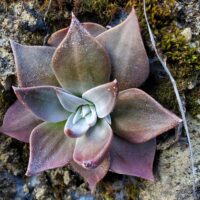
Dudleya cymosa
This charming succulent is in native to California where it grows in between rocks on inland cliffs in sun or bright shade. Best in the garden in a rock wall or terra-cotta pot with some afternoon shade. Height in flower is under one foot. The yellow to orange flowers are attractive to hummingbirds. Occasional to infrequent water in the ground. In pots, let dry out between waterings.
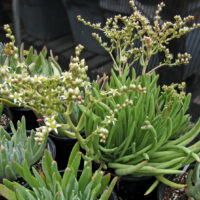
Dudleya edulis
Native to rocky slopes and ledges below 3900’ in Southern Coastal California, the Peninsular Ranges, and Northern Baja California. This Dudleya forms clustering rosettes of dainty, light green, pencil-like leaves. In summer, tall stalks of fragrant, pale yellow flowers rise high above the foliage. Growing about a foot tall (with flowers) by one foot wide. Plant in well drained soil and cool full sun to part shade inland. A delicate accent in a rock garden or amongst coastal plants, also fine in containers. Known as “mission lettuce” for its fleshy raw leaves, once considered a delicacy.
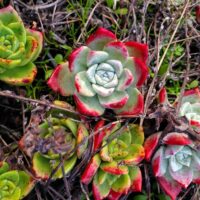
Dudleya farinosa
Native to sea bluffs in central and northern California. Rosettes of fleshy leaves are chalky grey or bright green and often red tipped. Candelabra-like clusters of light yellow flowers on thick stalks appear in summer. Provide part shade away from the coast. Excellent for rock garden, walls or containers, where good drainage and a little summer water can be provided.
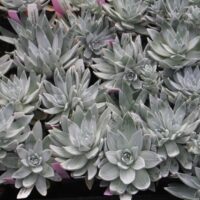
Dudleya farinosa – Noyo River form
Perched on the cliffs of the Noyo River are beautiful rosettes of bluish-white succulents known as bluff lettuce. This special form from the Mendocino coast was selected by Matt Teel for its small and compact stature, striking color and flat leaves. The foliage reaches a height of about 4 inches and slowly spreads to make small colonies. Yellow flowers sit atop slender pink stalks rising 8 inches off the ground. Provide protection from the afternoon sun in inland sites and plant in well-draining soil. Excellent in containers where it only needs occasional water.
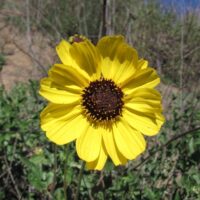
Encelia californica
Cheery yellow daisies with purplish-brown centers cover this sunflower from late winter all the way into summer, making it one of our longest blooming natives. The 2-inch-wide blossoms make for stupendous cut flowers and are loved by bees and butterflies. Goldfinches enjoy the seeds which follow. This somewhat short-lived subshrub features dark green, diamond-shaped leaves and reaches about 3 – 4 ft. tall, spreading a little wider. Should reseed if the spent flowers aren’t removed. Enjoys full sun to light shade and occasional to infrequent irrigation with decent drainage to look its best. Native to generally coastal areas in southern California. While not especially cold sensitive, it will freeze if the temperature gets down to the mid 20s.
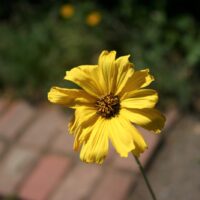
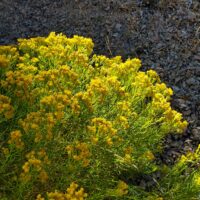
Ericameria arborescens
Native to chaparral regions throughout California, this tall, billowy shrub stands out with its soft and narrow, bright green leaves and, in the summer and early fall, clusters of small yellow flowers. Goldenfleece reaches 6 ft. or more tall with a width of around 4 ft. A wonderful accent plant for the dry garden, especially when combined with dark-foliaged plants such as ceanothus, toyon and manzanitas. Prefers full sun and excellent drainage. Very drought tolerant once established. Excellent for bees and butterflies. Deer resistant.