
Abutilon palmeri
Lovely, tangerine-orange flowers and fuzzy, grey-green, heart-shaped leaves make this evergreen native a real treat for the gardener. The cup-shaped blossoms appear throughout spring, attracting butterflies, followed by striking seed pods which can accent flower arrangements. A smallish shrub, reaching 4 – 5 ft tall and wide, suitable for full sun or part shade. Plant in soil with decent drainage and water infrequently once established. While native to Southern California, it does well in our area in places which don’t drop below 25F in winter.

Acer macrophyllum
This stately and picturesque tree is native to stream banks and moist canyons from Southern Alaska to the foothills of California. A large, round-topped tree with large dark green lobed leaves and smooth silver-gray bark. Fast growing 30 ft or more tall. One of the few native trees to offer good fall color. Sun to partial shade, occasional to regular water. When planting in a sunny location, protect the trunk from sun-scald with a dilute application of white latex paint.

Achillea millefolium ‘Terracotta’
This hybrid yarrow forms a mat of grey-green ferny foliage 2 - 3 ft. wide with interesting earth-tone colored flowers. The long-lasting flower clusters simultaneously sport peachy-yellow tones through burnt orange, on sturdy non-floppy stems to around 2 ft. tall. Plant in full sun with moderate to occasional summer water once established. Bees and butterflies love yarrows, but they are not deer favorites. Excellent cut flowers too.

Acmispon (Lotus) glaber (scoparius)
Bees go nuts over the bright-yellow flowers of this California native. From spring and into summer you can find this plant covered in blooms at the edges of chaparral throughout much of California. The intricate, pea-shaped flowers, often colored burnished red as they are pollinated, emerge along wand-like stems. Deerweed usually reaches a height and width of about 2 – 3 ft. Plant in full sun to light shade. Needs good drainage and no summer water once established. A remarkable number of butterflies use this species as a larval host plant, including the bramble hairstreak, orange sulphur, funeral duskywing, silvery blue, acmon blue and the avalon hairstreak.

Agoseris grandiflora
With a wide distribution throughout the state, the California dandelion is much more refined and well-behaved than its European, weedy look-alike. Found in oak woodland, chaparral, and many other plant communities in part-shade or bright dappled light. Slender, dissected, low, fuzzy gray-green leaves give rise to stem-like peduncles up to 2+ feet tall that are topped with rounded, flat, gold-yellow flower clusters from March-May, followed by large, perfectly rounded white globes of seeds that are wind-dispersed. Plant in part-sun or in areas with bright dappled light that drain well and are summer dry. Does not reseed aggressively like the European dandelion. Drought-tolerant.
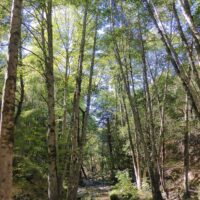
Alnus rhombifolia
From creeks and rivers throughout California, the white alder rapidly grows to become a large tree, reaching to 50 ft. or more at maturity. Serrated green leaves produce an excellent canopy above the straight, silvery-gray trunk. In winter, when the leaves have fallen, the ghostly branches make a striking silhouette with dangling catkins from the branch tips. An excellent plant for creek restoration where its aggressive roots help to stabilize banks. Keep away from irrigation pipes and foundations. Needs regular moisture and sun to light shade.
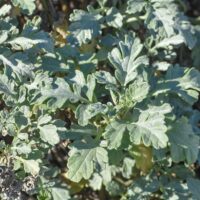
Ambrosia chamissonis
The silvery mats of this sand-dwelling species are important for soil stabilization along our coastline, but can also be used as an attractive, evergreen groundcover in the garden setting. Dissected leaves line crawling branches, forming a dense carpet up to about 10” high and spreading wherever they have room to grow. While vigorous, it can be pruned back easily. In summer, short stalks of inconspicuous, cream colored flowers raise, followed by bur-like seed capsules. Plant in sunny locations with moderate to occasional irrigation. Tolerant of different soil types.
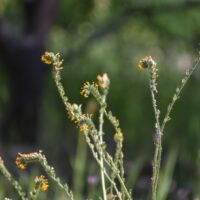
Amsinckia menziesii
A bright, yellow-orange ANNUAL with curled clusters of little trumpet-shaped flowers resembling the scrolled head of a violin. Flower stalks of one-to-three feet tall gradually unfurl with new blooms from mid-spring to early summer. The warmly-colored blossoms are a great nectar source for butterflies and develop into seeds adored by goldfinches and other songbirds. This grassland native adapts to the garden setting, where it prefers full sun and occasional irrigation. Will self-sow.
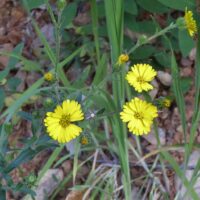
Anisocarpus (Madia) madioides
A quiet perennial, native to woods and coniferous forests of California from sea level to 4000 ft. Dark green, narrow leaves are covered with soft hairs and form a sturdy, low, perennial clump. The bright yellow daisies top 8-10 inch flower stems over a long period, from late spring into summer. Able to thrive in dry shady conditions.May seed about in a friendly way.
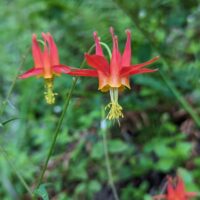
Aquilegia formosa
A popular native perennial with fern-like foliage and wonderful, nodding, spurred blossoms of red and yellow. Best with a little shade and moderate to regular moisture, but will tolerate full sun in somewhat cooler climates. The flower stalks reach 1 1/2’ to 3’ tall, with the grey-green foliage forming a mound of about 1 ft tall and wide. Flowers attract hummingbirds, while the seeds are relished by small birds such as sparrows and Juncos. If seed pods are left on the plants, you may get volunteer seedlings in the fall.
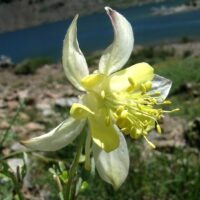
Aquilegia pubescens
Found on open, rocky slopes in the southern Sierra Nevadas in sub-alpine and alpine plant communities. Low rosettes of divided, blue-green foliage, sprout from a taproot. Flower stems rise 10 - 20 inches above the fragrant foliage and carry upward facing, nectar rich, long spurred flowers, perfectly positioned for pollinating hawk moths, hummingbirds and butterflies. The flower color is variable and runs the gamut from cream to yellow to pink, often in delicate hues rather than solid colors, except for an occasional pure white. Hybridizes freely with the native red columbine, which invites various shades of red to the flower color possibilities. Grows well in low elevation gardens, given light shade and summer water.

Aristolochia californica
Dutchman’s pipe vine is an interesting vine native to river, stream side and woodland habitats. Soft heart-shaped leaves and unusual purplish pipe-shaped flowers bloom in early spring. This deciduous twining plant will need some support if you wish it to grow upwards. Adaptable, but best with a little shade and moderate water. Slow to establish, we offer this adage to encourage patience: “The first year it sleeps, the second year it creeps and the third year it leaps”. Once established it will put on ample growth, easily covering a trellis or chain link fence. THE larval food source for the pipevine swallowtail butterfly. Deer resistant.

Arnica chamissonis
Native to moist meadows in mountainous regions of California and western North America. This delighful perennial grows 1 - 2 feet tall and wide with cheerful, bright golden-yellow daisies in early summer. The bright green, lance-shaped leaves sit in opposite pairs along them stems. Grow in full sun to light shade with decent draining soils and regular moisture. Said to have the same medicinal properties of its European cousin, but easier to grow. Flowers support bees, bumblebees and butterflies. Winter deciduous. Deer resistant.
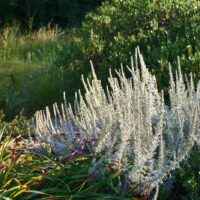
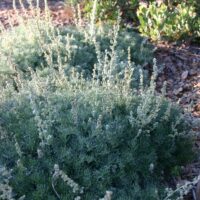
Artemisia pycnocephala ‘David’s Choice’
An exceptionally fine selection of a coastal native. Forms a dense silky mound of silvery foliage 4 - 6 inches tall and up to 2 ft. wide. The floppy flowering stems rise a foot above the foliage and are interesting but not real showy. Shear back for longer life. Sun and drought tolerant. Deer resistant.
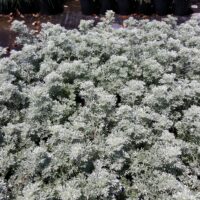
Artemisia pycnocephala ‘Dr. Seuss’
In deference to this selection’s whimsical form, we have named it in honor of the children’s author who truly embodies “whimsical”. Soft, silvery, ferny foliage slowly spreads across the ground on woody branches with unusually tall flower stalks reaching up to 2 feet in height. As the stalks arise, the base is thickly covered in the showy foliage, getting narrower as it approaches the flower buds, giving the plant its unusual form. The small flowers are pale yellow and open in late spring and into summer. Provide good drainage and plant in full sun to light shade. Deer resistant.
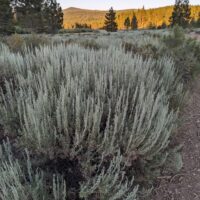
Artemisia tridentata
This long-lived, highly-aromatic shrub is emblematic of the American West, dominating high-desert landscapes east of the Sierras and along the Southern California and Baja coast. Its evergreen foliage is dense, silvery and held on tall stems that are woodier and more upright than the more coastal California sagebrush. In late summer, long flower stalks bear clusters of inconspicuous yellow blooms. Essential to wildlife in sagebrush ecosystems of the eastern Sierras and Great Basin, it also supports birds and bees in the garden setting. Although it can get quite statuesque, it averages 4-6 feet, with a rounded habit and architecturally twisty trunk. It thrives in well-draining soils with minimal water once established. This drought-tolerant species is excellent for erosion control and is nitrogen-fixing. Its fragrant leaves are deer resistant.
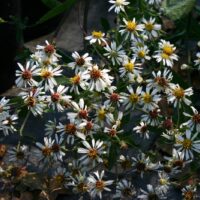
Aster (Eurybia) radulinus ‘Gilliam Creek’
This charming woodland aster makes its home in bright, dryish woods from the Channel Islands all the way up to the Oregon border and into the northern Sierras. Normally a shy, dainty little forest dweller, this selection from Sonoma County is far more robust, featuring large clusters of white-petaled daisies with white centers which turn yellow with age, and finally a deep maroon. Flower stalks reach up to 2 ft. high, much taller than is typical for the species. Serrated, deep green leaves form a high mat on this slowly spreading ground cover. An excellent plant for dry, woodland gardens, but will also tolerate moderate irrigation. One of the few excellent pollinator plants for the lightly shaded garden.
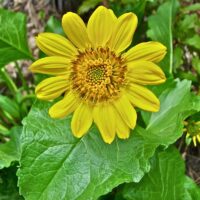
Balsamorhiza deltoidea
A bold and beautiful western native perennial, with bright-yellow, sunflower like blooms. Large, triangular shaped leaves rise from a deep taproot, forming a rosette a foot or so tall. Flower stalks rise mid to late spring, carrying large, yellow daisies which attract a myriad of pollinators. Best in full sun or light shade with good drainage, where it will be very drought tolerant once established. Care should be taken to allow plants to become dryish between waterings, though well established plants require no summer water. Historically used by native people for food and medicine. Attractive to bees and butterflies, and the seeds are relished by birds.
Berberis (Mahonia) aquifolium
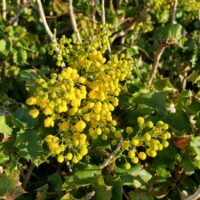
This attractive, western native evergreen has a long history in cultivation for good reason. Erect stems rise 4 to 7 feet or more tall and wide, spreading slowly by underground rhizomes to form dense clumps. Bronzy-red new growth gives way to dark-green, glossy leaves with spiny margins that are prickly to the touch. Cold winters can darken the foliage with purple-red tones. Late spring brings clusters of bright yellow, sweetly scented flowers. Edible blue-black fruits follow and are pretty and tasty. A useful and adaptable shrub in a hedge or a shrubby border. Takes full sun to part shade. Performs best with some afternoon shade in hot areas and moderate to infrequent water. A great habitat plant which provides cover, nectar rich flowers and fruits relished by all. Deer resistant.
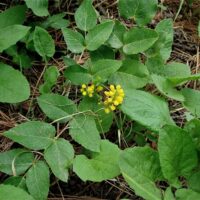
Berberis (Mahonia) aquifolium var. repens
This little cousin of the much larger Oregon grape only gets 1 - 3 ft. tall and spreads underground to create dense, evergreen drifts. The divided leaves have a matte finish with a grey-green color which turns purple-red with frost. Clusters of bright yellow flowers open in spring and are followed by deep blue "grapes" much loved by birds. The sweet-scented flowers are enjoyed by bees and butterflies. Provide full sun to shade and moderate to infrequent irrigation. Deer resistant.
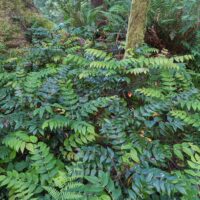
Berberis (Mahonia) nervosa
A handsome species with especially long, leathery, evergreen leaves. Grows to around 2 or more feet tall and spreads by underground stems. Yellow flowers in spring are born in upright clusters, followed by blue berries. Great woodland groundcover for full or partial shade with occasional to regular summer water. Deer resistant. Fruits eaten by robins, finches and towhees. The flowers have nectar for hummingbirds and bees.
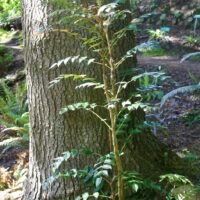
Berberis (Mahonia) nervosa var. mendocinoensis
The rare Mendocino longleaf mahonia comes from moist coniferous forests around Fort Bragg. Differs from the more diminutive longleaf mahonia in its unusual size: growing slowly to 5 ft tall or more and spreading to form narrow colonies. The pointed, leathery, deep green leaves, bronzy orange when young, provide a striking contrast to the bright yellow flower clusters produced in the spring. Attractive deep purple berries are a food source for birds. Needs shade and moderate moisture. Deer resistant.
Berberis (Mahonia) nevinii
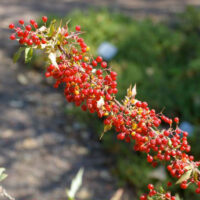
Nevin's barberry is a very rare southern California shrub with rigidly arching stems densely clothed in pointy silver gray leaflets. Heavy blooming with clear yellow flowers followed by heavy fruiting with bright red translucent fruit. 8 ft. by 8 ft. Does well in sunny well drained locations in the Bay Area. Great companion to matilija poppy and Salvia clevelandii. Very drought tolerant but best with occasional water. Deer resistant.
Calochortus luteus
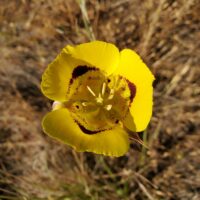
This showy mariposa lily offers vibrant, golden-yellow flowers, often with reddish brown markings at the base of each of the three petals. The upward facing, bowl-shaped flowers seem to hover over grasslands on stems reaching one to two feet tall. In early winter, grass like leaves emerge from the soil, followed by the butterfly-favored blossoms in late spring and early summer. Once the flowers are done, this native bulb will go dormant. Plant in full sun to light shade with well-draining soil. Allow to go completely dry in the summer. Said to be one of the easiest of the mariposa lilies to grow in gardens.
Carpenteria californica
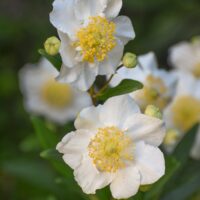
Long in cultivation, this native, evergreen shrub is rare in the wild, with a limited distribution in their native habitat. Forms a multi-branched shrub, 5 - 7 foot tall or more and nearly as wide, with dark green, leathery, lanceolate shaped leaves, which provides a dark foil to the brilliant white flowers. Late spring brings terminal clusters of white, 2 -3 inch, sweetly scented, anemone-like blossoms with yellow centers. An adaptable shrub which makes a striking specimen or foundation plant in a woodland area with morning sun and afternoon shade. Responds well to pruning and can be trained as an espalier. Drought tolerant, but appreciates occasional summer water. Flowers enjoyed by bees and butterflies.
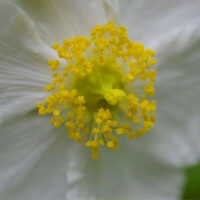
Carpenteria californica ‘Elizabeth’
A beautiful native evergreen shrub 5 - 7 ft. tall and 4 ft. or more wide. Blooms May-July with sweetly scented, pure white, yellow-stamened, camellia-like single flowers. This cultivar is especially free flowering with smaller than usual (2 inch) flowers in masses of up to 20 in each of the terminal clusters. Said to be more disease resistant. Has a narrow upright appearance which is unusual for a native shrub. Best with light shade or morning sun. Drought tolerant, but appearance is improved with some summer water. Does want decent drainage.
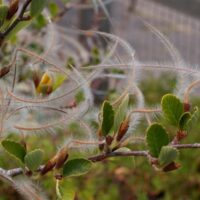
Cercocarpus betuloides
Mountain mahogany is an adaptable, semi-evergreen native shrub (8 to 12 ft. high and wide) or small tree with charming birch-like leaves set against silver-grey bark. Small, honey-scented flowers appear in spring followed by seeds with intriguing silky, curled, feather-like tails. The open habit contrasts nicely with evergreen shrubs or rock walls where its pleasing silhouette can be seen. Flowers are attractive to bees. Mountain mahogany is one of those rare native shrubs which can easily be pruned for narrow garden beds. Grows on dry slopes in chaparral or at the edges of woodlands. Provide full sun to light shade. It is surprisingly adaptable to diferent water regimes, from moderate irrigation to no water once established. Somewhat deer resistant.