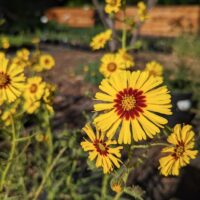
Madia elegans
Native ANNUAL growing 3-4 ft. tall with multi branching aromatic stems. Cheerful bright yellow daisies top the stems in the summer and can be solid yellow or may have a maroon spot at the base of each petal. Tarweeds are an important late nectar source for butterflies, bees and other beneficial insects. The seeds are relished by small mammals and birds, especially finches. Native to grasslands and open forests, well adapted to clay soils and full sun, perfectly adapted to our long, dry summers.
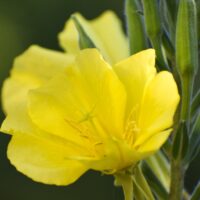
Oenothera elata ssp hookeri
Found in coastal areas from Sonoma County down to San Diego County. A vigorous, showy, winter-deciduous perennial that makes a dramatic border or background planting in full-sun gardens. In late summer into early fall, sprays of large, cheery, bright-yellow flowers with flat, papery petals top tall stalks up to 5’ high that are clothed with light-green lanceolate leaves. Blossoms provide a late season sweet treat for native butterflies and bees. As the name suggests, flowers fold and close during the heat of the day. May vigorously seed about. Moderate to occasional water once established.

Plantago maritima
From coastal bluffs up and down the California coast comes this charming little plantain. Starting in late spring and continuing through summer, small, greenish-yellow flowers flank the top of slender stems up to 6 inches tall. The dense rosettes of narrow, succulent leaves provide a striking accent in a rock garden or nestled in crevices between pavers or stones. A good container specimen. Recognized for its edible and medicinal uses. Plant in full sun to light shade. Tolerates low to regular moisture. May spread vigorously by seed.
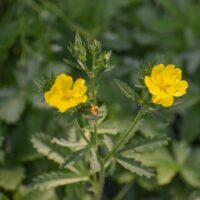
Potentilla gracilis
Prolific displays of bright yellow flowers resembling buttercups make this little cinquefoil a hit from spring through autumn. Flowers are held on two foot stems above low mats of dissected,dark green leaves. Native to mountainous areas throughout California. Provide full sun to light shade and give occasional to regular moisture. Will spread slowly by seed if exposed soil is nearby. A favorite of bees and butterflies. Deer resistant.
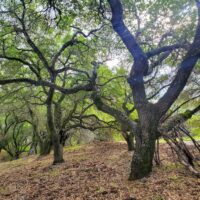
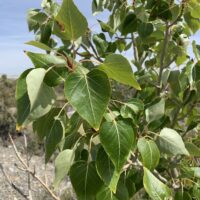
Quercus agrifolia
A beautiful and stately evergreen oak, native to many plant communities from Mendocino County south to Baja. One of the fastest growing California oaks and a versatile landscape subject as long as space allows. Young trees have a dense rounded canopy covered with thick, dark green, oval and convex leaves with spiny margins. Smooth gray bark becomes furrowed with age. Flowers are produced on short yellow hanging catkins followed by long tapered acorns. In time, develops a magnificent architecture with broad spreading branches. Planting native oaks provides beauty, shade, food and cover to a dazzling array of wildlife. Plant in sun to light shade. No additional summer water required once established.
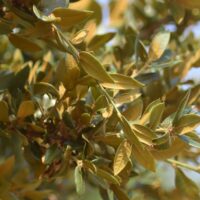
Quercus chrysolepis
A handsome evergreen oak with a rounded, spreading crown, 20 - 60 ft tall and wide. The leaves of its broad, low canopy are dark-green and shiny with fuzzy gold or silver hairs on the underside. Native from Oregon to Baja, it is the most widely distributed oak in California. Often grows near creeks, but requires only occasional water. Plant in full sun to light shade where it will be drought tolerant once established. A good choice for bank stabilization. Like other oaks, it is habitat powerhouse, offering food and cover for a huge variety of wildlife.
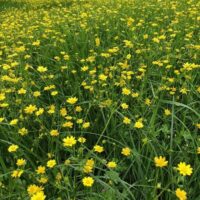
Ranunculus californicus
Cheerful harbinger of spring, this western native grows in vernally moist sites in a number of plant communities throughout California. Easy to grow perennial, sports bright green succulent foliage topped with slender stems 1 to 2 ft. tall and wide. A profusion of shiny, bright yellow blossoms bloom freely until soil dries out. Goes dormant with drought, returning in spring, often reseeding. Full sun to light shade. Excellent early pollen and nectar source, attractive to bees and other beneficials.
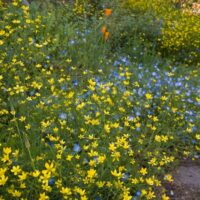
Ranunculus occidentalis
Native to open woodlands and meadows, this buttercup often occurs under deciduous oaks and buckeyes or on edges of forests. Perennial, with basal foliage, the flower stems rise 12 to 20 inches with bright yellow shiny petals. Has been surprisingly adaptable. Does fine with moderate summer irrigation, where it stays evergreen and long blooming. Once established can be allowed to go summer dry, where it will go dormant after setting seed, and returning with the winter rains.
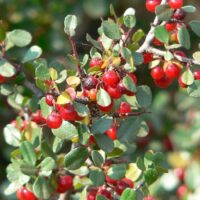
Rhamnus crocea
An under-used evergreen shrub native to chaparral, woodland, and coastal-sage scrub communities in California. Spiny redberry can grow up to 6 feet tall and wider, but is typically in the 2 - 4 ft. height range, spreading to 6 ft. or more across. Small, leathery, dark-green ovate leaves give this tough shrub a delicate look once established. The flowers on both male and female plants are inconspicuous, blooming from late winter into early spring. Female plants produce sporadic, jelly-like red berries. Great for dappled light under oaks, or a dry, shady woodland slope with California fescue. Can tolerate more sun near the coast, but prefers afternoon shade inland. Drought-tolerant once established. Larval host for a multitude of butterflies and moths, including the pale tiger swallowtail butterfly, Ceanothus silk moth, and Hermes copper butterfly. Deer resistant.

Rhamnus ilicifolia
A handsome evergreen shrub with small, dark green, leathery, serrated leaves. Found in the foothills and mountains of southern and central California, the Sierras and west of the Sacramento Valley up to 3,500 feet. Slow-growing, reaching 6-10 feet tall and wide, with a somewhat open, upright habit. Male and female plants are separate, producing inconspicuous yellow-cream flowers from spring into early summer. Female plants produce sporadic, gelatinous red fruits. Hollyleaf redberry can be planted in full sun to shade, but prefers a bit of relief from the afternoon sun in inland sites. It requires decent drainage and is drought-tolerant once established. Larval host for the pale swallowtail butterfly. Reportedly deer resistant.
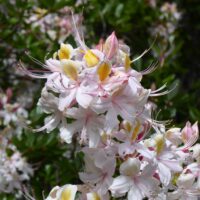
Rhododendron occidentale
A much sought after and admired native deciduous shrub found in moist places and stream banks in many plant communities throughout California. Leafs out in the spring with bright green foliage on a shrubby framework 3-6 ft. or more tall and wide. Glorious displays of fragrant azalea flowers in dense terminal clusters appear in late spring and can be pure white to pale pink often with yellow or orange markings. Needs decent light to bloom well but appreciates light shade, acid soils and regular water. Deer resistant
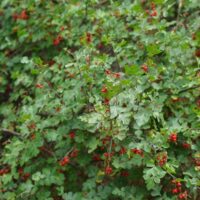
Rhus aromatica
An arching, mounding native shrub related to sugar bush and lemonade berry. Early spring brings a profusion of soft yellow flowers followed by orange-red fruits relished by wildlife. The leaves turn shades of yellow, orange and red in the fall. Plant in sun to light shade where it is drought, cold and heat tolerant. Useful addition to the naturalistic garden, as a shrubby groundcover, along seasonally moist streams, and for erosion control. Used by the native people for basketry.
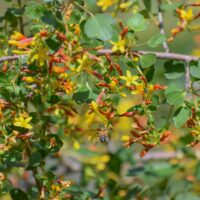
Ribes aureum
A vigorous deciduous shrub with masses of cheerful yellow blooms that appear in early spring. The light green foliage returns in late winter followed by delicate clusters of bright yellow tubular flowers that mature to a reddish-orange. Makes a wonderful addition to any habitat garden. Hummingbirds and bees adore the flowers, and the golden berries attract birds. Tolerates a variety of conditions from creeksides to dry woodland foothills to higher elevations - and even snow. Grows 6 to 8 ft. tall and wide. Where it finds water, it can spread by suckers, but is highly amenable to pruning. Adaptable to sun or shade, but does best with afternoon shade and moderate to occasional summer water.
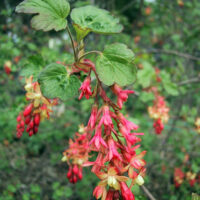
Ribes x gordonianum
A special hybrid flowering currant created in England by Donald Beaton in 1837 between our western U.S. Ribes sanguineum and the central U.S. Ribes odoratum. The fragrant flowers hang in dense dangling clusters in late spring and produce a dazzling color display with warm coppery red on the outside and yellow on the inside. The green maple-like leaves are deciduous. Robust and spreading, this currant grows to about 6 ft. tall and 8 ft. wide. Provide full sun to light shade and give moderate water.
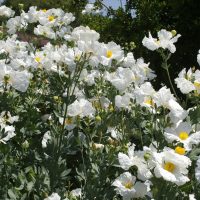
Romneya coulteri
A much admired, spectacular, shrub-like perennial, with a long history in cultivation. Can be both finicky to get going and extremely vigorous once established. The large flowers are made up of crinkly, crape paper-like, white petals with a shaft of yellow stamens in the center, at the top of long, gray-foliaged stems. Plant where its size and spreading won't be a problem and prune severely in winter. Height 4 -8 feet. Full sun. Drought and deer tolerant.
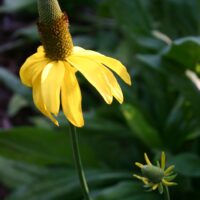
Rudbeckia californica
Large, bold perennial native to montane seeps and meadows where they receive regular moisture. The big leafy clumps can become very large growing 3 foot tall or more. Midsummer brings showy yellow daisies on tall stems with a distinctive long central cone and a skirt of three inch yellow petals. Plant in sun to light shade with regular water. Highly attractive to bees and other pollinators.
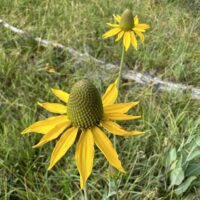
Rudbeckia glaucescens
This uncommon coneflower hails from the Klamath Mountains of northern California and southern Oregon. While similar in flower to the California coneflower, featuring yellowish-brown cones encircled with a skirt of long, yellow petals, this species has waxy leaves tinted a striking blue-gray. The flowers perch atop leafless stalks reaching 3 to 4 ft tall, rising above the large, lance-shaped leaves. A favorite of bees and butterflies. Even though this species normally occurs in serpentine soils, it grows easily in almost any soil type, as long as it is kept moist. Enjoys regular to moderate irrigation and full sun to part shade.
Salvia spathacea ‘Avis Keedy’
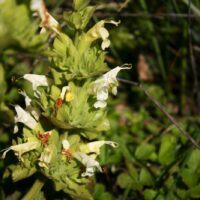
An striking yellow-flowered form of the normally magenta-flowered hummingbird sage, introduced by the Santa Barbara Botanic Garden. Discovered in an oak woodland in Santa Barbara County, this cultivar has unusual lemon yellow petals that fade to creamy white and are backed by lime green bracts. Forms the usual fragrant, spreading mat of large leaves topped with 2-3 foot tall flower stalks with distinctive whorls of flowers in the spring. Best with part shade unless directly along the coast and an occasional summer watering to keep it going through the summer. Without summer water will go summer dormant reviving with the rains. A bee and hummingbird favorite. Deer resistant.
Sambucus mexicana (nigra ssp. caerulea)
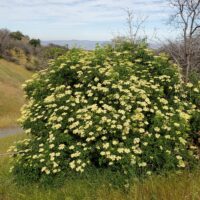
Our native blue elderberry, often seen on banks above rivers and streams, or even on somewhat drier slopes. A fast growing deciduous shrub or small tree 8 to 30 ft. tall with pinnately divided leaves. Creamy yellow flowers appear in late spring in flat-topped clusters, followed by blue berries. High on the birds’ favorite list! Ripe berries feed many species of birds. Moderate to infrequent summer water.
Sedum divergens
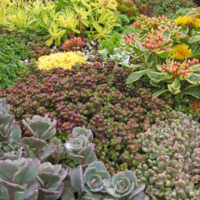
This is a little beauty. Mat-forming and evergreen, this succulent is native to California north to Alaska. Tolerant of wet winters, the shiny round bead-like leaves turn a dark red in full sun. Stays compact and slowly spreads, 2 - 4 inches tall, reaching about 18 inches in diameter. Blooms starry yellow flowers in summer. Great in rock gardens, planters, useful as an edge plant. Adapts to many soil types. Fully hardy and drought tolerant once established. We have this planted in our trough in front of the greenhouse.
Sedum spathulifolium
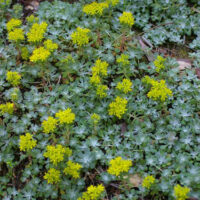
A mat forming native succulent often seen on rocky cliffs and shady banks in California’s Coast Ranges and Sierra Nevada north to British Columbia. Small, spoon-shaped leaves form flat rosettes where bright yellow star-like flowers appear in late spring and early summer. A natural for the rock garden or container plantings where they are best with part shade. Very drought tolerant.
Sedum spathulifolium ‘Cape Blanco’
A mat forming, western native succulent, often seen on rocky cliffs and shady banks in California’s Coast Ranges and Sierra Nevada north to British Columbia. Small, spoon-shaped leaves form flat rosettes where bright yellow star-like flowers appear in late spring and early summer. The cultivar 'Cape Blanco' was selected along the Oregon coast, for its chalky-white foliage. A natural for the rock garden or container plantings where they are best with part shade. Very drought tolerant.
Sedum spathulifolium ‘Purpureum’
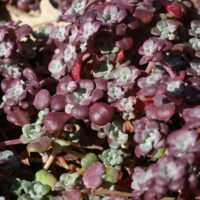
This distinctive form of the Pacific stonecrop features purple leaves which turn particularly dark in the winter. Bright yellow flowers are produced in late spring and early summer on short stems up to 4 inches high. This mat forming succulent grows in rocky crevices and shady banks in California’s Coast Ranges and Sierra Nevada north to British Columbia. The small, spoon-shaped leaves form flat rosettes. Needs excellent drainage and some shade, especially in the afternoon. A natural for the rock garden or container plantings where its diminutive nature can be appreciated. Very drought tolerant.
Sisyrinchium californicum
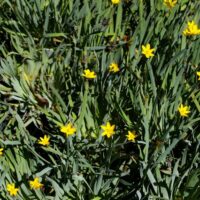
Native mostly to coastal areas where this easy perennial thrives in moist locations. From spring through to the end of summer, the bright yellow flowers rise above narrow, pale-green, iris-like leaves. Grows 6 inches to a 1.5 ft tall and at least a foot wide. Plant in sunny areas with regular water. Reseeds readily. Occurs from San Luis Obispo County north to British Columbia.
Solidago lepida v. salebrosa
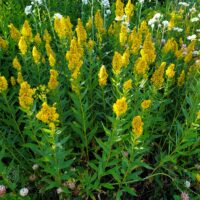
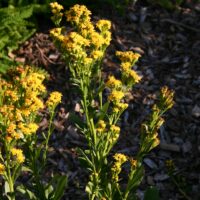
Golden-yellow, pyramid shaped inflorescences sit atop stems flanked with bright green leaves on this unusual native goldenrod. This selection is more compact and refined than the California goldenrod, with flower stalks reaching only about 2 feet tall and a spreading habit which is less aggressive. A superb plant to attract all sorts of bees and butterflies when it blooms in late summer and into autumn. Plant in full sun to light shade and water moderately to occasionally. This variety grows throughout western North America but is rare in California, only occurring in the northeast part of the state.
Solidago spathulata
Native to coastal strand and coastal scrub communities where it forms low mats of spreading bright green foliage. Summer brings flower stems a foot or so tall made up of small bright golden-yellow daisies. Full sun to light shade with some summer water. Tolerates heavy soils. The flowers support native bees, honey bees, beneficial insects and butterflies. It is a larval food source for the northern checkerspot butterfly.
Solidago velutina ssp. californica
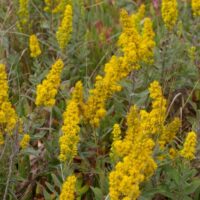
A showy and easy to grow late blooming native perennial. Spreads by creeping rootstocks where it can form a good-sized colony. Has spread slowly in our heavy clay soils with minimal water, but has the potential to spread aggressively in lighter soils especially with regular water. Late summer through fall brings slender wand-like flower stalks of golden yellow daisies 2 - 3 ft. tall which are visited by bees, butterflies and other insects. Plant in a sunny area where it is drought tolerant, but some supplemental summer water keeps it blooming longer.
Tanacetum bipinnatum (camphoratum)
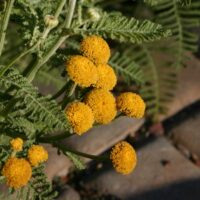
Native to sand dunes from the Bay Area north, this shrubby evergreen groundcover spreads quickly to create drifts of soft fern-like foliage. Yellow, button-shaped flowers form small clusters atop stalks up to 2 ft. tall. Enjoys full sun to light shade. Tolerant of clay soils and excessive moisture but will thrive with only occasional water once established. Reducing irrigation can temper this tansy's somewhat aggressive nature. Dune tansy has a strong scent of camphor and is valued for its medicinal uses. Beautiful when combined with ceanothus, Douglas iris and other plants from our coastal areas. Good for erosion control.