Thalictrum fendleri v. polycarpum
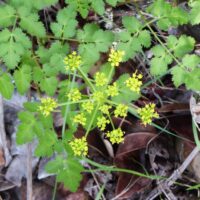
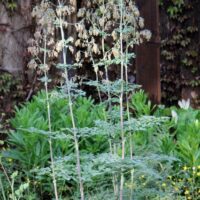
This native meadowrue has charm and adds a delicate, graceful quality to a woodland setting. Finely cut bluish-green foliage unfurls from purplish shoots. The tiny unisexual flowers are produced atop 2 - 5 ft. tall stalks on separate plants. The male flowers are showier with dangling cream-colored stamens; the females are clusters of greenish pistils. Useful in the woodland garden where it will thrive with some summer water or manage on winter rainfall. One way or the other it goes dormant in late summer where it can be allowed to go dry. Group several plants for best effect.
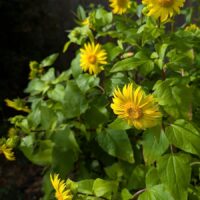
Venegasia carpesioides
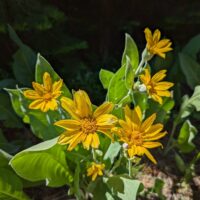
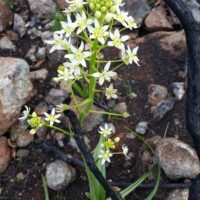
Native to coastal areas of central and southern California, the canyon sunflower brightens the garden with abundant blooms from spring into late summer. The daisy-like, golden-yellow blossoms are 2 in. wide and set against light-green, almost heart-shaped leaves. This 3 – 5 ft.-tall-and-wide, showy shrub is particularly useful for its pop of color in dry shade under oaks. It will also accept quite a bit of moisture, and full sun in warmer areas! Rarely offered in Northern California nurseries, it does well in our area, but may retreat back to the ground after hard frosts, only to re-emerge in spring. If kept dry through the summer, plants may go dormant until moisture returns.
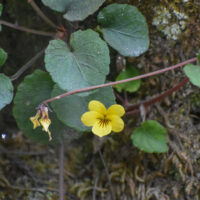
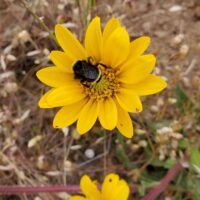
Wyethia angustifolia
Few hikers can resist the bright, golden-yellow flowers of this showy native sunflower relative. The large, 2” - 3” wide flowers perch atop stems 1.5 - 3 ft. tall in the spring. Bright green, lance-shaped leaves form low rosettes at the base of the flower stalks. This mule ears grows in sunny meadows and at the edges of woodlands. Perhaps the most garden tolerant of all of the mule’s ears, accepting occasional irrigation once established but not requiring it. Does not mind soils with poor drainage. A great plant for bees, butterflies and birds. Will go dormant once it finishes flowering but will re-emerge after the rain returns.
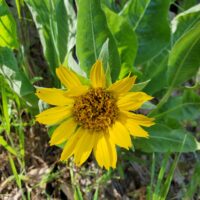
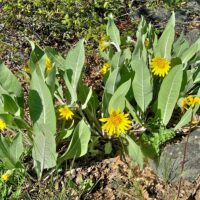
Wyethia helenioides
One of our less common native Wyethia, gray mule ears is a special find in nurseries. Strikingly large, upright leaves frame flower stalks that resemble little sunflowers with their wide golden discs and halo of yellow ray petals. Endemic to California, this radiant perennial wildflower is a welcome sight in woodland meadows of the Northern and Central Coast Ranges. A covering of silvery hairs on the broad, erect leaves gives the species its name. Lush, gray-green foliage emerges mid-winter followed by a spring floral display from March through early summer. Low-growing at up-to 2 feet tall and wide, it makes an impression greater than its stature. Eventually goes dormant as fall approaches. Does well in the garden if given decent drainage, good light, and minimal water once established. Bees and butterflies adore the flowers.