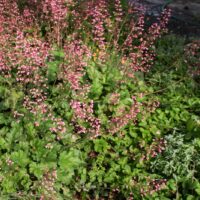
Heuchera ‘Old La Rochette’
Here is a wonderful, often hard to find Heuchera hybrid. Grows into robust clumps of rounded leaves to around 1 ft. tall and 1 - 2 ft. wide. 2 ft. tall flower stalks carry hundreds of soft pink blossoms in the spring, and often intermittently through the summer. Sturdy perennial for part shade and a little summer water. This species attracts hummingbirds.
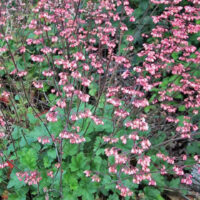
Heuchera ‘Rosada’
Listed as one of U.C. Davis Arboretum’s “All Stars”, this heuchera hybrid is tough and dependable. Forms an attractive mound of evergreen foliage 10 - 12 inches tall. A long display of tall flower stems covered with creamy-pink dainty bells begin in the spring and often continue into the summer. Best with part shade and moderate to occasional summer water. Attracts hummingbirds.

Heuchera ‘Santa Ana Cardinal’
An outstanding hybrid that is vigorous and free flowering. Compact clumps of foliage topped with 2 ft. tall flowering stems with vibrant rose-red blossoms over a long period. Plant in cool full sun to light shade with moderate to occassional summer water once established. This species attracts hummingbirds.
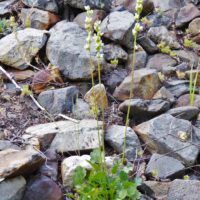
Heuchera cylindrica
Native to the northern mountains of California, the roundleaf alumroot is distinctive for its dense clusters of white to cream-yellow flowers held on vertical stems reaching 1 to 2 ft tall. Round leaves grow in tight mounds up to 8 inches high and 2 ft wide. Combine with pink Heucheras, Iris and small ferns for an attractive woodland display. Needs part shade and decent drainage. Attracts hummingbirds. Drought tolerant.
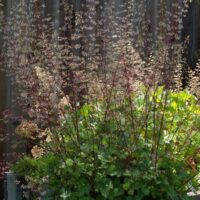
Heuchera micrantha
This is our common alum root which is usually seen on shady cliffs and roadbanks adjacent to forests. Easy to grow in garden situations. Forms low mounds of foliage topped with dainty white flowers on long stems. Likes moisture, but tolerates considerable drought and takes deeper shade than most Heuchera species. This species attracts hummingbirds.
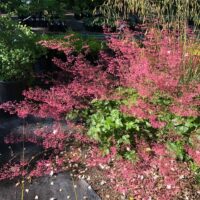
Heuchera micrantha ‘Martha Roderick’
Here’s a pink flowered form of the normally white flowered native alum root. Foliage forms handsome clumps topped with slender stalks 1 - 1 1/2 ft. tall of tiny pink flowers. Excellent in woodland setting for border, slope or rock garden. Drought tolerant but best with a little water. This species attracts hummingbirds.
Heuchera pilosissima
Native to the coast from Mendocino to Santa Barbara Counties, this perennial forms compact, evergreen clumps of light-green scalloped leaves. Stocky flower stems 12 – 16 inches long carry small white-pink flowers in early summer. Perfect in coastal areas where it can grow in sun to light shade and will be drought tolerant once established. Must have part shade and some summer water inland. Plant in mass for a nice ground cover in a woodland setting or in mixed plantings with shrubs and ferns. Attracts hummingbirds.
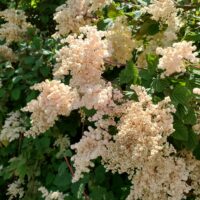
Holodiscus discolor
An elegant, deciduous, native shrub growing 5 - 6 ft. tall or more, depending on the site, and at least as wide. Beautiful, cascading clusters of creamy white flowers hang from branch tips in early summer. The fragrant flowers attract pollinators and a number of butterflies use it as a host plant. Best with light shade. Drought tolerant, but will accept some moisture.
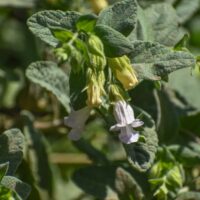
Lepechinia calycina
A super fragrant sage relative with a wide distribution in California’s coastal ranges. White to pale pink or lavender, open-mouthed, tubular flowers appear in late spring and early summer. Fuzzy, grey leaves clothe the plant all year but less densely in the winter. Can grow 2 - 4 ft. tall and wide with a rather lank form which can be improved with regular pinching. A fast growing perennial for sunny to lightly shaded areas with good drainage. Very drought tolerant once established. Attracts hummingbirds. Deer resistant.
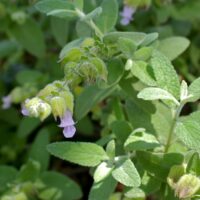
Lepechinia calycina ‘Rocky Point’
An excellent form of a native pitcher sage selected by Tilden Botanic Garden. Features a more compact habit, growing 2 ft. or more tall by 4 ft. or so wide. Pale lavender, tubular flowers appear in spring and summer, drawing hummingbirds into the garden. The fragrant, felted foliage is basically evergreen but is less dense in the winter. Plant in full sun to very light shade and provide good drainage. Very drought tolerant once established and deer resistant.
Lepechinia fragrans
This fragrant sage relative is endemic to Southern California, native to chaparral and woodlands of the Santa Monica and San Gabriel Mountains and the Northern Channel Islands. Softly hairy and strongly fragrant, this woody perennial grows around 4 - 5 feet tall and wide. Showy, lavender-purple, wide-mouthed, tubular flowers bloom in mid to late spring, attracting bumble bees and hummingbirds. Will thrive in full sun to light shade, where it will be drought tolerant once established. Pinching back foliage helps form a dense growth habit. Deer resistant.
Lepechinia fragrans ‘El Tigre’
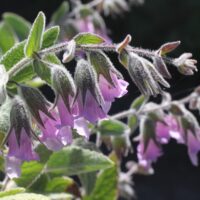
A wonderful addition to the dry garden, this rare fragrant pitcher sage is native to the Channel Islands off of California but is quite happy in Sonoma County gardens. Forms a shrub 4 - 5 ft. tall, with soft lavender flowers in the spring hanging gracefully from slender, arching stems. The long, angular leaves are colored soft, gray-green and covered in white hairs. This selection was chosen for its more saturated flowers with darker calyces. Adored by hummingbirds and bees. Plant in full sun on the coast, but provide partial shade inland. Needs good drainage and is drought tolerant once established. Deer resistant.
Lewisia cotyledon
Named for Meriwether Lewis, this attractive succulent is native to higher elevations in Northern California and Southern Oregon, typically granite outcrops. The flowers which usually emerge in spring and summer, can range in color from yellow to orange to pink to red. These frost hardy plants form evergreen rosettes, approx. 8 - 10” tall by a foot or so wide. Lewisias need very good, sharp drainage, are heavy feeders, and love a granite rock mulch. They like to be grown sideways, in rock walls, where their crown can drain any moisture away. Plant somewhat high in a fast draining mix and feed every now and then. Morning sun, afternoon shade is best inland. Water as you would any succulent, sparingly, and keep the crown high and dry.
Lewisia cotyledon – Sunset Strain
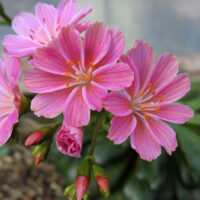
Named for Meriwether Lewis, this attractive and showy succulent is native to higher elevations in Northern California and Southern Oregon, typically on granite outcrops. Abundant floral sprays arise in spring and summer on stalks reaching 6-10" above evergreen foliage. This seed strain has produced a rainbow of flower colors, including: yellow, white, orange, pink and red. The frost hardy rosettes grow to approx. 8-10” tall by a foot or so wide. Lewisias need very good, sharp drainage, and love a granite rock mulch. They like to be grown sideways, in rock walls, where excess moisture drains away. Plant somewhat high in a fast-draining mix and feed every now and then. Morning sun with afternoon shade is best inland. Water sparingly, as you would any succulent, and keep the crown dry.
Lewisia longipetala ‘Little Peach’
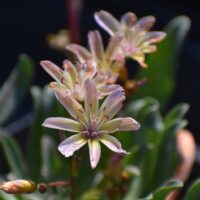
Large flowers with long petals colored peachy apricot make this selection of our native cliff maids a knockout in the garden. Round clusters of narrow, succulent leaves form patches up to about 8 inches wide. The irresistible flowers emerge en masse from between the leaves on slender stalks up to about 10 inches high. A very long bloomer, beginning in spring and often re-blooming in summer. Works really well in a container with lean, fast draining soil, placed in bright partial shade. Water sparingly. For best results, mulch with granite chips and fertilize occasionally. Lewisias are native to the mountains of California and beyond, where they grow in rock cliffs. An excellent choice for the rock garden.
Lewisia longipetala ‘Little Raspberry’
The parent of this strain of Lewisias is found in rocky outcroppings of the Sierra Nevada Mts. Forms low, fleshy rosettes of tough evergreen leaves. Raspberry-red flowers bloom on short stems above the leathery foliage in the spring into summer and often again in the autumn. Requires good sharp drainage and rock mulch, but appreciates partial shade in hot summer areas. Perfect for rock walls, rock garden, containers and troughs. Water as you would any succulent, sparingly, and keep crown high and dry. This is not the plant for your perennial border, but it is easy to make happy in containers.
Ligusticum apiifolium
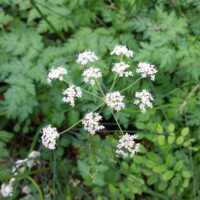
We love members of the carrot family, with their flat-topped clusters of star-like flowers and excellent habitat value. This species is no exception, though it is rarely grown in nurseries. In spring the clear-white flowers appear in delicate umbels on slender stalks 2 - 4 ft. high. The ferny, bright-green foliage stays close to the ground, rarely reaching more than a foot tall. Occurs in the Coast Range from the San Francisco Bay Area northwards. You may find this species in full sun near the coast or in bright woodlands further inland. Needs decent drainage and occasional to infrequent summer water.
Lilium pardalinum
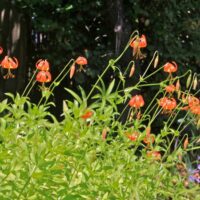
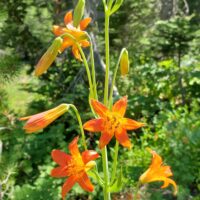
An elegant and beautiful native from moist places and along stream banks in many plant communities from southern Oregon to southern California. A reliable species easily growing 4 ft. tall or more, slowly increasing its width over time. The Turk’s cap style flowers bloom in summer and are orange with red tips and maroon spots. Dies back to the ground in winter. Prefers fertile, well drained soils. Where summers are cool you can plant in full sun. Elsewhere plant in filtered sun, light shade or afternoon shade. Requires moderate summer water.
Lilium pardalinum ‘Giganteum’
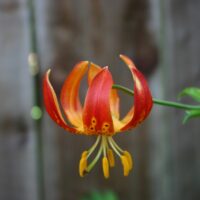
A towering lily reaching up to 7 feet tall with orange and crimson flowers 3 to 4 inches wide. Who can resist that! Believed to have been discovered along the Van Duzen River in Northern California and thought to be a natural cross between L. humboldtii and L. pardalinum. The large stalks are crowned in summer by layers of flowers up to 30 in number with whorls of large leaves ascending up the base. Forms colonies over time to dramatic effect. Plant in full sun near the coast but protect from the hot afternoon sun, inland. Needs moderate water but is intolerant of soggy soils. Tolerates drier soil than the typical leopard lily.
Lilium pardalinum (Gualala River)
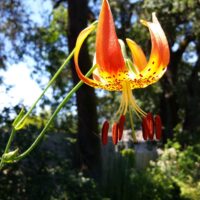
An elegant and beautiful native from moist places and along stream banks in many plant communities from southern Oregon to southern California. A reliable species easily growing 4 ft. tall or more, slowly increasing its width over time. The Turk’s cap style flowers bloom in summer and are orange with red tips and maroon spots. Dies back to the ground in winter. Prefers fertile, well drained soils. Where summers are cool you can plant in full sun. Elsewhere plant in filtered sun, light shade or afternoon shade. Requires moderate summer water.
Lilium pardalinum ssp. pitkinense
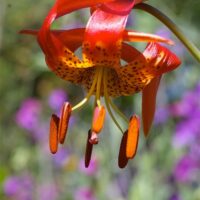
This is the local rare subspecies of the leopard lily, threatened by habitat loss, grazing, competition with Himalayan blackberries, and collecting. Ours are responsibly grown by scale division from seed grown parent plants. A beautiful turks cap lily with intense orange-red reflexed petals revealing maroon spots. Needs moisture until it's through flowering and protection from gophers. Bright shade or morning sun with afternoon shade is best. This species attracts hummingbirds and butterflies.

Lomatium californicum
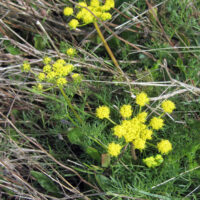
Native to lightly shaded banks or brushy slopes, this interesting native forms clumps of beautiful, ferny, blue-green leaves. The foliage has a pungent celery flavor and grows 1 ft. or so tall. The yellow-green flowers form broad umbels that reach up to 4 ft. high. Good for brightly lit woodlands that go summer dry. Plant with Heucheras, California fescue and Iris. A larval food source for the Anise Swallowtail butterfly.
Lomatium dissectum
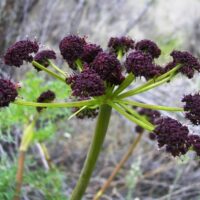
This carrot relative features clusters of small burgundy or yellow flowers held in round clusters in open umbels. Tall, slender stalks about 3 - 4 ft high support the blossoms above broad, finely dissected leaves. Pollinators love the flowers and the anise and indra swallowtail butterflies depend on the leaves as a food source for the developing caterpillars. Grows throughout much of California in hot, inland areas. Plant in full sun to light shade and provide little to no water once established. Needs excellent drainage. A rarity in nurseries.
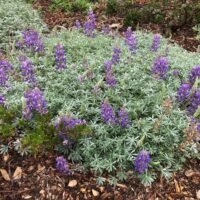
Lupinus albifrons var. albifrons
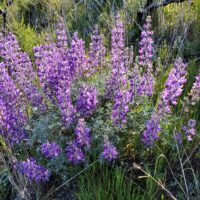
A popular California native lupine growing to around 3 ft. tall and wide. Beautiful silver foliage with intense blue-purple flower spikes in the spring. To thrive, this lupine needs full sun to very light shade and excellent drainage. Little to no water once established. Vulnerable to snail and slug predation. An excellent species for native pollinators and a larval host for several species of butterflies. Deer resistant.
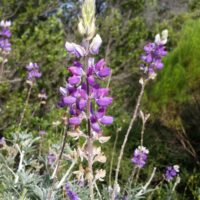
Lupinus albifrons var. collinus
A beautiful low growing form of the silver bush lupine. Forms a mat of gorgeous silvery foliage 12 inches or so wide with spires of rich blue flowers rising 12-18 inches tall in the spring. Plant in full sun to very light shade with well drained soil. Flowers attract a wide array of beneficial insects, especially bees of all types. Drought and deer resistant.
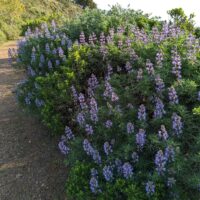
Lupinus albifrons var. douglasii
This variety of the popular silver bush lupine has the same wonderful wands of blue-purple flowers in spring and summer but also features larger, silvery leaves covered with fine hairs. The plant itself is also larger, reaching 3 – 5 feet in height. This variety grows from Marin County down to the Channel Islands. Plant in full sun with excellent drainage and little to no summer water once established. A nectar species for native bumblebees and hummingbirds. This is a butterfly host plant for several blues, hairstreaks and the northern cloudy-wing. Deer resistant.
Lupinus arboreus – blue flowered form
Native to coastal areas from Sonoma Co. down to Southern California, the blue bush lupine is distinctive for its grand size (reaching up to 6 ft. tall) and racemes of scented, blue and white flowers. The showy blooms which appear in spring and continue into summer are an excellent nectar source for native bees and hummingbirds. Various butterflies use this species as a larval host plant. The seeds are enjoyed by birds. Grow in full sun with good drainage and occasional to no irrigation once established. Not suitable for areas which get very cold in the winter. Not suitable for Mendocino Co. northwards where it can invade natural areas. Deer resistant.
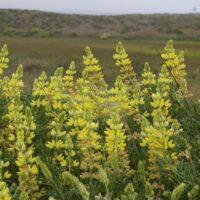
Lupinus arboreus – yellow flowered form
Native to coastal plant communities from Sonoma County south to Ventura County. Showy, fragrant, clear-yellow flowers in long, dense spikes in mid spring and into summer. A fast-growing, floriferous shrub, 3-6 ft. tall and wide. Excellent choice for coastal areas in full sun with good drainage. Not suggested for gardens in coastal Mendocino County due to its ability to quickly naturalize and take over fragile plant communities. Drought and wind tolerant. Lupines have great habitat value, offering nectar for pollinators and nourishing seeds for birds. Great for hummingbirds and a larval food source for various butterflies. Deer resistant.