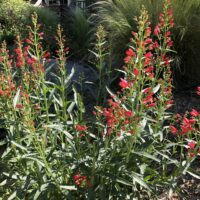
Penstemon barbatus ‘Riding Hood Red’
Trumpet-shaped blossoms of coral-red arise on thick stems up to 2 ft. high on this Dutch selection of the beardlip penstemon. Originating from the American Southwest, this superlative species offers flowers from late spring to the end of summer, enticing hummingbirds, bees and butterflies into the garden. Light green, lanceolate leaves grow densely at the base and climb up the stout stalks. This selection has proven to be very garden tolerant, liking full sun and moderate to infrequent irrigation.
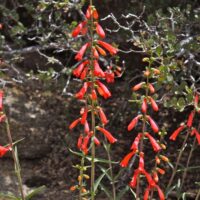
Penstemon centranthifolius
Custom made for hummingbirds, this Penstemon sports an abundance of bright-red to orange-red tubular flowers from late spring into summer. Native to dry habitats in the North Coast Ranges south to Mexico and east to the Southern Sierra, growing in chaparral and openings in woodlands below 6000 ft. Thick, blue-green leaves form a rosette 1 – 2 ft. tall and wide. Long flower spikes rise 2 – 4 ft. above the waxy leaves with many narrow, tubular, scarlet blossoms. Likes full sun, lean soils and good drainage. Drought and cold tolerant. Hummingbird and butterfly favorite.
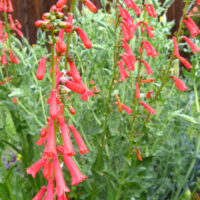
Penstemon eatonii
Adaptable and beautiful perennial native to the western United States including southeastern California. Narrow, leathery leaves form an evergreen rosette of foliage. Flower stalks rise 2-3 ft above the foliage. This form has brilliant red tubular flowers lining the erect stems in early summer. Requires good drainage, full sun to light shade and occasional to little summer water. Tolerates winter cold to 18 degrees and drought once established. Hummingbird favorite.
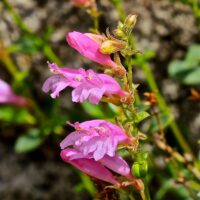
Penstemon newberryi
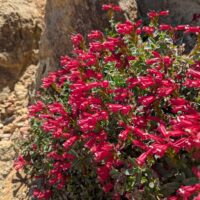
As the common name implies, this beauty is native to the mountains of California, Oregon and Nevada, where it grows in rocky habitats at high elevations. Forms an evergreen mat, under a foot tall with thick, leathery leaves and gorgeous magenta-pink tubular flowers, in mid to late spring. Good drainage is a must for success and growing in a container is an option for those with heavy soils. Full sun to very light shade with occasional summer waterings. Can be challenging to cultivate, but well worth the extra effort. The showy flowers are highly attractive to hummingbirds and butterflies. Said to be deer resistant.
Penstemon newberryi v. sonomensis
This rare, perennial, inland beauty, found only in Sonoma, Napa, and Lake Counties, is a great addition to the dry, inland rock garden. A low mat of small, gray-green, succulent-like leaves gives rise to 5-12” stalks topped with clusters of chunky, tubular, magenta-red flowers with white, fuzzy throats and reproductive structures. Mature plants are no more than 2' wide. A native bee and hummingbird magnet. Plant in full sun with decent soil drainage. Little to no water once established.
Penstemon palmeri
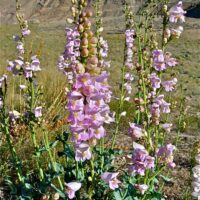
Showy, grape-scented, pale pink flowers top blue-green, succulent-like foliage on vertical stalks reaching an astonishing 4 to 5 ft. in height. The bulbous flowers have given rise to the common name, ballon flower. Native to desert mountains of southern California and throughout the western United States. This penstemon is attractive to a multitude of pollinators, especially hummingbirds. Plant in full sun to light shade and provide good drainage. Drought tolerant once established. The tall but narrow flower stalks make this penstemon useful in narrow spaces where height is desired.
Penstemon rostriflorus
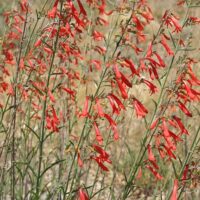
A wonderful addition to the dry garden, bringing late summer color through abundant, bright red, tubular flowers. Growing 2 - 4 feet tall and wide, with attractive, glossy foliage, that takes on red and bronze tones in winter. A late blooming Penstemon, beginning in July, provides copious nectar for hummingbirds as well as bees, butterflies, and moths. Tolerant of wide range of soils and conditions, plant in full sun to light shade with occasional water. Drought tolerant once established.
Perideridia kelloggii
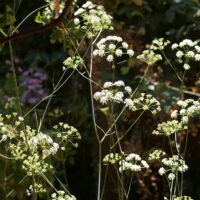
An interesting and rarely cultivated native perennial that grows in grasslands and meadows in central to northern California and the Sierra Nevada foothills. Narrow leaves emerge in the spring giving way to lovely 4 ft. tall flowering stems topped with umbels of delicate white flowers in the summer. Looks particularly nice in mass and livens up a meadow or grassland planting that may be waning in summer. Entice the anise swallowtail butterfly with a NATIVE larval food source. Plant in full sun to light shade with a little water. Allow to go dry after flowering.
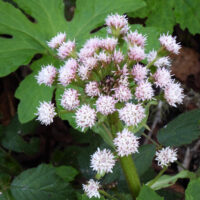
Petasites frigidus var. palmatus
A bold, beautiful and AGGRESSIVE creekside native, found in coastal and montane regions in California, north to Alaska, where it grows along shady creek banks. The large, almost tropical, palmate leaves spread from thick creeping rootstocks to form large colonies. Flowers before the foliage fully emerges in the spring with flat topped clusters of white to pink flowers on 1-2 ft. tall stems. Requires shade and plenty of water and is useful as a soil stabilizer. To control its spreading nature, use in containers or in contained areas. It won't spread into areas which are dry. Dies back to the ground in the winter. Flowers attractive to a wide range of beneficial insects.
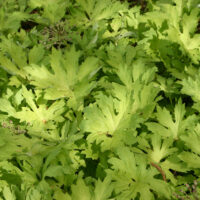
Petasites palmatus ‘Golden Palms’
Here is an exciting introduction of the western coltsfoot with wonderful golden foliage. Native to streamsides in low elevation forests, the broadly palmate leaves spread by creeping rhizomes. Careful thought should be given to its placement as it can be invasive. This bold foliage plant is great in containers or contained areas with regular water and part shade. Dies back to the ground in winter.
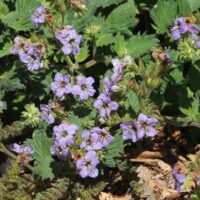
Phacelia bolanderi
Easy to grow perennial for part shade and a little summer water. Native to slopes and canyons of coastal forests in northern California. Forms low mounds of soft foliage 6 - 8 inches tall by 2 ft. or so wide. Pretty powder blue-purple one inch flowers late spring into summer offer nectar to hummingbirds, bees, and butterflies. The seeds are enjoyed by songbirds. Though somewhat short-lived, it often reseeds. Appears to be deer resistant.
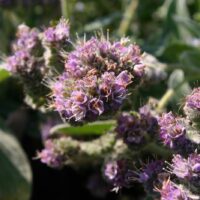
Phacelia californica
A low elevation species inhabiting bluffs, open slopes, road cuts and canyons of our inner and outer Coast Ranges down through the central coast. Forms perennial clumps of crinkled gray leaves. Stout stems rise above the rosette one foot to 18 inches tall with large coils of lavender flowers. Excellent rock garden subject. Plant in sunny areas with good drainage where it will be drought tolerant, and will do fine with a little summer water. Phacelias are great for attracting bees and butterflies.
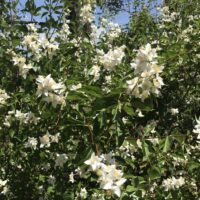
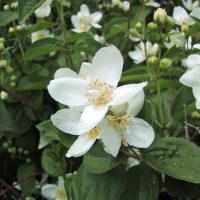
Philadelphus lewisii ‘Covelo’
Sweetly fragrant, pure white blossoms with yellow stamens cover this desirable, deciduous native shrub in late spring, attracting bees and butterflies. Reaches to 8 ft. tall and wide with a vaguely umbrella shape. This selection is somewhat denser than 'Marjorie Schmidt', in both foliage and flower, with leaves that are less serrated. Enjoys full sun to light shade and moderate to occasional summer water. Tolerant of clay soil. Works well in a conatainer.
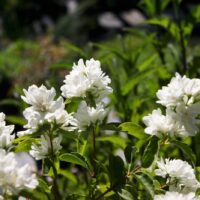
Philadelphus lewisii ‘Goose Creek’
This unusual selection of our native mock orange offers fully double flowers! We aren't usually fans of extra petals on our flowers, but this selection is quite appealing, with blossoms looking like fluffy snowballs held along the stems in late spring. This form was discovered near the Smith River in Del Norte County. Mock orange is a large deciduous shrub up to 8 ft tall and wide with sweetly fragrant, white flowers in late spring and early summer. Useful as a specimen or in mixed plantings. Sun to light shade, moderate to little water when established. A good container plant and clay tolerant.
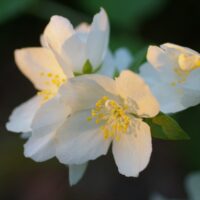
Philadelphus lewisii ‘Marjorie Schmidt’
This native mock orange was selected by Roger Raiche and Ron Lutsko in Shasta County. It caught their eye while driving along Route 36 west of Red Bluff, as being larger-flowered and more floriferous than surrounding shrubs. Large deciduous shrub up to 8 ft tall and wide with fragrant white flowers in early summer. Sun to light shade, most soils, moderate to little water once established. Flowers attractive to bees and butterflies.
Physocarpus capitatus
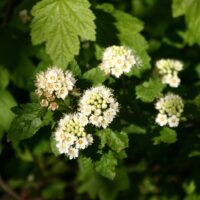
Handsome, deciduous shrub favoring wooded streamsides in California. Grows vigorously 4 - 8 ft. tall and wide. After leafing out in the spring, the shrub looks spiraea-like, covered with small clusters of white flowers followed by red capsular fruits. Best with light shade and some summer water, but will accept full sun in cooler areas. Keep bushy and in bounds with pruning.
Physocarpus capitatus ‘Tilden Park’
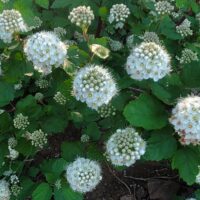
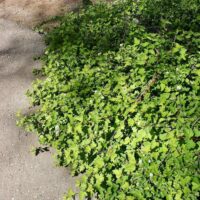
A rare and delightful prostrate form of the native ninebark from San Bruno Mountain. Makes a sturdy groundcover about 3 ft. tall and spreading to at least 6 ft. wide, featuring lush, bright green, maple-like leaves with white flower clusters in the spring. The blossoms give way to bright red seed pods in the summer. Sun to light shade with moderate water, but will tolerate dryish conditions in part shade once established. Clay tolerant.
Ranunculus californicus
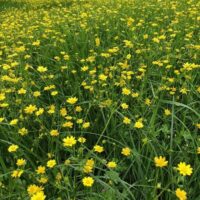
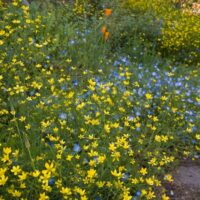
Cheerful harbinger of spring, this western native grows in vernally moist sites in a number of plant communities throughout California. Easy to grow perennial, sports bright green succulent foliage topped with slender stems 1 to 2 ft. tall and wide. A profusion of shiny, bright yellow blossoms bloom freely until soil dries out. Goes dormant with drought, returning in spring, often reseeding. Full sun to light shade. Excellent early pollen and nectar source, attractive to bees and other beneficials.
Ranunculus occidentalis
Native to open woodlands and meadows, this buttercup often occurs under deciduous oaks and buckeyes or on edges of forests. Perennial, with basal foliage, the flower stems rise 12 to 20 inches with bright yellow shiny petals. Has been surprisingly adaptable. Does fine with moderate summer irrigation, where it stays evergreen and long blooming. Once established can be allowed to go summer dry, where it will go dormant after setting seed, and returning with the winter rains.
Rhododendron macrophyllum
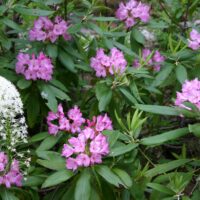
One of the glories of our coastal redwoods forests, this evergreen rhododendron features clusters of large flowers in the spring which can range in color from deep rose to pale pink. Native from the Big Sur Coast north to Washington. In the wild, this open branched, big leaved shrub can reach a height of 13 feet. Plants in the garden tend to be much smaller, not usually exceeding 8 feet with a slightly narrower width. While somewhat temperamental in cultivation, success can be achieved with dappled shade, well draining soil rich in organic matter and moderate to regular water. Deer resistant.
Rhododendron occidentale
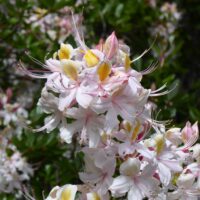
A much sought after and admired native deciduous shrub found in moist places and stream banks in many plant communities throughout California. Leafs out in the spring with bright green foliage on a shrubby framework 3-6 ft. or more tall and wide. Glorious displays of fragrant azalea flowers in dense terminal clusters appear in late spring and can be pure white to pale pink often with yellow or orange markings. Needs decent light to bloom well but appreciates light shade, acid soils and regular water. Deer resistant
Ribes aureum
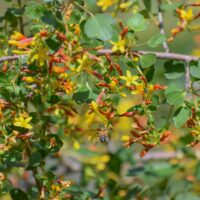
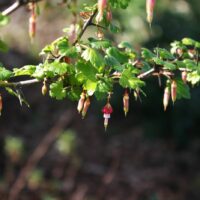
A vigorous deciduous shrub with masses of cheerful yellow blooms that appear in early spring. The light green foliage returns in late winter followed by delicate clusters of bright yellow tubular flowers that mature to a reddish-orange. Makes a wonderful addition to any habitat garden. Hummingbirds and bees adore the flowers, and the golden berries attract birds. Tolerates a variety of conditions from creeksides to dry woodland foothills to higher elevations - and even snow. Grows 6 to 8 ft. tall and wide. Where it finds water, it can spread by suckers, but is highly amenable to pruning. Adaptable to sun or shade, but does best with afternoon shade and moderate to occasional summer water.
Ribes californicum
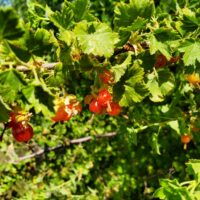
Undemanding, winter blooming, deciduous shrub, native to Coast Range mountains of California, from Mendocino County south to Orange County. Excellent choice for habitat gardens, where it provides abundant flowers and fruits plus thorny, protective cover. Variable in size, this spiny shrub can grow 4 - 6 ft. tall and wide. The pendant flowers are tiny but numerous and charming on close inspection. The tubular flower parts are white and extend beyond the reflexed red sepals, and are highly attractive to hummingbirds and other pollinators. Red, bristly, globular fruits follow and are adored by birds. The bright green leaves often take on striking crimson colors in the late summer before going dormant with drought. Host plant to several butterfly species as well as the white-lined sphinx moth. Best with light shade and a little irrigation, though once established it is completely drought tolerant.
Ribes divaricatum var. pubiflorum
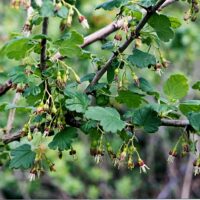
Native to coastal scrub, moist woods and shady canyons of the Pacific coast from British Columbia south through much of coastal California. This gooseberry is perhaps the most tasty of all of our native Ribes. The berries have the added benefit of being free of thorns. Forms an arching shrub 3-6 ft. tall and a bit wider with thorns at the leaf nodes. The tiny flowers are composed of reddish sepals and white petals that dangle beneath the branches and are attractive to hummingbirds. The small, blue-black berries are relished by birds. Plant in light shade with some summer moisture. Will tolerate full sun near the coast. Useful as a barrier, hedgerow or habitat plant where it provides excellent food and thorny cover for birds.

Ribes indecorum
Native to Southern California chaparral and coastal scrub plant communities from Santa Barbara County to Northern Baja. This vase shaped deciduous shrub features thick, aromatic, scalloped leaves and grows 6 feet or so tall and wide. Small clusters of white flowers cover the stems in November and attract hummingbirds, bees and butterflies. The fruits that follow are very appealing to birds. Plant in sun to light shade. Little to no summer water is required once established. While this currant is often summer deciduous, a little extra water will help it to retain most of its leaves all year long.
Ribes malvaceum
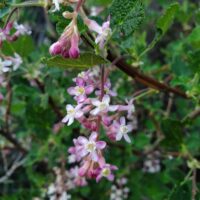
Chaparral currant is a tough and durable native shrub 5 to 8 ft. tall. This deciduous shrub will grow in full sun to light shade and is quite drought tolerant. Flowers early, often midwinter with dangling clusters of pink blossoms. Good early nectar source for hummingbirds. Berries attract many birds including grosbeak and mockingbirds.
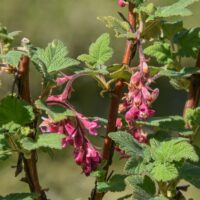
Ribes malvaceum ‘Cupertino Rose’
Chaparral currant's flowers can range from white to pink to nearly red in color. This selection carries flower clusters that were the darkest to be found in this population from the foothills of the Santa Cruz Mts. west of Cupertino. The buds are dark pink and the dangling racemes when fully open read medium pink. Deciduous shrub 4-6 ft tall and wide with a very early bloom season often beginning in November, which provides an excellent early source of nectar for hummingbirds. The pendulous clusters of berries that follow are relished by birds. Tolerates full sun along the coast with some shade inland and occasional to little summer water.