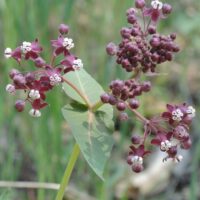
Abutilon palmeri
Lovely, tangerine-orange flowers and fuzzy, grey-green, heart-shaped leaves make this evergreen native a real treat for the gardener. The cup-shaped blossoms appear throughout spring, attracting butterflies, followed by striking seed pods which can accent flower arrangements. A smallish shrub, reaching 4 – 5 ft tall and wide, suitable for full sun or part shade. Plant in soil with decent drainage and water infrequently once established. While native to Southern California, it does well in our area in places which don’t drop below 25F in winter.

Achillea millefolium – Bodega Bay form
Larger leaves up to 10 inches long distinguish this form from most other local yarrow selections. While most yarrow from our coastline have very green leaves, this strain is on the grey side. From spring through autumn, large white flower clusters sit upon stalks about to at least 2 feet in height. Water occasionally in areas away from the coast and provide full sun. The foliage is deer resistant.

Achillea millefolium – inland form – Lake County seed source
A vigorous and easy to grow perennial, yarrow grows native throughout California in many plant communities. This crop is grown from seed collected from a hot inland site in Lake County. In this form, flower stems rise 18 inches above the gray ferny foliage bearing white flowers in flat topped clusters. Plant in a sunny location with moderate to a little water. Spreads by rhizomes and can form sizable clumps if happy. A good addition to the habitat garden where the flowers provide nectar for bees and butterflies and the foliage provides winter forage for birds. The foliage is deer resistant.

Achillea millefolium – inland form – Napa County seed source
A vigorous and easy to grow perennial, yarrow grows native throughout California in many plant communities. This crop is grown from seed collected from a hot inland site in Napa County. In this form, flower stems rise 18 inches above the gray ferny foliage bearing white flowers in flat topped clusters. Plant in a sunny location with moderate to a little water. Spreads by rhizomes and can form sizable clumps if happy. A good addition to the habitat garden where the flowers provide nectar for bees and butterflies and the foliage provides winter forage for birds. The foliage is deer resistant.

Achillea millefolium – inland form – Sonoma County seed source
A vigorous and easy to grow perennial, yarrow grows native throughout California in many plant communities. This crop is grown from seed collected from a hot inland site in Sonoma County. In this form, flower stems rise 18 inches above the gray ferny foliage bearing white flowers in flat topped clusters. Plant in a sunny location with moderate to a little water. Spreads by rhizomes and can form sizable clumps if happy. A good addition to the habitat garden where the flowers provide nectar for bees and butterflies and the foliage provides winter forage for birds. The foliage is deer resistant.
Achillea millefolium – Montara Mountain form
We discovered the parent of this giant seed strain on the lower slopes of Montara Mountain in San Mateo Co.. With broad, white flower clusters reaching up to 4 ft. high, this is the largest yarrow we've encountered. While seedlings can vary, we have high hopes for this new introduction. Give full sun and moderate to infrequent irrigation. Potentially an excellent spreading perennial for a tall meadow. Attracts all sorts of pollinators. The green, fuzzy leaves are usually considered to be deer resistant.

Achillea millefolium ‘Island Pink’
A color variant of the normally white California native yarrow from Santa Cruz Island. Dark green ferny foliage topped with clusters of bright pink flowers on 18 inch stems over a long period. Sun to partial shade, occasional to moderate water. Good habitat value, providing nectar for bees and butterflies. The foliage is deer resistant.

Achillea millefolium ‘Red Velvet’
This yarrow is getting rave reviews for its deep-red flowers produced atop grey-green ferny foliage. Spreading 2 foot or so wide with flowers rising 2 – 2 ½ feet tall. Best in full sun with moderate to occasional watering. Popular with bees and butterflies. Often deer resistant.

Achillea millefolium ‘Sonoma Coast’
This is a local selection from the Sonoma County coast near Salmon Creek. Bright green foliage is topped with white flowers in dense heads on compact stems to around 1 ft. tall. Can bloom over a long period, spring through fall, depending on conditions. Best in sunny areas with some summer water, though it is drought tolerant. Flowers attract butterflies and other insects. The foliage is deer resistant.

Achillea millefolium ‘Terracotta’
This hybrid yarrow forms a mat of grey-green ferny foliage 2 - 3 ft. wide with interesting earth-tone colored flowers. The long-lasting flower clusters simultaneously sport peachy-yellow tones through burnt orange, on sturdy non-floppy stems to around 2 ft. tall. Plant in full sun with moderate to occasional summer water once established. Bees and butterflies love yarrows, but they are not deer favorites. Excellent cut flowers too.

Adelinia (Cynoglossum) grandis
From woodlands throughout Northern and Central California comes this alluring bluebells relative. Dainty flower clusters ranging in color from periwinkle blue to lavender appear on slender stalks in the spring. The leaves are what gives this plant its name: grey-green and tongue-shaped, emerging in the winter from basal roots. Plant in bright shade and don’t water once established. Needs decent drainage. Once this plant goes to seed it will go dormant, re-emerging in late winter. A great accent plant for under the dry shade of deciduous oaks.

Adiantum aleuticum
Five finger fern provides a delicate, airy, fresh effect in the shade garden. Easy to grow with regular water and humusy soil. Does well in containers too. Fronds form finger-like patterns on handsome black stems up to 1 1/2 feet tall. Somewhat winter deciduous. Combine with wild ginger, redwood sorrel, leopard lilies and sword fern for a handsome woodland garden. Somewhat deer resistant.

Adiantum capillus-veneris
A lacy and delicate looking fern with arching dark stems that carry bright green fan-shaped leaflets. A wonderful addition to a woodland garden or any shady space where it is easy to grow as long as it receives regular water. Lovely in containers or raised beds, on a shady bank or border, along the north side of a building. Can grow as much as 1 1/2 ft. tall and wide. Southern maidenhair can be grown through much of California except for high mountain areas. Goes winter dormant with cold. Somewhat deer resistant.

Adiantum x tracyi
A naturally occurring cross between Western five finger and California maidenhair fern. Offers a delicate lacy effect with gorgeous bright green fronds on black arching stems. One of the parents is winter dormant, the other, summer dormant, with the resulting hybrid being evergreen. Easy to grow with shade, woodsy soil and summer irrigation. Excellent container plant too. Deer resistant.

Aesculus californica
Beautiful in all its seasons, this native tree is perfectly adapted to our summer dry climate. Broad headed, deciduous tree rapidly growing to 15 feet or more with smooth grey bark and a rounded shapely habit. Bright green palmate leaves unfurl in the spring. Striking, fragrant white to pink flowers in long spikes are followed by pear shaped fruits that split open to reveal large chestnut-brown shiny seeds dangling from branch tips. Buckeyes lose their leaves in summer to avoid the long dry season. Adaptable and tolerant of a wide range of conditions. Sun to light shade, little to no water once established. Flowers provide nectar for hummingbirds, butterflies and native bees.
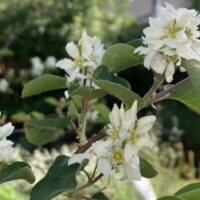
Amelanchier alnifolia
A common native shrub or small multi-trunked tree often found growing along seasonal streams. Serviceberries provide a touch of autumn color where the leaves turn a lovely butterscotch yellow. The white spring flowers are followed by dark blue-purple fruits coveted by band-tailed pigeons in the wild. Sun to partial shade. Moderate to infrequent water. Many butterflies use this species as a larval host, such as the California hairstreak and the Ceanothus silkmoth. Grows well in a large container.
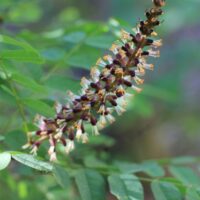
Amorpha californica var. napensis
A lovely and rare native shrub of the pea family, occasionally seen in woodland and chaparral communities in the coast ranges around the San Francisco Bay Area. Offering a delicate, airy quality, this deciduous shrub grows to around 6 ft. tall and wide, though can get bigger in the wild. Intricate flowers are closely set on slender spikes and are made up of tiny, intense indigo-purple petals with protruding bright orange stamens, charming on close inspection. This rare and threatened shrub is the larval food source for the California dogface butterfly, our state insect! Bees and butterflies nectar on the flowers as well. Best in lightly shaded areas with occasional to no summer water needed once established. Deer resistant.
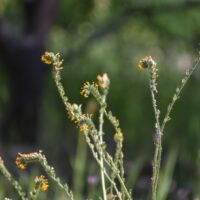
Amsinckia menziesii
A bright, yellow-orange ANNUAL with curled clusters of little trumpet-shaped flowers resembling the scrolled head of a violin. Flower stalks of one-to-three feet tall gradually unfurl with new blooms from mid-spring to early summer. The warmly-colored blossoms are a great nectar source for butterflies and develop into seeds adored by goldfinches and other songbirds. This grassland native adapts to the garden setting, where it prefers full sun and occasional irrigation. Will self-sow.
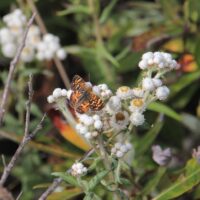
Anaphalis margaritacea
An adaptable plant with silver-green leaves that are densely white and woolly beneath. The flowers appear in summer and are made up of pearly white papery bracts surrounding yellow centers. The “straw flowers” retain their shape and color and are often used in dried arrangements. Tolerant of almost any soil type, it prefers full sun where it will grow in moist to somewhat dry conditions. Can spread vigorously, perhaps best used in meadow plantings or other naturalistic settings. Grows 1 - 3 ft. tall and spreading. Dies back to the ground in the winter. Larval food source for the painted lady and American lady butterflies. Deer resistant.
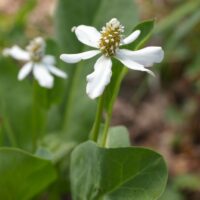
Anemopsis californica
An unusual plant - native to wet areas, but adaptable to regular or moderate garden water. The low rosettes of leaves spread into attractive colonies. The white flowers, or actually, flower bracts, are very showy in late spring. Sun to light shade with moisture. Herbalists use roots and leaves for a topical antibiotic and other uses.
Angelica arguta
A remarkable form of this native mountain Angelica with striking bluish-gray foliage. Umbrella-shaped clusters of white flowers sit on stalks up to 6 feet in height. Needs moderate irrigation and dappled shade inland. Combine with native Heleniums, lilies and columbines to create a beautiful woodland flower patch. Great for native pollinators. A larval food source for the anise swallowtail butterfly.
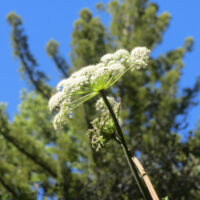
Angelica californica
Striking stalks up to 6 or more feet tall hold flat topped clusters of white flowers above low growing emerald-green leaves. This uncommon member of the carrot family needs only occasional water once established. Naturally occurs under the dappled shade of oaks where it cohabitates with ferns, hound's tongue, yerba buena and woodland strawberries. Excellent for attracting beneficial insects and is a larval food source for the anise swallowtail butterfly. May go summer dormant when allowed to dry out.
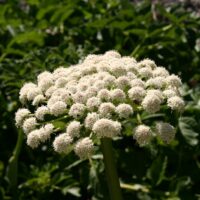
Angelica hendersonii
Found in nature on the immediate coast, though well adapted to the watered inland garden. It has the overall look of a stout cow parsnip with creamy white flowers in umbels and pinnately compound leaves of a deep green. Like many umbels, it is a good nectar source for beneficial insects. 4 - 6 ft. tall. Full sun to light shade. Good drainage with moderate summer water.
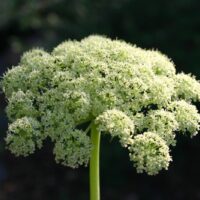
Angelica lucida
Large white flower clusters up to one foot across are held on stalks up to 5 feet tall above coarsely dissected leaves. Greener leaves and a more refined character distinguish this species from the more common Angelica hendersonii. While it is rare on the sea cliffs of northern California, sea-watch has a large distribution along coasts throughout the northern hemisphere. Give regular moisture and part shade in areas away from the coast. Attracts bees and butterflies.
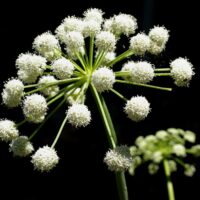
Angelica tomentosa
This species offers striking, flat-topped clusters of white flowers held up dramatically on stalks reaching up to around 5 ft. tall. Handsome, pinnately compound, gray-green leaves mass at their base. A generally inland angelica found in more or less moist, lightly shaded places, usually on serpentine. It can grow in full sun as long as it has plenty of moisture during the growing season. An important plant for the Pomo for its many medicinal and shamanistic uses. Diverse pollinators utilize the flowers, while the anise swallowtail butterfly uses the stems and leaves as a host plant for the catterpillars. Enjoys moderate water in the garden with a late summer rest (low water).
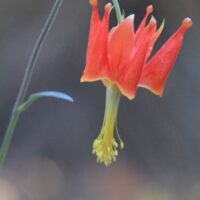
Aquilegia eximia
Large, orangey-red flowers with yellow stamens adorn this beautiful and uncommon native columbine. The pendant, brightly colored blossoms are larger than those of the western columbine but just as attractive to hummingbirds. Forms a 1 ft. high mound of foliage with flowering stalks reaching up to 5 ft. tall. Native to the Coast Ranges from Mendocino to Ventura Counties often on serpentine soils. Provide full sun to part shade and only water enough to prevent the soil from drying out completely. In areas far away from the coast provide a little shade from the hot afternoon sun. This species is a little more drought tolerant than the more common Western columbine.
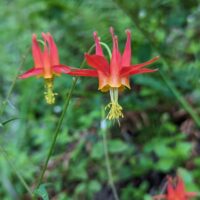
Aquilegia formosa
A popular native perennial with fern-like foliage and wonderful, nodding, spurred blossoms of red and yellow. Best with a little shade and moderate to regular moisture, but will tolerate full sun in somewhat cooler climates. The flower stalks reach 1 1/2’ to 3’ tall, with the grey-green foliage forming a mound of about 1 ft tall and wide. Flowers attract hummingbirds, while the seeds are relished by small birds such as sparrows and Juncos. If seed pods are left on the plants, you may get volunteer seedlings in the fall.
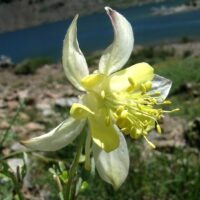
Aquilegia pubescens
Found on open, rocky slopes in the southern Sierra Nevadas in sub-alpine and alpine plant communities. Low rosettes of divided, blue-green foliage, sprout from a taproot. Flower stems rise 10 - 20 inches above the fragrant foliage and carry upward facing, nectar rich, long spurred flowers, perfectly positioned for pollinating hawk moths, hummingbirds and butterflies. The flower color is variable and runs the gamut from cream to yellow to pink, often in delicate hues rather than solid colors, except for an occasional pure white. Hybridizes freely with the native red columbine, which invites various shades of red to the flower color possibilities. Grows well in low elevation gardens, given light shade and summer water.