
Triteleia hyacinthina
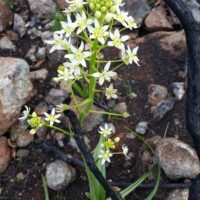
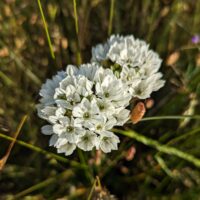
One of the easier to grow native bulbs that adapts well to garden conditions. Native to vernally moist areas that become summer dry in the Coast Ranges, Central Valley and Sierra Nevada into southwestern Oregon. Slender flowering stems rise one to two feet above the narrow leaves, with umbels of white, star-shaped flowers with green centers. If happy, the corms will multiply, forming drifts among grasses and shrubs and in open woodland settings. Easy to grow in containers, where they can be stashed in the shade once they go dormant. Bee and butterfly favorite.
Triteleia laxa ‘Corrina’
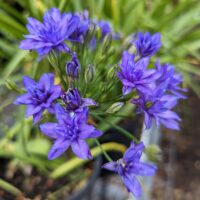
A beautifully dark flowered form of our Ithuriel’s spear, with flowers a darker blue-purple than the more common ‘Queen Fabiola’. The trumpet-shaped flowers form circular clusters at the top of slender stalks 12 to 18 inches high. This easy to grow bulb sends up slender, grass-like leaves in late winter followed by the striking flowers in late spring. Multiplies readily forming colorful drifts which mix well with grasses and smaller perennials. Tolerant of pretty much all soil types and can be allowed to dry out completely in summer when it goes dormant. Unlike most grassland bulbs, this species will also tolerate moderate irrigation. Plant in full sun to light shade. Attracts bees, butterflies and hummingbirds.
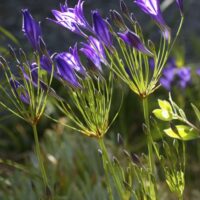
Triteleia laxa ‘Queen Fabiola’
Trumpets of bluish-purple blossoms make a dazzling display at the height of spring on this easily grown lily relative. The showy flowers rise up to 18 inches tall in dense whorls on slender stalks above grasslike leaves. The small bulbs increase rapidly to form small, colorful drifts. Give full sun to light shade. Tolerant of dry conditions but accepts occasional irrigation. Will go dormant by mid-summer but reemerges in early winter. Attracts bees, butterflies and hummingbirds. Plant in openings between low, evergreen plants or in meadows with yarrow, California fuchsia and grasses.
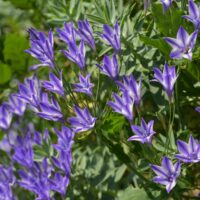
Triteleia laxa ‘Rudy’
An interesting flower color variation of this easy to grow native bulb. Grasslike blades 12 - 18 inches tall produce flower stems with large clusters of showy, funnel-shaped, pale blue-lavender blossoms with a vivid violet stripe down the center of each petal. An eye catching addition to a naturalistic planting, in sun to light shade. A willing grower which will multiply if happy. Enjoys dry conditions once done flowering, but will accept some moisture. Good container subject. Attracts bees, hummingbirds and butterflies.
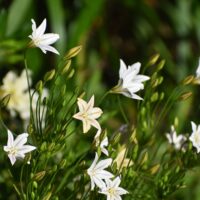
Triteleia laxa ‘Silver Queen’
A white form of Ithuriel’s spear! We kid you not. You may be familiar with this species and its traditionally blue-purple, trumpet-shaped flowers perched in whorls atop stalks a foot or more tall. We now have a selection featuring soft white flowers. This native bulb sends up grass-like foliage in the winter followed by the charming flowers in spring and early summer. The bulbs multiply readily, forming small colonies over time. While it tolerates dry conditions in summer, it will also accept occasional irrigation, making it very useful in the garden. Enjoys full sun to light shade and will tolerate clay soil.
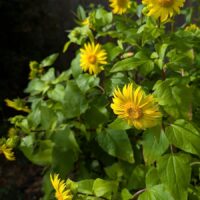
Venegasia carpesioides
Native to coastal areas of central and southern California, the canyon sunflower brightens the garden with abundant blooms from spring into late summer. The daisy-like, golden-yellow blossoms are 2 in. wide and set against light-green, almost heart-shaped leaves. This 3 – 5 ft.-tall-and-wide, showy shrub is particularly useful for its pop of color in dry shade under oaks. It will also accept quite a bit of moisture, and full sun in warmer areas! Rarely offered in Northern California nurseries, it does well in our area, but may retreat back to the ground after hard frosts, only to re-emerge in spring. If kept dry through the summer, plants may go dormant until moisture returns.
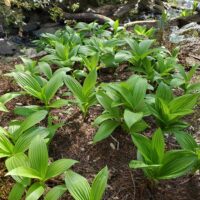
Veratrum fimbriatum
From moist, coastal areas of Sonoma and Mendocino County comes this very rare lily relative. A cousin of the high mountain cornlily, this threatened species features large, pleated leaves which emerge in late winter and are followed in the autumn by icy-white flowers with fringed edges. After its long bloom period is over, the plant will go dormant through the winter. Surprisingly tolerant of shade, but will accept full sun along the coast with ample moisture. A choice plant for woodland gardens and will also thrive in a container. This plant is POISONOUS when consumed. Deer and gopher resistant.
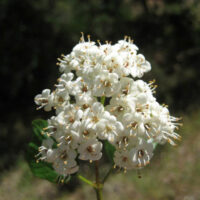
Viburnum ellipticum
Loosely branched deciduous shrub 6-10 feet tall. Common in Washington and Oregon and rare in California where it can be found in chaparral and coniferous forests generally on north facing slopes. Soft reddish new growth makes way for the neat deep green oval leaves with a serrated edge. Small white flowers in terminal clusters followed by shiny black fruits which are enjoyed by birds. Attractive reddish fall color. Best with some shade and a little summer water. A candidate for the high banks of creeks, margins of wetlands or edges of forests.
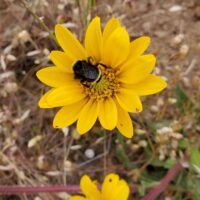
Wyethia angustifolia
Few hikers can resist the bright, golden-yellow flowers of this showy native sunflower relative. The large, 2” - 3” wide flowers perch atop stems 1.5 - 3 ft. tall in the spring. Bright green, lance-shaped leaves form low rosettes at the base of the flower stalks. This mule ears grows in sunny meadows and at the edges of woodlands. Perhaps the most garden tolerant of all of the mule’s ears, accepting occasional irrigation once established but not requiring it. Does not mind soils with poor drainage. A great plant for bees, butterflies and birds. Will go dormant once it finishes flowering but will re-emerge after the rain returns.
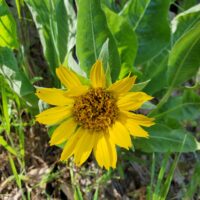
Wyethia helenioides
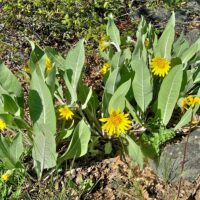
One of our less common native Wyethia, gray mule ears is a special find in nurseries. Strikingly large, upright leaves frame flower stalks that resemble little sunflowers with their wide golden discs and halo of yellow ray petals. Endemic to California, this radiant perennial wildflower is a welcome sight in woodland meadows of the Northern and Central Coast Ranges. A covering of silvery hairs on the broad, erect leaves gives the species its name. Lush, gray-green foliage emerges mid-winter followed by a spring floral display from March through early summer. Low-growing at up-to 2 feet tall and wide, it makes an impression greater than its stature. Eventually goes dormant as fall approaches. Does well in the garden if given decent drainage, good light, and minimal water once established. Bees and butterflies adore the flowers.