Asclepias eriocarpa
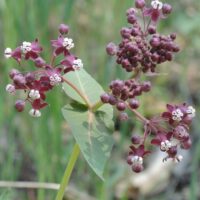
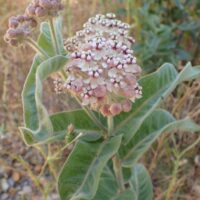
More diminutive than showy milkweed at 1-3 feet, this long-blooming species has similar broad, greyish leaves and creamy, pink-accented flower clusters. Like other milkweeds, it is a larval host for the monarch butterfly. A great choice for habitat gardens in dry, sunny areas, providing nectar for a wide array of pollinators from late spring into fall. Usually found in rocky soils throughout parts of Southern California and in foothill areas north of the San Francisco Bay. Spreads to form colonies with minimal supplemental water. Deer resistant.
Asclepias fascicularis
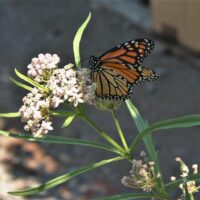
Our most common native milkweed is found in meadows and on the banks above ponds. Its flowers are held in umbels of a pale mauve color. They form at the top of 1 - 3 ft. tall slender stems that die back in winter to a perennial rootstock. Its wandering roots form small colonies. Drought tolerant, it prefers seasonally moist soils and likes moderate water in the garden. The narrow leaves are the preferred larval food for the Monarch Butterfly. Full sun to part shade. Unlikely to be bothered by deer.
Asclepias speciosa
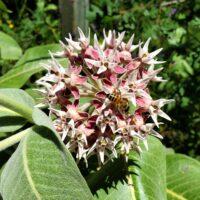
Bold and beautiful native milkweed that forms a large patch of tall stems with broad pale green leaves. Fragrant clusters of pinkish-purple flowers, followed by interesting seed pods. Spreads by underground shoots. Great in semi-dry naturalistic plantings. Host to Monarch butterflies. Deer resistant.
Baccharis salicifolia
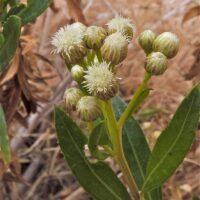
This native shrub looks something like a willow in foliage and is found in similar habitats in California and the southwest US. Not a willow at all, but a member of the aster family, this evergreen shrub blooms nearly year round, making it a powerhouse for pollinators. The profusion of small, creamy white, fuzzy flowers, tinged with pink or red are highly attractive to butterflies, bees and other beneficial insects. Extremely tough and easy to grow in full sun with summer water, where it will grow 6 - 10 feet tall and wide with rich, green foliage. Able to survive drier conditions than a willow could handle, but it will look rough if it gets too dry. Responds well to pruning and can be cut down to six inches to refresh. Excellent screen, windbreak and for soil stabilization. Stellar for attracting pollinators.

Brodiaea californica ‘Babylon’
A beautiful selection of a robust species, native to the North Coast Ranges and northern Sierra Nevada. Instead of the more typical lavender-purple colored blossoms, 'Babylon' offers particularly large flowers of pink-lavender. The star shaped flowers are in dense clusters on stout stems up to 24 inches tall. Best in full sun and tolerant of different soil types. Allow to go dry once foliage begins to go dormant. This beauty flowers in late spring/early summer and is favored by butterflies. A good container subject.
Brodiaea elegans
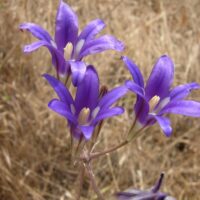
From grassy meadows and open woodlands comes this drought tolerant and colorful wildflower. Open clusters of dainty violet flowers sit atop stems reaching 8 to 20 inches in height. Plant in full sun to bright shade and provide decent drainage. As the name suggests, the harvest Brodiaea is the latest blooming of the Brodiaeas, sometimes not flowering until the end of summer after the grass-like leaves have gone dormant. It spreads rapidly but not invasively to form broad drifts. After blooming, this bulb will sleep until the return of winter rains. Do not irrigate. An excellent candidate for the rock garden where its graceful form will contrast wonderfully with the rigid stone.
Calochortus uniflorus ‘Cupido’
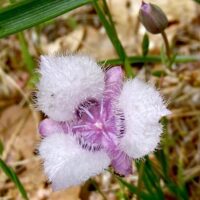
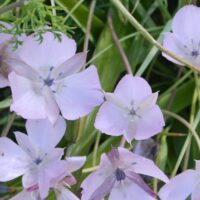
While many Calochortus are known to be challenging in the garden, this selection is quite easy and blooms in abundance! Blue-grey, iris-like leaves emerge in the winter, followed by soft lavender-pink, tulip-like flowers in late spring. After flowering they will go dormant. Plant in full sun to light shade. Very drought tolerant but will tolerate occasional irrigation. This rare species has a surprisingly wide-ranging distribution, from the coast to the mountains of Northern California. Attracts native pollinators.
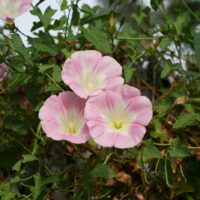
Calystegia purpurata ssp. purpurata
Lush, slender-stemmed vine with gray-green heart-shaped leaves scrambles up, over, or through any support provided. From late spring through early summer the plant is decorated with trumpet-shaped blossoms ranging in color from white to pink to purple. This deciduous vine can grow up to 10 ft. tall and wide. Sun to light shade, most soils, moderate to occasional watering for best appearance. Native throughout the Coast Range of California.
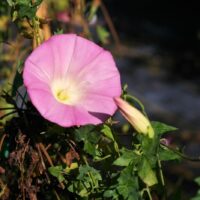
Calystegia purpurata ssp. purpurata ‘Palomarin’
Large flowers which open pinkish-white and darken to a rich lavender distinguish this selection which we discovered near Bolinas in Marin County. This vigorous, deciduous vine spreads quickly to climb over fences and shrubs with clasping stems and grey-green, arrow-shaped leaves. Reaches a height of up to 10 ft. or so and can spread at least as wide. In late spring and early summer, the morning glory flowers put on quite the display, opening at dawn and then closing at dusk. Does great in full sun but also enjoys a little shade, especially in hot, inland areas. Likes moderate irrigation but will become somewhat drought tolerant once established. Hummingbirds and native pollinators are drawn to the flowers.
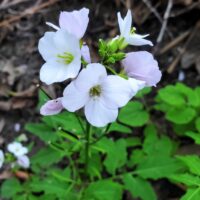
Cardamine californica
One of California's most widespread and earliest spring wildflowers, often beginning to bloom in the winter. Found in somewhat shady locations in a number of plant communities, this slender perennial has rounded basal leaves. Flower stems 10 inches to 20 inches tall are topped with four petaled flowers of pure white to soft pink. This sweet harbinger of spring is easy to grow given a little shade and winter rain. After flowering and setting seed it dies back to its roots where it goes dormant until next year's rains awaken it. Good under oaks.
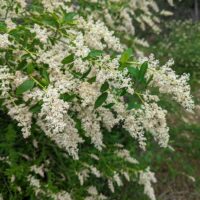
Ceanothus integerrimus
Deer brush is an excellent addition to the dry garden, featuring an abundance of blue, white or even pink flower plumes in late spring. One of the few deciduous species, displaying soft flat leaves which fall in autumn and reemerge in spring. Deer brush is an open upright shrub, growing 5 - 12 feet tall and wide with many different growth habits. A variable species found in a wide range of habitats throughout the state. Often used in restoration for its rugged qualities and ability to deal with summer heat and winter cold. This crop, grown from seed collected near Lake Sonoma has white flowers. Plant in full sun to light shade with good drainage. Little to no summer water once established.
Chilopsis linearis
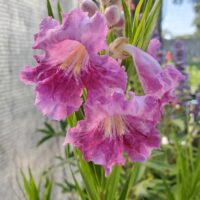
A graceful, summer-blooming, deciduous shrub, native to desert washes where it grows in gravelly soils and intense heat. Forms a large, multi-branched shrub or small tree reaching up to 15'-20' tall and wide with narrow, willow-like leaves. Terminal clusters of showy, trumpet-shaped flowers in summer come in shades of white, to pink and purple that attract hummingbirds and butterflies. Long, bean-like pods follow and hold on into winter. Enjoys hot climates with plenty of sun, decent drainage and occasional to moderate water. Avoid cool coastal conditions and heavy wet soils. Grows fast when happy with no pest or disease problems, demanding little. A great option for along sidewalks.
Cirsium occidentale
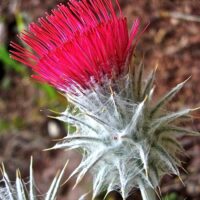
A beautiful NATIVE and NON-WEEDY thistle. Forms a rosette of gray woolly and spiny leaves the first year. A BIENNIAL, flowering occurs the second year with tall, narrow spikes of showy maroon-red to dark pink flowers with cobweb hairs on the bracts. A striking plant, usually reaching 3 - 6 ft tall when blooming, for sunny areas with good drainage and low to no irrigation. An excellent addition to the habitat garden where it attracts bees, butterflies and hummingbirds. Butterflies such as the painted lady and the mylitta crescent depend on cobweb thistle as a larval food source. Deer resistant.
Clarkia amoena ssp. whitneyi
Nearly extinct in the wild, this beautiful ANNUAL was found in coastal communities in Mendocino and Humboldt Counties. Growing 3 ft. tall and wide, the branched leafy stems are topped with a long succession of 3 inch cup- shaped flowers. The large flowers are light lavender-pink with whitish areas at the base of the petals. Clarkias make excellent garden plants needing very little and giving much in return. Plant in full sun to light shade, as a filler among trees or shrubs, in mixed flower border or meadow planting. A little water while flowering will extend their show. Good container subject too. Excellent cut flowers. Seems to be deer resistant. Attractive to bees and butterflies.
Clarkia rubicunda
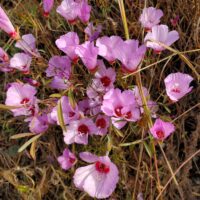
Showy and floriferous, with gorgeous, cup shaped blossoms of silky, pink-purple petals featuring a dark red center with a long bloom from late spring into summer. This endemic, ANNUAL wildflower grows in openings of woodlands and chaparral near the coast, mostly in the central part of state. Grows 2-ft. tall or more in full sun with low water needs. Tolerant of heavy soils, the exuberant blossoms attract bees, butterflies and moths, including Sphinx moth species. Performs well in containers and is an excellent cut flower too. Deer resistant.
Clarkia williamsonii
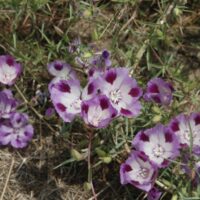
The incredibly showy flowers of this native ANNUAL will take your breath away in late spring and early summer. The large, lavender-pink, papery flowers feature deep, burgundy-red brush strokes and cheery white centers. Plants form a loose mound about 1 ½ ft. around. Butterflies and other pollinators love Clarkias. Native to the Sierra foothills, where it grows in full sun to light shade. Plants enjoy moisture while they are developing in the winter and spring, but are accustom to hot and dry summers. Needs decent drainage. Reseeds readily, as long as there is exposed soil nearby. Deer resistant!
Claytonia sibirica
This native perennial with white to pink candy-striped flowers seeks shady, moist conditions. Our form is from Sonoma Coast and has particularly pink flowers. Related to miners lettuce, candy stripe produces dark green, succulent, edible leaves in low rosettes. Blooms over a long period beginning in spring and will frequently reseed. A sweet, spreading, low ground cover for a shady area with regular moisture. A charming and colorful addition to the forest garden, combining beautifully with ferns, wild ginger and false Solomon’s seal.
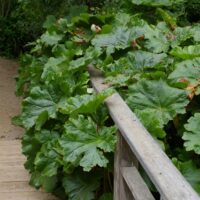
Darmera peltata
Native to mountain streamsides of Northern California and Oregon. A spectacular plant for pond, stream, moist woodland, or anywhere there is regular moisture and lightly shaded conditions. The lovely pink flower clusters on tall naked stems are the first to emerge in the spring. Next the very large bright green round leaves on sturdy stalks unfurl, reaching a height of up to 4 ft.. The foliage turns yellow in the fall and dies back to chunky rhizomes in the winter. A bold and beautiful flowering and foliage plant. Does well in containers too.
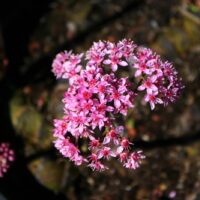
Darmera peltata – dwarf form
This is a surprising dwarf form of the moisture loving umbrella plant. The normally large round leaves of this species are dramatically reduced in height and width in this novel selection. Only about 1 1/2 ft. tall with leaves 8 - 10 inches wide. Deep pink flower clusters, unusually dark for the species, emerge on slender stems in spring and are soon followed by the bright green leaves. The foliage turns yellow in the fall and dies back to chunky rhizomes in the winter. A nice compact alternative for the smaller garden with part shade and regular moisture. Does well in containers.
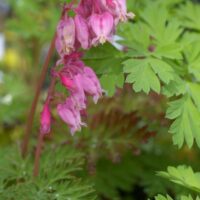
Dicentra formosa
Ferny foliage makes a lacy groundcover in shady areas. Clusters of pendulous, pink, heart-shaped flowers in spring and into summer. Will spread rapidly when happy, enjoying moist but not soggy woodland conditions. Tolerates dry shade where it goes dormant with drought. Early nectar source for hummingbirds and bumble bees. Deer resistant.
Dichelostemma ida-maia x multiflorum ‘Pink Diamond’
A natural occurring hybrid involving the red firecracker flower and a blue flowering species, producing bright, magenta-pink tubular flowers with charming reflexed tips like it's firecracker parent. Strap shaped leaves emerge in the spring with leafless flower stems following, 8-20 inches tall. The umbels of deep pink flowers are favored by hummingbirds and butterflies. Tolerant of different soil types in full sun to light shade. Dry conditions once it goes dormant is a must. Good container plant.
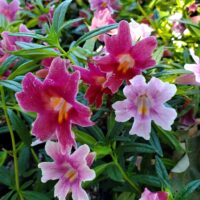
Diplacus (Mimulus) ‘Jelly Bean Dark Pink’
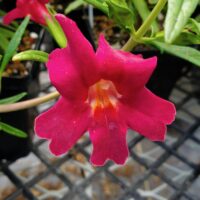
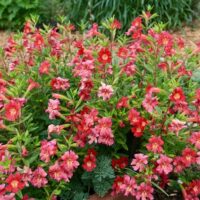
This fine selection by monkeyflower breeder Richard Persoff has large, showy flowers in a dark rosy-pink with orange throats and white edging. As the flowers age, their color becomes paler, creating a dramatic contrast between new and old flowers. Selected for its attractive foliage, floriferousness, and compact habit, it grows to 2 ft. tall and wide. Monkeyflowers are dought tolerant once established, but need good drainage and occasional deep watering to keep the flowers coming. Plant in full sun along the coast and light shade inland. A favorite of hummingbirds and butterflies. Deer resistant.
Diplacus (Mimulus) ‘Trish’
Large rosy-pink flowers are the hallmark of this hybrid monkeyflower developed by Richard Persoff. Monkeyflowers are evergreen, drought tolerant sub-shrubs with attractive tubular flowers. This is a restrained form at 1 - 2 ft. tall and wide. Best with good drainage, light shade and careful watering. Give it occasional deep soaks in the summer and pinch the stems to create a good support for the abundant flowers. Bees, butterflies and hummingbirds work the flowers and painted lady and checkerspot butterflies use it as a larval food source. Deer resistant.
Epilobium canum ‘Coral Canyon’
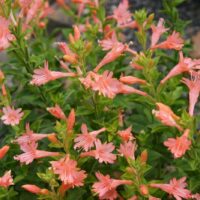
This elegant and unusual form of the California fuchsia offers a prolific display of peachy-pink flowers, a departure from the more common orangey-red blossoms. The late-summer, autumn blooms are held on distinctly upright stems reaching 1 ½ ft. high above broader, bright green foliage. Unlike most native fuchsias, this selection is somewhat shy to spread, generally forming a rounded mound about 2 ft. wide. Enjoys full sun, but will benefit from a little afternoon shade in hot areas. Likes moderate to occasional irrigation. Hummingbirds and bees partake from the flowers. We must thank Cistus Nursery for discovering the parent plant on a high ridge above the North Fork of the American River.
Epilobium canum ‘Marin Pink’
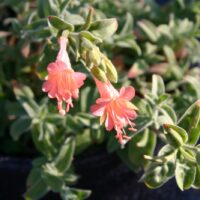
California fuchsias are appreciated for their abundant tubular flowers that bloom in late summer and fall, predominantly in different shades of orange-red. This unusual selection has beautiful PINK tubular flowers produced on sage green mounds of foliage to about 2 ft. tall and spreading by underground rhizomes. Vigorous and easy to grow in full sun to very light shade. Touted as drought tolerant, they will survive dry conditions but will thrive with occasional summer water. Beautiful against a rock wall, in dry stream beds, or naturalistic plantings where they have some room to spread. Hummingbird favorite. Pruning plants down to a few inches in late autumn helps to rejuvenate them for the following year.
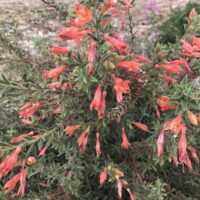
Epilobium canum ‘Sierra Salmon’
California fuchsias have many charms, blooming in late summer into fall with hummingbird attracting, tubular flowers, mostly in shades of red and orange. 'Sierra Salmon' offers unusual salmon-colored blossoms on soft blue-green foliage. This cultivar doesn't tend to wander like some can and forms dense clumps of erect stems 12 - 24 inches tall and wide. Looks wonderful amongst rocks or boulders, in perennial borders or to add pizazz with grass and shrub plantings. Plant in full sun with occasional summer water. Prune down to a few inches after blooms are done.

Epipactis gigantea
Here’s a native orchid that’s easy in cultivation. In time it will form a colony producing many flower stems. Each stem holds several interesting orchid blossoms of subtle orange, coral and green tones 12 - 18 inches tall. Dies back to the ground in winter. Best with decent drainage and regular to moderate moisture (NOT soggy soils) and dappled shade part of the day. Wonderful addition to the woodland garden, around pond or near streams. Good in containers too.