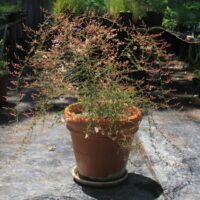
Holodiscus dumosus ‘var. cedrorus’
A recently described endemic shrub discovered by the extraordinary plantsmen Roger Raiche, growing on serpentine soils of the Cedars in northwestern Sonoma County. An open deciduous shrub, approximately 3 ft. x 3 ft. with wiry ruby-red stems and elegant small, shiny, dark green to bronze leaves. Early summer brings erect panicles of cream colored flowers that are suffused in light wine-red or pink coloration. Seems to tolerate a wide range of conditions from full sun to deep shade. Once established has proven durable and drought tolerant. This lovely small creambush is perfect for those who want something completely new and different. It does well in containers and should be interesting to experiment with in different applications and settings.
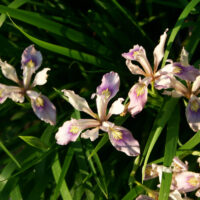
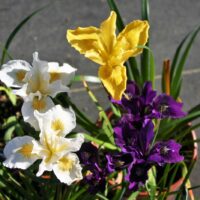
Iris Pacific Coast hybrid
A diverse group bred from the native irises with wonderful coloration, patterning, flower form variation....ranging from soft pastels to mahogany, maroon and midnight purple. Evergreen foliage, about 1 to 2 ft. high. Can eventually form sizable clumps. Full sun to light shade. Often do well as an understory for oaks that needs no summer water. Drought tolerant, moderate to little water when established. Deer don’t seem to eat flowers or foliage.
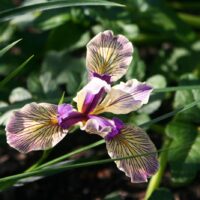
Iris Pacific Coast hybrid ‘Sebastopol’
A diverse group bred from the native irises with wonderful coloration, patterning, flower form variation....ranging from soft pastels to mahogany, maroon and midnight purple. Evergreen foliage, about 1 to 2 ft. high. Can eventually form sizable clumps. Full sun to light shade. Often do well as an understory for oaks that needs no summer water. Drought tolerant, moderate to little water when established. Deer don’t seem to eat flowers or foliage.
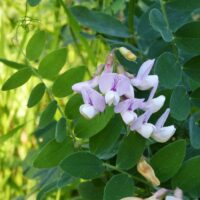
Lathyrus vestitus
From woodland to chaparral throughout much of the California coast ranges comes this charming sweet pea relative. Clusters of dainty flowers ranging in color from white to pink and lavender grace this evergreen vine in the spring, followed by clusters of small peapods. Plant along a fence or amongst shrubs where it will climb up to 8 ft. tall and wide. Provide light shade inland but will tolerate full sun near the coast. Drought tolerant once established but will also accept occasional irrigation. This vine is a host plant to the silvery blue butterfly and the arrowhead blue butterfly.
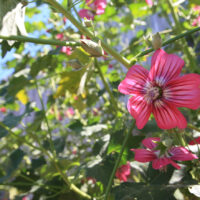
Lavatera (Malva) assurgentiflora
Light green, maple-like leaves with showy, rose-pink flowers with dark veination bloom over a long period from spring to fall. Native to the Channel Islands, this fast growing shrub will grow 10 ft. tall or more. Useful as a drought tolerant, wind resistant, fast growing screen or hedgerow plant, at its best in coastal environments. Inland needs some protection and periodic summer water. Pruning helps maintain a nice habit. Probably best in naturalistic garden designs. A favorite nectar source of orioles.
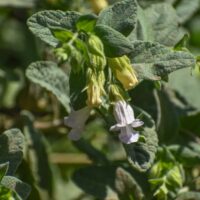
Lepechinia calycina
A super fragrant sage relative with a wide distribution in California’s coastal ranges. White to pale pink or lavender, open-mouthed, tubular flowers appear in late spring and early summer. Fuzzy, grey leaves clothe the plant all year but less densely in the winter. Can grow 2 - 4 ft. tall and wide with a rather lank form which can be improved with regular pinching. A fast growing perennial for sunny to lightly shaded areas with good drainage. Very drought tolerant once established. Attracts hummingbirds. Deer resistant.
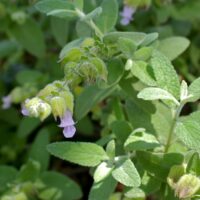
Lepechinia calycina ‘Rocky Point’
An excellent form of a native pitcher sage selected by Tilden Botanic Garden. Features a more compact habit, growing 2 ft. or more tall by 4 ft. or so wide. Pale lavender, tubular flowers appear in spring and summer, drawing hummingbirds into the garden. The fragrant, felted foliage is basically evergreen but is less dense in the winter. Plant in full sun to very light shade and provide good drainage. Very drought tolerant once established and deer resistant.

Lepechinia fragrans
This fragrant sage relative is endemic to Southern California, native to chaparral and woodlands of the Santa Monica and San Gabriel Mountains and the Northern Channel Islands. Softly hairy and strongly fragrant, this woody perennial grows around 4 - 5 feet tall and wide. Showy, lavender-purple, wide-mouthed, tubular flowers bloom in mid to late spring, attracting bumble bees and hummingbirds. Will thrive in full sun to light shade, where it will be drought tolerant once established. Pinching back foliage helps form a dense growth habit. Deer resistant.
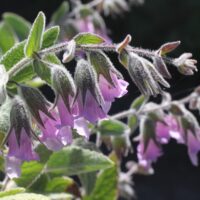
Lepechinia fragrans ‘El Tigre’
A wonderful addition to the dry garden, this rare fragrant pitcher sage is native to the Channel Islands off of California but is quite happy in Sonoma County gardens. Forms a shrub 4 - 5 ft. tall, with soft lavender flowers in the spring hanging gracefully from slender, arching stems. The long, angular leaves are colored soft, gray-green and covered in white hairs. This selection was chosen for its more saturated flowers with darker calyces. Adored by hummingbirds and bees. Plant in full sun on the coast, but provide partial shade inland. Needs good drainage and is drought tolerant once established. Deer resistant.
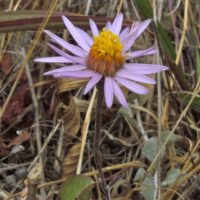
Lessingia (Corethrogyne) filaginifolia
This California native perennial often hugs the ground, spreading widely, it threads its silvery foliage decoratively among other plants. Bright lavender, yellow centered aster-like flowers give a summer long season of bloom. Provide full sun to light shade, some summer water and reasonable drainage. A nectar and larval food source for butterflies. Deer resistant.
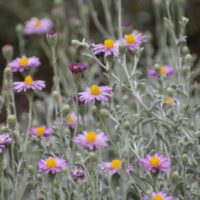
Lessingia (Corethrogyne) filaginifolia ‘Silver Carpet’
A variable species, this selection hails from the Big Sur Coast and was discovered by Carol Bornstein. Forms an attractive ground hugging mat 4 ft. or more wide. The gorgeous silver foliage is the perfect foil for the 1 inch lavender-pink daisies with yellow centers. Tolerates a wide range of conditions including full sun to light shade, drought and wind. Useful groundcover, meadow plant or spiller where its flowers are enjoyed by bees and butterflies. Best with some summer water inland. Deer resistant.
Lewisia cotyledon
Named for Meriwether Lewis, this attractive succulent is native to higher elevations in Northern California and Southern Oregon, typically granite outcrops. The flowers which usually emerge in spring and summer, can range in color from yellow to orange to pink to red. These frost hardy plants form evergreen rosettes, approx. 8 - 10” tall by a foot or so wide. Lewisias need very good, sharp drainage, are heavy feeders, and love a granite rock mulch. They like to be grown sideways, in rock walls, where their crown can drain any moisture away. Plant somewhat high in a fast draining mix and feed every now and then. Morning sun, afternoon shade is best inland. Water as you would any succulent, sparingly, and keep the crown high and dry.
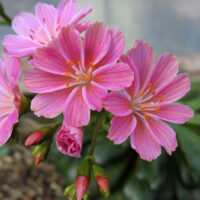
Lewisia cotyledon – Sunset Strain
Named for Meriwether Lewis, this attractive and showy succulent is native to higher elevations in Northern California and Southern Oregon, typically on granite outcrops. Abundant floral sprays arise in spring and summer on stalks reaching 6-10" above evergreen foliage. This seed strain has produced a rainbow of flower colors, including: yellow, white, orange, pink and red. The frost hardy rosettes grow to approx. 8-10” tall by a foot or so wide. Lewisias need very good, sharp drainage, and love a granite rock mulch. They like to be grown sideways, in rock walls, where excess moisture drains away. Plant somewhat high in a fast-draining mix and feed every now and then. Morning sun with afternoon shade is best inland. Water sparingly, as you would any succulent, and keep the crown dry.
Lewisia longipetala ‘Little Raspberry’
The parent of this strain of Lewisias is found in rocky outcroppings of the Sierra Nevada Mts. Forms low, fleshy rosettes of tough evergreen leaves. Raspberry-red flowers bloom on short stems above the leathery foliage in the spring into summer and often again in the autumn. Requires good sharp drainage and rock mulch, but appreciates partial shade in hot summer areas. Perfect for rock walls, rock garden, containers and troughs. Water as you would any succulent, sparingly, and keep crown high and dry. This is not the plant for your perennial border, but it is easy to make happy in containers.
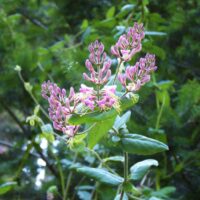
Lonicera hispidula
This native honeysuckle is often seen climbing over shrubs on the edge of woodlands where its roots are shaded and its foliage is sun drenched. The trumpet-shaped flowers range in color from rosy-pink to pink and white and feature prominent yellow stamens emerging from their mouths. They form clusters which decorate the tips of the vining branches and are attractive to bees and hummingbirds. The high point is the drooping clusters of luminous red berries in late summer which are beautiful to behold and provide a feast for birds, especially orioles. A drought tolerant vine but would appreciate occasional deep summer watering. Considered by some to be deer resistant.
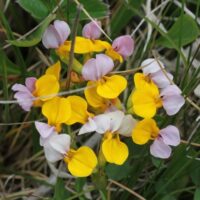
Lotus (Hosackia) formosissimus (gracilis)
A low growing native perennial found in seasonally moist meadows, ditches and seeps along California's coast, north to British Columbia. Small, neat leaves form a pretty, low ground cover spreading up to 2 ft. wide. Pea-like flowers have a bright yellow upper petal and deep pink lower petals which bloom in the spring then sporadically through the summer. Plant in full sun to light shade with regular moisture. Makes a nice container plant, too. Flowers visited by bees and other pollinators. Thought to be the larval food source for the possibly extinct lotus blue butterfly.
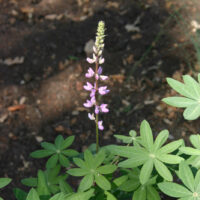
Lupinus latifolius var. parishii
A moisture loving lupine that grows along streambanks and throughout woodlands in central and southern California. A lush perennial, growing 3-4 feet tall and wide, with foot long flower spikes of scented, pink to lavender flowers in late spring-early summer. The large, dark green leaves create a bold texture beneath the slender flower stalks. Plant in lightly shaded conditions with some summer water. Dies back to the ground in winter. Attractive to bees and hummingbirds. Deer resistant.
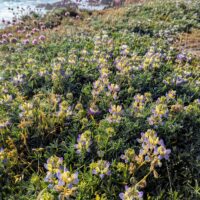
Lupinus littoralis var. variicolor
Often found nestled amid rocks and sand, this low-growing, perennial lupine is native to the beaches and dunes of coastal California. Forms a clump or mat of silver-green foliage under 18 inches tall, with jewel-like flower spikes. Blooms in a subtle range of colors, typically shades of purple-blue with white to pale yellow banners. Makes for an excellent addition to a rock garden. Formerly known as Lupinus variicolor, it is currently considered a variety of bluff lupine that is endemic to the Bay Area from Sonoma County down to the Peninsula. It attracts pollinators, and is one of the few hosts for the rare Mission Blue butterfly. Accepts various watering regimens from regular to occasional so long as it gets excellent drainage. Drought tolerant once established.
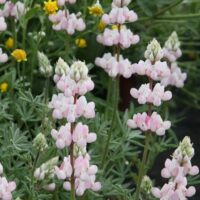
Lupinus nanus – Pacific Pink
Unusual, soft pink flowers distinguish this seed strain of the iconic California sky lupine, the traditionally blue flowered, ANNUAL species which blankets grasslands throughout California in the spring. The blossoms sit in whorls on upright stems above dissected, palmate leaves. This low plant reach 6 – 20 inches tall and wide, combining nicely with low, native perennials and grasses. Enjoys well-draining soil in full sun to light shade. Reseeds fairly readily if exposed soil surrounds the plants. Attractive to a diverse array of pollinators and a larval food source for a number of butterfly and moth species. Deer resistant.
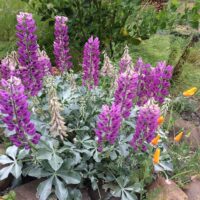
Lupinus sericatus
A rare species from Sonoma, Lake and Napa Counties, this lupine forms a low, wide mound of gorgeous, broad, silver leaves with thick,1 -2 foot spikes of mauve-pink to violet flowers in spring. Requires full sun to very light shade and good drainage. Do not water much once established. Lupine flowers attract a wide array of insects, especially bees. Deer resistant.
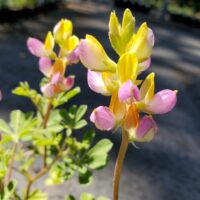
Lupinus stiversii
A striking ANNUAL lupine, endemic to California, with a disjunct distribution in the Sierra foothills and separate mountain ranges in Southern California. Instead of the more typical blue or purple flowers, this lupine sports beautiful, bicolored flowers of yellow and pink, on low foliage 6 - 18 inches tall. Grows in open, exposed areas, in full sun with good drainage, and is extremely drought tolerant. Blooms in the spring and offers excellent pollinator value, attracting a variety of insects, and a larval food source for a number of butterfly and moth species. Deer resistant.
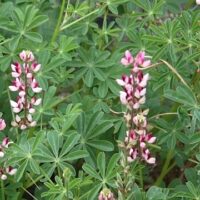
Lupinus succulentus
A pretty, pink selection of an easy-to-grow species of ANNUAL lupine. Arroyo lupines have lush, bright-green foliage and attractive flower spikes that typically come in shades of pink or purple. On 'Rodeo Rose', these eye-catching blooms combine rosy-pink wings with banners that turn a dark maroon. Grows quickly to 2-3 feet tall and wide, and reseeds readily at the end of its season. This adaptable species has an affinity for moist, heavy soils, and does well in irrigated gardens, but tolerates drier conditions as well. It is native to diverse habitats and has a broad range in California. Prefers full sun and occasional water. Plant en masse for a gorgeous, seasonal groundcover. All parts of the plant are toxic if eaten, but it's an important butterfly larval host and a food source for native bees. Deer resistant.
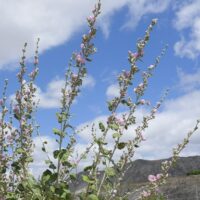
Malacothamnus fasciculatus
Native to western Southern California, this fast growing, evergreen shrub grows to 6 + feet tall and spreads to form colonies. A multi-branched mallow with hairy, gray-green, leaves often shaped like those of maples. The pale pink, cup-shaped flowers held in clusters along the stem, bloom from spring into summer. A native bee magnet. Useful as an evergreen screen for full sun. Occasional irrigation to drought tolerant once established. A larval food source for the west coast lady and the northern white-skipper butterflies. Reported to be deer resistant.
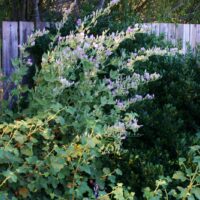
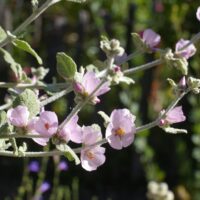
Malacothamnus fremontii
A fast growing, thicket forming, native shrub with silvery white, felted foliage 4 - 6 ft. tall and spreading. A profusion of pale-pink, cup-shaped flowers decorate the branch tips in summer. A tough and adaptable shrub for sunny dry areas, appreciating occasional summer water once established. Useful on banks or other challenging sites. Host plant for the Painted Lady and West Coast Lady butterfly. An excellent nectar source for orioles. Deer often seem to leave it alone.
Malacothamnus jonesii
A rare endemic from southern Monterey and San Luis Obispo counties, growing in foothill woodland and chaparral plant communities. Fast growing shrub, often coming in after fires or disturbance. Growing 4 - 6 ft. tall and wide with beautiful gray foliage, covered in white, velvety hairs. Lovely, soft pink, cup-shaped flowers appear in profusion on the slender branch tips, late spring into summer. Nectar is highly attractive to a myriad of insects, hummingbirds (who seek both nectar and insects), bees and butterflies. Larval food source for the West Coast Lady and Northern White Skipper butterflies. Plant in full sun to ight shade, where it will be drought tolerant once established.
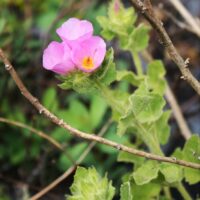
Malacothamnus palmeri var. lucianus
From the hot valleys of the Santa Lucia mountains in central California comes this rare form of the native bush-mallow. Deep pink, cup-shaped flowers appear in late spring and early summer above the fuzzy, light green leaves. Reaches a height of about 6 ft and slowly spreads to form colonies. Give full sun to light shade and provide little to no water once established. A good choice for hot, dry banks with Toyon, Ceanothus and Manzanita. An excellent nectar source for orioles. Deer seem to leave it alone.
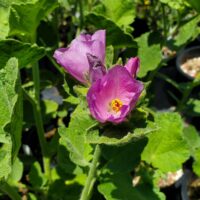
Malacothamnus palmeri var. lucianus ‘Hanging Valley’
Description coming soon!
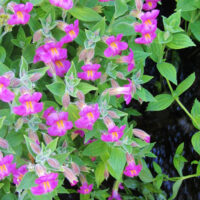
Mimulus (Erythranthe) lewisii – dark flowered form
From cold streams in the Cascade Mountains comes this particularly dark flowered form of Lewis' monkeyflower. Trumpet-shaped blossoms with flared mouths are colored a deep, rich rose-pink, unlike the paler Sierra form. Reaching up to more than a foot tall and spreading to form small clumps, this moisture-loving monkeyflower enjoys part-shade and decent drainage. Hummingbirds love the flowers. Plant with sedges, blue lobelia and false bugbane for a colorful woodland display filled with texture. Great in a container.