Arctostaphylos manzanita
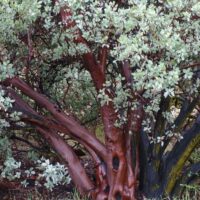
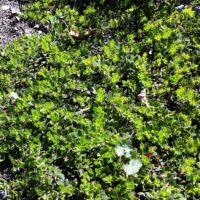
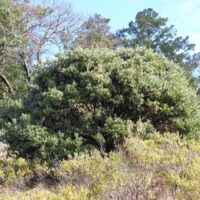
Good subject for a dry sunny bank where this picturesque native shrub can develop its beautiful form of sinewy branches and smooth red-brown bark. Growing 8-12 ft. tall by 6-10 ft. wide or even larger with time. Flowers heavily in the spring with white to soft pink urn-shaped flowers followed by clusters of tiny apple-shaped fruits. An excellent habitat plant providing food and cover for a wide array of birds. The flowers are an excellent early nectar source for bees and hummingbirds. Very drought tolerant once established.
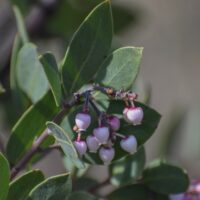
Arctostaphylos manzanita ‘Garrison Canyon’
This large, tree-like selection comes from Garrison Canyon on Pepperwood Preserve above Mark West Springs. Big, round, pewter-green leaves adorn branches covered in smooth mahogany bark. Especially large clusters of soft-pink flowers emerge in late winter and are followed in summer by “little apple” fruits. In time, this selection may reach up to 15 ft. tall and wide. Provide full sun. Very drought tolerant once established.
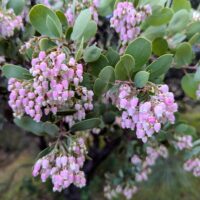
Arctostaphylos manzanita ‘Lake Sonoma Pink’
We discovered this stunning manzanita above Lake Sonoma, which stood out with large, rounded clusters of the pinkest flowers we’ve ever seen on this species. The big, rounded leaves are an appealing grey-green, a pleasing compliment to the colorful blossoms. The smooth, burgundy branches reach up to about 15 ft tall and nearly as wide if left unpruned. Hummingbirds and bumblebees enjoy the late winter flowers, while birds eat the ”little apples” which ripen in the summer. Plant in full sun to light shade and provide little to no irrigation once established. Needs decent drainage. Great as a loose hedge or featured as specimen.
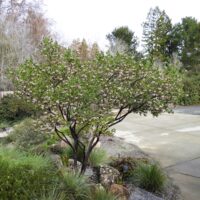
Arctostaphylos manzanita x ‘Austin Griffiths’
Believed to be a cross between 'Sentinel' and 'Dr. Hurd', this hybrid was discovered by Native Sons Nursery and named in honor of a valued volunteer. Glossy green leaves and dark maroon-brown bark form an attractive backdrop for large clusters of soft pink flowers. The blooms appear in early winter, providing a valuable nectar source for hummingbirds and bees. Over time, this upright manzanita can reach a height of up to 10 feet and a width of 8 ft or more. More garden tolerant than 'Dr. Hurd', 'Austin Griffiths' accepts occasional irrigation but can be drought tolerant once established.
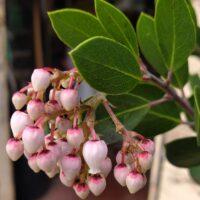
Arctostaphylos manzanita x ‘Mary’s Blush’
This lovely manzanita selection was found along Guerneville Rd. in Sonoma County. Likely a natural cross with the rare Vine Hill manzanita, it has the size and upright form of the common manzanita, with the disease resistance of the A. densiflora hybrids. Initially growing about a foot a year, it will eventually reach 8-10 feet in height. Its slightly-glossy leaves create a dense, tidy appearance, which can be pruned up to show off the deep mahogany trunk. In winter, it blooms prolifically with clusters of pink flowers, followed by beautiful red berries. More tolerant of garden conditions and heavy soil than most, it requires minimal water in summer once established. Its flowers are highly attractive to bees, butterflies, and hummingbirds, and its berries are food for birds.
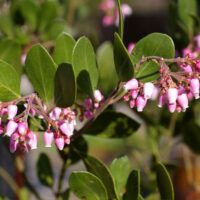
Arctostaphylos manzanita x densiflora ‘Monica’
Found originally along Guerneville Rd. in Sonoma County. It has the form and size of the large common manzanita, 8 ft or more tall with time, and the disease resistance of the Vine Hill manzanita. Features a beautiful dark mahogany trunk and clusters of shell pink flowers set against dark, glossy leaves. The structure is narrower and more upright than most other tall manzanitas, only reaching about 8 ft wide. Give it sun to light shade and summer drought, but it's more tolerant than most of some summer water.Provides food and cover for birds and its flowers provide nectar for hummingbirds and bumble bees.
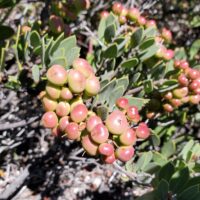
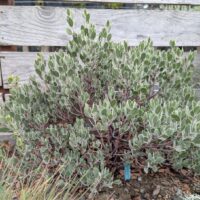
Arctostaphylos montana ssp. montana ‘Lagunitas Grey’
This a strikingly gray and compact form of the rare Mt. Tamalpais manzanita, which is found only in Marin County. Silvery leaves provide all year appeal, set against the smooth, sculptural, burgundy trunks. Winter brings clusters of pink-tinged, white flowers gathered at branch tips, followed by shiny red “little apples” in the summer. Mature plants develop an evenly mounded form, reaching up to about 4’ tall and 5’ wide in about 10 years. They are easily pruned to keep narrower and show of the beautiful bark. While native to serpentine soils, this species does well in most decently draining soil types with full sun and little to no water once established.
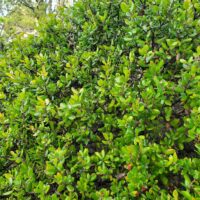
Arctostaphylos osoensis
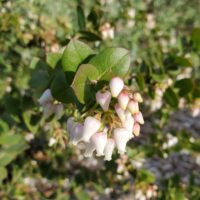
A beautiful and extremely rare manzanita from a small area above Morro Bay. The bright green leaves are auriculate, meaning “ear-shaped”, and have a distinctive matte finish, with new growth emerging in a reddish bronze color. Small clusters of dainty, pinkish-white flowers emerge in late winter/early spring and are adored by hummingbirds. The contorted branches are smooth and colored reddish-brown, aging to gray. Oso manzanita is attractively rounded and dense when young, only reaching to about 5 ft. or so in height with a slightly larger width. With age, it will begin to open, revealing its striking, sculptural trunks. Needs full sun and enjoys occasional irrigation, though it is quite drought tolerant once established.
Arctostaphylos pajaroensis ‘Paradise’
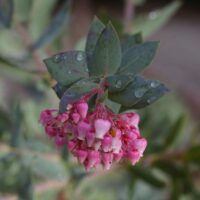
This rare species offers striking foliage and flowers. Large flower clusters of a lovely shade of pink and are followed by prominent rusty-red berries, enjoyed by birds. Beautiful bronze new growth ages to an appealing blue-green which contrasts nicely with the shaggy cinnamon-colored bark. Approximately 6 ft. or more tall and 8 - 10 ft. across in 10 years. Full sun to light shade, excellent drainage with little to no water once established. Flowers are an excellent early source of nectar for hummingbirds and bumble bees.
Arctostaphylos pajaroensis ‘Warren Roberts’
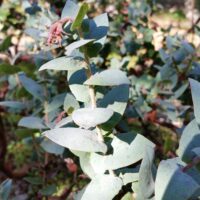
This stunning manzanita displays coral-pink flowers in early winter set against chalky blue-green leaves. In the spring the burnished red new growth emerges creating a striking contrast with the older leaves. The widely curving branches covered with shaggy cinnamon colored bark create a wonderfully sculpted look. If left unpruned, this selection will form a broad drift, about 6 ft. high and up to 8 ft. wide. 'Warren Roberts' is denser and has more intense blue-green leaves than its sister, 'Paradise'. Provide full sun to very light shade and occasional to no irrigation once established. Needs decent drainage. Discovered by Roger Raiche.
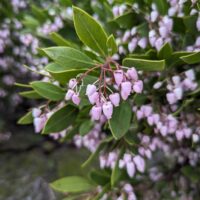
Arctostaphylos stanfordiana
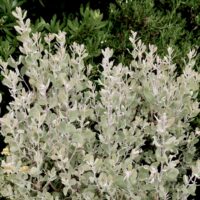
One of the most beautiful of manzanitas with handsome dark mahogany bark, dense shiny green leaves and flowers ranging in color from intense pink to white. Its upright form ranges in height from 4 to 8 ft with a somewhat narrower width. Native to warmer areas of northern California's Coast Range, this species requires excellent drainage, full sun and NO water once established.
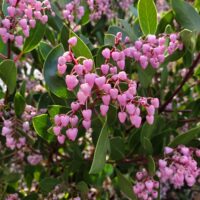
Arctostaphylos stanfordiana ‘Sonoma’
Masses of deep pink flowers and glossy, deep green leaves are an enticing feature of this uncommon selection. But what really distinguishes this cultivar from other Stanford manzanitas is the fact that it actually survives in the garden! Most other selections of this species are notoriously challenging to keep alive in cultivation. While fairly slow growing, the dense foliage mounds up over time to reach a height and width of about 5 ft. The striking burgundy-red trunks contrast nicely with the green leaves. Needs full sun and excellent drainage. No summer water once established.
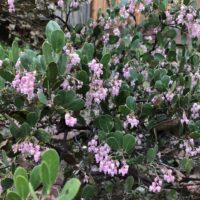
Arctostaphylos stanfordiana ssp. decumbens
A Sonoma County endemic, this rare manzanita is from Rincon Ridge east of Santa Rosa. Low growing mounding shrub to as much as 4 ft tall by more than 6 ft. wide. Charming pink urn-shaped flowers in early spring. Handsome, rugged and drought tolerant. Best in full sun with good drainage, no water necessary once established. A good choice for lean soils, summer heat and drought.

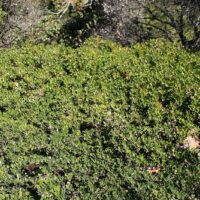
Arctostaphylos uva-ursi ‘Green Supreme’
A superior garden hybrid of the trailing bearberry. A volunteer seedling discovered by staff at Tilden Regional Parks Botanic Garden. Ultimately spreads 6 - 12 ft. across and less than a foot tall. Enjoys moderate to occasional irrigation. The glossy bright green leaves create a beautiful groundcover. Tolerates a wide range of soil types with reasonable drainage. Very disease resistant and fast growing. Shy to bloom or set berries. Sun to part-shade.
Arctostaphylos uva-ursi ‘Point Reyes’
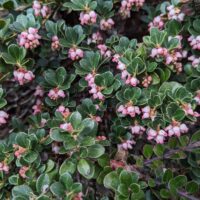
An unusual selection of our native bearberry discovered near the Point Reyes lighthouse in Marin County. Dark green, leathery leaves form distinctive whorls along the stems with pale pink, urn-shaped flowers emerging in early winter. The showy red berries contrast nicely with the dark green leaves. Reaching a height of about 18” and a width of at least 6 ft., this groundcover works well in a rock garden or mixed with other low shrubs and grasses from our coastal areas. Give moderate water in interior locations and protect from the hot afternoon sun.
Arctostaphylos uva-ursi ‘Radiant’
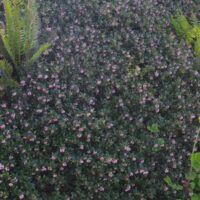
A very low mat of glossy, dark green foliage 6 - 8 inches high and creeping at least 6 ft. across. Light pink flowers in early winter are followed by showy red berries. In hot inland areas give moderate water and light afternoon shade. A sturdy evergreen groundcover.
Arctostaphylos uva-ursi ‘Samoa Dunes’
This Humboldt County selection of the ubiquitous bearberry distinguishes itself with large, rounded, glossy leaves of deep green. Reaching a height of about 6 inches and a width of at least 6 feet, this durable groundcover spreads quickly to form a weed-smothering carpet. Little urn-shaped flowers colored soft pink appear in spring and are followed by shiny red berries. Provide full sun to part shade and moderate to occasional irrigation once established. Protect from the hot afternoon sun in warmer areas. The shiny, dark green foliage combines well with grey-leaved plants such as Artemisia ‘David’s Choice’ and the fescue ‘Patrick’s Point’.
Arctostaphylos uva-ursi ‘San Bruno Mountain’
A beautiful selection of bearberry from San Bruno Mountain south of San Francisco. This groundcover manzanita forms a luxuriant mat of large, glossy, spatulate leaves spreading to around 6 feet wide. The soft pink urn-shaped flowers lead to big red showy berries. A natural for coastal plantings where it can grow in full sun with little to no summer water needed. Inland, bearberry does best with shade from the hot afternoon sun and moderate summer watering.
Arctostaphylos uva-ursi ‘Wood’s Compact’
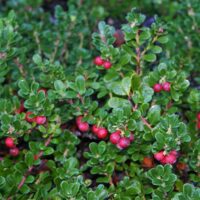
A low growing, spreading manzanita with lustrous green, rounded foliage, little pink urn-shaped flowers and pretty red berries, quite large for the species. This selection from coastal Oregon spreads at a moderate pace to 6-8 feet wide and only getting 6-8 inches tall. Full sun to light shade in hot areas with moderate summer water.
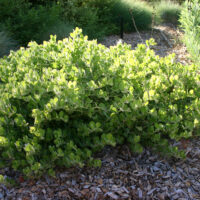
Arctostaphylos x media – Point Arena forms
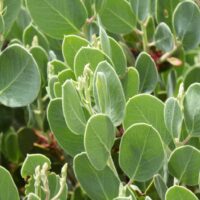
This special and diverse group of manzanitas come from Point Arena on the southern Mendocino Coast. These naturally occurring hybrids involve at least two species: A. uva-ursi, A. columbiana and sometimes A. nummularia. The resulting offspring have wonderfully varying features. The leaves range from large, light-green, and fuzzy to small, dark-green and glossy. The plants can form a mounding habit reaching up to 4 feet tall or hug the ground to form dense mats. Plant in full sun to light shade and give moderate to infrequent irrigation once established. Plants grown in hot areas will benefit from extra irrigation and some afternoon shade.
Arctostaphylos x media ‘Humboldt Mystery’
Arching branches and a mounding habit up to 6 ft. tall and 8 ft. wide distinguish this manzanita from its relatives. In winter, pinkish-white flowers provide nectar for hummingbirds and bees, followed by large, red berries in the autumn. Burnished red trunks display a colorful backdrop to the leathery, large, dark green leaves. Plant in full sun to light shade and provide moderate to infrequent irrigation. James Roof of Tilden Botanic Garden discovered this unusual selection somewhere on the Humboldt Coast, but, true to his enigmatic character, refused to say where he found it. It is believed to be a natural cross between bearberry and the hairy manzanita.
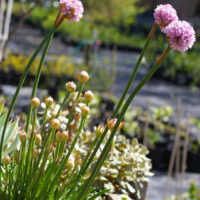
Armeria maritima ssp. californica
Grown from northern California seed source, this coastal native is a sturdy perennial with grass-like blades in compact clumps. Pink pompom flowers on long stems bloom spring into summer. A natural along the coast where it grows in full sun, needing a little shade in hotter regions. Moderate to little water with decent drainage. Excellent for rock gardens. Deer resistant.