
Sidalcea stipularis
A very rare checkerbloom native to a single marsh in the Sierra foothills. Round, serrated leaves appear in late winter and spread quickly to form an eight inch tall, light green groundcover. Soft-pink cup-shaped flowers bloom in early summer atop two foot stems clothed in lance-shaped leaves. Combine with low grasses in a well-watered meadow for a lovely naturalized look. Plant in full sun to light shade with moderate to regular water. Tolerant of heavy soils. Winter deciduous.
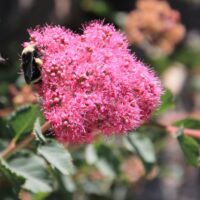
Spiraea densiflora ‘Trinity Rose’
This cultivar hails from the Trinity Alps in northwestern California. A neat looking deciduous shrub growing 2-3 foot tall and a bit wider with a compact habit and pretty bluish-green leaves. Early summer brings flat topped clusters of rosy-pink flowers on the branch tips. Foliage often takes on nice yellow tones in the autumn before losing its leaves. Plant in sun to light shade with regular water. Flowers attract butterflies.
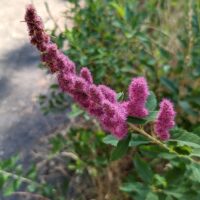
Spiraea douglasii
In summer, wands of violet-pink flower clusters decorate the branch tips of this deciduous shrub. Forms broad thickets 3 - 6 ft. tall with bluish-green leaves. Enjoys regular moisture and full sun to light shade. Great for a naturalistic planting in a woodland garden or along streams. Attracts bees and butterflies and is a larval host for various butterflies and moths in its native range. Native to the coast and into the mountains from northern California to Alaska.
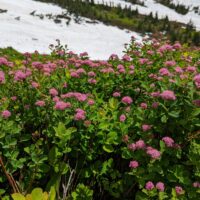
Stachys bullata
A native perennial from the mint family, found primarily near the coast from San Francisco southward, where it inhabits oak, pine and fir woodlands. Medium-green leaves are softly fuzzy with scalloped edges, growing around 2 ft. or more tall and spreading by underground rhizomes to form a colony. Blooming spring through summer, with lavender-pink tubular flowers in whorls, which attract bees, butterflies and hummingbirds. Tends to grow in somewhat drier areas, but responds well to moisture and also tolerates inundation. A natural with rushes, ferns and snowberries. Useful for partly shaded bioswales and oak/mixed conifer woodlands. The underground rhizomes make it a good choice for erosion control. Deer resistant.
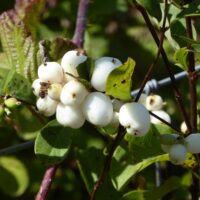
Symphoricarpos albus var. laevigatus
Snowberry is a deciduous, native shrub for dry or moist shade. Reaches about 4 - 6 ft. tall and spreading. Clusters of tiny, pinkish, urn-shaped flowers are followed by showy white berries on arching branches. Responds well to shearing. A good choice for under native oaks. Fruit may be toxic to humans. Hummingbirds like the flowers. Berries are palatable to hermit thrush, Swainson’s thrush, robins and other birds. Also creates good cover for birds.
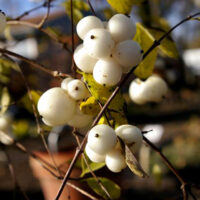
Symphoricarpos albus var. laevigatus ‘Bartlett Springs’
Snowberry is a deciduous, native shrub for dry or moist shade. Our own selection from Lake County, has particularly large oval leaves on graceful arching branches with exceptionally big fruits. Reaches about 4 ft. tall and spreading. Clusters of tiny, pinkish, urn-shaped flowers are followed by showy white berries on the branch tips. Responds well to shearing. A good choice for under native oaks. Fruit may be toxic to humans. Hummingbirds and bees like the flowers. Berries are palatable to hermit thrush, Swainson’s thrush, robins and other birds. Also creates good cover for birds.
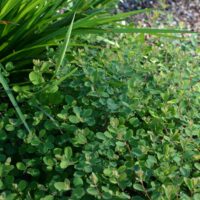
Symphoricarpos albus var. laevigatus ‘San Bruno Mountain’
This attractive low-growing form of our native snowberry is a Cal Flora Nursery selection from San Bruno Mountain. Its dimensions are about 8 inches tall and spreading. Indeed the spreading nature of this plant is robust and it should be included in areas where that is an asset rather than a liability. The wiry arching branches hold light green rounded leaves and the effect of the new growth is delicate and appealing. Tiny pink urn-shaped flowers decorate the branch tips, followed by small white fruits. Perfect for a lightly shaded bank or the light shade of a tree where it will be very drought tolerant. With total drought it may go summer deciduous but occasional summer water will keep it looking fresh. The flowers attract bees and hummingbirds.
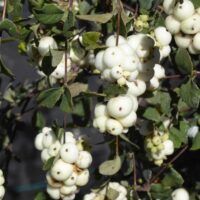
Symphoricarpos albus var. laevigatus ‘Tilden Park’
Here is a particularly fine selection of the native snowberry, notable for its dependable crop of showy white berries on arching branches. A deciduous shrub, snowberry grows to about 4 ft. tall and spreads to form drifts. A good choice for a shady bank, woodland edge, or under oaks. Appreciates and responds to moisture, but once established will tolerate dry conditions. Fruit may be toxic to humans. Hummingbirds like the flowers. Berries are palatable to hermit thrush, Swainson’s thrush, robins and other birds. Also creates good cover for birds.
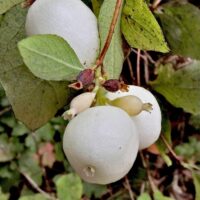
Symphoricarpos mollis
Low growing, spreading groundcover, usually staying around a foot tall by 3-6 feet wide. Rounded blue-green leaves on arching stems makes an excellent low growing thicket which competes well with tree roots. An amenable plant, able to grow in full sun in coastal areas and different depths of shade elsewhere, even fairly deep shade. The tiny, pink, bell shaped flowers are attractive to bees and hummingbirds and the white fruits that follow are eaten by birds. Good for erosion control and does well under oaks. Offers excellent habitat value with its flowers and fruits and provides cover for ground nesting birds. Drought tolerant once established. Deer often leave it alone.

Tellima grandiflora
Fringe cups is a sweet native perennial for the shade garden. Slender flower stalks rise above the soft mounds of foliage 18 inches to 2 ft. The small, urn-shaped flowers have tiny fringed petals which open green and then age to pink. Seeds about in a nice way. Tolerates dry shade. Deer resistant.
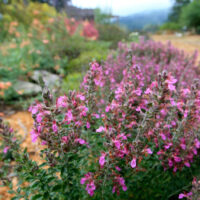
Teucrium chamaedrys
Tough, neat looking evergreen shrublet-good for hot dry places. Excellent edging for herb gardens. Grows 1 ft. tall by 2 ft. wide. Dark green foliage topped with light magenta flowers in spikes. Shear after blooming. Deer seem to leave it alone. Bee favorite.
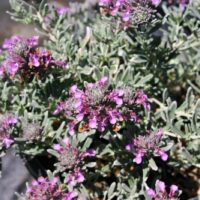
Teucrium cossonii (majoricum)
A beautiful little shrublet that hugs the ground to 2 ft. or more wide. Narrow gray-green foiage is topped with dense clusters of rosy-lavender flowers, nearly the entire growing season. Requires decent drainage with moderate to occasional summer water once established. Great rock garden plant. Pollinator friendly and deer resistant.
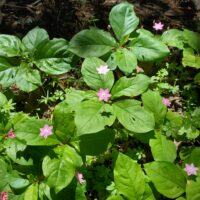
Trientalis latifolia
Shade loving native perennial, inhabiting open woods from San Luis Obispo County to British Columbia. Forming small colonies from underground tuberous rootstock. Slender stems rise 6 inches tall with a whorl of neat leaves at the top of the erect stems. Dainty pink star-shaped flowers are suspended above the leaves on thread-like pedicels. Flourishes in loose, woodsy, acidic soils in lightly shaded areas. Thrives with the spring rains, then goes dormant in the summer dry period. A charming addition to the shade garden.
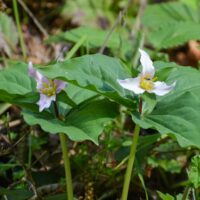
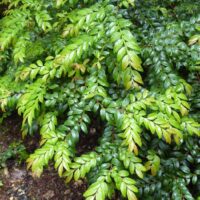
Vaccinium ovatum
A handsome evergreen shrub native to moist forests of the Pacific Coast. Leathery dark green leaves with new growth flushed bronzy-red. Small pinkish flowers in the spring are followed by delectable black berries prized in pies and jams. A slow growing shrub for shady situations or cool sun along the coast with moderate to regular water. Grows 4 - 5 ft. tall and wide or as much as 8 ft. in especially prime locations given time. Flowers provide nectar for hummingbirds and bees, fruit for many species including humans. Fire resistant. Deer resistant.
Vaccinium ovatum ‘Scarlet Ovation’
A round of applause for this cultivar of the evergreen huckleberry, featuring an especially compact habit and stand out bronzy-red new growth. Forms a small, dense shrub, 3 -4 ft. tall and wide. The new growth in the spring is dependably fiery-red, contrasting beautifully with the neat, dark-green older foliage. Small, urn-shaped, pinkish-white flowers are rich in nectar and attract an array of pollinators, including hummingbirds. The small, dark-blue berries are tasty and enjoyed by wildlife and humans. Huckleberries can grow in full sun along the coast, but require some shade in hot areas. Moderate to regular summer water. Fire and deer resistant.
Vaccinium ovatum (Inverness)
This Marin County selection of the evergreen huckleberry was chosen by landscape architect Ron Lutsko for its dense and compact habit. The leaves appear to us to be smaller than usual for this species and spaced more closely together. It has the classic, tasty huckleberries and blooms and fruits readily. Plant in part shade and provide regular to moderate irrigation. Will grow in full sun near the coast. While tolerant of somewhat shadier locations, evergreen huckleberries fruit best with adequate light. Fire resistant. Deer resistant.