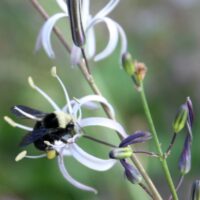
Chlorogalum pomeridianum v. pomeridianum
Known for their large, fibrous bulbs historically used by indigenous peoples and early settlers for soap, food and to stupefy fish. Long, wavy-margined leaves form a rosette in winter followed in late spring by tall, airy flower stems bearing small white flowers that open in the late afternoon and evening. Great in naturalistic settings in full sun to light shade. Needs to go summer dry once established. Larval food source for the Western Brown Elfin butterfly.
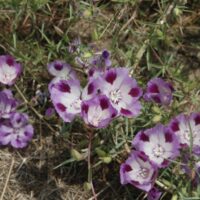
Clarkia williamsonii
The incredibly showy flowers of this native ANNUAL will take your breath away in late spring and early summer. The large, lavender-pink, papery flowers feature deep, burgundy-red brush strokes and cheery white centers. Plants form a loose mound about 1 ½ ft. around. Butterflies and other pollinators love Clarkias. Native to the Sierra foothills, where it grows in full sun to light shade. Plants enjoy moisture while they are developing in the winter and spring, but are accustom to hot and dry summers. Needs decent drainage. Reseeds readily, as long as there is exposed soil nearby. Deer resistant!

Claytonia sibirica
This native perennial with white to pink candy-striped flowers seeks shady, moist conditions. Our form is from Sonoma Coast and has particularly pink flowers. Related to miners lettuce, candy stripe produces dark green, succulent, edible leaves in low rosettes. Blooms over a long period beginning in spring and will frequently reseed. A sweet, spreading, low ground cover for a shady area with regular moisture. A charming and colorful addition to the forest garden, combining beautifully with ferns, wild ginger and false Solomon’s seal.
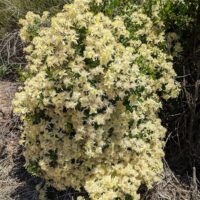
Clematis lasiantha
This deciduous native vine climbs over shrubs and trees in full sun to part shade. Produces a wealth of one inch, creamy-white flowers in spring and summer followed by large fluffy attractive seed heads. Use clematis to adorn a pergola or archway, or to train up trees or other structures. Plant in full sun to light shade. Little water once established. Generally deer resistant.
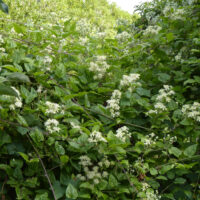
Clematis ligusticifolia
Native to riparian areas where the vining stems will climb and weave their way up and over shrubs and trees. Large masses of fragrant, small creamy-white flowers bloom in summer. Beautiful, silvery, feather-like fruits follow and are as attractive as the blossoms. The intricately divided leaves on long stems can climb 20 - 30 ft. Full sun to light shade with regular to moderate summer water. Deciduous. Generally deer resistant.
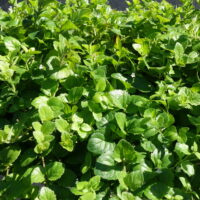
Clinopodium (Satureja) douglasii
Wonderfully fragrant native perennial with trailing stems about 6 inches tall and spreading. Roundish, scallop-edged, deliciously minty leaves have a long history of herbal uses. Tiny white flowers are borne in axils of leaves in the spring. A sweet small scale groundcover for the woodland garden with light shade and moderate to a little summer water.
Comarostaphylis diversifolia
Looking something like a toyon but closely related to manzanita, this handsome evergreen is a useful landscape subject. Native to chaparral communities near the coast in Southern California where it usually grows on north facing slopes. Growing slowly 6-20 ft. tall with shredded red bark and shiny dark green foliage. Creamy-white urn-shaped flowers in racemes bloom March-May are attractive to hummingbirds and pollinators. The dark-red rough textured fruits in summer are enjoyed by many kinds of birds. Grow as an upright shrub or with selective pruning can be trained into a small tree. Useful as a specimen, background screen or informal hedge in full sun to light shade with good drainage. Will except summer water only with good drainage and is drought tolerant once established.
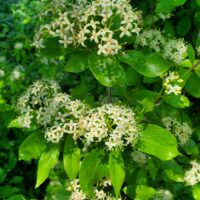
Cornus glabrata
The bluish-white fruits of this species are reputed to be especially good for attracting birds. Small creamy white flowers appear in spring on subtly beautiful arching branches. A type of stream dogwood, it forms thickets with time, 6 - 10 ft. tall. Deciduous. Prefers moisture and some shade. Western tanager and warblers eat the flowers. Grosbeak, Northern oriole, flickers, spotted towhee, Western bluebird, robins, mockingbirds, bandtailed pigeon, waxwing and quail eat the fruits. A great plant for stream restoration.
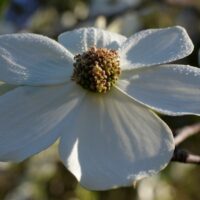
Cornus nuttallii
Spectacular native tree with pleasing horizontal branching, gorgeous white flowers, handsome fruits and good fall color. An elegant specimen tree though notoriously challenging in cultivation. Easiest to grow within its native range. Dislikes poor drainage, fertilizing, pruning, and injury to the tender bark. Drought tolerant in shady, cool situations but enjoys occasional to moderate water in fast draining soils. Once established it can become a show stopping specimen in a wooded garden, under high branching trees, along stream courses and slopes with eastern or northern exposure. Birds relish the red fruits.
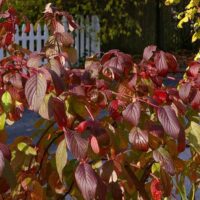
Cornus sericea
Redtwig dogwood is a spreading shrub growing 6 ft. or more tall and at least as wide, forming broad thickets along creeks and rivers. The beautiful red stems stand out in the winter landscape once they loose their leaves in the fall. Flat topped flower clusters are creamy white and are followed by clusters of white fruits. Often takes on nice fall color before loosing its leaves. Plant in full sun to light shade with regular to moderate watering. Does great on heavy clay soils and is a very good soil stabilizer. An excellent habitat plant where it provides food and cover. The fruits are very popular with birds. At the nursery, bluebirds and mockingbirds compete aggressively for the fleshy white fruits.
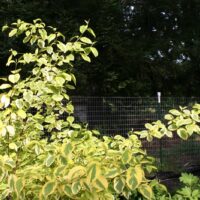
Cornus sericea ‘Hedgerow’s Gold’
A striking selection of redtwig dogwood, discovered near the Deschutes River in Eastern Oregon and introduced by Hedgerows Nursery. The large leaves of soft green have a broad, irregular, bright golden edge. In autumn the leaves turn an attractive ruby color. Forms a thicket that easily reaches 6 ft. tall by 6 ft. wide. The red stems stand out in the winter landscape after the leaves have fallen. Flat topped cluster of white flowers appear in spring and are followed by small white fruits enjoyed by birds. Best with regular water, good light and protection from the hot afternoon sun.
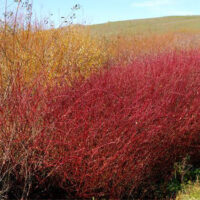
Cornus sericea ssp. occidentalis ‘Tomales Bay’
This selection of the native creek dogwood is from Tomales Bay, Marin County, where it forms broad clumps 6 ft. or more tall and wide. The beautiful red stems stand out in the winter landscape. Flat topped flower clusters are creamy white followed by small white fruits. Good fall color. Plant in full sun to light shade and give regular irrigation. Western tanager and warblers eat the flowers. Grosbeak, Northern oriole, flickers, spotted towhee, Western bluebird, robins, mockingbirds, bandtailed pigeon, waxwing and quail eat the fruits.
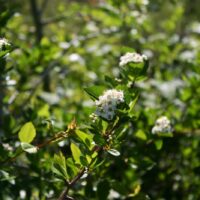
Crataegus gaylussacia
Klamath hawthorn occurs in seasonally wet meadows or borders of forests in northern California. A large deciduous shrub or small tree 6 - 20 ft. tall with reddish-brown bark and formidable thorns. Small, white flowers in flat topped clusters in late spring are followed by red fruits that ripen to black. The fruits are highly attractive to birds. A slight fall/winter chill can turn the leaves a brilliant orangey-red. Plant in full sun to partial shade with regular to moderate water. This shrub tends to sucker and could be encouraged to form a thicket. It is also amenable to pruning, and can be trained into a slender tree. This is our most common, local native hawthorn., and until recently was once thought to be C. douglasii.
Dichondra donelliana
Dichondra is a small genus of flowering plants in the morning glory family that form a thick, mat-like ground cover of rounded leaves, once popular as lawn substitutes. This native species is uncommon in the nursery trade and in gardens, but has potential worth exploring. Native to California coastal plant communities on open slopes and moist grasslands, it forms a flat, perennial ground cover with tidy, rounded leaves, densely packed along creeping stems. The flowers are tiny and greenish-white, not real showy but interesting. An obvious application would be a small scale ground cover or meadow planting in areas with some moisture. Could be a candidate for green roofs or walls, where a low and spreading plant is the ticket. Plant in full sun on the immediate coast, otherwise light shade is necessary. Moderate summer water.
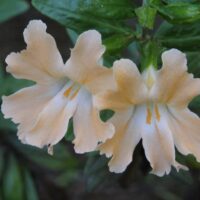
Diplacus (Mimulus) ‘Creamsicle’
The trumpet-shaped blossoms of the 'Creamsicle' monkeyflower are a beautiful, light shade of pastel orange. With their white throats and dark orange nectar guides, the flowers have a two-toned affect. This is one of Phil Van Soelen's first hybrids using Diplacus bifidus from Bowman Lake in the Sierra Nevada (thanks to Ted Kipping). It has proved long lived in both Fulton and Sebastopol and has the useful characteristic of sprouting new growth from the base so that old growth can be pruned away. Evergreen foliage grows 2-3 feet tall and wide. Best with light shade, good drainage, and minimal summer water. Deer resistant.
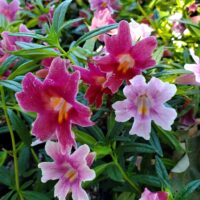
Diplacus (Mimulus) ‘Jelly Bean Dark Pink’
This fine selection by monkeyflower breeder Richard Persoff has large, showy flowers in a dark rosy-pink with orange throats and white edging. As the flowers age, their color becomes paler, creating a dramatic contrast between new and old flowers. Selected for its attractive foliage, floriferousness, and compact habit, it grows to 2 ft. tall and wide. Monkeyflowers are dought tolerant once established, but need good drainage and occasional deep watering to keep the flowers coming. Plant in full sun along the coast and light shade inland. A favorite of hummingbirds and butterflies. Deer resistant.
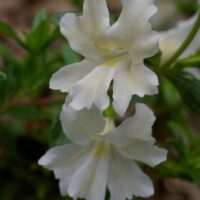
Diplacus (Mimulus) ‘Phil’s White’
The blooms of this monkeyflower hybrid open as a pale ivory-yellow and mature to a cool white. 'Phil's White' is a cross between the lovely White Verity Diplacus (Mimulus) hybrid and Diplacus bifidus from Bowman Lake in the Sierra Nevada (thanks to Ted Kipping). It has proved long-lived in both Fulton and Sebastopol. Foliage is evergreen but benefits from occasional pinching of older stems. This selection has the useful characteristic of sprouting new growth from the base so that old growth can be pruned away. Best with light shade and good drainage. Water occasionally for best blooms. The flowers provide nectar for hummingbirds and butterflies. Deer resistant.
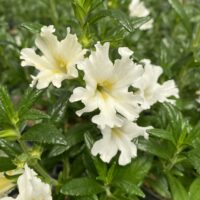
Diplacus (Mimulus) bifidus ‘White’
This elegant monkeyflower has extra frilly, creamy-white, azalea-like flowers, with soft yellow throats. The abundant blossoms stand out against the slender, deep green foliage and bloom over a long period, late spring and into fall. Reaches about 2 ft. tall and 3 ft. wide. Plant in sun to light shade with good drainage and occasional summer water. Hummingbirds, bees and butterflies are all drawn to the flowers and it is a larval food source for checkerspot and painted lady butterflies. Great in a container. Deer resistant.
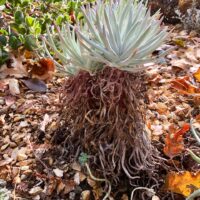
Dudleya virens ssp. hassei
Endemic to Catalina Island, this rare succulent forms chalky-grey rosettes made up of plump fingerlike leaves, 6 inches tall and spreading to form a mat 1 – 2 feet wide. Small white flowers with yellow centers on stems 6 -12 inches tall, bloom in the late spring and are attractive to hummingbirds and other pollinators. Plant in full sun to light shade with occasional deep summer watering. Tolerates heavier soils than most Dudleyas. A dependable small-scale groundcover or container plant.
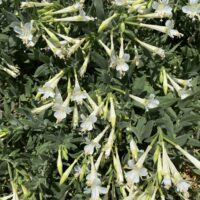
Epilobium canum ‘Summer Snow’
While CA fuchsias are generally known for their abundant showy red flowers, this unusual variety offers surprising clean-white blossoms on low growing green foliage up to 10 inches tall. Spreading by underground rhizomes, this mat forming perennial grows in full sun to light shade with occasional to little summer water once established. Perfect in naturalistic plantings, on slopes amongst boulders, dry creek beds or rock walls. California fuchsias bloom heavily late summer into fall and their tubular flowers are hummingbird favorites. The habit of this plant can be improved with shearing in the winter.
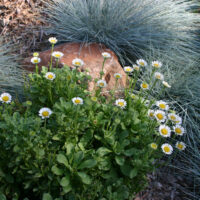
Erigeron glaucus ‘White Lights’
This unusual white flowering form of seaside daisy was discovered along a coastal bluff in Sonoma County by Roger Raiche. It has been a long bloomer, starting in spring and continuing into autumn. Reaches a height of up to 1 ft. and spreads to form a small clump. Prefers sun, decent drainage, and is drought tolerant once established. A little shade and moderate to occasional water is best in hot inland sites. A member of the sunflower family, seaside daisies are excellent sources of both nectar and pollen for butterflies, bees and other pollinators. Their seeds are favored by juncos and finches.
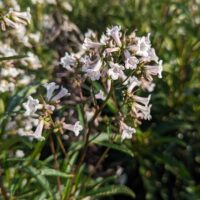
Eriodictyon californicum
Uncommon in the nursery trade, this aromatic, evergreen shrub is native to dry habitats of chaparral and mixed evergreen forest plant communities in North and Central California and into Oregon. An opportunist, this shrub stump sprouts after fires and grows with renewed vigor after any soil disturbance. The dark green, leathery leaves are covered in a shiny, fragrant, resin and are sticky to touch. The common name means, holy herb, and the pungent leaves have a long history of medicinal uses. Grows 3 - 5 ft. tall and spreads by underground roots to form a colony. Late spring brings clusters of small, trumpet-shaped flowers of pale lavender, sometimes white or pale blue, which are highly attractive to butterflies, hummingbirds and bees. Plant in full sun with good drainage and little water once established. Deer resistant.
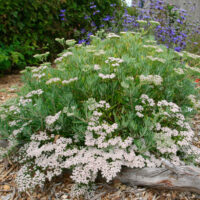
Eriogonum arborescens
A large, shrubby buckwheat with narrow, pale green foliage and sturdy, flat-topped inflorescences of creamy white to pink flowers. The flowers age over time, eventually turning reddish brown, remaining ornamental for a long period. Grows 3 to 4 ft. tall and slightly wider. Normal to very lean well-drained soils. Especially drought tolerant along the coast, may need infrequent summer water inland and possibly a little afternoon shade. Buckwheats are excellent additions to habitat gardens, providing pollen and nectar for bees and butterflies and seeds for many creatures. Deer resistant.
Eriogonum elongatum
This buckwheat is native to dry, rocky places, from Monterey Bay south to Baja, in coastal scrub and chaparral plant communities. Super drought tolerant and late blooming, supporting native bees, parasitic and predatory insects and butterflies. Forms a low mound of gray foliage, topped with long, leafless, flower stems, rising 2 - 3 ft. tall. Flowers late in the summer with ball-like clusters of tiny white and pink flowers spaced along the tall, gray, tomentose stems. Full sun, good drainage. Tolerant of serpentine soils. Deer resistant.
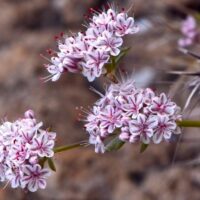
Eriogonum fasciculatum
This adaptable buckwheat is a native of central and southern California. It is a pioneer plant capable of surviving and colonizing some of the hottest driest sites. These attributes are very useful in a garden setting but it should not be planted in or adjacent to wildlands where it may escape and displace local natives. Small native shrub, forming a broad mound 3-4 ft. high and at least 4 ft. wide. Flower clusters are creamy white to pink, turning an attractive rust color with age. Good erosion control plant - best in a well drained, sunny site. Flowers attractive to bees and butterflies. Deer resistant.
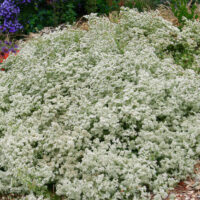
Eriogonum fasciculatum ‘Warriner Lytle’
An interesting form of California buckwheat introduced by the Theodore Payne Foundation. Grows quickly into a low and spreading evergreen groundcover clothed with small, needle-like leaves, 18 inches tall and 6 to 8 feet wide. From late spring to early fall, tight clusters of creamy-whitish pink flowers appear which are very attractive to bees and butterflies. As the flowers go to seed they gradually turn dark russet and are attractive to seed eating birds and mammals. Excellent for dry slopes where it will grow in full sun to light shade with good drainage. Quite drought tolerant once established. Deer resistant.
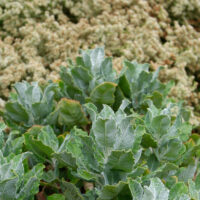
Eriogonum giganteum
Native to the Channel Islands of Southern California, this buckwheat can grow to be a very large mounding shrub with gray felted leaves, 4 - 5 ft. tall and wide. The flower stalks have large, flat sprays of cream-colored to pale pink flowers in summer and are prized by arrangers of dried bouquets. Flowers are attractive to bees and butterflies and birds enjoy the seeds. Best in sunny well-drained sites. Drought tolerant but in hot inland situations they look best with occasional deep waterings in summer.
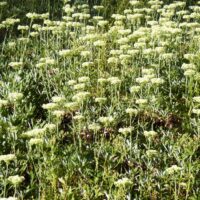
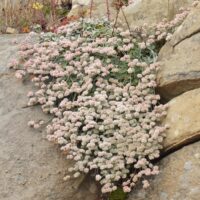
Eriogonum latifolium
Native to our coastal bluffs, this perennial forms neat mounds of silvery white foliage under 1 ft. tall. Flowers develop in dense pom-poms and are creamy white to pinkish. Tolerates sun, wind and drought once established but needs decent drainage. Provide occasional summer irrigation to keep them looking their best. Buckwheats have substantial wildlife value, providing pollen and nectar for bees and butterflies, larval food for butterflies, seeds for birds and cover for many creatures. Deer resistant.
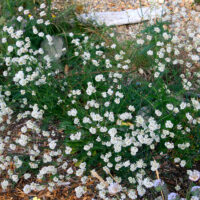
Eriogonum nudum
Few natives are as excellent a source of nectar for bees and butterflies as the buckwheats. This widely distributed species is known for its elegant flower displays on naked stems rising one to three feet above low mounds of grey-green leaves. Naked buckwheat has flower pom-poms ranging in color from white to pink set on slender stems in open clusters up to twelve inches wide. Blooms from late spring into early autumn. Provide full sun to very light shade in soil with decent drainage. Drought tolerant once established. Generally deer resistant.