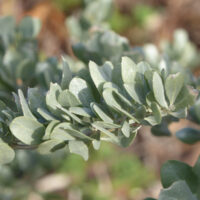
Atriplex lentiformis
This native bird favorite is a tough and useful shrub with beautiful silvery gray foliage. Growing 5 ft. or more tall and spreading widely, quail bush is valued for its ability to deal with difficult sites where it tolerates wind, salt spray, saline and alkaline soils. A terrific habitat plant, providing food and cover for a wide array of birds and mammals. Native from the coast to the desert. Excellent for erosion control and is fire resistant. Benefits from annual shearing and occasional aggressive pruning to rejuvenate. Plant in full sun with occasional to little summer water.
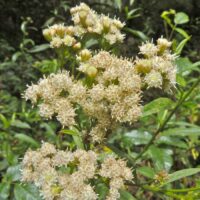
Baccharis glutinosa (douglasii)
This native perennial is a powerhouse for pollinators, luring small butterflies, predatory wasps and other beneficial insects to its dense, white, flat-topped, nectar rich flower heads. Found in wetland and riparian habitats such as salt marshes and stream edges along the coast and interior valleys of California. An erect perennial, growing 3 ft. or more tall, with long, lance-shaped, resinous, leaves and spreading by rhizomes. Blooming in late summer to early fall, the flowers lack petals and are dioecious, with male and female disc flowers occurring on separate plants. Plant in full sun to light shade with moderate to regular water. Deer resistant.
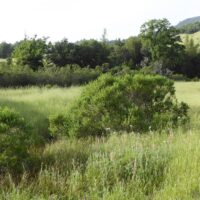
Baccharis pilularis
This is the upright form of coyote bush, growing 4 - 8 ft. tall and wide. Valued for its ability to flourish in a wide range of conditions. Also valued as an excellent habitat plant offering food and cover to a wide variety of wildlife. Flowers are not showy and the male and female flowers are borne on separate shrubs. This crop of plants are a mix of males and females and one can’t tell until they bloom. Plant in sunn or light shade. Not fussy about soils. Quite drought tolerant once established. Responds well to pruning or shearing, working well as a screen. Deer resistant.
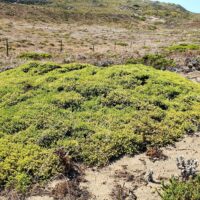
Baccharis pilularis – Bodega Dunes form
Coyote bush is a tough, native, evergreen shrub, forming mounds of dense foliage that hold soil and provide food and cover for birds and mammals. Flowers are small and cream-colored and appear in the autumn. This crop is grown from seed collected in the Bodega Bay Dunes from parents that were under two feet tall and around 6 ft or so wide. Time will reveal the exact form and sex of each plant in this crop. Both male and female plants have significant habitat value, with their combined contributions of abundant pollen, nectar and copious seed late in the season. It will be a surprise as well as a useful addition to the habitat garden. Plant in full sun, though a little shade is helpful in hotter sites. Shear occasionally to renovate and keep dense. Drought tolerant on the coast, but best with occasional water inland. Deer resistant.
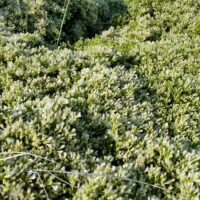
Baccharis pilularis – female
Upright form of coyote brush, growing 4 - 8 ft. tall and wide. Valued for its ability to flourish in a wide range of conditions. Also valued as an excellent habitat plant offering food and cover to a wide variety of wildlife. Flowers are not showy and the male and female flowers are borne on separate shrubs. Theses plants are FEMALE and will produce seed (when male plants are present). An abundance of pollinators and beneficial insects use Baccharis flowers and birds love their seeds. Plant in sun to light shade. Not fussy about soils. Quite drought tolerant once established. Responds well to pruning or shearing and is useful as a screen. Deer resistant.
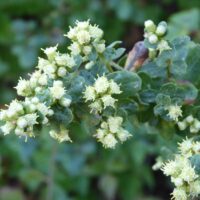
Baccharis pilularis – male
Upright form of coyote brush, growing 4 - 8 ft. tall and wide. Valued for its ability to flourish in a wide range of conditions. Also valued as an excellent habitat plant offering food and cover to a wide variety of wildlife. Flowers are not showy and the male and female flowers are borne on separate shrubs. These plants are MALE and produce ivory colored flowers with pollen and nectar. An abundance of pollinators and beneficial insects use Baccharis flowers. Plant in sun to light shade. Not fussy about soils. Quite drought tolerant once established. Responds well to pruning or shearing and is useful as a screen. Deer resistant.
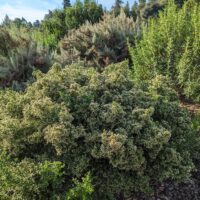
Baccharis pilularis ‘Mayacama Mound’
This dense, bright green, gumdrop-shaped coyote bush only reaches about 3 ft tall and spreads a wider. We discovered this heat and drought tolerant selection in a batch of seedlings from inland Sonoma Co.. A great alternative for the ubiquitous ‘Twin Peaks’, which is a coastal selection and less suitable for hot, dry sites. Plant in full sun to light shade where mature plants won’t need supplemental water, but an infrequent deep soak will keep them looking fresh. The small, whitish flowers are relished by pollinators in the early autumn. This selection is female, so the late autumn seeds provide an important food source for birds. A sturdy, low, evergreen shrub for tough situations.
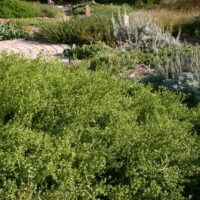
Baccharis pilularis ‘Pigeon Point’
Adaptable and dependable low growing form of the native coyote bush. Forms a mound of bright green leaves with an undulating habit 2 - 3 ft. tall and 6-8 ft. wide. Able to tolerate many soil types and watering regimes this shrub is best in full sun to light shade. Extremely drought tolerant along the coast but best with moderate to occasional summer water inland. When watered and annually trimmed to keep low and free of debris it is recommended for fire resistance landscapes. A good addition to the habitat garden, coyote bush offers excellent cover to a wide variety of wildlife. ‘Pigeon Point’ is a male selection and does not make seed. Deer resistant.
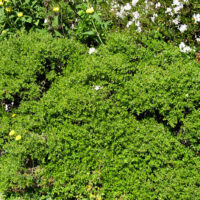
Baccharis pilularis ‘Twin Peaks’
One of the fastest, toughest, densest evergreen native large scale groundcovers. Discovered on Twin Peaks in San Francisco. Grows at least to 6 ft. wide and 2 - 3 ft. tall. Extremely drought tolerant along the coast but best with moderate to occasional summer water inland. Shear hard annually in spring to keep rejuvenated. Sun on coast, afternoon shade inland. This is a male selection so it won't produce seeds. Deer don’t seem to eat it.
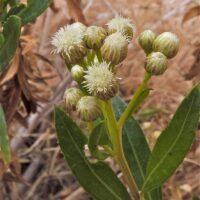
Baccharis salicifolia
This native shrub looks something like a willow in foliage and is found in similar habitats in California and the southwest US. Not a willow at all, but a member of the aster family, this evergreen shrub blooms nearly year round, making it a powerhouse for pollinators. The profusion of small, creamy white, fuzzy flowers, tinged with pink or red are highly attractive to butterflies, bees and other beneficial insects. Extremely tough and easy to grow in full sun with summer water, where it will grow 6 - 10 feet tall and wide with rich, green foliage. Able to survive drier conditions than a willow could handle, but it will look rough if it gets too dry. Responds well to pruning and can be cut down to six inches to refresh. Excellent screen, windbreak and for soil stabilization. Stellar for attracting pollinators.
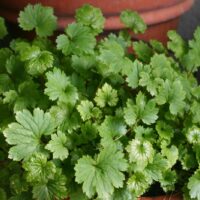
Boykinia occidentalis
Clusters of dainty white flowers and glossy dark green leaves make the brook saxifrage a wonderful addition to the moist shade garden. Flowers open in the spring on arching stems up to a foot tall. May continue to bloom into autumn. The round, serrated leaves form low mounds up to 2 feet wide. Tolerates heavy soil and may seed around. Will grow in part to heavy shade. Needs regular moisture.
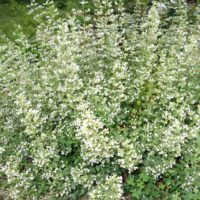
Calamintha nepetoides
A pretty, little, non-spreading mint relative, forming a rounded shrublet of shiny, bright green foliage to around 1’ tall and about 2 ft wide. Covered with hundreds of tiny, pale blue, nearly white blossoms over a long period in summer. Good for full sun to light shade with moderate watering. Tolerant of clay soil. One of our bee magnets. Deer resistant.
Calystegia purpurata ssp. purpurata
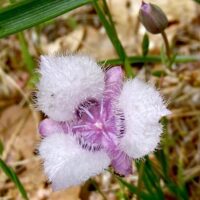
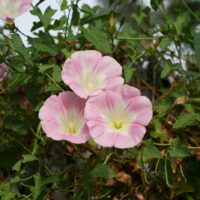
Lush, slender-stemmed vine with gray-green heart-shaped leaves scrambles up, over, or through any support provided. From late spring through early summer the plant is decorated with trumpet-shaped blossoms ranging in color from white to pink to purple. This deciduous vine can grow up to 10 ft. tall and wide. Sun to light shade, most soils, moderate to occasional watering for best appearance. Native throughout the Coast Range of California.
Calystegia purpurata ssp. purpurata ‘Palomarin’
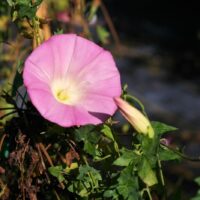
Large flowers which open pinkish-white and darken to a rich lavender distinguish this selection which we discovered near Bolinas in Marin County. This vigorous, deciduous vine spreads quickly to climb over fences and shrubs with clasping stems and grey-green, arrow-shaped leaves. Reaches a height of up to 10 ft. or so and can spread at least as wide. In late spring and early summer, the morning glory flowers put on quite the display, opening at dawn and then closing at dusk. Does great in full sun but also enjoys a little shade, especially in hot, inland areas. Likes moderate irrigation but will become somewhat drought tolerant once established. Hummingbirds and native pollinators are drawn to the flowers.
Cardamine californica
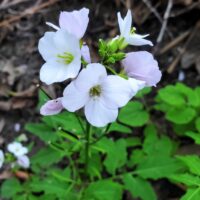
One of California's most widespread and earliest spring wildflowers, often beginning to bloom in the winter. Found in somewhat shady locations in a number of plant communities, this slender perennial has rounded basal leaves. Flower stems 10 inches to 20 inches tall are topped with four petaled flowers of pure white to soft pink. This sweet harbinger of spring is easy to grow given a little shade and winter rain. After flowering and setting seed it dies back to its roots where it goes dormant until next year's rains awaken it. Good under oaks.
Carpenteria californica
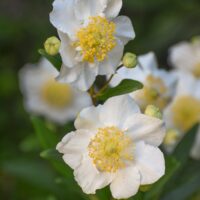
Long in cultivation, this native, evergreen shrub is rare in the wild, with a limited distribution in their native habitat. Forms a multi-branched shrub, 5 - 7 foot tall or more and nearly as wide, with dark green, leathery, lanceolate shaped leaves, which provides a dark foil to the brilliant white flowers. Late spring brings terminal clusters of white, 2 -3 inch, sweetly scented, anemone-like blossoms with yellow centers. An adaptable shrub which makes a striking specimen or foundation plant in a woodland area with morning sun and afternoon shade. Responds well to pruning and can be trained as an espalier. Drought tolerant, but appreciates occasional summer water. Flowers enjoyed by bees and butterflies.
Carpenteria californica ‘Elizabeth’
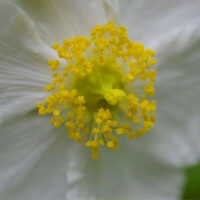
A beautiful native evergreen shrub 5 - 7 ft. tall and 4 ft. or more wide. Blooms May-July with sweetly scented, pure white, yellow-stamened, camellia-like single flowers. This cultivar is especially free flowering with smaller than usual (2 inch) flowers in masses of up to 20 in each of the terminal clusters. Said to be more disease resistant. Has a narrow upright appearance which is unusual for a native shrub. Best with light shade or morning sun. Drought tolerant, but appearance is improved with some summer water. Does want decent drainage.
Ceanothus cuneatus
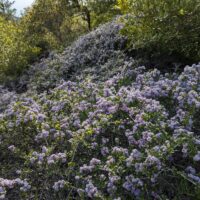
One of California's most widespread species offering a variety of forms. Typically buckbrush grows as an arching shrub growing 5 - 8 ft. or more tall and wide with small, thick, leathery leaves. Flowers can range from white to lavender to purple and are produced in small tight clusters in early spring. When in full bloom, the powerfully sweet scent of the flowers engulfs the visiting hiker. An excellent choice for hot dry conditions and difficult sites where it will grow in full sun with little to no water once established. Valuable addition to the habitat garden where it provides food and cover for a wide array of wildlife, birds, bees and butterflies. Said to be deer resistant.
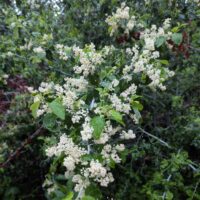
Ceanothus incanus
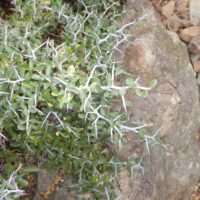
A common and widespread Ceanothus found in the coast ranges of northern California but rarely cultivated in gardens. Probably best suited to conditions similar to where it would be found in the wild. Sunny slopes, canyons, the dappled shade in woodlands, with decent drainage, no to little summer water and full sun to light shade. Growing 5-10 ft. tall with arching rigid branches, whitish bark, stout twiggy spines and evergreen oval leaves of grey-green. Plumes of fragrant white flowers in the spring attract a wide array of insects, birds and butterflies.
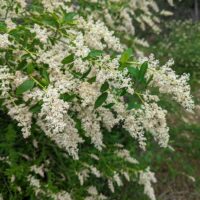
Ceanothus integerrimus
Deer brush is an excellent addition to the dry garden, featuring an abundance of blue, white or even pink flower plumes in late spring. One of the few deciduous species, displaying soft flat leaves which fall in autumn and reemerge in spring. Deer brush is an open upright shrub, growing 5 - 12 feet tall and wide with many different growth habits. A variable species found in a wide range of habitats throughout the state. Often used in restoration for its rugged qualities and ability to deal with summer heat and winter cold. This crop, grown from seed collected near Lake Sonoma has white flowers. Plant in full sun to light shade with good drainage. Little to no summer water once established.
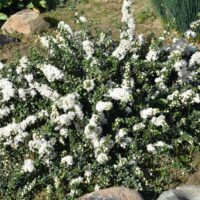
Ceanothus maritimus ‘Popcorn’
A special white-flowered form of a very rare species from Hearst Castle in San Luis Obispo County. This rugged groundcover ceanothus reaches up to 3 ft tall and spreads to 5 ft wide, an excellent candidate for parkway strips and drier borders. The thick, rigid leaves are serrated along the margins and colored a pleasing gray-green. In spite of its coastal origin, 'Popcorn' tolerates sun and heat quite well, but will enjoy a little afternoon shade in the hottest interior locations. It has been long-lived and very drought tolerant here in Fulton, even putting up with our heavy clay soil. A fabulous pollinator plant which also provides food and cover for birds.
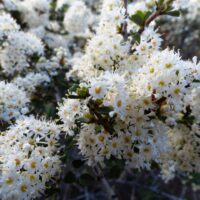
Ceanothus rigidus ‘Snowball’
A good selection for a dry sunny hillside or as a cascading plant for a wall. A densely mounding shrub 3 - 5 feet tall and wide. Covered with ball-like clusters of white flowers in late winter. Plant in full sun with occasional to no summer water once established. Ceanothus are great additions to the habitat garden offering food and cover for birds and nectar for bees and butterflies. Deer resistant.
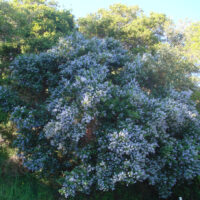
Ceanothus thyrsiflorus
One of the larger ceanothus, forming a good sized shrub or small tree 6-25 ft. tall. Shiny, bright green leaves and good sized clusters of flowers which can range from pure white to pale blue, sky blue through rich darker shades of blue in the spring. Easy, fast growing. Can be trained into a single trunk if desired. Useful as a specimen tree, background shrub or informal hedge. Drought tolerant when established. Ceanothus are fantastic habitat plants providing food and cover for a wide range of creatures. Bees and other pollinators frequent the flowers as do butterflies. Several butterflies and moths use it as a larvel food source. Bushtits, mockingbirds, quail and finches eat the seeds.

Ceanothus thyrsiflorus ‘Snow Flurry’
A beautiful large shrub or small tree 12 ft. (or more) tall and wide. Rich deep green foliage and profuse clusters of radiant pure white flowers in the spring. Adaptable, dependable and garden tolerant. Does well in coastal and inland situations. Best in full sun. 'Snow Flurry' is drought tolerant, but would appreciate a little summer water in hot regions. Not tolerant of very cold winter conditions. Selected from the Big Sur coast. Shrubby ceanothus provide seeds eaten by bushtits, mockingbirds, quail and finches, as well as cover for birds.
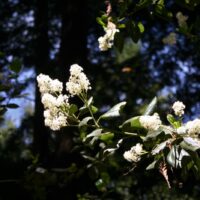
Ceanothus velutinus
Found primarily in the northern half of the state in the Coast Ranges, Sierras, Klamath and Modoc regions, in coniferous forests, chaparral, and various woodland environments up to 11,000 ft in elevation, the resinous floral scent and plumes of soft white flowers from spring to early summer make tobacco brush a choice evergreen shrub for dry, sunny to part-shade garden sites that drain well. Grows to 6-10 ft tall, and has large, sticky dark-green, aromatic, leathery foliage. A larval host for many native butterfly species such as the ceanothus silk moth, California tortoiseshell butterfly, and the hedgerow hairstreak butterfly. The flowers are also attractive to native bee and butterfly pollinators. Drought-tolerant once established.
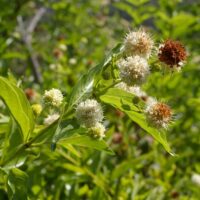
Cephalanthus occidentalis
Button willow is a large deciduous shrub, at times becoming treelike, growing 6-12 ft. (infrequently as much as 20 ft.) tall and wide. It lines waterways in foothills and warm interior valleys. Smooth, glossy bright- green leaves clothe this shrub during the growing season, turning yellow in the autumn. Creamy white flowers are arranged in spherical heads with protruding styles which give the flowers a pincushion-like appearance. The summer blooming, fragrant flowers are extremely rich in nectar and attract bees, butterflies and other pollinators. The globe-like fruits persists into winter and attract birds. Plant in sun to light shade with regular summer water or continuously moist or wet soils. An excellent habitat plant offering food and cover for a wide array of insects and birds.
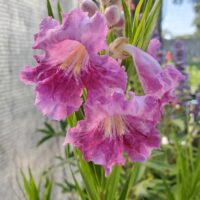
Chilopsis linearis
A graceful, summer-blooming, deciduous shrub, native to desert washes where it grows in gravelly soils and intense heat. Forms a large, multi-branched shrub or small tree reaching up to 15'-20' tall and wide with narrow, willow-like leaves. Terminal clusters of showy, trumpet-shaped flowers in summer come in shades of white, to pink and purple that attract hummingbirds and butterflies. Long, bean-like pods follow and hold on into winter. Enjoys hot climates with plenty of sun, decent drainage and occasional to moderate water. Avoid cool coastal conditions and heavy wet soils. Grows fast when happy with no pest or disease problems, demanding little. A great option for along sidewalks.
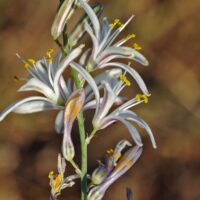
Chlorogalum angustifolium
You may be familiar with the common soap plant and its tall stalks of delicate white flowers. But this unusual, diminutive species of soap root is much smaller, only reaching 1 – 2 ft. high. Rarely offered in nurseries, this species has short, narrow leaves which are not wavy like the common soap plant. Grows in dry grassland and open woodlands in the northern Sierra foothills and coast range. Enjoys full sun to light shade and no additional irrigation once established. Tolerates clay. The seed for these plants came from Windsor and was generously given to us by Vicki Wilson.