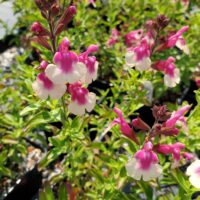
Salvia greggii ‘Mirage Rose Bicolor’
Top winner at the Welby Flower Trials in Colorado, this hybrid sage was bred for long blooming and heat tolerance. Compact and tidy, growing 12 -14 inches tall and a bit wider. The fragrant foliage is topped with a profusion of nectar-rich, two toned flowers of deep rose-pink and creamy-white, summer into fall. The appealing, bold display attracts hummingbirds, butterflies and bees. Plant in full sun to light shade with moderate to occasional water. Makes a good container subject. Deer resistant.
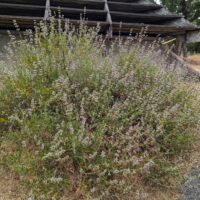
Salvia mellifera
California’s most common sage occurring in coastal scrub and chaparral communities from the San Francisco Bay Area south into Baja. Grows about 3 - 5 ft. tall and wide with textured, highly aromatic foliage. Flowers in late spring with tight whorls of small whitish to pale lavender blossoms. Flowers are not super showy, but renowned as an excellent source of nectar for bees and hummingbirds. Plant in full sun to light shade where it is tough, drought tolerant and deer resistant. No additional water is required once established.
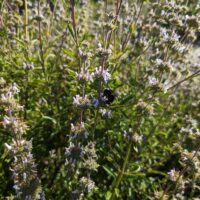
Salvia mellifera ‘Big Rock’
California's most common sage, growing in coastal scrub and chaparral communities from SF Bay Area south to Baja. The selection 'Big Rock' hails from the most northerly population, on Big Rock Ridge in Marin County. This sage is considered one of the best sources of nectar for bees and attracts a wide array of pollinators, including solitary native bees, butterflies and hummingbirds. The seeds are relished by quail and other birds. This selection is particularly fast growing and disease resistant, sporting highly fragrant, dark green foliage, growing 5 - 6 ft tall and somewhat wider. Late spring brings spikes of bluish-white flowers arranged in tight whorls. Plant in full sun where it will be extremely drought tolerant once established. Deer resistant.
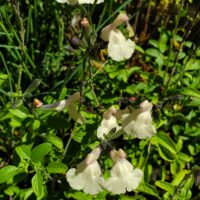
Salvia microphylla ‘Heatwave Glimmer’
Another selection from the Heatwave Series, bred in Australia for compact habit and heat resistance. Growing around 2.5 ft. tall, this floriferous sage offers creamy-white flowers with a hint of pink. The abundant blossoms are set off by handsome black calyces and appeal to bees, butterflies and hummingbirds. Plant in full sun to light shade. Drought tolerant but best with occasional deep watering during the growing season. Deer resistant.
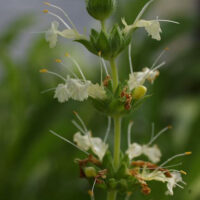
Salvia sonomensis ‘John Farmar-Bowers’
Thanks to Kent Calkins for sharing this unique form of sonoma sage he found growing on his property in the hills above Santa Rosa. Instead of the usual lavender-blue flowers, this plant has creamy white flowers on 6 inch stalks above the ground hugging mat of aromatic foliage. A wonderful native groundcover which requires good drainage and performs best with light shade. Water plants to get established - very drought tolerant, will NOT tolerate regular summer water. Deer resistant. Attracts bees and hummingbirds.
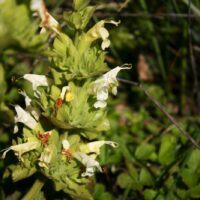
Salvia spathacea ‘Avis Keedy’
An striking yellow-flowered form of the normally magenta-flowered hummingbird sage, introduced by the Santa Barbara Botanic Garden. Discovered in an oak woodland in Santa Barbara County, this cultivar has unusual lemon yellow petals that fade to creamy white and are backed by lime green bracts. Forms the usual fragrant, spreading mat of large leaves topped with 2-3 foot tall flower stalks with distinctive whorls of flowers in the spring. Best with part shade unless directly along the coast and an occasional summer watering to keep it going through the summer. Without summer water will go summer dormant reviving with the rains. A bee and hummingbird favorite. Deer resistant.
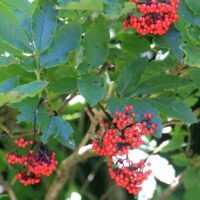
Sambucus racemosa
Red elderberry has light-green foliage topped by pretty, white flowers in pyramidal clusters which are followed by bright red berries. This 7-to-18-ft shrub or small tree is native to moist areas along the coast and in the Sierra-Nevada mountains. The fruits are relished by birds but are reputed to be poisonous to humans. Prefers cool sun or light shade, and moisture. Ripe berries are high on many birds’ favorite list!
Scutellaria californica
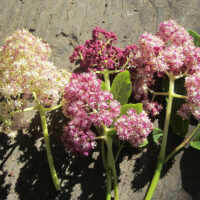
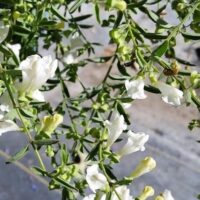
A charming perennial native to gravelly soils of low and mid elevation mountains of Northern California where it grows on the edge of woodlands and chaparral communities. Leaves are arranged oppositely on erect stems around one foot tall. The very sweet, small, creamy-white snapdragon-like flowers occur in pairs at the leaf axils. Spreads by underground rootstocks to form colonies. In our nutritious, water-retentive soils has spread quite vigorously, in dryer leaner soils less so. Plant in full sun to light shade. Drought tolerant but would appreciate a little summer water.
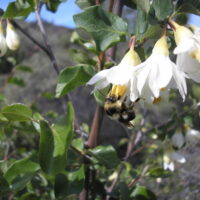
Styrax redivivus
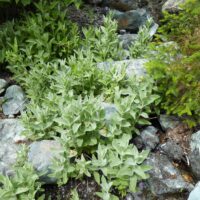
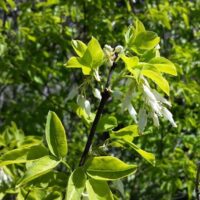
A beautiful but little known California native. Slow to mature but worth the wait. Develops into a graceful multistemed deciduous shrub. Dark green rounded leaves clothe the smooth gray branches. Late spring brings dangling clusters of pure white, waxy, bell-shaped blossoms. Grows 6 to 10 ft. tall for sun to light shade. Drought tolerant. We have observed hummingbirds and pipevine swallowtail butterflies nectaring on styrax blossoms.
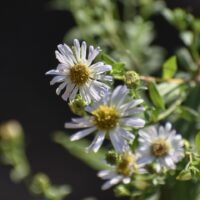
Symphyotrichum (Aster) chilense ‘Olema White’
Clear white flowers replace the class purple ones in this unusual selection of California aster that we found near the town of Olema in Marin County. In summer and into fall, a profusion of flowers bursts forth on this VIGOROUSLY spreading native perennial. An extremely adaptable groundcover reaching up to 3 ft. tall. Accepts regular to very little irrigation and full sun to light shade. This prolific bloomer is a bee magnet and also enjoyed by butterflies. Tolerant of clay and periodic flooding. Looks best when sheared to the ground after blooming.
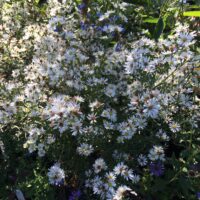
Symphyotrichum (Aster) ericoides ‘Monte Cassino’
Eye-catching, cheerful, and easy to grow, 'Monte Cassino' is a particularly stunning selection of a species of American aster with a wide native range east of the Rockies. In late summer and early fall, this vigorous aster dazzles with dense sprays of delicate, white, daisy-shaped blooms. The lacy foliage remains low, but the cloud-like flower-stalks can shoot up 3-4 feet tall and wide. Makes for gorgeous cut flowers. Thrives in full sun to part shade with moderate water. Irresistable to bees and butterflies.
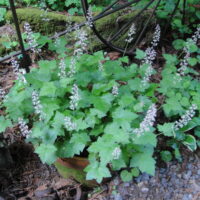
Tiarella trifoliata v. unifoliata
The native sugar-scoop makes an attractive groundcover in a shady spot with some moisture. Blooms in early summer with spikes of little white stars; seed pods are shaped like little scoops. Removing spent flower stalks often prompts reblooming. Native to the dark and damp forest floor of northern California. A sweet addition to the woodland garden where there is summer moisture.
Trautvetteria caroliniensis
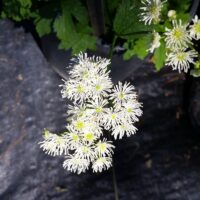
From moist woodlands in mountainous areas of northern California comes this lush and verdant buttercup relative. Large, serrated, palmate leaves up to 8 inches wide spread densely across the ground on slender stems. In summer through early fall, icy white flowers made up of thin filaments form flat topped clusters up to 5 inches wide. These delicate flowers sit atop stems reaching up to 3 ft. high. Plant in moist areas with part to full shade. The leaves will die down in winter only to re-emerge in spring. While very rare in California, false bugbane is more common in other parts of the country. Our form comes from the Siskiyou Mountains of northern California.
Trillium chloropetalum
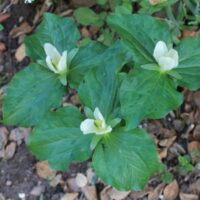
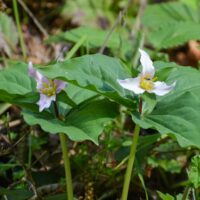
The beautiful and distinctive giant Trillium is an elegant addition to the woodland garden. Native to coastal and interior open forests and woodlands of the San Francisco Bay Area and North Coast Ranges.Emerges in February with three broad leaves surrounding a leafless stem 10-18 inches tall. A single large flower arises directly from the whorl of leaves and can vary from white, pink, to maroon red. The leaves often have green or maroon mottling. After flowering it dies back to the ground. Prefers the dappled light of a woodland setting with humusy well drained soil and some summer moisture.
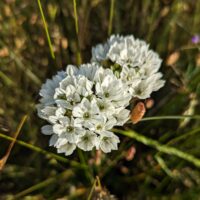
Triteleia hyacinthina
One of the easier to grow native bulbs that adapts well to garden conditions. Native to vernally moist areas that become summer dry in the Coast Ranges, Central Valley and Sierra Nevada into southwestern Oregon. Slender flowering stems rise one to two feet above the narrow leaves, with umbels of white, star-shaped flowers with green centers. If happy, the corms will multiply, forming drifts among grasses and shrubs and in open woodland settings. Easy to grow in containers, where they can be stashed in the shade once they go dormant. Bee and butterfly favorite.
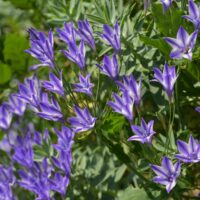
Triteleia laxa ‘Rudy’
An interesting flower color variation of this easy to grow native bulb. Grasslike blades 12 - 18 inches tall produce flower stems with large clusters of showy, funnel-shaped, pale blue-lavender blossoms with a vivid violet stripe down the center of each petal. An eye catching addition to a naturalistic planting, in sun to light shade. A willing grower which will multiply if happy. Enjoys dry conditions once done flowering, but will accept some moisture. Good container subject. Attracts bees, hummingbirds and butterflies.
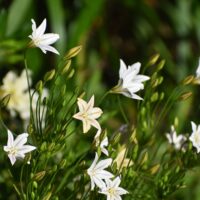
Triteleia laxa ‘Silver Queen’
A white form of Ithuriel’s spear! We kid you not. You may be familiar with this species and its traditionally blue-purple, trumpet-shaped flowers perched in whorls atop stalks a foot or more tall. We now have a selection featuring soft white flowers. This native bulb sends up grass-like foliage in the winter followed by the charming flowers in spring and early summer. The bulbs multiply readily, forming small colonies over time. While it tolerates dry conditions in summer, it will also accept occasional irrigation, making it very useful in the garden. Enjoys full sun to light shade and will tolerate clay soil.
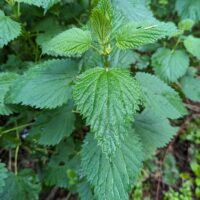
Urtica dioica
Found in moist woodlands and meadows throughout the state, stinging nettle is a habitat powerhouse. Growing at least 3 ft. tall and spreading vigorously to form large colonies, it's a great addition to any shady habitat garden or swale, where it stays moist throughout the year. Plant away from high traffic areas, as both the stems and foliage have small, stinging hairs that can cause skin irritation upon contact. This nettle has distinctive gray stalks, serrated leaves, and produces white, firework-like inflorescences that grow on stems in clusters throughout summer and early fall. Not only has it been used for centuries for a multitude of edible and medicinal purposes by indigenous tribes, it is also a larval host to several native butterflies including the painted lady and red admiral. Good cover for birds and small mammals.

Vaccinium ovatum (Inverness)
This Marin County selection of the evergreen huckleberry was chosen by landscape architect Ron Lutsko for its dense and compact habit. The leaves appear to us to be smaller than usual for this species and spaced more closely together. It has the classic, tasty huckleberries and blooms and fruits readily. Plant in part shade and provide regular to moderate irrigation. Will grow in full sun near the coast. While tolerant of somewhat shadier locations, evergreen huckleberries fruit best with adequate light. Fire resistant. Deer resistant.
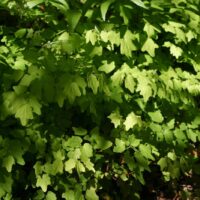
Vancouveria hexandra
A useful ground cover for shady areas with delicate apple green, fern-like foliage and creeping rootstocks. Grows 6 to 12 inches tall and spreads slowly by underground rhizomes. Dainty, nodding, white flowers with reflexed petals give the impression of being turned inside out and can appear over a long period from April through June. This western native grows profusely in moist woodland conditions but tolerates dryish conditions once established. Competes well with tree roots too.
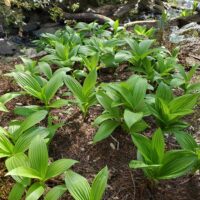
Veratrum fimbriatum
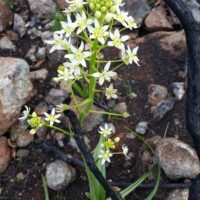
From moist, coastal areas of Sonoma and Mendocino County comes this very rare lily relative. A cousin of the high mountain cornlily, this threatened species features large, pleated leaves which emerge in late winter and are followed in the autumn by icy-white flowers with fringed edges. After its long bloom period is over, the plant will go dormant through the winter. Surprisingly tolerant of shade, but will accept full sun along the coast with ample moisture. A choice plant for woodland gardens and will also thrive in a container. This plant is POISONOUS when consumed. Deer and gopher resistant.
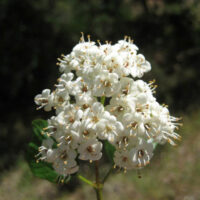
Viburnum ellipticum
Loosely branched deciduous shrub 6-10 feet tall. Common in Washington and Oregon and rare in California where it can be found in chaparral and coniferous forests generally on north facing slopes. Soft reddish new growth makes way for the neat deep green oval leaves with a serrated edge. Small white flowers in terminal clusters followed by shiny black fruits which are enjoyed by birds. Attractive reddish fall color. Best with some shade and a little summer water. A candidate for the high banks of creeks, margins of wetlands or edges of forests.
Viola palustris
Native to moist environments in both coast and mountain plant communities of N. America and Eurasia. Rare in California, where it is found in the northern counties of Mendocino, Humboldt and Del Norte. Rounded to heart shaped leaves with shallow scalloped edges grow from basal rosettes and spread by slender rhizomes. The charming flowers bloom April through July and range from white through lavender in color with dark-purple nectar guides. Used by Fritillary butterflies as a larval food source. Easy to grow, this is not a violet for heavy shade, but prefers brighter locations with light shade and moist, but well drained soils.
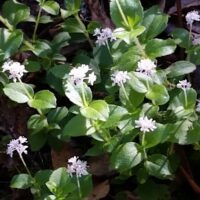
Whipplea modesta
The common name “modesty” fits this unassuming evergreen creeper. Though not super showy, one has to admire its ability to thrive on difficult sites. A good stabilizer native to forests of the Coast Ranges where it tolerates dry shady situations. Will appreciate a little summer water, but it is drought tolerant once established. Numerous tiny white flowers in late spring. Deer seem to leave it alone.