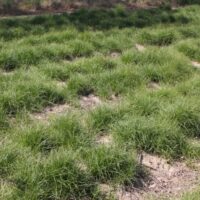
Carex pansa
A durable spreading sedge which can be used as a lawn substitute or unmowed meadow. Growing 8 -12 inches tall and spreading by rhizomes to form dense colonies of curling dark green foliage. The foliage is evergreen in mild climates and grows well in full sun to partial shade with regular to occasional water. Too much drought causes summer dormancy. Flowers appear in early spring but are not real showy. Deer resistant.
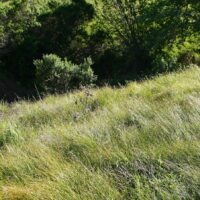
Carex praegracilis
Similar to Carex pansa but growing taller. The fine textured grass-like blades can reach a foot or more tall and spreads freely by rhizomes to form a thick weed smothering groundcover. Useful for meadows, green roofs, bio-swales, erosion control and as a lawn substitute. Can be left natural where it has a lush tousled appearance or trimmed occasionally for a low turf-like appearance. Tolerates drought, inundation, poor soils, salt spray, heat, cold, shade and foot traffic. Plant in sun to light shade where it requires some summer moisture but far less than a conventional lawn. Will go summer dormant if allowed to get too dry. Deer resistant.

Carex praegracilis ‘Chisai’
An excellent cultivar of the native field sedge, selected for it's compact form and slower spreading habit. Increases by short rhizomes to form a sturdy, dark-green carpet, 6 -8 inches tall and 1 - 2 ft wide. Grows more clumping and significantly tighter than the rapidly spreading forms more typical of the species. Still, it will form a solid, small scale ground cover or turf substitute, between stepping stones or mixed with bulbs and perennials for a meadow affect. Plant in full sun to light shade with occasional to moderate water. Tolerates light foot traffic. Deer resistant.
Carex tumulicola
This is the TRUE Carex tumulicola, the foothill sedge, not to be confused with the so called Berkeley sedge which is correctly identified as Carex divulsa and is non-native AND invasive. Foothill sedge has a wide distribution in California and north to Washington. A tough and adaptable tufted evergreen growing 12 inches (or more) tall and spreading slowly by underground rootstocks. Useful as an informal groundcover under shrubs or trees, for a meadow planting or for soil stabilization where the spreading roots help control erosion. Best with some shade unless right along the coast. Responds to water but is able to tolerate periods of dryness.
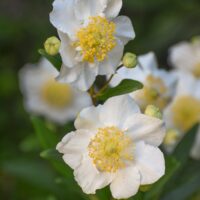
Carpenteria californica
Long in cultivation, this native, evergreen shrub is rare in the wild, with a limited distribution in their native habitat. Forms a multi-branched shrub, 5 - 7 foot tall or more and nearly as wide, with dark green, leathery, lanceolate shaped leaves, which provides a dark foil to the brilliant white flowers. Late spring brings terminal clusters of white, 2 -3 inch, sweetly scented, anemone-like blossoms with yellow centers. An adaptable shrub which makes a striking specimen or foundation plant in a woodland area with morning sun and afternoon shade. Responds well to pruning and can be trained as an espalier. Drought tolerant, but appreciates occasional summer water. Flowers enjoyed by bees and butterflies.
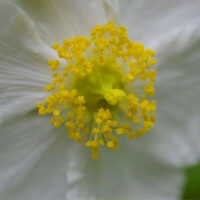
Carpenteria californica ‘Elizabeth’
A beautiful native evergreen shrub 5 - 7 ft. tall and 4 ft. or more wide. Blooms May-July with sweetly scented, pure white, yellow-stamened, camellia-like single flowers. This cultivar is especially free flowering with smaller than usual (2 inch) flowers in masses of up to 20 in each of the terminal clusters. Said to be more disease resistant. Has a narrow upright appearance which is unusual for a native shrub. Best with light shade or morning sun. Drought tolerant, but appearance is improved with some summer water. Does want decent drainage.
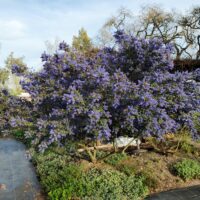
Ceanothus ‘Antonette’
An exciting introduction by Native Sons Nursery which was discovered in their landscape. ‘Antonette’ is believed to be a cross between Ceanothus arboreus and Ceanothus ‘Cynthia Postan’ with unusual elongated leaves which remind us of a rockrose. Grows 8 – 10 feet tall and 6 – 8 feet wide with spectacular displays of frosted, violet-blue flowers in early spring. Before they fully emerge, the flower buds display a pleasing rosy color. Plant in full sun with occasional to little summer water once established. Valuable habitat plant, providing food and cover for birds, bees and butterflies.
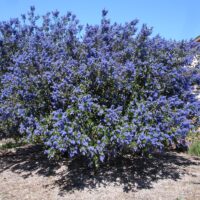
Ceanothus ‘Better Than Ray Hartman’
A friend of ours, Eric Nelson, discovered this spectacular selection growing on a property near where he lived. Masses of rich, blue-purple flowers held in large sprays cover the plant in spring, attracting bees and butterflies. The seeds which follow feed an array of birds. Reaches 10 – 15 ft. tall and wide with larger, deep-green, rounded leaves. We believe this plant is an existing cultivar, but none of the Ceanothus experts have been able to reach a consensus on exactly which one, hence the peculiar name referencing a selection which it resembles. Plant in full sun to light shade and water occasionally or less once established.
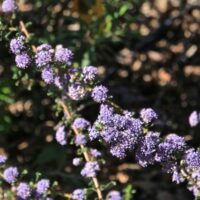
Ceanothus ‘Blue Jeans’
Not the color of denim exactly, the profuse springtime blossoms of 'Blue Jeans' are a rich lavender-purple. Erect evergreen shrub 6 ft. tall and wide with small shiny green leaves. Vigorous and fast growing. Best in full sun with little to no water once established. Tolerates heavy soils. Shrubby Ceanothus provide seeds eaten by bushtits, mockingbirds, quail and finches, as well as cover for birds.
Ceanothus ‘Blue Ray’
A Suncrest Nursery introduction, this is a cross between two popular cultivars, Ceanothus 'Ray Hartman' and Ceanothus 'Dark Star'. Grows 10 feet tall by 15 ft. wide with deep green textured leaves on sturdy stems forming a large mound. Deep vivid blue flowers in dense clusters cover the shrub in spring. Plant in full sun with occasional to no summer water once established. Ceanothus, when in flower, are highly attractive to pollinators of all sorts.
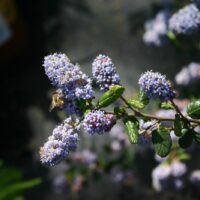
Ceanothus ‘Celestial Blue’
A beautiful hybrid California lilac selected and introduced by Las Pilitas Nursery. Luminous, rich blue flowers, in tight, conical clusters put on a massive display in spring with the added bonus of sporadic blooming through summer and into fall. Growing 6-8 ft. tall and wide with a mounding habit. Useful as an accent, informal hedge or screen shrub where it grows in full sun to light shade with little to no water once established. Ceanothus are an excellent addition to the habitat garden attracting a myriad of insects and birds.
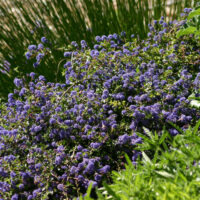
Ceanothus ‘Centennial’
This low growing Ceanothus has bright, cobalt-blue flowers and small dark-green, shiny leaves. Spreads quickly to around one foot tall by 6 - 8 feet wide. The flowers are displayed in profusions of small pom-poms colored an intense deep-blue set above small glossy foliage. Drought tolerant but will tolerate moderate irrigation in faster draining soils. More shade tolerant than many Ceanothus but will take full sun except in hot, inland areas. Selected by Roger Raiche at Horseshoe Cove, Sonoma County.
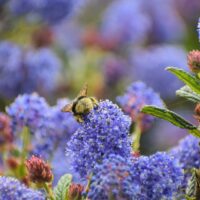
Ceanothus ‘Concha’
An adaptable shrub growing 6 ft. tall and wide, with a dazzling display of glowing purple-blue flowers in the spring. The gracefully arching branches carry dark green shiny leaves and are tolerant of light pruning. Thrives in full sun with little or no water once established. More tolerant of heavy soils and summer watering than most ceanothus. Shrubby Ceanothus provide seeds eaten by bushtits, mockingbirds, quail and finches, as well as cover for birds.
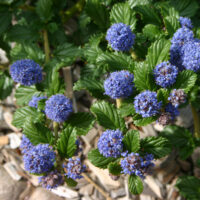
Ceanothus ‘Coronado’
Phil van Soelen selected this striking natural hybrid from along the Sonoma Coast. It was named for the late David Coronado, our dear friend and a talented plantsmen. Compact habit growing to around 2 ft. tall and 6 ft. wide with dark green, deeply veined, toothed leaves. Frosty blue buds open to luminous deep blue blossoms in early spring. Perhaps best in somewhat cooler climates where it performs beautifully in full sun with moderate to no water once established. Ceanothus are excellent habitat plants providing cover and food for wildlife. The early flowers provide nectar for pollinators and seeds for birds. The myriad of insects attracted to the flowers are an added attraction to birds.
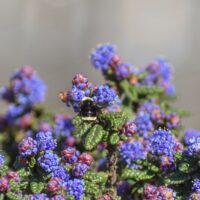
Ceanothus ‘Dark Star’
This popular small leaved shrub reaches 4 - 6 ft. high by 6 - 10 ft. wide. The electric cobalt-blue flowers cover the plant in spring and are very popular with bees and butterflies. Plant in full sun and provide decent drainage. Not a good choice for hot, inland areas. Drought tolerant. 'Dark Star' is VERY similar to 'Julia Phelps' but differs mainly in size. 'Dark Star' tends to stay a little smaller. Shrubby Ceanothus provide seeds eaten by bushtits, mockingbirds, quail and finches, as well as cover for birds.
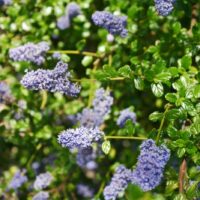
Ceanothus ‘Frosty Blue’
A Rancho Santa Ana introduction from the mid 1970's. This upright evergreen shrub reaches 8 to 12 feet tall and 10 to 15 feet wide with glossy green, textured foliage. Flowers in late spring with 2-4 inch panicles of beautiful blue flowers with a frosted appearance due to the white bracts on the buds. Useful as a specimen or screen due to its rapid growth. Amenable to pruning and can be trained into a small tree or espaliered subject. This reliable cultivar tolerates heavy soils better than most upright Ceanothus. Does best in full sun and will be drought tolerant once established. California lilac are valuable additions to the habitat garden.
Ceanothus ‘Joan Mirov’
A naturally occurring hybrid from the Sonoma Coast selected by Roger Raiche and introduced by the U.C. Berkeley Botanic Garden. Low spreading habit with a dense form grows 4 ft. tall spreading widely 6-10 ft. or more. The small dark green shiny leaves are topped with an abundance of dark pink buds opening to cobalt blue flower clusters in the spring. An excellent bank cover where a dense ground covering shrub is needed on a sunny dry site. When planted inland a little afternoon shade and some summer irrigation is best. Ceanothus are valuable habitat plants where they offer food and cover and excellent forage for pollinators.
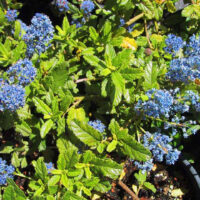
Ceanothus ‘Joyce Coulter’
A very useful medium sized mounding evergreen groundcover discovered in 1956 by John Coulter. Grows 2 - 5 ft. tall and spreads 12 ft. or more wide. Medium-blue flowers cover this shrub in spring. Tolerates garden conditions better than most Ceanothus. Responds well to shearing and can easily be kept to a more compact size. Plant in full sun where it is drought tolerant but best with some summer water in hot interior sites. Shrubby ceanothus provide seeds eaten by bushtits, mockingbirds, quail and finches, as well as cover for birds.
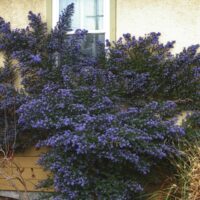
Ceanothus ‘Julia Phelps’
This much admired hybrid Ceanothus features a compact and bushy form, about 6 to 8 ft. tall and 8 to 10 ft. wide. Spectacular in spring when glowing dark indigo flowers cover the plant, accented by reddish buds. Small and crinkled dark green leaves provide an excellent backdrop for the richly colored flowers. Plant in full sun. Needs good drainage and summer drought once established. Does not do well in hot, interior climates. Very hard to distinguish from 'Dark Star', 'Julia Phelps' is somewhat larger. Shrubby Ceanothus provide seeds eaten by bushtits, mockingbirds, quail and finches, as well as cover for birds.
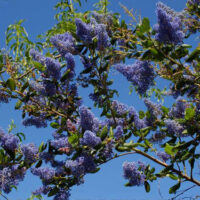
Ceanothus ‘Ray Hartman’
Beautiful large shrub rapidly grows 12 - 20 ft. tall and wide. Dark, shiny green foliage with large, medium blue spike-like flower clusters in the spring. Tolerates pruning and can be trained as a small tree or sheared to create a tall hedge. This selection is especially adaptable, tolerating heat, some summer water and drought. Plant in sun or very light shade. 'Ray Hartman' is a cross between the species C. arboreus and C. thyrsiflorus var. griseus. Ceanothus provide habitat and forage for a wide variety of birds, bees and butterflies.
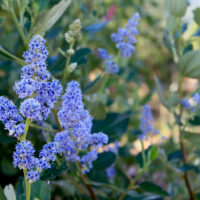
Ceanothus arboreus ‘Cliff Schmidt’
Selected from Santa Cruz Island by Native Son's Nursery, this handsome cultivar has a strong upright habit, growing into a tall and spreading shrub as much as 15-20 ft. tall and wide. Large dark green glossy leaves have white felted undersides. Medium blue flower spikes blossom in late winter to early spring and often again in fall. Excellent for coastal gardens in full sun, give some afternoon shade and a little summer water in warmer inland sites. This large shrub can be pruned into a lovely small tree. Ceanothus are excellent additions to habitat gardens where they provide food, cover and nesting sites for birds and beneficial insects.
Ceanothus divergens ssp. confusus
A species of special concern due to its limited distribution in the wild and continued habitat loss. The Rincon Ridge ceanothus is worth considering for those hot inland gardens where some of the more commonly available coastal ceanothus may not be as long lived. Forms a low growing mound of decumbent stems with small holly-like leaves usually under a foot tall. Flowers in dense clusters in early spring are lavender-purple. Plant in sunny areas with good drainage and little to no water once established. Ceanothus are wonderful additions to the habitat garden attracting a wide array of wildlife. This species is likely to be deer resistant.
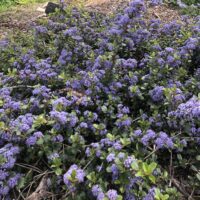
Ceanothus gloriosus var. exaltatus ‘Emily Brown’
One of the earliest blooming California lilacs. A low spreading evergreen shrub 2 - 4 ft. tall, 8 - 10 ft. wide with dark green hollylike leaves. Flowers of dark violet blue in 1 inch clusters cover the shrub in early spring. Sun and drought tolerant, but will need some afternoon shade in hot areas. Shrubby ceanothus provide seeds eaten by bushtits, mockingbirds, quail and finches, as well as cover for birds. Perhaps the most deer resistant of the ceanothus.
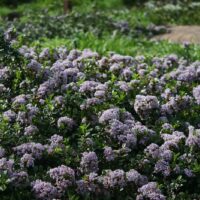
Ceanothus gloriosus var. gloriosus ‘Anchor Bay’
This Point Reyes ceanothus grows 1 - 2 ft. high or more and spreads 8 ft. wide or more with an attractively dense and luxuriant appearance. The evergreen foliage is dark green and holly-like in shape. Flowers of blue-violet cover the plant in spring. Sun to light shade. Drought tolerant along the coast - a little extra water inland but will tolerate up to moderate irrigation. Ceanothus are great additions to the habitat garden offering food and cover for birds and nectar for bees and butterflies. This species is somewhat deer resistant.
Ceanothus gloriosus var. gloriosus ‘Heart’s Desire’
One of the lowest growing ceanothus, under one foot tall and spreading three or more feet wide. The small, holly-like leaves line stems which tightly hug the ground. Performs better than most ground cover ceanothus on relatively hot inland sites. Flowers of lavender-blue appear in early spring. Sun, decent drainage, moderate to little summer water once established. Ceanothus are excellent additions to the habitat garden offering flowers for pollinators and seeds for birds. Deer resistant.
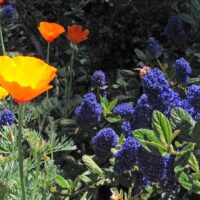
Ceanothus griseus ‘Kurt Zadnik’
Selected by Roger Raiche of the UC Berkeley Botanic Garden from the northern Sonoma Coast. Grows about 3 ft. tall and 10 - 15 ft. wide. The flower buds are very dark with beautiful rich indigo blue flowers, perhaps the darkest of any ceanothus. This fine selection is a prolific bloomer and works well to cover large banks in a hurry. Low to moderate irrigation. Shrubby ceanothus provide seeds eaten by bushtits, mockingbirds, quail and finches, as well as cover for birds.
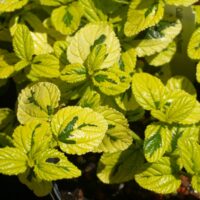
Ceanothus griseus var. horizontalis ‘Diamond Heights’
Grown for its beautiful golden variegated foliage, this low growing shrub spreads 3 - 5 ft. wide and up to 1 ft. high. Scant, light blue flowers in spring contrast nicely with the yellow foliage. Best with light shade in warmer regions. Enjoys some summer water though drought tolerant once established. Discovered from a colony of cultivated Carmel ceanothus in San Francisco in the area known as Diamond Heights.
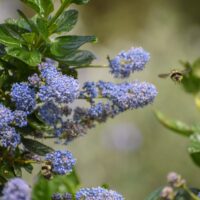
Ceanothus griseus var. horizontalis ‘Yankee Point’
An energetic bright green shrub growing up to 3 ft. tall and spreading rapidly to 10 - 12 ft. wide. Powder blue flowers in the spring. A good evergreen, weed-smothering groundcover for full sun to light shade. Drought tolerant, but appreciates an occasional summer watering and will accept moderate water. Tolerant of hot interior locations as long as some shade and irrigation are provided. Older specimens may reach up to 5 ft. tall, especially when side pruned. Ceanothus are great additions to the habitat garden offering food and cover for birds and nectar for bees and butterflies.
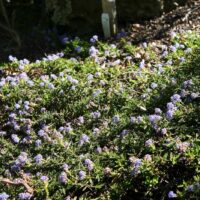
Ceanothus hearstiorum
A rare species with limited distribution in San Luis Obispo County. One of the lowest of the ceanothus, up to 12 inches tall and about 6 ft. wide. Often completely flat with a star-like pattern of growth. Medium-blue flowers sit atop the narrow, wrinkled leaves in spring. Sun to light shade. More shade tolerant than most Ceanothus, making it a suitable option for under the dappled shade of oaks. Drought tolerant but will accept occasional irrigation. Excessive irrigation will shorten the life of this species. Provide good drainage.
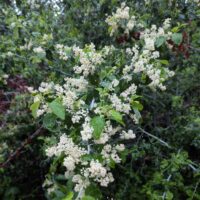
Ceanothus incanus
A common and widespread Ceanothus found in the coast ranges of northern California but rarely cultivated in gardens. Probably best suited to conditions similar to where it would be found in the wild. Sunny slopes, canyons, the dappled shade in woodlands, with decent drainage, no to little summer water and full sun to light shade. Growing 5-10 ft. tall with arching rigid branches, whitish bark, stout twiggy spines and evergreen oval leaves of grey-green. Plumes of fragrant white flowers in the spring attract a wide array of insects, birds and butterflies.