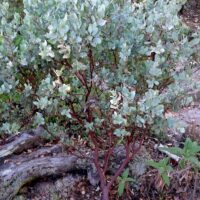
Arctostaphylos gabilanensis
This extremely rare and threatened species wasn’t discovered until the early part of the 21st century, making it the newest species of manzanita to be identified. Not only is it very rare, but it is also extremely beautiful, featuring large, wedge-shaped, fuzzy, grey leaves and new growth flushed rosy-pink. Smooth, burgundy bark clothes the contoured branches which support clusters of whitish flowers in mid-winter, followed by red fruits in the summer. This slow growing shrub will eventually reach a height of 6 ft. or more with a broader width. Provide full sun. Needs decent drainage and will be very drought tolerant once established.
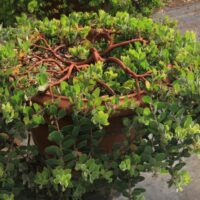
Arctostaphylos glandulosa f. repens ‘Mount Vision’
Found only in the Bishop pine forest of the Point Reyes Peninsula, the repens form has a low and mounding habit. This particular selection was picked for its exceptionally compact and creeping nature and large, gray-green leaves. Clusters of white flowers hang from branch tips in early winter. While slower growing than most other groundcover manzanitas, this cultivar will eventually reach about 6 ft wide with a height of about 1 ft. 'Mount Vision' is best planted as a specimen rather than in mass plantings. Very drought tolerant once established with full sun to light shade. An excellent container plant.
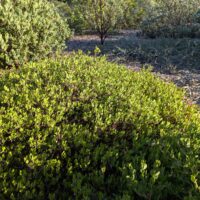
Arctostaphylos hookeri ‘Harry Roberts’
A dense and low selection of this hardy and adaptable species, reaching to about 1 foot tall and around 6 ft wide. Not quite as short as ‘Monterey Carpet’, but a little faster growing. The deep green, pointed leaves create a verdant groundcover, suitable for drier spots. The small, white flowers in winter are not particularly abundant. Plant in full sun to light shade and water infrequently. Clay soil tolerant. A great, low growing manzanita for hotter areas. This species is a rare native from coastal Monterey and Santa Cruz Counties.
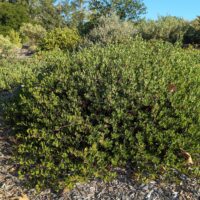
Arctostaphylos hookeri ‘Ken Taylor’
This hardy, groundcover manzanita is denser and a little more refined than the popular ‘Wayside’ selection. Pointed, smaller, rich-green leaves clothe mounding branches reaching 2’-3’ tall and 6’-8’ wide. In winter, the white, urn-shaped flowers are somewhat sparse, making the lustrous, evergreen foliage the star of the show. Tolerates more heat, more sun and needs less water than the bearberry. A great option as a bank cover, where it enjoys full sun to light shade, infrequent irrigation, and tolerates clay soil. Combine with deer grass and California fuchsia for a hardy and attractive planting. The Hooker’s manzanita is a rare native from coastal Monterey and Santa Cruz Counties.
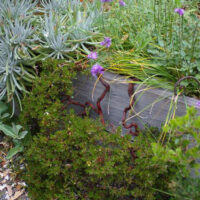
Arctostaphylos hookeri ‘Monterey Carpet’
Evergreen, creeping manzanita less than 1 ft. tall with small, deep green leaves. Dark red branches tend to root and increase its spread to 8 ft. or so wide. Small clusters of white flowers appear in late winter to early spring. Prefers a little shade inland. Drought tolerant but enjoys occasional irrigation in inland sites. Perfect under deciduous oaks or tall pines. Works well in spots where the creeping branches can spill over an edge, creating a cascade effect.
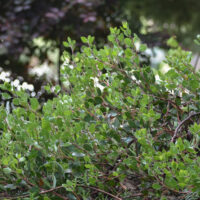
Arctostaphylos hookeri ‘Wayside’
A robust selection of the Monterey manzanita with dense branches growing up to 3 ft. high by 8 ft or more broad. Attractive upsweeping crooked trunks with little white flowers and small deep green leaves. Occurring on open hills around Monterey Bay. Despite its somewhat coastal origin, this selection tolerates, sun, heat and drought quite well. That being said, it will also accept occasional irrigation and light shade. A very useful plant for covering large sunny banks with poor soil.
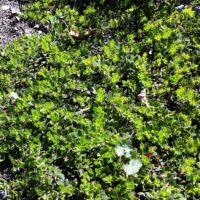
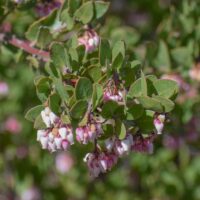
Arctostaphylos hookeri x pajaroensis – Tilden form
We thank Tilden Botanic Garden for this natural cross from the Pajaro River area of Monterey Bay. While similar to ‘Sunset’, this selection has somewhat denser foliage and thicker, more rigid stems. A vigorous and disease resistant manzanita with dark green, wedge-shaped leaves and bronzy-red new growth. In late winter, small, whitish flowers draw native bees into the garden for nectar. The slightly shaggy, cinnamon-colored bark covers the contorted trunks to great effect. Reaches up to a height of about 5 or 6 ft. and a width of around 7 ft. Provide full sun to part shade. Is more tolerant of heavy soils than many manzanitas and will accept moderate to infrequent irrigation in the garden.
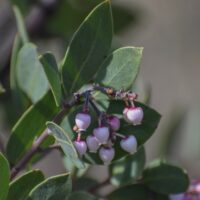
Arctostaphylos manzanita ‘Garrison Canyon’
This large, tree-like selection comes from Garrison Canyon on Pepperwood Preserve above Mark West Springs. Big, round, pewter-green leaves adorn branches covered in smooth mahogany bark. Especially large clusters of soft-pink flowers emerge in late winter and are followed in summer by “little apple” fruits. In time, this selection may reach up to 15 ft. tall and wide. Provide full sun. Very drought tolerant once established.

Arctostaphylos manzanita ‘Saint Helena’
A vigorous selection of the common manzanita selected by Nevin Smith from the slopes of Mount St. Helena in Napa County. A beautiful, upright, evergreen shrub with gorgeous, sinewy branches of smooth, red-brown bark and medium green, pointed leaves. Fast growing for a manzanita, this robust and disease resistant selection grows 10 -12 tall and wide with a broad, rounded shape. Pure white, urn-shaped blossoms in late winter and early spring are an important early nectar source for bumblebees and hummingbirds. The bronze, little, apple-like fruits are relished by wildlife. Plant in full sun with good drainage, where it will be drought tolerant once established.
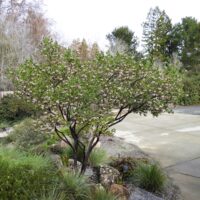
Arctostaphylos manzanita x ‘Austin Griffiths’
Believed to be a cross between 'Sentinel' and 'Dr. Hurd', this hybrid was discovered by Native Sons Nursery and named in honor of a valued volunteer. Glossy green leaves and dark maroon-brown bark form an attractive backdrop for large clusters of soft pink flowers. The blooms appear in early winter, providing a valuable nectar source for hummingbirds and bees. Over time, this upright manzanita can reach a height of up to 10 feet and a width of 8 ft or more. More garden tolerant than 'Dr. Hurd', 'Austin Griffiths' accepts occasional irrigation but can be drought tolerant once established.
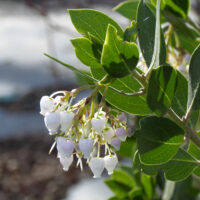
Arctostaphylos manzanita x ‘Laguna White’
Discovered along Guerneville Road near the Laguna de Santa Rosa, this remarkable manzanita boasts dense clusters of clear white flowers in winter with semi-glossy apple green leaves and burgundy colored bark. Plant in full sun where it will reach a height of about 8 -10 ft. tall by 6 ft. wide or more over time. More garden tolerant than many manzanitas, this selection will accept occasional watering after establishment. Though drought tolerant, 'Laguna White' may benefit from deep monthly waterings in the summer, especially in hot interior sites. An excellent early source of nectar for hummingbirds and native bees.
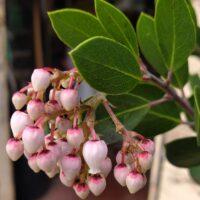
Arctostaphylos manzanita x ‘Mary’s Blush’
This lovely manzanita selection was found along Guerneville Rd. in Sonoma County. Likely a natural cross with the rare Vine Hill manzanita, it has the size and upright form of the common manzanita, with the disease resistance of the A. densiflora hybrids. Initially growing about a foot a year, it will eventually reach 8-10 feet in height. Its slightly-glossy leaves create a dense, tidy appearance, which can be pruned up to show off the deep mahogany trunk. In winter, it blooms prolifically with clusters of pink flowers, followed by beautiful red berries. More tolerant of garden conditions and heavy soil than most, it requires minimal water in summer once established. Its flowers are highly attractive to bees, butterflies, and hummingbirds, and its berries are food for birds.
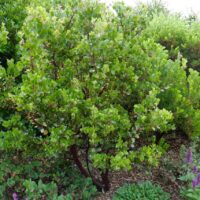
Arctostaphylos manzanita x ‘Molino Corner’
The clear white flowers and attractive, wavy, deep-green leaves make this wild selection from the Sebastopol area a real charmer. Burgundy bark clothes the sinuous trunks on this upright manzanita which reaches 8 ft or more tall and potentially as wide, if left unpruned. The urn-shaped flowers appear in late winter in good-sized clusters, followed by reddish fruits in the summer. This selection is part of a group manzanitas from west Sonoma Co. which naturally share genes with the vine hill manzanita, making them more garden tolerant than most inland forms. Plant in full sun to light shade. Water occasional or let go dry in the summer once established. A great winter food source for hummingbirds and bumblebees.
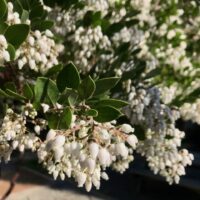
Arctostaphylos manzanita x ‘Sebastopol White’
This upright manzanita displays dense growth of soft green, pointed leaves with clusters of white flowers in winter on a burnished mahogany trunk. Reaches a height of 8 ft or more and a width of at least 6 ft. Discovered along Guerneville Rd. in western Sonoma County. Very drought tolerant once established but will tolerate moderate irrigation when young. A disease resistant selection. Heavy soils are not a problem as long as water does not pool at the crown in winter. Enjoys full sun but will tolerate light shade.
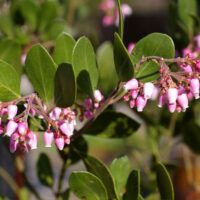
Arctostaphylos manzanita x densiflora ‘Monica’
Found originally along Guerneville Rd. in Sonoma County. It has the form and size of the large common manzanita, 8 ft or more tall with time, and the disease resistance of the Vine Hill manzanita. Features a beautiful dark mahogany trunk and clusters of shell pink flowers set against dark, glossy leaves. The structure is narrower and more upright than most other tall manzanitas, only reaching about 8 ft wide. Give it sun to light shade and summer drought, but it's more tolerant than most of some summer water.Provides food and cover for birds and its flowers provide nectar for hummingbirds and bumble bees.
Arctostaphylos montana ssp. montana ‘Lagunitas Grey’
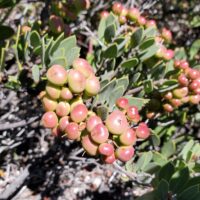
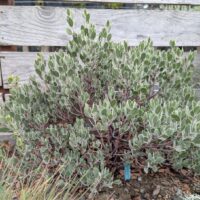
This a strikingly gray and compact form of the rare Mt. Tamalpais manzanita, which is found only in Marin County. Silvery leaves provide all year appeal, set against the smooth, sculptural, burgundy trunks. Winter brings clusters of pink-tinged, white flowers gathered at branch tips, followed by shiny red “little apples” in the summer. Mature plants develop an evenly mounded form, reaching up to about 4’ tall and 5’ wide in about 10 years. They are easily pruned to keep narrower and show of the beautiful bark. While native to serpentine soils, this species does well in most decently draining soil types with full sun and little to no water once established.
Arctostaphylos montana ssp. ravenii
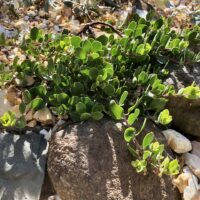
This diminutive, groundcover manzanita once grew on windswept, serpentine outcrops in San Francisco where the Presidio currently exists. Due to rapid development in the late 19th and early 20th centuries, only one clone of this manzanita currently exists in the wild, making it one of the rarest species around. The small, thick, gray-green leaves line creeping stems reaching 6 - 12 inches in height. Forms a large mat over time, crawling around rocks and other obstacles. In late winter/early spring, clusters of little, white, urn-shaped flowers appear at the ends of the stems. Needs full sun to light shade and decent drainage. Drought tolerant once established but will enjoy an occasional deep watering, especially in warmer areas. You don’t have to be a collector to enjoy this appealing little manzanita.
Arctostaphylos montereyensis
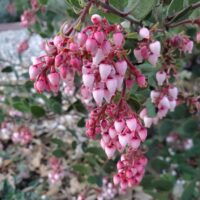
Beautiful pink flowers in winter and bright green leaves make this very rare manzanita from the Monterey Bay a must-have for the discerning collector. Slowly mounds to 5 or 6 ft. tall and wide with a classic reddish trunk. Provide full sun to very light shade and occasional to no irrigation once established. So far we have found it to be surprisingly adaptable, tolerating some irrigation as it ages. Decent drainage will probably be needed.
Arctostaphylos osoensis
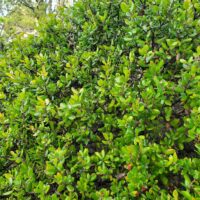
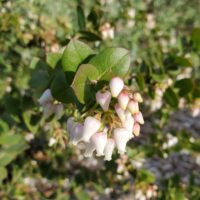
A beautiful and extremely rare manzanita from a small area above Morro Bay. The bright green leaves are auriculate, meaning “ear-shaped”, and have a distinctive matte finish, with new growth emerging in a reddish bronze color. Small clusters of dainty, pinkish-white flowers emerge in late winter/early spring and are adored by hummingbirds. The contorted branches are smooth and colored reddish-brown, aging to gray. Oso manzanita is attractively rounded and dense when young, only reaching to about 5 ft. or so in height with a slightly larger width. With age, it will begin to open, revealing its striking, sculptural trunks. Needs full sun and enjoys occasional irrigation, though it is quite drought tolerant once established.
Arctostaphylos pajaroensis ‘Paradise’
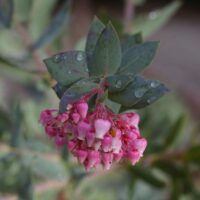
This rare species offers striking foliage and flowers. Large flower clusters of a lovely shade of pink and are followed by prominent rusty-red berries, enjoyed by birds. Beautiful bronze new growth ages to an appealing blue-green which contrasts nicely with the shaggy cinnamon-colored bark. Approximately 6 ft. or more tall and 8 - 10 ft. across in 10 years. Full sun to light shade, excellent drainage with little to no water once established. Flowers are an excellent early source of nectar for hummingbirds and bumble bees.
Arctostaphylos pajaroensis ‘Warren Roberts’
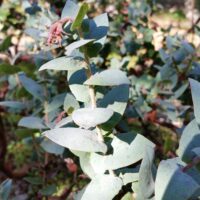
This stunning manzanita displays coral-pink flowers in early winter set against chalky blue-green leaves. In the spring the burnished red new growth emerges creating a striking contrast with the older leaves. The widely curving branches covered with shaggy cinnamon colored bark create a wonderfully sculpted look. If left unpruned, this selection will form a broad drift, about 6 ft. high and up to 8 ft. wide. 'Warren Roberts' is denser and has more intense blue-green leaves than its sister, 'Paradise'. Provide full sun to very light shade and occasional to no irrigation once established. Needs decent drainage. Discovered by Roger Raiche.
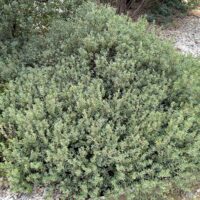
Arctostaphylos pumila ‘Wavelength’
A rare species endemic to areas on and around the Monterey Peninsula. ‘Wavelength’, a Dave Fross selection, is a dense, mounding, low shrub reaching 2 – 3 ft. tall and +10 ft. across. Soft, gray-green foliage and bronzy new growth accentuate its undulating form. White, lantern-shaped flowers appear in spring, enjoyed by hummingbirds. Great for sloped, drainy sites where it can take up a lot of real estate. Can take full sun to light shade. Low irrigation once established.
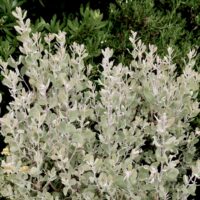
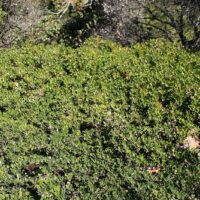
Arctostaphylos uva-ursi ‘Green Supreme’
A superior garden hybrid of the trailing bearberry. A volunteer seedling discovered by staff at Tilden Regional Parks Botanic Garden. Ultimately spreads 6 - 12 ft. across and less than a foot tall. Enjoys moderate to occasional irrigation. The glossy bright green leaves create a beautiful groundcover. Tolerates a wide range of soil types with reasonable drainage. Very disease resistant and fast growing. Shy to bloom or set berries. Sun to part-shade.