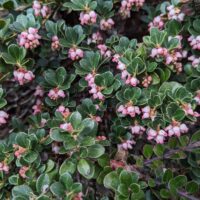
Arctostaphylos uva-ursi ‘Point Reyes’
An unusual selection of our native bearberry discovered near the Point Reyes lighthouse in Marin County. Dark green, leathery leaves form distinctive whorls along the stems with pale pink, urn-shaped flowers emerging in early winter. The showy red berries contrast nicely with the dark green leaves. Reaching a height of about 18” and a width of at least 6 ft., this groundcover works well in a rock garden or mixed with other low shrubs and grasses from our coastal areas. Give moderate water in interior locations and protect from the hot afternoon sun.
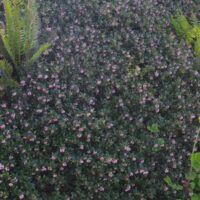
Arctostaphylos uva-ursi ‘Radiant’
A very low mat of glossy, dark green foliage 6 - 8 inches high and creeping at least 6 ft. across. Light pink flowers in early winter are followed by showy red berries. In hot inland areas give moderate water and light afternoon shade. A sturdy evergreen groundcover.

Arctostaphylos uva-ursi ‘Samoa Dunes’
This Humboldt County selection of the ubiquitous bearberry distinguishes itself with large, rounded, glossy leaves of deep green. Reaching a height of about 6 inches and a width of at least 6 feet, this durable groundcover spreads quickly to form a weed-smothering carpet. Little urn-shaped flowers colored soft pink appear in spring and are followed by shiny red berries. Provide full sun to part shade and moderate to occasional irrigation once established. Protect from the hot afternoon sun in warmer areas. The shiny, dark green foliage combines well with grey-leaved plants such as Artemisia ‘David’s Choice’ and the fescue ‘Patrick’s Point’.
Arctostaphylos uva-ursi ‘San Bruno Mountain’
A beautiful selection of bearberry from San Bruno Mountain south of San Francisco. This groundcover manzanita forms a luxuriant mat of large, glossy, spatulate leaves spreading to around 6 feet wide. The soft pink urn-shaped flowers lead to big red showy berries. A natural for coastal plantings where it can grow in full sun with little to no summer water needed. Inland, bearberry does best with shade from the hot afternoon sun and moderate summer watering.
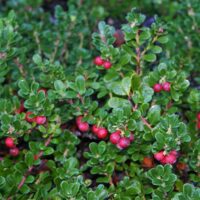
Arctostaphylos uva-ursi ‘Wood’s Compact’
A low growing, spreading manzanita with lustrous green, rounded foliage, little pink urn-shaped flowers and pretty red berries, quite large for the species. This selection from coastal Oregon spreads at a moderate pace to 6-8 feet wide and only getting 6-8 inches tall. Full sun to light shade in hot areas with moderate summer water.
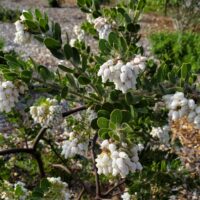
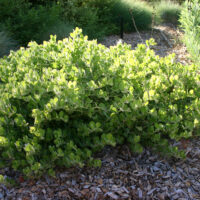
Arctostaphylos x media – Point Arena forms
This special and diverse group of manzanitas come from Point Arena on the southern Mendocino Coast. These naturally occurring hybrids involve at least two species: A. uva-ursi, A. columbiana and sometimes A. nummularia. The resulting offspring have wonderfully varying features. The leaves range from large, light-green, and fuzzy to small, dark-green and glossy. The plants can form a mounding habit reaching up to 4 feet tall or hug the ground to form dense mats. Plant in full sun to light shade and give moderate to infrequent irrigation once established. Plants grown in hot areas will benefit from extra irrigation and some afternoon shade.
Arctostaphylos x media – Tilden form
This big-leaved selection was discovered at Point Arena on the southern Mendocino coast by Steve Edwards of Tilden Botanic Garden. Distinctive for its large, hairy, apple-green leaves and low, dense form only reaching up to about 2 ft in height and at least 6 ft. in width. Clusters of white flowers appear in spring followed by round, bright green fruits. Plant in full sun to light shade and provide moderate to occasional irrigation once established. Should be quite drought tolerant once established.
Arctostaphylos x media ‘Humboldt Mystery’
Arching branches and a mounding habit up to 6 ft. tall and 8 ft. wide distinguish this manzanita from its relatives. In winter, pinkish-white flowers provide nectar for hummingbirds and bees, followed by large, red berries in the autumn. Burnished red trunks display a colorful backdrop to the leathery, large, dark green leaves. Plant in full sun to light shade and provide moderate to infrequent irrigation. James Roof of Tilden Botanic Garden discovered this unusual selection somewhere on the Humboldt Coast, but, true to his enigmatic character, refused to say where he found it. It is believed to be a natural cross between bearberry and the hairy manzanita.
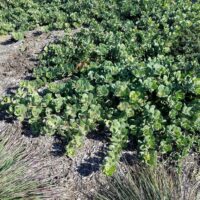
Arctostaphylos x media ‘Peter Ehrlich’
This unusual manzanita from the southern Mendocino coast features what may be the largest leaves of any of the groundcover manzanitas. The round, grey-green foliage mounds densely over time to reach a height of about 3 ft. and a width of up to 8 ft. Clusters of white flowers gather at branch tips in winter, followed by little apple-like fruits in the spring. While fairly adaptable in the garden, decent drainage is best and full sun to light shade. Accepting of moderate irrigation but will become quite drought tolerant once established.
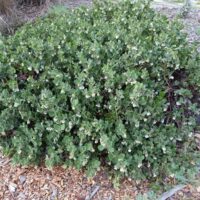
Arctostaphylos x media ‘Reina de Arena’
An outstanding selection from a special population of natural manzanita hybrids, holding court on the rugged, fog shrouded, coastal bluffs of Point Arena in Mendocino County. The "Queen" forms a lovely, compact mound of large, rounded, fuzzy leaves, reaching up to about 2 ft. high and at least 6 ft. wide. Elegant, pure white, urn-shaped flowers decorate the branch tips in winter and are an early nectar source for hummingbirds and bumblebees. Plant in full sun to light shade and give moderate to infrequent summer water once established. Plants grown in hot areas will benefit from some afternoon shade and extra irrigation.

Aristolochia californica
Dutchman’s pipe vine is an interesting vine native to river, stream side and woodland habitats. Soft heart-shaped leaves and unusual purplish pipe-shaped flowers bloom in early spring. This deciduous twining plant will need some support if you wish it to grow upwards. Adaptable, but best with a little shade and moderate water. Slow to establish, we offer this adage to encourage patience: “The first year it sleeps, the second year it creeps and the third year it leaps”. Once established it will put on ample growth, easily covering a trellis or chain link fence. THE larval food source for the pipevine swallowtail butterfly. Deer resistant.
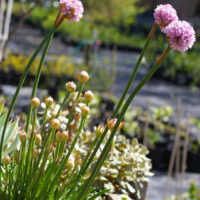
Armeria maritima ssp. californica
Grown from northern California seed source, this coastal native is a sturdy perennial with grass-like blades in compact clumps. Pink pompom flowers on long stems bloom spring into summer. A natural along the coast where it grows in full sun, needing a little shade in hotter regions. Moderate to little water with decent drainage. Excellent for rock gardens. Deer resistant.
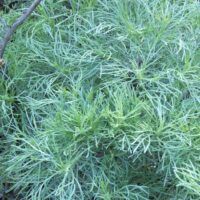
Artemisia californica
Native to coastal regions from Northern California to Baja. Densely branched shrub with finely divided gray-green scented foliage. Grows 2 - 6 ft. tall and wide. Light pruning or pinching help keep it dense. Grown for its wonderful texture and foliage color, flowers are inconspicuous. Requires decent drainage and full sun. Thrives in coastal environments, but has performed well inland, especially on slopes where cold air and winter wet drains away. Drought and deer tolerant.
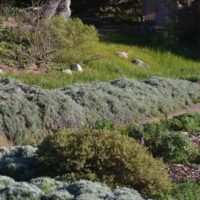
Artemisia californica ‘Canyon Gray’
An unusual prostrate form of our coastal native sagebrush, forming a loose, nearly flat mat of finely cut, silvery, fragrant foliage around 4 ft. wide. Useful as a bank cover or for the top of a retaining wall where it can cascade over the edge. Combines beatifully with ceanothus, buckwheats and iris. Should be cut back from time to time to keep dense. Enjoys full sun to light shade and is very drought tolerant once established. Deer resistant.
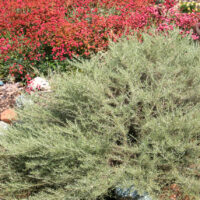
Artemisia californica ‘Montara’
Selected by Roger Raiche at Montara Ridge in San Mateo County. Forms a mound of finely cut fragrant foliage to around 2 ft. tall by 3 ft. (or more) wide. Requires full sun with decent drainage and is drought tolerant once established. Occasional summer water helps retain fresh look. Thrives in coastal environments. Deer resistant.
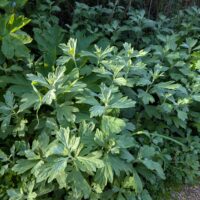
Artemisia douglasiana
Mugwort is native to many plant communities where there is at least some year round moisture: streams and riverbanks, road cuts, ditches, and moist meadows. A stout, rhizomatous perennial with aromatic foliage that is green on top and silvery beneath. The flowers are small and not particularly showy. The foliage is beautiful and fragrant with a long history of medicinal uses. Plant in sun to light shade where it will grow 3 ft. tall and spreading to form a colony. Well watered plants can grow even taller. Provides excellent cover and seeds for birds. Deer resistant.
Artemisia pycnocephala ‘David’s Choice’
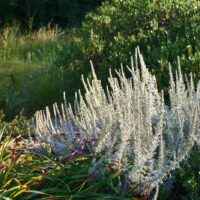
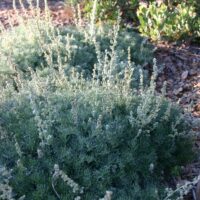
An exceptionally fine selection of a coastal native. Forms a dense silky mound of silvery foliage 4 - 6 inches tall and up to 2 ft. wide. The floppy flowering stems rise a foot above the foliage and are interesting but not real showy. Shear back for longer life. Sun and drought tolerant. Deer resistant.
Artemisia pycnocephala ‘Dr. Seuss’
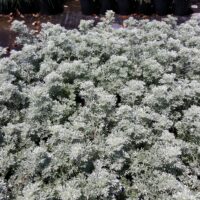
In deference to this selection’s whimsical form, we have named it in honor of the children’s author who truly embodies “whimsical”. Soft, silvery, ferny foliage slowly spreads across the ground on woody branches with unusually tall flower stalks reaching up to 2 feet in height. As the stalks arise, the base is thickly covered in the showy foliage, getting narrower as it approaches the flower buds, giving the plant its unusual form. The small flowers are pale yellow and open in late spring and into summer. Provide good drainage and plant in full sun to light shade. Deer resistant.
Artemisia suksdorfii
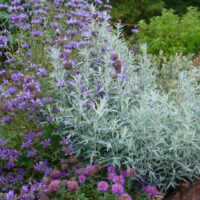
Rhizomatous perennial with sturdy upright stems of whitish-gray felted foliage. Native to coastal California where it grows in seasonal drainages near the ocean. Growing 1 1/2 ft. to 3 ft. tall and spreading to form colonies of beautiful wooly foliage with a pleasant sage scent. The tiny flowers are not particularly showy but are attractive to pollinators. Useful in informal gardens for sunny areas with some summer moisture. Probably best in areas with some coastal influence. Cut to the ground annually to freshen and make room for new spring growth. Deer resistant.
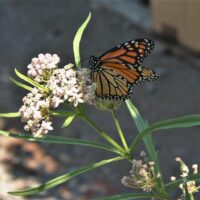
Asclepias fascicularis
Our most common native milkweed is found in meadows and on the banks above ponds. Its flowers are held in umbels of a pale mauve color. They form at the top of 1 - 3 ft. tall slender stems that die back in winter to a perennial rootstock. Its wandering roots form small colonies. Drought tolerant, it prefers seasonally moist soils and likes moderate water in the garden. The narrow leaves are the preferred larval food for the Monarch Butterfly. Full sun to part shade. Unlikely to be bothered by deer.
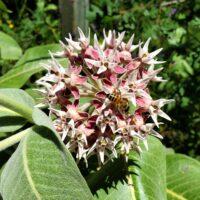
Asclepias speciosa
Bold and beautiful native milkweed that forms a large patch of tall stems with broad pale green leaves. Fragrant clusters of pinkish-purple flowers, followed by interesting seed pods. Spreads by underground shoots. Great in semi-dry naturalistic plantings. Host to Monarch butterflies. Deer resistant.
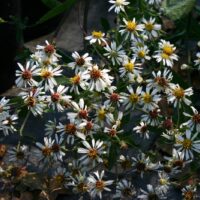
Aster (Eurybia) radulinus ‘Gilliam Creek’
This charming woodland aster makes its home in bright, dryish woods from the Channel Islands all the way up to the Oregon border and into the northern Sierras. Normally a shy, dainty little forest dweller, this selection from Sonoma County is far more robust, featuring large clusters of white-petaled daisies with white centers which turn yellow with age, and finally a deep maroon. Flower stalks reach up to 2 ft. high, much taller than is typical for the species. Serrated, deep green leaves form a high mat on this slowly spreading ground cover. An excellent plant for dry, woodland gardens, but will also tolerate moderate irrigation. One of the few excellent pollinator plants for the lightly shaded garden.
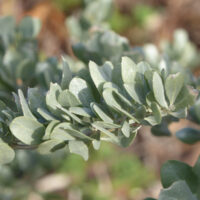
Atriplex lentiformis
This native bird favorite is a tough and useful shrub with beautiful silvery gray foliage. Growing 5 ft. or more tall and spreading widely, quail bush is valued for its ability to deal with difficult sites where it tolerates wind, salt spray, saline and alkaline soils. A terrific habitat plant, providing food and cover for a wide array of birds and mammals. Native from the coast to the desert. Excellent for erosion control and is fire resistant. Benefits from annual shearing and occasional aggressive pruning to rejuvenate. Plant in full sun with occasional to little summer water.
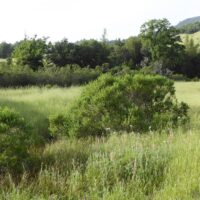
Baccharis pilularis
This is the upright form of coyote bush, growing 4 - 8 ft. tall and wide. Valued for its ability to flourish in a wide range of conditions. Also valued as an excellent habitat plant offering food and cover to a wide variety of wildlife. Flowers are not showy and the male and female flowers are borne on separate shrubs. This crop of plants are a mix of males and females and one can’t tell until they bloom. Plant in sunn or light shade. Not fussy about soils. Quite drought tolerant once established. Responds well to pruning or shearing, working well as a screen. Deer resistant.
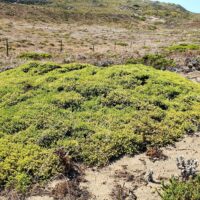
Baccharis pilularis – Bodega Dunes form
Coyote bush is a tough, native, evergreen shrub, forming mounds of dense foliage that hold soil and provide food and cover for birds and mammals. Flowers are small and cream-colored and appear in the autumn. This crop is grown from seed collected in the Bodega Bay Dunes from parents that were under two feet tall and around 6 ft or so wide. Time will reveal the exact form and sex of each plant in this crop. Both male and female plants have significant habitat value, with their combined contributions of abundant pollen, nectar and copious seed late in the season. It will be a surprise as well as a useful addition to the habitat garden. Plant in full sun, though a little shade is helpful in hotter sites. Shear occasionally to renovate and keep dense. Drought tolerant on the coast, but best with occasional water inland. Deer resistant.
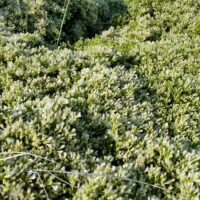
Baccharis pilularis – female
Upright form of coyote brush, growing 4 - 8 ft. tall and wide. Valued for its ability to flourish in a wide range of conditions. Also valued as an excellent habitat plant offering food and cover to a wide variety of wildlife. Flowers are not showy and the male and female flowers are borne on separate shrubs. Theses plants are FEMALE and will produce seed (when male plants are present). An abundance of pollinators and beneficial insects use Baccharis flowers and birds love their seeds. Plant in sun to light shade. Not fussy about soils. Quite drought tolerant once established. Responds well to pruning or shearing and is useful as a screen. Deer resistant.
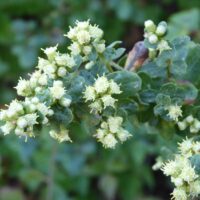
Baccharis pilularis – male
Upright form of coyote brush, growing 4 - 8 ft. tall and wide. Valued for its ability to flourish in a wide range of conditions. Also valued as an excellent habitat plant offering food and cover to a wide variety of wildlife. Flowers are not showy and the male and female flowers are borne on separate shrubs. These plants are MALE and produce ivory colored flowers with pollen and nectar. An abundance of pollinators and beneficial insects use Baccharis flowers. Plant in sun to light shade. Not fussy about soils. Quite drought tolerant once established. Responds well to pruning or shearing and is useful as a screen. Deer resistant.
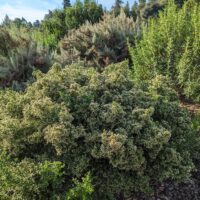
Baccharis pilularis ‘Mayacama Mound’
This dense, bright green, gumdrop-shaped coyote bush only reaches about 3 ft tall and spreads a wider. We discovered this heat and drought tolerant selection in a batch of seedlings from inland Sonoma Co.. A great alternative for the ubiquitous ‘Twin Peaks’, which is a coastal selection and less suitable for hot, dry sites. Plant in full sun to light shade where mature plants won’t need supplemental water, but an infrequent deep soak will keep them looking fresh. The small, whitish flowers are relished by pollinators in the early autumn. This selection is female, so the late autumn seeds provide an important food source for birds. A sturdy, low, evergreen shrub for tough situations.