
Ceanothus maritimus ‘Point Sierra’
An excellent choice for a small scale ground cover, this rare Ceanothus is found on coastal bluffs and low hills in northern San Luis Obsipo County. Even though it is native to the coast it does surprisingly well inland. Smaller and slower growing than most Ceanothus, it blooms very early often beginning in late January or early February. 'Point Sierra' was selected from Arroyo de la Cruz by Native Son's Nursery. Grows 2-3 ft. tall with small, thick, leathery leaves and a dense mounding habit looking almost like Cotoneaster. Rounded clusters of blue-violet flowers from dusty white buds in late winter provide an early nectar source for pollinators of all sorts. A natural for coastal areas in full sun but has proven durable inland when it is provided a little shade. Tolerates heavy soils. Drought tolerant once established. Somewhat deer resistant.
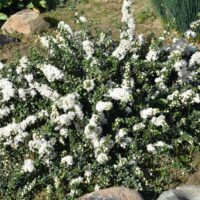
Ceanothus maritimus ‘Popcorn’
A special white-flowered form of a very rare species from Hearst Castle in San Luis Obispo County. This rugged groundcover ceanothus reaches up to 3 ft tall and spreads to 5 ft wide, an excellent candidate for parkway strips and drier borders. The thick, rigid leaves are serrated along the margins and colored a pleasing gray-green. In spite of its coastal origin, 'Popcorn' tolerates sun and heat quite well, but will enjoy a little afternoon shade in the hottest interior locations. It has been long-lived and very drought tolerant here in Fulton, even putting up with our heavy clay soil. A fabulous pollinator plant which also provides food and cover for birds.
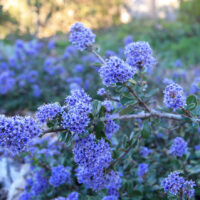
Ceanothus maritimus ‘Valley Violet’
Valley Violet ceanothus is a tough and reliable shrub introduced by the UC Davis Arboretum as an "Arboretum All-Star", one of their 100 top recommended plants. This relatively small Ceanothus grows 2 ft. tall by 4 ft. wide with small leathery leaves and gorgeous dark-violet flowers in early spring. Though native to coastal bluffs of San Luis Obispo County, it performs well in both coastal and inland situations. In hot inland sites it may be best with a little afternoon shade. Drought tolerant once established. For a Ceanothus it is slower growing and has proven to be long lived and tolerant of many soil types. A wide array of pollinators are attracted to its flowers. Deer resistant.
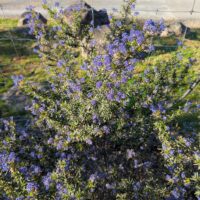
Ceanothus papillosus – upright Baja form
This cold hardy selection from Baja California is highly useful in the garden setting thanks to its tall, upright form and narrow, vaselike shape. Many customers ask us for a big but narrow form of ceanothus. This is one of the few selections that fits the bill. Plants reach 8 – 10 ft tall, but only reach 3 – 4 ft wide, making it ideal for a privacy screen in a small area. Indigo blue flowers cover plants in spring, followed by little seed capsules which are relished by birds. The crinkly, dark-green leaves are elongated and create a nice foil for brighter green plants, such as Salvia and Artemisia. As with all ceanothus, the flowers are loved by a large array of pollinators. Plant in full sun to very light shade and water infrequently once established. Needs decent drainage. This is the variety papillosus.
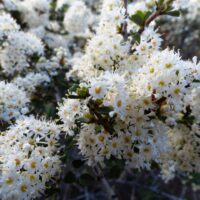
Ceanothus rigidus ‘Snowball’
A good selection for a dry sunny hillside or as a cascading plant for a wall. A densely mounding shrub 3 - 5 feet tall and wide. Covered with ball-like clusters of white flowers in late winter. Plant in full sun with occasional to no summer water once established. Ceanothus are great additions to the habitat garden offering food and cover for birds and nectar for bees and butterflies. Deer resistant.
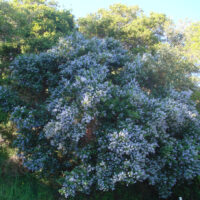
Ceanothus thyrsiflorus
One of the larger ceanothus, forming a good sized shrub or small tree 6-25 ft. tall. Shiny, bright green leaves and good sized clusters of flowers which can range from pure white to pale blue, sky blue through rich darker shades of blue in the spring. Easy, fast growing. Can be trained into a single trunk if desired. Useful as a specimen tree, background shrub or informal hedge. Drought tolerant when established. Ceanothus are fantastic habitat plants providing food and cover for a wide range of creatures. Bees and other pollinators frequent the flowers as do butterflies. Several butterflies and moths use it as a larvel food source. Bushtits, mockingbirds, quail and finches eat the seeds.
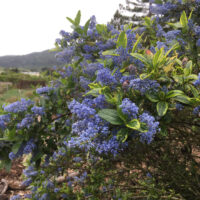
Ceanothus thyrsiflorus ‘El Dorado’
Fast growing upright evergreen shrub 6 - 10 ft. tall and wide. Dark green foliage with golden yellow variegation is a nice foil for the medium blue flowers in spring. Plant in full sun along the coast, some shade for hot interior sites. Drought tolerant once established. Occasional summer irrigation can be helpful, but allow soil to dry between waterings. Good for an informal hedge. An excellent habitat plant.
Ceanothus thyrsiflorus ‘Oregon Mist’
Blue blossom ceanothus grows in chaparral and woodland plant communities of the outer coast ranges, from Santa Barbara, California to southern Oregon. Selected by Xera Plants, 'Oregon Mist' hails from the northern most part of its range, suggesting superior cold hardiness. Growing 8 - 15 ft. tall and wide with deep-green shiny leaves and baby-blue flowers in narrow clusters, blooming in mid to late spring. This fast growing evergreen makes a fine stand alone specimen or as part of a shrubby border or screen, where its particularly dense form can be used to great effect. Plant in sun to light shade where it will be drought tolerant once established. An excellent addition to the habitat garden where it provides food and cover for a wide array of insects and birds.
Ceanothus thyrsiflorus ‘Skylark’
Valued for its compact habit and late flowering, this selection offers clusters of dark blue flowers on short stems appearing just as other ceanothus are finishing their show. 4 - 5 ft. tall and 6 - 7 ft. wide with shiny evergreen foliage. This would be a ceanothus to try in hot areas. 'Skylark' is believed to be a cross between Ceanothus thyrsiflorus and C. velutinus. Shrubby ceanothus provide seeds eaten by bushtits, mockingbirds, quail and finches, as well as cover for birds.
Ceanothus thyrsiflorus ‘Snow Flurry’
A beautiful large shrub or small tree 12 ft. (or more) tall and wide. Rich deep green foliage and profuse clusters of radiant pure white flowers in the spring. Adaptable, dependable and garden tolerant. Does well in coastal and inland situations. Best in full sun. 'Snow Flurry' is drought tolerant, but would appreciate a little summer water in hot regions. Not tolerant of very cold winter conditions. Selected from the Big Sur coast. Shrubby ceanothus provide seeds eaten by bushtits, mockingbirds, quail and finches, as well as cover for birds.
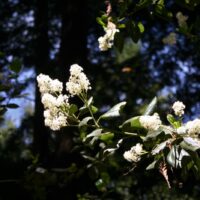
Ceanothus velutinus
Found primarily in the northern half of the state in the Coast Ranges, Sierras, Klamath and Modoc regions, in coniferous forests, chaparral, and various woodland environments up to 11,000 ft in elevation, the resinous floral scent and plumes of soft white flowers from spring to early summer make tobacco brush a choice evergreen shrub for dry, sunny to part-shade garden sites that drain well. Grows to 6-10 ft tall, and has large, sticky dark-green, aromatic, leathery foliage. A larval host for many native butterfly species such as the ceanothus silk moth, California tortoiseshell butterfly, and the hedgerow hairstreak butterfly. The flowers are also attractive to native bee and butterfly pollinators. Drought-tolerant once established.
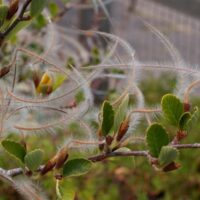
Cercocarpus betuloides
Mountain mahogany is an adaptable, semi-evergreen native shrub (8 to 12 ft. high and wide) or small tree with charming birch-like leaves set against silver-grey bark. Small, honey-scented flowers appear in spring followed by seeds with intriguing silky, curled, feather-like tails. The open habit contrasts nicely with evergreen shrubs or rock walls where its pleasing silhouette can be seen. Flowers are attractive to bees. Mountain mahogany is one of those rare native shrubs which can easily be pruned for narrow garden beds. Grows on dry slopes in chaparral or at the edges of woodlands. Provide full sun to light shade. It is surprisingly adaptable to diferent water regimes, from moderate irrigation to no water once established. Somewhat deer resistant.
Cercocarpus betuloides var. blancheae
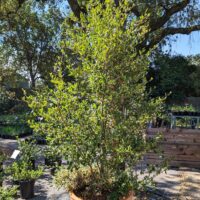
This rare and beautiful variety of our native mountain mahogany offers larger, birch-like leaves with fuzzy and whitish undersides. The highly useful from generally reaches 8 – 15 ft. tall, but only spreads to about 6 ft. wide, making it ideal for narrow locations where a screening, evergreen, fast-growing bush is needed. Small, disk-like, creamy flowers appear in the spring, followed in summer by seed pods with hairy, grey tails which curl upwards, giving the plant a silver halo. Over time, the trunks are covered in a smooth, grey bark. The Island mountain mahogany typically grows much more rapidly than our local variety and is tolerant of moist or dry soils once established and part shade to full sun. Heat isn’t an issue. A great candidate for a container, where it is very amenable to pruning.
Chilopsis linearis
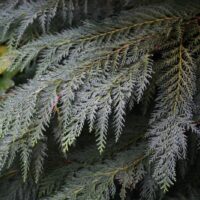
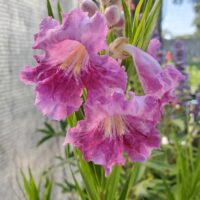
A graceful, summer-blooming, deciduous shrub, native to desert washes where it grows in gravelly soils and intense heat. Forms a large, multi-branched shrub or small tree reaching up to 15'-20' tall and wide with narrow, willow-like leaves. Terminal clusters of showy, trumpet-shaped flowers in summer come in shades of white, to pink and purple that attract hummingbirds and butterflies. Long, bean-like pods follow and hold on into winter. Enjoys hot climates with plenty of sun, decent drainage and occasional to moderate water. Avoid cool coastal conditions and heavy wet soils. Grows fast when happy with no pest or disease problems, demanding little. A great option for along sidewalks.
Chlorogalum angustifolium
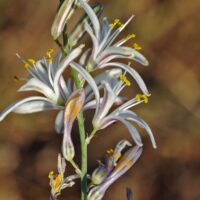
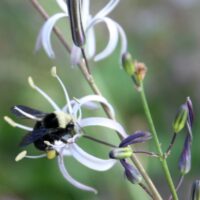
You may be familiar with the common soap plant and its tall stalks of delicate white flowers. But this unusual, diminutive species of soap root is much smaller, only reaching 1 – 2 ft. high. Rarely offered in nurseries, this species has short, narrow leaves which are not wavy like the common soap plant. Grows in dry grassland and open woodlands in the northern Sierra foothills and coast range. Enjoys full sun to light shade and no additional irrigation once established. Tolerates clay. The seed for these plants came from Windsor and was generously given to us by Vicki Wilson.
Chlorogalum pomeridianum v. pomeridianum
Known for their large, fibrous bulbs historically used by indigenous peoples and early settlers for soap, food and to stupefy fish. Long, wavy-margined leaves form a rosette in winter followed in late spring by tall, airy flower stems bearing small white flowers that open in the late afternoon and evening. Great in naturalistic settings in full sun to light shade. Needs to go summer dry once established. Larval food source for the Western Brown Elfin butterfly.
Cirsium occidentale
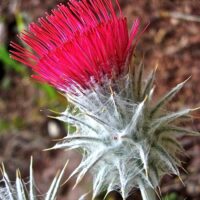
A beautiful NATIVE and NON-WEEDY thistle. Forms a rosette of gray woolly and spiny leaves the first year. A BIENNIAL, flowering occurs the second year with tall, narrow spikes of showy maroon-red to dark pink flowers with cobweb hairs on the bracts. A striking plant, usually reaching 3 - 6 ft tall when blooming, for sunny areas with good drainage and low to no irrigation. An excellent addition to the habitat garden where it attracts bees, butterflies and hummingbirds. Butterflies such as the painted lady and the mylitta crescent depend on cobweb thistle as a larval food source. Deer resistant.
Clarkia amoena ssp. whitneyi
Nearly extinct in the wild, this beautiful ANNUAL was found in coastal communities in Mendocino and Humboldt Counties. Growing 3 ft. tall and wide, the branched leafy stems are topped with a long succession of 3 inch cup- shaped flowers. The large flowers are light lavender-pink with whitish areas at the base of the petals. Clarkias make excellent garden plants needing very little and giving much in return. Plant in full sun to light shade, as a filler among trees or shrubs, in mixed flower border or meadow planting. A little water while flowering will extend their show. Good container subject too. Excellent cut flowers. Seems to be deer resistant. Attractive to bees and butterflies.
Clarkia rubicunda
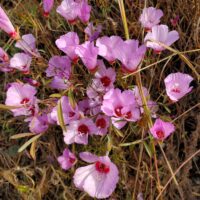
Showy and floriferous, with gorgeous, cup shaped blossoms of silky, pink-purple petals featuring a dark red center with a long bloom from late spring into summer. This endemic, ANNUAL wildflower grows in openings of woodlands and chaparral near the coast, mostly in the central part of state. Grows 2-ft. tall or more in full sun with low water needs. Tolerant of heavy soils, the exuberant blossoms attract bees, butterflies and moths, including Sphinx moth species. Performs well in containers and is an excellent cut flower too. Deer resistant.
Clarkia williamsonii
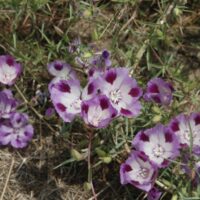
The incredibly showy flowers of this native ANNUAL will take your breath away in late spring and early summer. The large, lavender-pink, papery flowers feature deep, burgundy-red brush strokes and cheery white centers. Plants form a loose mound about 1 ½ ft. around. Butterflies and other pollinators love Clarkias. Native to the Sierra foothills, where it grows in full sun to light shade. Plants enjoy moisture while they are developing in the winter and spring, but are accustom to hot and dry summers. Needs decent drainage. Reseeds readily, as long as there is exposed soil nearby. Deer resistant!
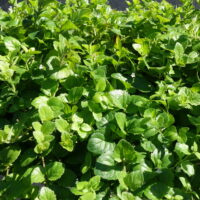
Clinopodium (Satureja) douglasii
Wonderfully fragrant native perennial with trailing stems about 6 inches tall and spreading. Roundish, scallop-edged, deliciously minty leaves have a long history of herbal uses. Tiny white flowers are borne in axils of leaves in the spring. A sweet small scale groundcover for the woodland garden with light shade and moderate to a little summer water.
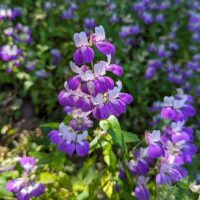
Collinsia heterophylla
A striking form of a native annual wildflower found in open woodlands in much of California. The open lipped flowers are stacked in tiers, and said to look pagoda-like. This charming woodlander is best in bright shade, in edges and openings, or under oaks, where it blooms from mid spring to early summer. Grows around 2 ft. by 2 ft. When happy it will reseed and those seedlings will require no irrigation. A bee and butterfly favorite.
Comarostaphylis diversifolia
Looking something like a toyon but closely related to manzanita, this handsome evergreen is a useful landscape subject. Native to chaparral communities near the coast in Southern California where it usually grows on north facing slopes. Growing slowly 6-20 ft. tall with shredded red bark and shiny dark green foliage. Creamy-white urn-shaped flowers in racemes bloom March-May are attractive to hummingbirds and pollinators. The dark-red rough textured fruits in summer are enjoyed by many kinds of birds. Grow as an upright shrub or with selective pruning can be trained into a small tree. Useful as a specimen, background screen or informal hedge in full sun to light shade with good drainage. Will except summer water only with good drainage and is drought tolerant once established.
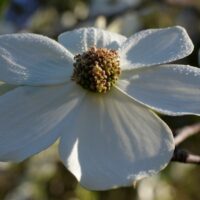
Cornus nuttallii
Spectacular native tree with pleasing horizontal branching, gorgeous white flowers, handsome fruits and good fall color. An elegant specimen tree though notoriously challenging in cultivation. Easiest to grow within its native range. Dislikes poor drainage, fertilizing, pruning, and injury to the tender bark. Drought tolerant in shady, cool situations but enjoys occasional to moderate water in fast draining soils. Once established it can become a show stopping specimen in a wooded garden, under high branching trees, along stream courses and slopes with eastern or northern exposure. Birds relish the red fruits.
Cornus sessilis
Native to moist ravines and stream banks of the coast ranges and the Sierra Nevada Mts, this deciduous shrub or small tree grows 5-10 ft. or more tall and wide. Beautiful shiny, jade green leaves with prominent lateral veining decorate the graceful green barked stems. Small, yellow flowers appear early as it leafs out in the spring and are followed by oval fruits. Fruit color changes as it matures from greenish-white to yellow, red and finally shiny black which attract a wide range of fruit eating birds. Foliage can take on pretty tones of yellow and red in the autumn. Thrives in moist shady locations, but will grow well with just part shade and moderate to occasional summer water once established.
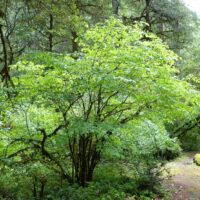
Corylus cornuta ssp. californica
Western hazelnut is a handsome, open, multi-stemmed shrub native to forests from Santa Cruz northwards in the Coast Range, and from Sequoia northwards in the Sierra foothills. Winter deciduous with decorative dangling catkins in winter. The soft, somewhat hairy leaves turn yellow in the fall. Small amounts of tasty nuts are produced in late summer and are relished by wildlife and people. Part shade with some moisture, but will tolerate fairly dry conditions once established. Usually grows 6 - 10 ft. tall. Somewhat deer resistant.
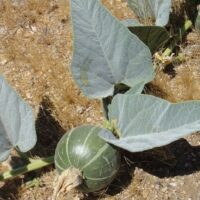
Cucurbita foetidissima
Found in valley grasslands and coastal scrub environments of Central and Southern California, the buffalo gourd is a deciduous perennial ground cover or vine that is sure to grab attention. In late winter and early spring, this vigorously spreading gourd emerges from a tuberous root, potentially spreading to 20’ feet or more, producing big, triangular, gray-green fuzzy leaves, followed by large, showy, orange-yellow, bell-shaped flowers in summer which attract bees. The round fruits, about 4 inches across, are green-striped when young, maturing to yellow. As the fruit matures, it is too bitter for humans to eat. The mature fruit is used by native peoples for decorative purposes or for making musical rattles. Plant in full sun. Drought-tolerant once established.
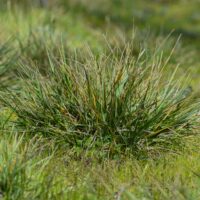
Danthonia californica
California oatgrass is a native bunchgrass found throughout mountains and coast ranges in both open and partly shaded areas. Forms dense leafy tufts with flower stalks of nodding spikelets to 1 1/2 ft. tall. Not to be confused with the invasive alien wild oats, this native makes a good basic grass for a meadow planting. Withstands trampling and traffic. Good for soil stabilization. Sun to very light shade. Little to no summer water once established. Deer resistant.
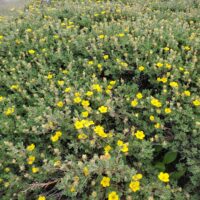
Dasiphora (Potentilla) fruticosa
A popular landscape subject, valued for its long bloom period, hardiness and carefree nature. A member of the rose family, this deciduous shrub can be found across the northern hemisphere, often growing at higher elevations. Here in California, it ocurrs in the Sierras, the Klamath Mountains and the Warners. Grows 2 -3 ft tall and wide with handsome, pinnately compound leaves. Cheerful, rich-yellow, saucer-shaped flowers bloom over a long period, summer into fall. Plant in full sun to light shade with moderate watering. Drought tolerant once established. Attracts bees and butterflies. Great in a pot. Deer resistant.