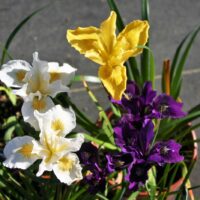
Iris Pacific Coast hybrid
A diverse group bred from the native irises with wonderful coloration, patterning, flower form variation....ranging from soft pastels to mahogany, maroon and midnight purple. Evergreen foliage, about 1 to 2 ft. high. Can eventually form sizable clumps. Full sun to light shade. Often do well as an understory for oaks that needs no summer water. Drought tolerant, moderate to little water when established. Deer don’t seem to eat flowers or foliage.
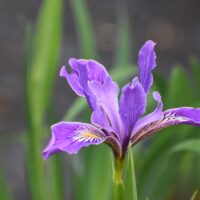
Iris Pacific Coast hybrid – lavender
A native iris hybrid thought to be a cross with Iris douglasiana. Flowers are a deep lavender in color, with purple-veined petals and yellow throats. Evergreen foliage is 12-18 inches tall and spreads to form 2-3 foot-wide clumps. Tolerates full sun on the coast but does best with afternoon shade inland. Occasional water keeps it looking good in summer. Like other Pacific Coast iris hybrids, it can be planted in the understory of oaks, where it will require little irrigation once established. Drought tolerant and deer resistant.
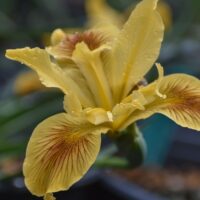
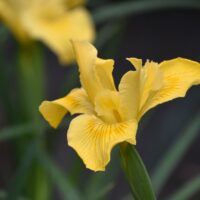
Iris Pacific Coast hybrid ‘Canyon Sunshine’
One of a diverse group of hybrid native irises, this butter-yellow selection with a lemony center is the result of a cross with Iris douglasiana 'Canyon Snow.' The evergreen foliage grows about 1 - 2 feet tall and spreads by rhizomes to form clumps up to 3 feet wide. Tolerates full sun on the coast but does best with afternoon shade inland. Occasional water keeps it looking nice in summer. A good plant for the understory of oaks, where it will require little irrigation once established. Drought tolerant and deer resistant.
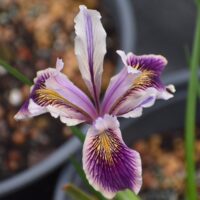
Iris Pacific Coast hybrid ‘Purple & White’
A Pacific Coast hybrid iris with thick purple veins and a splash of yellow at the center of white flowers. The evergreen foliage gets 12-18 inches tall and spreads by rhizomes to form clumps up to 3 feet wide. Does well in full sun in cooler, coastal areas, but needs afternoon shade inland. Occasional water keeps it looking good in summer. A suitable plant for the understory of oaks, where it will require little irrigation once established. Drought tolerant and deer resistant.
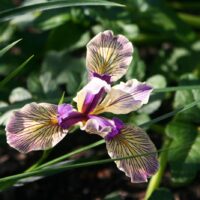
Iris Pacific Coast hybrid ‘Sebastopol’
A diverse group bred from the native irises with wonderful coloration, patterning, flower form variation....ranging from soft pastels to mahogany, maroon and midnight purple. Evergreen foliage, about 1 to 2 ft. high. Can eventually form sizable clumps. Full sun to light shade. Often do well as an understory for oaks that needs no summer water. Drought tolerant, moderate to little water when established. Deer don’t seem to eat flowers or foliage.
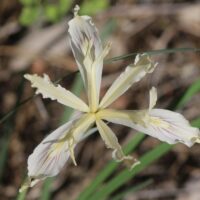
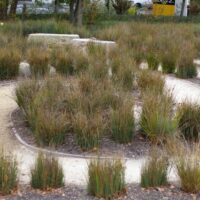
Juncus patens
This handsome evergreen rush provides a striking vertical accent 1-1/2 to 2-1/2 ft. tall with grey-green to grey-blue foliage. Brownish-yellow, tassel-like flowers appear in the spring and early summer. Very adaptable, tolerating a wide range of conditions. Enjoys sun with moisture, but will tolerate dry conditions once established. Accepts moderate shade. Robust root systems are excellent for soil stabilization. Deer resistant.
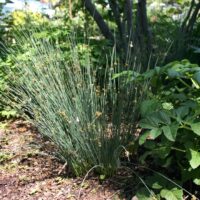
Juncus patens ‘Elk Blue’
Introduced by San Marcos Growers, this form of Juncus patens was selected from the hills southeast of the town of Elk in Mendocino County. Features exceptionally blue foliage and and a vigorous spreading habit. This selection is shorter than the typical grey rush only reaching about 18 inches tall. An adaptable species, will thrive in moist soils, even shallow water but once established tolerates dry conditions too. Grows in sun to moderate shade. An excellent accent plant with its stiff, vertical foliage. Deer resistant.
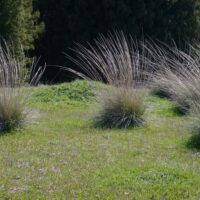
Muhlenbergia rigens
With its graceful, arching habit and tall, attractive seed stalk, this versatile, adaptable native grass is a striking addition to any garden. Forms a tidy, dense clump 3 ft. tall and 3-4 feet wide, making it useful as a specimen and also wonderful planted in mass. Remains mostly evergreen with occasional summer water, but can be periodically chopped down to spur fresh growth. Plant in full sun to light shade. Tolerates moist or dry soils and performs well in clay. Its extensive root system makes it an excellent for soil stabilization. Good habitat value offering seeds for songbirds and is a larval food source for a number of butterflies species. Deer resistant.
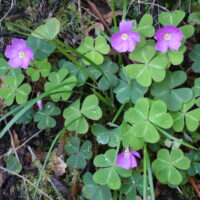
Oxalis oregana
A natural companion of coast redwoods where it forms low carpets of clover-like foliage. Useful ground cover for the woodland garden where it competes well with tree roots and thrives in partial to deep shade. Low and spreading with spring flowers that can range from white through dark pink . Best with humus in the soil and some summer moisture, though it is drought tolerant in coastal zones. Deer resistant.
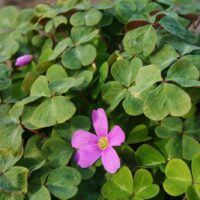
Oxalis oregana ‘American Beauty’
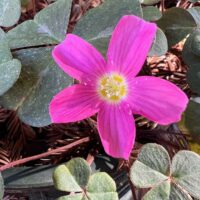
This remarkable selection of our native redwood sorrel has perhaps the largest flowers of any of the forms we've seen. The big pink blooms appear in spring above the lush, green, clover-like foliage. This ground cover competes well with tree roots and thrives in even the shadiest spots. Best with humus in soil and some moisture, though it is drought tolerant in coastal zones. Deer resistant.
Oxalis oregana ‘Klamath Ruby’
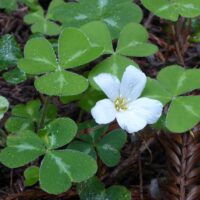
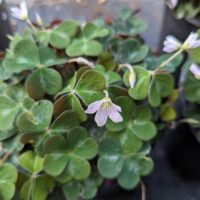
Low spreading groundcover which thrives in the shady conditions of Douglas fir and redwood forests. The cultivar ‘Klamath Ruby’ offers dark green clover-like foliage with beautiful burgundy backed leaves. White flowers with pale pink veining on the petals bloom in the spring. A lovely groundcover for a shady garden with some summer water, though it is drought tolerant in coastal zones, once established. Deer resistant.
Oxalis oregana ‘Smith River White’
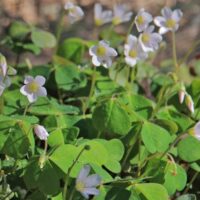
This Cal Flora selection carries white flowers with thin pink lines on the petals held up above the foliage, thus creating an effect somewhat reminiscent of our small native anemones. The foliage is handsome with dark olive green tops and purple-red undersides to the leaves. The perfect ground cover for deep to moderate shade with some summer moisture. Drought tolerant when grown in more coastal areas. Rampant when its needs are met, it competes well with tree roots and is the perfect companion to other redwood forest understory plants. Deer resistant.
Polypodium californicum ‘Sarah Lyman’
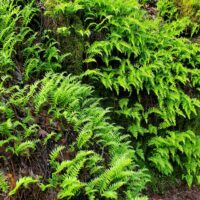
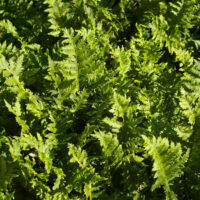
An interesting cultivar of the California polypody fern with finely divided leaves. A wonderful addition to the shade garden where it is perfectly adapted to our dry summers. With the first coolness of autumn the fiddleheads emerge and unfurl. Energetic bright green frilly foliage thrives all winter and into spring. Goes dormant late spring or early summer where it waits out the dry season returning dependably again in the autumn. Grows 12 to 15 inches tall and slowly spreads.
Polypodium glycyrrhiza
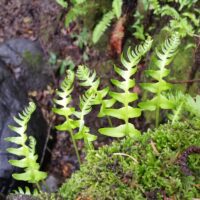
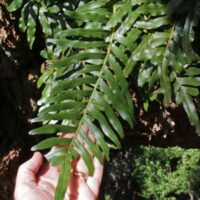
Native to moist coastal forests from Monterey County to Alaska. This epiphytic fern enjoys shady environments where it grows on trees, logs and stumps, mossy rocks and slopes. The long, narrow, deeply lobed fronds spread by creeping rhizomes, which have a sweet licorice flavor and a history of use by various native American peoples. They grow happily in moist shady gardens, going summer dormant once conditions get too dry, returning with the autumn rains and coolness. Drought tolerant in somewhat coastal conditions. Good container subject. Deer resistant.
Polypodium scouleri
A choice species native to moist coastal forests of the western U.S. where this fern will grow on trees, rocks and logs. Beautiful, leathery, deeply lobed, evergreen fronds grow on creeping rhizomes to about 8-12 inches tall and slowly spreading. Requires good drainage with a humusy soil and some summer moisture, but not overly wet. Wonderful on rocks, cracks in walls, and logs in shady locations. Excellent in containers. Makes a lovely hanging basket.
Polystichum munitum
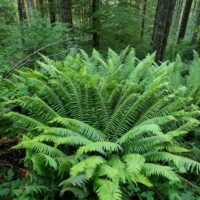
The versatile western sword fern is an evergreen native fern from California to Alaska. In most gardens it will reach about three feet tall and wide. In prime areas near the coast where moisture is readily available and cool temperatures prevail, this fern can get up to 5 feet tall and wide. Excellent for shady beds, along walls, as a large scale groundcover and mixed woodland planting. Best with humusy soil and regular to moderate water, but drought tolerant once established and tolerant of most soil types. Actually quite adaptable and deer resistant.
Ribes aureum
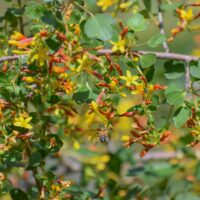
A vigorous deciduous shrub with masses of cheerful yellow blooms that appear in early spring. The light green foliage returns in late winter followed by delicate clusters of bright yellow tubular flowers that mature to a reddish-orange. Makes a wonderful addition to any habitat garden. Hummingbirds and bees adore the flowers, and the golden berries attract birds. Tolerates a variety of conditions from creeksides to dry woodland foothills to higher elevations - and even snow. Grows 6 to 8 ft. tall and wide. Where it finds water, it can spread by suckers, but is highly amenable to pruning. Adaptable to sun or shade, but does best with afternoon shade and moderate to occasional summer water.
Ribes californicum
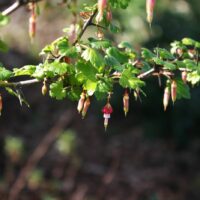
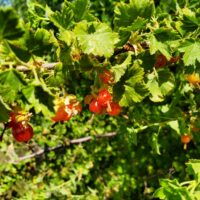
Undemanding, winter blooming, deciduous shrub, native to Coast Range mountains of California, from Mendocino County south to Orange County. Excellent choice for habitat gardens, where it provides abundant flowers and fruits plus thorny, protective cover. Variable in size, this spiny shrub can grow 4 - 6 ft. tall and wide. The pendant flowers are tiny but numerous and charming on close inspection. The tubular flower parts are white and extend beyond the reflexed red sepals, and are highly attractive to hummingbirds and other pollinators. Red, bristly, globular fruits follow and are adored by birds. The bright green leaves often take on striking crimson colors in the late summer before going dormant with drought. Host plant to several butterfly species as well as the white-lined sphinx moth. Best with light shade and a little irrigation, though once established it is completely drought tolerant.

Ribes indecorum
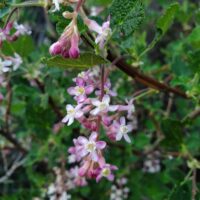
Native to Southern California chaparral and coastal scrub plant communities from Santa Barbara County to Northern Baja. This vase shaped deciduous shrub features thick, aromatic, scalloped leaves and grows 6 feet or so tall and wide. Small clusters of white flowers cover the stems in November and attract hummingbirds, bees and butterflies. The fruits that follow are very appealing to birds. Plant in sun to light shade. Little to no summer water is required once established. While this currant is often summer deciduous, a little extra water will help it to retain most of its leaves all year long.
Ribes malvaceum
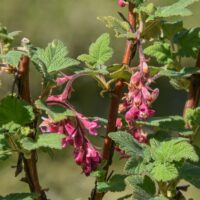
Chaparral currant is a tough and durable native shrub 5 to 8 ft. tall. This deciduous shrub will grow in full sun to light shade and is quite drought tolerant. Flowers early, often midwinter with dangling clusters of pink blossoms. Good early nectar source for hummingbirds. Berries attract many birds including grosbeak and mockingbirds.
Ribes malvaceum ‘Cupertino Rose’
Chaparral currant's flowers can range from white to pink to nearly red in color. This selection carries flower clusters that were the darkest to be found in this population from the foothills of the Santa Cruz Mts. west of Cupertino. The buds are dark pink and the dangling racemes when fully open read medium pink. Deciduous shrub 4-6 ft tall and wide with a very early bloom season often beginning in November, which provides an excellent early source of nectar for hummingbirds. The pendulous clusters of berries that follow are relished by birds. Tolerates full sun along the coast with some shade inland and occasional to little summer water.
Ribes malvaceum ‘Dancing Tassels’
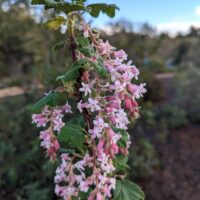
A dazzling selection by Rancho Santa Ana Botanic Garden from San Clemente Island. Blooming in winter over a long period with the longest dangling flower clusters we’ve seen in the species. Pendulous flower clusters are dusty pink in bud, opening to white and soft pink when fully open. Growing 6 ft. or more tall, this deciduous, vase shaped shrub has gray-green foliage with a pungent resinous fragrance. Peeling red-brown bark and clusters of blue-black berries add to its beauty and appeal. Chaparral currant blooms earlier and is more sun and drought tolerant than the popular pink flowering currant, Ribes sanguineum glutinosum. Plant in full sun to light shade with little to no water once established. An outstanding early nectar source for hummingbirds.
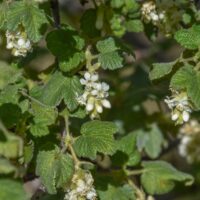
Ribes malvaceum ‘Rana White’
This unusual form of the chaparral currant has pure white flowers, not the typical pink flowers one normally sees. Forming an erect shrub of true green, aromatic foliage 6 ft. or more tall and wider. Winter and early spring bring short pendant racemes of the fragrant white flowers that are highly attractive to hummingbirds and pollinators. Clusters of sticky berries follow and are relished by birds. Though it will tolerate garden conditions, this currant is extremely drought tolerant once established. When allowed to go dry, this well-adapted species drops its leaves in late summer and leafs out again in late autumn. Moderate irrigation can make it almost evergreen. Plant in full sun to light shade. This species can be found throughout much of California in chaparral and on the edges of woodlands. Introduced by Rana Nursery.