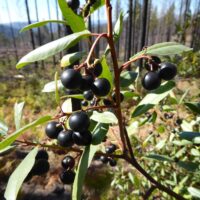
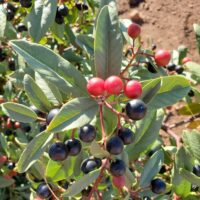
Frangula (Rhamnus) californica – large, inland form
Handsome native evergreen shrub with small greenish-yellow flowers followed by showy dark-colored berries. The propagation material for this this crop was collected from tall, upright shrubs on a hot inland site. Growing 8 ft. or more tall, coffeeberries thrive in full sun to light shade. They are drought tolerant once established, but would appreciate occasional deep summer waterings. A good choice for hedgerows and habitat gardens, coffeeberry provides food and nectar for a wide array of beneficial insects, birds and wildlife.
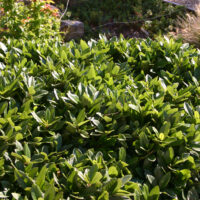
Frangula (Rhamnus) californica ‘Ed Holm’
Prized by gardeners for its low, dense habit and shiny, leathery leaves, this special selection of coffeeberry was discovered along Skyline Dr. in the northern Santa Cruz Mountains. Clusters of small, creamy-yellow flowers are produced from spring through fall and are followed by penny-sized, deep purple fruits. Over time, 'Ed Holm' will reach a height of up to 3 ft. and a width up to 6 ft.. Plant in full sun to light shade. Protect from the hot afternoon sun in hot areas and give moderate to infrequent irrigation. The blossoms are a favorite of bees.
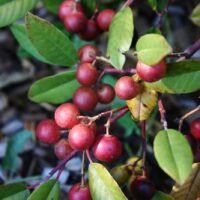
Frangula (Rhamnus) californica ‘Eve Case’
This well-known cultivar of coffeeberry was introduced to the trade in 1975 by the Saratoga Horticultural Foundation. Coffeeberry is a handsome evergreen shrub with broad leathery leaves. This selection grows to 6 ft. tall and wide, though mature specimens can reach 8 ft. or more tall under ideal circumstances. The small yellow-green flowers are not showy but attract an array of pollinators. The berries start out green and age to burgundy-black and are attractive to small mammals and birds. A larval food source for pale swallowtail butterfly. Adaptable, grows in sun to light shade. Drought tolerant but appreciates occasional summer water.
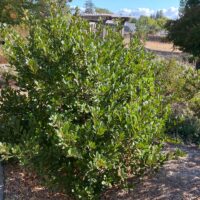
Frangula (Rhamnus) californica ‘Gumdrop’
This somewhat diminutive selection of our native coffeeberry was discovered as a seedling from a plant found on Montara Mountain, south of San Francisco. We thought the dense form and evocative, gumdrop shape was deserving of this sweet moniker. Only reaches to about 5 - 6 ft. tall and wide and offers attractive, slightly-concave, dark green, leathery leaves, not unlike its close relation ‘Leatherleaf’. Will accept full sun in somewhat cooler locations but enjoys a little shade in hotter regions. Occasional to infrequent irrigation once established. The small, yellowish flowers which appear in spring and summer are extremely popular with bees, and the juicy, purple fruits which follow are enjoyed by birds.
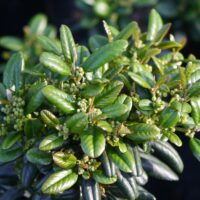
Frangula (Rhamnus) californica ‘Leatherleaf’
Another fine Roger Raiche selection, this coffeeberry cultivar is well worth growing. The evergreen leaves are particularly dark and broad with a mounding habit growing 5 - 6 ft. tall and wide. The tiny flowers attract a wide array of pollinators. Larval food source for pale swallowtail butterfly. The handsome fruits go green to red to black and are enjoyed by small mammals and birds. Plant in sun to light shade. Drought tolerant once established though occasional summer watering is helpful. An adaptable and useful shrub for both formal and naturalistic plantings.
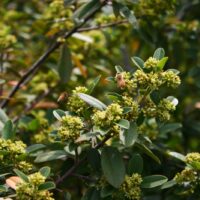
Frangula (Rhamnus) californica ‘Mound San Bruno’
Selected by Roger Raiche on San Bruno Mountain in San Mateo County, this is one of the most reliable coffeeberries. Grows 6 ft tall and wide, with narrow, evergreen leaves and a compact habit. For full sun on the coast to part shade inland. Will tolerate irrigation, but needs only occasional summer water once established. Flowers are loved by pollinators, especially bees. A larval food source for the pale swallowtail butterfly. Provides black juicy fruit in the fall for thrushes, jays, mockingbirds, and robins. May grow to as much as 8 ft. tall with moderate water and good drainage in cooler areas.
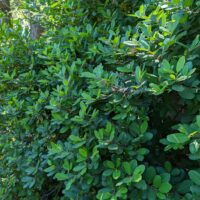
Frangula (Rhamnus) californica ‘Olema’
We discovered this large, dense form of our native coffeeberry near the town of Olema in coastal Marin County. While it reached up to around 15 ft. tall and wide in nature, it has been a little slow to do so in the ground here at the nursery. After about 4 years, it’s reached a height of about 9 ft. This selection of coffeeberry is ideal for a tall hedge or screen where an evergreen shrub is needed to create privacy. Grows well in full sun somewhat near the coast but will need a little shade in hot, inland sites. Occasional to infrequent irrigation once established. Coffeeberries are some of the best habitat plants. The small, yellowish flowers are adored by bees in spring and summer, while the plump, purple fruits that follow are relished by birds.
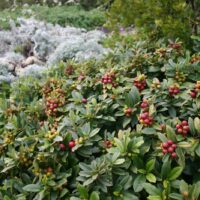
Frangula (Rhamnus) californica ‘Seaview’
This highly sought after selection of our native coffeeberry stays low and compact only reaching 2 – 3 ft tall and up to 6 ft wide. The tidy, deep green leaves form dense rosettes with small cream-colored flowers appearing from spring through summer. Deep purple “berries” form dense clusters in the summer and fall. Enjoys full sun to moderate shade and moderate to occasional water once established. An excellent habitat plant for bees and birds.
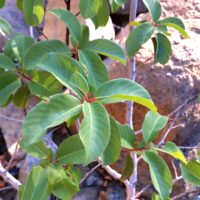
Frangula (Rhamnus) californica ssp. occidentalis
Description coming soon!
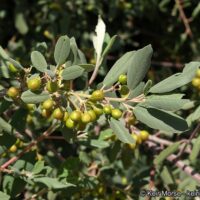
Frangula (Rhamnus) californica ssp. tomentella
This distinctive species of coffeeberry features blue-grey leaves with velvety, silver undersides and grey, fuzzy stems. The somewhat open form grows 6 to 10 ft tall and wide. Clusters of small cream-colored flowers appear from winter through spring and are a favorite of bees. The deep purple fruits which follow are highly prized by birds. While native to serpentine soils, this coffeeberry should thrive anywhere with decent drainage. Provide full sun to light shade and give occasional irrigation once established. The grey stems contrast beautifully with the shiny, dark green leaves of Ceanothus ‘Yankee Point’.
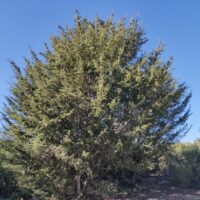
Hesperocyparis macnabiana
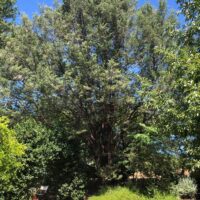
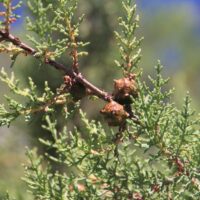
MacNab Cypress is native to dry, open, slopes, usually on serpentine, in chaparral and woodlands of Northern California. Fast growing tree or large shrub, 15 – 40 ft. tall, often with multiple trunks and a spreading crown, growing wider than it is tall. The pleasantly pungent, grey-green, foliage smells like gin and is arranged on flattened branches, giving it a somewhat lacey appearance. The bark is rough and furrowed and the cones are spherical and persistent. Plant in full sun with good drainage and little to no summer water once established. Deer resistant.
Hesperocyparis sargentii
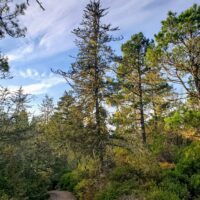
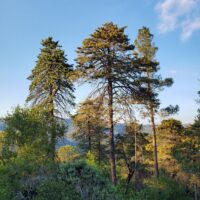
This cypress makes its home in serpentine pygmy forests from Santa Barbara to Mendocino Counties. While often dwarfed in its native terrain, this species can grow quite happily off of serpentine and may reach up to 60 ft. tall. The small, dark-green, scale-like leaves form a bushy canopy against the gray-brown trunk. A good medium-sized tree for hotter inland areas, but will also tolerate coastal conditions. The sargent cypress can grow fairly rapidly, useful as a high privacy screen or wind break. Plant in full sun to light shade and water occasionally. Will be very drought tolerant once established. Needs good drainage. Deer resistant.
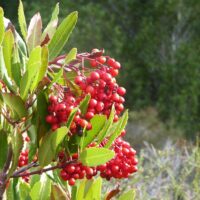
Heteromeles arbutifolia
Toyon is a handsome native evergreen shrub 6 - 10 ft. tall and wide. Sun to part shade, drought tolerant. Clusters of lacy white flowers bloom in summer and areattractive to pollinators. Spectacular bundles of red berries are relished by birds and are a great winter decoration. Valuable as a specimen, screen, hedge or bank plant. Birds attracted to the fruit include the following species: Cedar waxwing, California towhee, spotted towhee, Western bluebird, robins, mockingbirds, bandtailed pigeon, waxwing and quail.
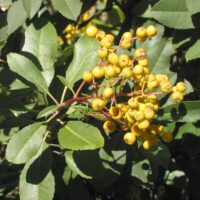
Heteromeles arbutifolia ‘Davis Gold’
An interesting cultivar of the native toyon which bears bright golden yellow berries rather than the more common red-colored fruits. A handsome evergreen shrub 8 - 12 ft. tall and wide (or more). Sun to part shade, drought tolerant. Clusters of lacy white flowers bloom in summer and are attractive to pollinators. The showy clusters of orange-yellow berries are relished by birds and are great winter decoration. Valuable as a specimen, screen, hedge or bank plant. This selection is considered more disease resistant than most toyon.
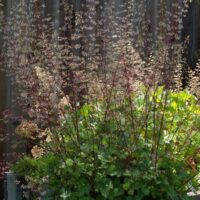
Heuchera micrantha
This is our common alum root which is usually seen on shady cliffs and roadbanks adjacent to forests. Easy to grow in garden situations. Forms low mounds of foliage topped with dainty white flowers on long stems. Likes moisture, but tolerates considerable drought and takes deeper shade than most Heuchera species. This species attracts hummingbirds.
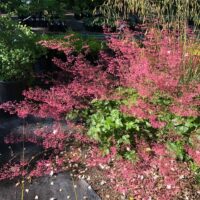
Heuchera micrantha ‘Martha Roderick’
Here’s a pink flowered form of the normally white flowered native alum root. Foliage forms handsome clumps topped with slender stalks 1 - 1 1/2 ft. tall of tiny pink flowers. Excellent in woodland setting for border, slope or rock garden. Drought tolerant but best with a little water. This species attracts hummingbirds.
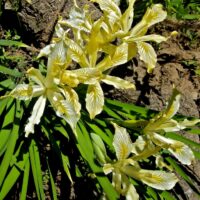
Iris chrysophylla
Native to far northern California and into western Oregon, this uncommon iris grows in fast draining soils in open forests and woodlands. A small scale iris, usually under 12 inches tall in bloom, spreads slowly from slender rhizomes. The delicate blossoms flower in the spring and can vary in color from white to cream to yellow, with a central yellow splash and prominent dark venation. Grow in sun to light shade with occasional to little watering. Visited by bees and hummingbirds. Deer resistant.
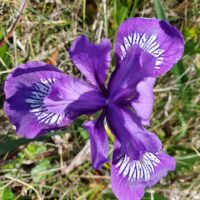
Iris douglasiana
Native to the California coast from Santa Barbara to Oregon. Grows both on the edge of coastal forests and on bluffs and prairies along the ocean. Clumps of evergreen, sword-shaped leaves increase readily and are topped with violet-purple blossoms early to mid spring. Important nectar producer for native bees. An adaptable garden subject for cool full sun to light shade. Drought tolerant once established, but occasional summer water will help keep foliage fresher. Deer resistant.
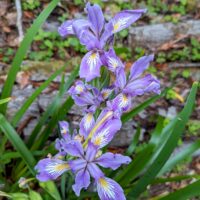
Iris douglasiana – Robust Form
We discovered this incredibly striking form of the popular Douglas iris near Tannery Gulch, outside of Occidental. The dark, evergreen leaves reach up to an astounding three feet in height, and are exceptionally broad. Even though these are grown by seed, the flowers are a dependable lavender-blue, with sprays of white and yellow, held on tall stalks reaching up to a foot above the foliage! Grows well in dappled shade in hotter areas, but can take full sun where there is coastal influence. While drought tolerant, occasional deep soaks keep them looking verdant and vigorous. Deer and gopher resistant.
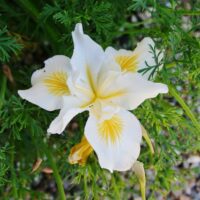
Iris douglasiana ‘Canyon Snow’
A dependable and floriferous selection of the native Douglas iris, with springtime flowers that are pure white with yellow markings on the falls. Broad shiny blades are mostly evergreen and grow a foot or more tall and form compact clumps. Plant in sun to part shade, particularly in hot inland areas, with moderate to little summer water. Prefers good drainage but will grow well on clay soils provided they are mounded up. Too much summer water on heavy soils will prove fatal. Deer resistant.
Iris douglasiana v. major
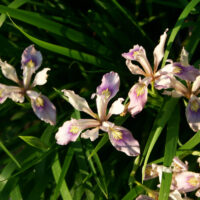
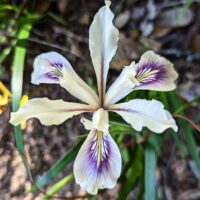
This rare form of the Douglas iris occurs throughout Marin County, offering a rainbow of possible flower colors, including blue-purple, mauve, creamy yellow and white, with all sorts of gradations in between. Since these are seed grown, the color will be a surprise when they bloom. The spring blossoms often have striking venation, and are held on stalks 1’ – 2’ high. Foliage clumps generally reach about a foot tall and spread to form extensive colonies of evergreen, strap like leaves. Plant in full sun in cooler areas, but provide some shade in hotter zones. Plants require little water once established, and are perhaps a little more drought and heat tolerant than the straight species. Deer and gopher resistant.
Iris fernaldii
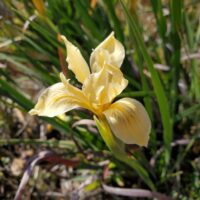
Rarely offered in nurseries, the creamy-white to soft, buttery-yellow flowers of Iris fernaldii brighten up any dry shade to part-sun, inland garden in April. The flowers rise a foot above the evergreen, narrow, strap-like, deep-green foliage. This patch-forming Iris can be found in the more inland canyons of Northwestern California, from the Santa Cruz mountains, throughout inland Sonoma County, to Lake, Colusa, and Glenn counties. Fernald’s iris is well adapted to both extreme heat and cold, but can also perform well in full sun on the coast. Native bees and butterflies are attracted to the cheery flowers of this iris. This species prefers decent drainage and is drought tolerant and deer resistant once established.

Iris innominata
A choice iris with slender, glossy, dark-green leaves and dainty flowers in late spring. Flower color can be from brilliant yellows to shades of purple. Native to the Siskiyou Mountains in Del Norte County, California, into southern Oregon where it forms low, dense, evergreen clumps in openings of woodlands or coniferous forests. This species does better in hot, inland areas than the Douglas iris. Requires good drainage and some summer water. This Del Norte County iris has been used in hybridization programs to produce the popular Pacific Coast Hybrid Iris. Deer resistant.
Iris longipetala
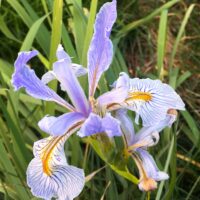
Restricted to swales and moist areas in coastal grasslands from San Francisco to Monterey, this uncommon native is well worth growing. Bluish-green evergreen blades form erect clumps one foot to 20 inches tall. Early spring brings beautiful lavender-blue flowers with dark purple venation. Full sun in coastal areas, a little shade inland with regular water through the bloom period. Can go dryer once flowering is finished. Deer resistant.
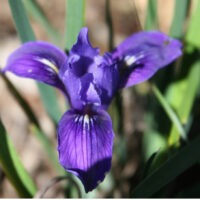
Iris macrosiphon
A widespread and variable species growing throughout Northern California’s coast ranges and Sierra Nevada foothills. Our crop is grown from seed collected in western Sonoma County which has lovely lavender-blue blossoms April through May. Forms small clumps of narrow and slightly arching blades under 18 inches tall. Often found on wooded slopes, in openings or edges of forests where it will form small patches. Prefers good drainage, drought tolerant, or just a little summer moisture. Deer resistant.