Quercus kelloggii
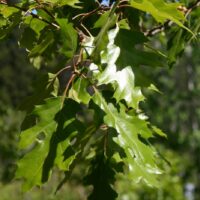
Beautiful in all seasons, the native black oak makes a fine specimen. Found mostly in foothills and low mountains away from the immediate coast, often in association with conifers, from California to Oregon. Growing 35 - 80 ft tall, this graceful, deciduous tree starts the spring with gorgeous, rosy-pink new growth. The soft pink leaves soon mature to a lustrous, shiny, dark green and are deeply lobed with pointed tips. Gold-green catkins dangle from the branch tips in the spring, leading to plump acorns, set deep in their scaly cups. In the autumn, the bold, leathery leaves take on golden hues before they fall. Oak trees are the ultimate habitat plant, offering food and cover for a myriad of species, including invertebrates, mammals and birds. Plant in full sun to light shade where it will be drought tolerant once established.
Ranunculus californicus
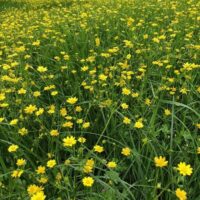
Cheerful harbinger of spring, this western native grows in vernally moist sites in a number of plant communities throughout California. Easy to grow perennial, sports bright green succulent foliage topped with slender stems 1 to 2 ft. tall and wide. A profusion of shiny, bright yellow blossoms bloom freely until soil dries out. Goes dormant with drought, returning in spring, often reseeding. Full sun to light shade. Excellent early pollen and nectar source, attractive to bees and other beneficials.
Ranunculus occidentalis
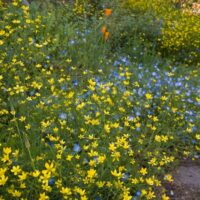
Native to open woodlands and meadows, this buttercup often occurs under deciduous oaks and buckeyes or on edges of forests. Perennial, with basal foliage, the flower stems rise 12 to 20 inches with bright yellow shiny petals. Has been surprisingly adaptable. Does fine with moderate summer irrigation, where it stays evergreen and long blooming. Once established can be allowed to go summer dry, where it will go dormant after setting seed, and returning with the winter rains.
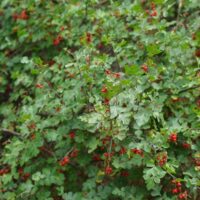
Rhus aromatica
An arching, mounding native shrub related to sugar bush and lemonade berry. Early spring brings a profusion of soft yellow flowers followed by orange-red fruits relished by wildlife. The leaves turn shades of yellow, orange and red in the fall. Plant in sun to light shade where it is drought, cold and heat tolerant. Useful addition to the naturalistic garden, as a shrubby groundcover, along seasonally moist streams, and for erosion control. Used by the native people for basketry.
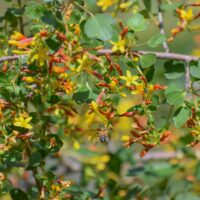
Ribes aureum
A vigorous deciduous shrub with masses of cheerful yellow blooms that appear in early spring. The light green foliage returns in late winter followed by delicate clusters of bright yellow tubular flowers that mature to a reddish-orange. Makes a wonderful addition to any habitat garden. Hummingbirds and bees adore the flowers, and the golden berries attract birds. Tolerates a variety of conditions from creeksides to dry woodland foothills to higher elevations - and even snow. Grows 6 to 8 ft. tall and wide. Where it finds water, it can spread by suckers, but is highly amenable to pruning. Adaptable to sun or shade, but does best with afternoon shade and moderate to occasional summer water.
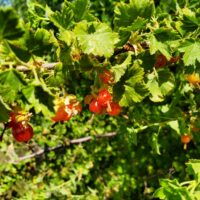
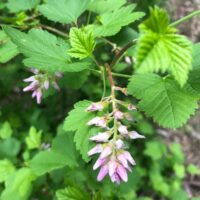
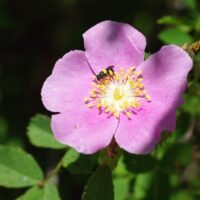
Rosa californica
A thicket forming, deciduous shrub native to riparian zones throughout the state. Fragrant, pink blossoms with yellow centers are followed by attractive red fruits or rosehips. The stems are lined with little thorns and gray-green, pinnately divided leaves. A good screen or living fence, where it will grows at least 5 ft. tall and usually spread wider. Very important for erosion control along streams. This is one of our most popular hedgerow plants due to the cover it provides for foraging wildlife and the value it offers to pollinators and birds. Prefers full sun to light shade and seasonally moist soils, but can go a little drier in the summer. A larval host to several butterflies.
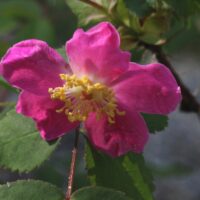
Rosa gymnocarpa
Delicate, native rose of woodlands, growing 3 - 4 ft. tall. Sprinkled with sweetly fragrant single pink flowers followed by small red rose hips. Best in woodsy shade where it tolerates drought. Bees, butterflies and other pollinators are attracted to rose blossoms and the fruits are enjoyed by birds.
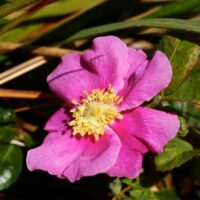
Rosa nutkana
Named for the Nootka Sound in Alaska where it was originally described, this shrub's range runs all the way south into California. Forms prickly thickets at least 6 feet tall with light green foliage. Super fragrant, 2-3 inch single pink flowers appear in summer followed by showy red hips.Favors moist sites in full sun to light shade. Rose thickets provide excellent habitat value, offering food and cover for birds and small mammals, pollen and nectar for many beneficial insects as well as a larval food source for a number of butterflies.

Rubus leucodermis
West coast native found in open or wooded places from British Columbia south to California.Forms an arching deciduous shrub 3-4 foot tall and wide.The stems and back of the leaves are covered in beautiful white blooms. White flowers are followed by tasty red to purple fruits.Tolerates many soil types, preferring some moisture and a little shade from the hottest sun. Excellent habitat plant where the the prickly shoots and thorny canes provide safe cover for birds, flowers attract a wide array of pollinators and tasty berries are a favorite of animals of all sorts.
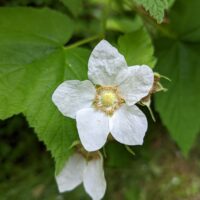
Rubus parviflorus
Thimbleberry is a deciduous native shrub with handsome large pale green velvety leaves. Small clusters of pretty white single flowers in spring and early summer followed by thimble-shaped mild-flavored edible berries in mid summer. Grows 3 - 6 ft. tall and spreading. Needs part shade and moisture.
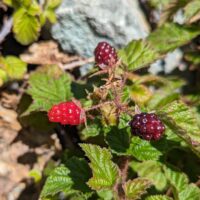
Rubus ursinus
Not to be confused with the weedy non-native Himalaya berry that has taken over acres in northern California. The native blackberry when happy can form a good sized patch, growing to about 3 ft. tall and spreading more than 6 ft. wide depending on available moisture. This thorny, spreading evergreen has excellent habitat value. The berries are widely used as a food source for wildlife. Offers excellent escape and nesting cover and is good for erosion control. People relish the berries and its fruits are highly prized for pies and jam. Best with some shade and moisture, but is drought tolerant once established.
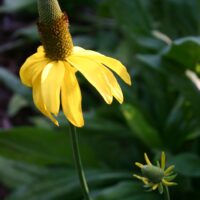
Rudbeckia californica
Large, bold perennial native to montane seeps and meadows where they receive regular moisture. The big leafy clumps can become very large growing 3 foot tall or more. Midsummer brings showy yellow daisies on tall stems with a distinctive long central cone and a skirt of three inch yellow petals. Plant in sun to light shade with regular water. Highly attractive to bees and other pollinators.
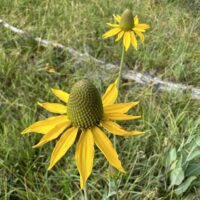
Rudbeckia glaucescens
This uncommon coneflower hails from the Klamath Mountains of northern California and southern Oregon. While similar in flower to the California coneflower, featuring yellowish-brown cones encircled with a skirt of long, yellow petals, this species has waxy leaves tinted a striking blue-gray. The flowers perch atop leafless stalks reaching 3 to 4 ft tall, rising above the large, lance-shaped leaves. A favorite of bees and butterflies. Even though this species normally occurs in serpentine soils, it grows easily in almost any soil type, as long as it is kept moist. Enjoys regular to moderate irrigation and full sun to part shade.
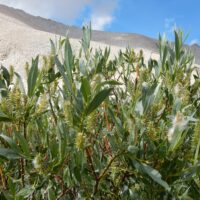
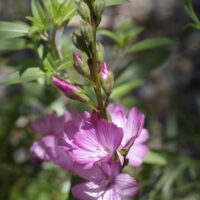
Sidalcea malviflora
Beautiful spring blooming native perennial found in moist meadows along the coast and inland from Southern Oregon to the Mexican border. Reliable and easy to grow, and an excellent addition to a grasslands or meadow planting. Grow in full sun to partial shade where it thrives with moisture and tolerates moderate to little water once established. With drought will go summer dormant. Light to dark pink, small to large flowered; they are all beautiful. A nectar and larval food source for the West Coast Lady, Painted Lady, Common Checkered Skipper, and the Gray Hairstreak butterflies.
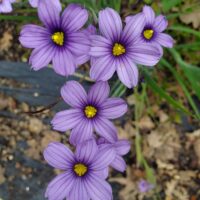
Sisyrinchium bellum
A beloved native perennial wildflower with grass-like foliage and six-petaled spring blossoms that range from blue to purple with occasional pure white forms. Grows 6 - 12 inches tall in small clumps where it is useful in meadow or grassland plantings as well as mixed borders. Sun to partial shade, with moderate to infrequent summer water. Goes summer dormant in dry gardens. Does well in heavy soils and often seeds about when happy.
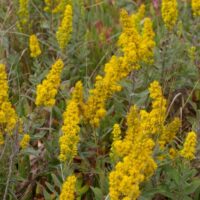
Solidago velutina ssp. californica
A showy and easy to grow late blooming native perennial. Spreads by creeping rootstocks where it can form a good-sized colony. Has spread slowly in our heavy clay soils with minimal water, but has the potential to spread aggressively in lighter soils especially with regular water. Late summer through fall brings slender wand-like flower stalks of golden yellow daisies 2 - 3 ft. tall which are visited by bees, butterflies and other insects. Plant in a sunny area where it is drought tolerant, but some supplemental summer water keeps it blooming longer.
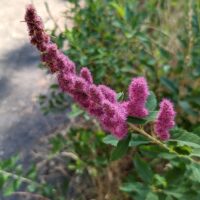
Spiraea douglasii
In summer, wands of violet-pink flower clusters decorate the branch tips of this deciduous shrub. Forms broad thickets 3 - 6 ft. tall with bluish-green leaves. Enjoys regular moisture and full sun to light shade. Great for a naturalistic planting in a woodland garden or along streams. Attracts bees and butterflies and is a larval host for various butterflies and moths in its native range. Native to the coast and into the mountains from northern California to Alaska.
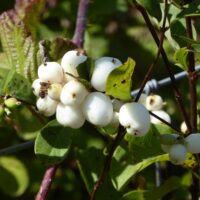
Symphoricarpos albus var. laevigatus
Snowberry is a deciduous, native shrub for dry or moist shade. Reaches about 4 - 6 ft. tall and spreading. Clusters of tiny, pinkish, urn-shaped flowers are followed by showy white berries on arching branches. Responds well to shearing. A good choice for under native oaks. Fruit may be toxic to humans. Hummingbirds like the flowers. Berries are palatable to hermit thrush, Swainson’s thrush, robins and other birds. Also creates good cover for birds.
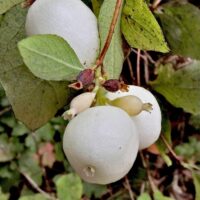
Symphoricarpos mollis
Low growing, spreading groundcover, usually staying around a foot tall by 3-6 feet wide. Rounded blue-green leaves on arching stems makes an excellent low growing thicket which competes well with tree roots. An amenable plant, able to grow in full sun in coastal areas and different depths of shade elsewhere, even fairly deep shade. The tiny, pink, bell shaped flowers are attractive to bees and hummingbirds and the white fruits that follow are eaten by birds. Good for erosion control and does well under oaks. Offers excellent habitat value with its flowers and fruits and provides cover for ground nesting birds. Drought tolerant once established. Deer often leave it alone.
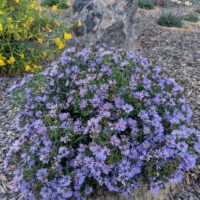
Symphyotrichum (Aster) chilense ‘Plumas Purple’
This form of the California aster is remarkably compact and refined, featuring blue-purple daisies which are darker than any other selection we have seen. Grows to a height of under a foot and so far has been much less likely to spread aggressively, though it should get to at least 3’ wide. In late summer and early autumn, the dense blooms turn plants into bonbons of flowers. Grow in full sun, where they will be drought tolerant once established, but will enjoy an occasional soak. California asters provide an important late nectar and pollen source for bees, while butterflies enjoy the nectar and are reported to utilize them as a larval hosts. Thank you to Pete Veilleux for giving us this stellar selection! It’s thought to have been found in Plumas County, so should be quite heat and cold tolerant.
Symphyotrichum (Aster) foliaceum
Native to the western United States where it grows in open woods, mountain meadows and along streams at mid to high elevations. The erect flower stems hold daisies of light blue to violet blue with yellow centers, surrounded by leafy bracts. An important pollinator plant, offering pollen and nectar late in the season to bees, butterflies and other beneficial insects. Grows 1 - 2 ft. tall from a leafy base that slowly increases. Prefers full sun with regular to moderate moisture. Winter deciduous.
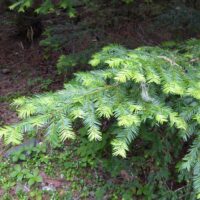
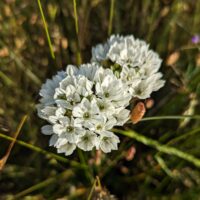
Triteleia hyacinthina
One of the easier to grow native bulbs that adapts well to garden conditions. Native to vernally moist areas that become summer dry in the Coast Ranges, Central Valley and Sierra Nevada into southwestern Oregon. Slender flowering stems rise one to two feet above the narrow leaves, with umbels of white, star-shaped flowers with green centers. If happy, the corms will multiply, forming drifts among grasses and shrubs and in open woodland settings. Easy to grow in containers, where they can be stashed in the shade once they go dormant. Bee and butterfly favorite.
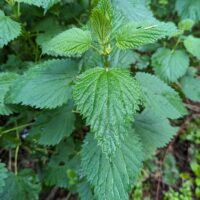
Urtica dioica
Found in moist woodlands and meadows throughout the state, stinging nettle is a habitat powerhouse. Growing at least 3 ft. tall and spreading vigorously to form large colonies, it's a great addition to any shady habitat garden or swale, where it stays moist throughout the year. Plant away from high traffic areas, as both the stems and foliage have small, stinging hairs that can cause skin irritation upon contact. This nettle has distinctive gray stalks, serrated leaves, and produces white, firework-like inflorescences that grow on stems in clusters throughout summer and early fall. Not only has it been used for centuries for a multitude of edible and medicinal purposes by indigenous tribes, it is also a larval host to several native butterflies including the painted lady and red admiral. Good cover for birds and small mammals.
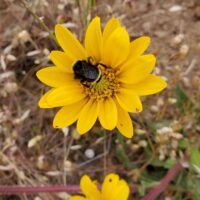
Wyethia angustifolia
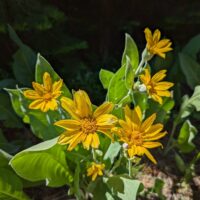
Few hikers can resist the bright, golden-yellow flowers of this showy native sunflower relative. The large, 2” - 3” wide flowers perch atop stems 1.5 - 3 ft. tall in the spring. Bright green, lance-shaped leaves form low rosettes at the base of the flower stalks. This mule ears grows in sunny meadows and at the edges of woodlands. Perhaps the most garden tolerant of all of the mule’s ears, accepting occasional irrigation once established but not requiring it. Does not mind soils with poor drainage. A great plant for bees, butterflies and birds. Will go dormant once it finishes flowering but will re-emerge after the rain returns.