


Acer circinatum
Deciduous shrub or tree 5 to 20 ft. tall, native to moist woods and streambanks in the coastal mountains of northern California to British Columbia. Attractive in all seasons: bare reddish twigs in winter, delicate lobed leaves in spring and summer, and good color in autumn. Wonderful in the woodland setting, under tall conifers where its fall color will stand out. A natural with ferns and other woodland plants that receive dappled to part shade and regular to moderate summer water. Can be espaliered too.


Acer macrophyllum
This stately and picturesque tree is native to stream banks and moist canyons from Southern Alaska to the foothills of California. A large, round-topped tree with large dark green lobed leaves and smooth silver-gray bark. Fast growing 30 ft or more tall. One of the few native trees to offer good fall color. Sun to partial shade, occasional to regular water. When planting in a sunny location, protect the trunk from sun-scald with a dilute application of white latex paint.
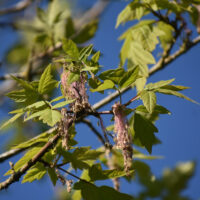
Acer negundo var. californicum
The box elder at maturity features a broad canopy supported by thick branches and a wide, gray trunk. In spring, the silky pink inflorescences hang from the tips of the branches as the leaves begin to emerge. Quickly grows to a height and width of up to 50 ft. Often used as a restoration plant in riparian zones. Full sun to part shade. Enjoys regular moisture. Deer seem to leave it alone once established.

Achillea millefolium – inland form – Lake County seed source
A vigorous and easy to grow perennial, yarrow grows native throughout California in many plant communities. This crop is grown from seed collected from a hot inland site in Lake County. In this form, flower stems rise 18 inches above the gray ferny foliage bearing white flowers in flat topped clusters. Plant in a sunny location with moderate to a little water. Spreads by rhizomes and can form sizable clumps if happy. A good addition to the habitat garden where the flowers provide nectar for bees and butterflies and the foliage provides winter forage for birds. The foliage is deer resistant.

Achillea millefolium – inland form – Napa County seed source
A vigorous and easy to grow perennial, yarrow grows native throughout California in many plant communities. This crop is grown from seed collected from a hot inland site in Napa County. In this form, flower stems rise 18 inches above the gray ferny foliage bearing white flowers in flat topped clusters. Plant in a sunny location with moderate to a little water. Spreads by rhizomes and can form sizable clumps if happy. A good addition to the habitat garden where the flowers provide nectar for bees and butterflies and the foliage provides winter forage for birds. The foliage is deer resistant.

Adelinia (Cynoglossum) grandis
From woodlands throughout Northern and Central California comes this alluring bluebells relative. Dainty flower clusters ranging in color from periwinkle blue to lavender appear on slender stalks in the spring. The leaves are what gives this plant its name: grey-green and tongue-shaped, emerging in the winter from basal roots. Plant in bright shade and don’t water once established. Needs decent drainage. Once this plant goes to seed it will go dormant, re-emerging in late winter. A great accent plant for under the dry shade of deciduous oaks.

Adenostoma fasciculatum
Chamise is found on the poorest soils in hot, dry, exposed areas of chaparral plant communities. Bright green needle-like leaves cover this evergreen shrub. Late spring brings showy plumes of creamy white flowers in small dense sprays, persisting as they age to reddish brown. This tough shrub can grow 4-10 ft tall and wide depending on conditions. An excellent erosion control plant for tough sites where it holds soil, provides cover for wildlife and acts as a nurse plant, paving the way for the other species to get started. Plant in full sun with no water required once established.

Adiantum aleuticum
Five finger fern provides a delicate, airy, fresh effect in the shade garden. Easy to grow with regular water and humusy soil. Does well in containers too. Fronds form finger-like patterns on handsome black stems up to 1 1/2 feet tall. Somewhat winter deciduous. Combine with wild ginger, redwood sorrel, leopard lilies and sword fern for a handsome woodland garden. Somewhat deer resistant.

Aesculus californica
Beautiful in all its seasons, this native tree is perfectly adapted to our summer dry climate. Broad headed, deciduous tree rapidly growing to 15 feet or more with smooth grey bark and a rounded shapely habit. Bright green palmate leaves unfurl in the spring. Striking, fragrant white to pink flowers in long spikes are followed by pear shaped fruits that split open to reveal large chestnut-brown shiny seeds dangling from branch tips. Buckeyes lose their leaves in summer to avoid the long dry season. Adaptable and tolerant of a wide range of conditions. Sun to light shade, little to no water once established. Flowers provide nectar for hummingbirds, butterflies and native bees.

Agoseris grandiflora
With a wide distribution throughout the state, the California dandelion is much more refined and well-behaved than its European, weedy look-alike. Found in oak woodland, chaparral, and many other plant communities in part-shade or bright dappled light. Slender, dissected, low, fuzzy gray-green leaves give rise to stem-like peduncles up to 2+ feet tall that are topped with rounded, flat, gold-yellow flower clusters from March-May, followed by large, perfectly rounded white globes of seeds that are wind-dispersed. Plant in part-sun or in areas with bright dappled light that drain well and are summer dry. Does not reseed aggressively like the European dandelion. Drought-tolerant.

Agrostis pallens
A fine textured, drought tolerant, spreading, perennial grass that forms an undulating, naturalistic, meadow look, or can be mowed and used as a lawn substitute. Native to meadows, open woodlands and forests in many plant communities in California north to British Columbia. Grows 1 -2 ft. tall with airy flower stems in late spring to early summer. May be shy to flower in shady areas. Plant in sun to light shade, with decent drainage, where it will accept both water and drought. Will go dormant in summer without irrigation. If using as a lawn substitute, it will need summer irrigation, though requiring far less than a traditional lawn. Excellent understory among trees or shrubs, for rain gardens, bio-swales, meadows or mowed as a lawn substitute. Host plant for a number of butterflies. Deer resistant.
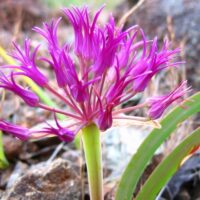
Allium falcifolium
This is one of our favorite native bulbs and it is rarely available in nurseries. In spring or summer, dense, rounded clusters of flowers, ranging in color from light to deep pink, sit atop thick, flattened stems up to 10 inches high. The strap-like leaves are few and don't distract from the chunky blooms. Needs excellent drainage and a lean, rocky soil. Once the flowers are done, allow the plant to go dormant with no irrigation. Native to rocky, sunny outcrops from Santa Cruz up to southwestern Oregon. Nestle among rocks and little succulents to show this unusual onion off to your friends. Works well in a container where its somewhat tricky requirements can be more easily met.
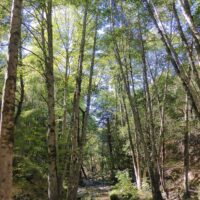
Alnus rhombifolia
From creeks and rivers throughout California, the white alder rapidly grows to become a large tree, reaching to 50 ft. or more at maturity. Serrated green leaves produce an excellent canopy above the straight, silvery-gray trunk. In winter, when the leaves have fallen, the ghostly branches make a striking silhouette with dangling catkins from the branch tips. An excellent plant for creek restoration where its aggressive roots help to stabilize banks. Keep away from irrigation pipes and foundations. Needs regular moisture and sun to light shade.
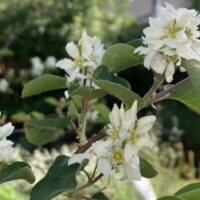
Amelanchier alnifolia
A common native shrub or small multi-trunked tree often found growing along seasonal streams. Serviceberries provide a touch of autumn color where the leaves turn a lovely butterscotch yellow. The white spring flowers are followed by dark blue-purple fruits coveted by band-tailed pigeons in the wild. Sun to partial shade. Moderate to infrequent water. Many butterflies use this species as a larval host, such as the California hairstreak and the Ceanothus silkmoth. Grows well in a large container.
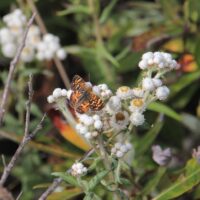
Anaphalis margaritacea
An adaptable plant with silver-green leaves that are densely white and woolly beneath. The flowers appear in summer and are made up of pearly white papery bracts surrounding yellow centers. The “straw flowers” retain their shape and color and are often used in dried arrangements. Tolerant of almost any soil type, it prefers full sun where it will grow in moist to somewhat dry conditions. Can spread vigorously, perhaps best used in meadow plantings or other naturalistic settings. Grows 1 - 3 ft. tall and spreading. Dies back to the ground in the winter. Larval food source for the painted lady and American lady butterflies. Deer resistant.

Angelica arguta
A remarkable form of this native mountain Angelica with striking bluish-gray foliage. Umbrella-shaped clusters of white flowers sit on stalks up to 6 feet in height. Needs moderate irrigation and dappled shade inland. Combine with native Heleniums, lilies and columbines to create a beautiful woodland flower patch. Great for native pollinators. A larval food source for the anise swallowtail butterfly.
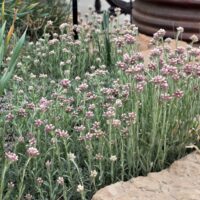
Antennaria rosea
A charming, native, mountain dweller which grows among rocks and onto boulders at meadow edges. Forms low mats only a couple of inches high of woolly, gray leaves that creep and cascade. Short flower stems with small, creamy-white and rosy-pink papery bracts, bloom summer into fall. Plant in full sun to very light shade with good drainage and a little summer water. Good addition for the pollinator garden and is the larval food source for a number of butterflies including the American lady. This is one of the few natives which is so low growing you can plant it between stepping stones.
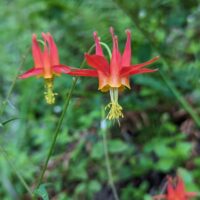
Aquilegia formosa
A popular native perennial with fern-like foliage and wonderful, nodding, spurred blossoms of red and yellow. Best with a little shade and moderate to regular moisture, but will tolerate full sun in somewhat cooler climates. The flower stalks reach 1 1/2’ to 3’ tall, with the grey-green foliage forming a mound of about 1 ft tall and wide. Flowers attract hummingbirds, while the seeds are relished by small birds such as sparrows and Juncos. If seed pods are left on the plants, you may get volunteer seedlings in the fall.
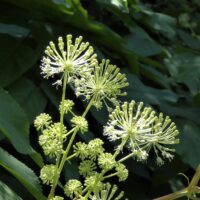
Aralia californica
A striking and dramatic native perennial for shady areas with regular water. The elk clover boasts tropical looking foliage 4 - 8 ft. tall with stalks of white, ball-like flower clusters followed by purple berries. In the autumn the foliage turns yellow and dies to the ground, returning with exuberance in the spring. Birds relish the fruits. Deer resistant.
Arnica chamissonis
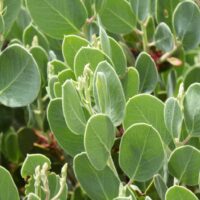
Native to moist meadows in mountainous regions of California and western North America. This delighful perennial grows 1 - 2 feet tall and wide with cheerful, bright golden-yellow daisies in early summer. The bright green, lance-shaped leaves sit in opposite pairs along them stems. Grow in full sun to light shade with decent draining soils and regular moisture. Said to have the same medicinal properties of its European cousin, but easier to grow. Flowers support bees, bumblebees and butterflies. Winter deciduous. Deer resistant.
Artemisia douglasiana
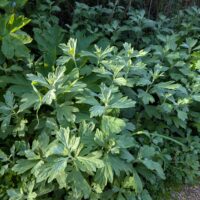
Mugwort is native to many plant communities where there is at least some year round moisture: streams and riverbanks, road cuts, ditches, and moist meadows. A stout, rhizomatous perennial with aromatic foliage that is green on top and silvery beneath. The flowers are small and not particularly showy. The foliage is beautiful and fragrant with a long history of medicinal uses. Plant in sun to light shade where it will grow 3 ft. tall and spreading to form a colony. Well watered plants can grow even taller. Provides excellent cover and seeds for birds. Deer resistant.
Artemisia tridentata
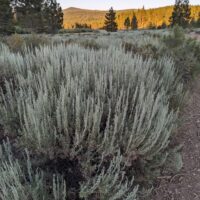
This long-lived, highly-aromatic shrub is emblematic of the American West, dominating high-desert landscapes east of the Sierras and along the Southern California and Baja coast. Its evergreen foliage is dense, silvery and held on tall stems that are woodier and more upright than the more coastal California sagebrush. In late summer, long flower stalks bear clusters of inconspicuous yellow blooms. Essential to wildlife in sagebrush ecosystems of the eastern Sierras and Great Basin, it also supports birds and bees in the garden setting. Although it can get quite statuesque, it averages 4-6 feet, with a rounded habit and architecturally twisty trunk. It thrives in well-draining soils with minimal water once established. This drought-tolerant species is excellent for erosion control and is nitrogen-fixing. Its fragrant leaves are deer resistant.
Asclepias fascicularis
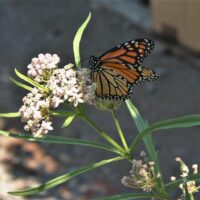
Our most common native milkweed is found in meadows and on the banks above ponds. Its flowers are held in umbels of a pale mauve color. They form at the top of 1 - 3 ft. tall slender stems that die back in winter to a perennial rootstock. Its wandering roots form small colonies. Drought tolerant, it prefers seasonally moist soils and likes moderate water in the garden. The narrow leaves are the preferred larval food for the Monarch Butterfly. Full sun to part shade. Unlikely to be bothered by deer.
Asclepias speciosa
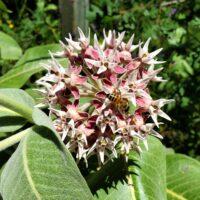
Bold and beautiful native milkweed that forms a large patch of tall stems with broad pale green leaves. Fragrant clusters of pinkish-purple flowers, followed by interesting seed pods. Spreads by underground shoots. Great in semi-dry naturalistic plantings. Host to Monarch butterflies. Deer resistant.
Athyrium filix-femina
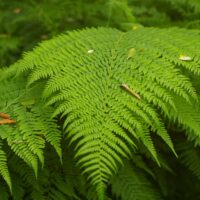
Native to much of North America, lady fern grows in moist shady places. The newly emerging fiddleheads in the spring are particularly attractive. The graceful, delicate looking fronds grow 3 foot or more tall by 3 ft. or more wide. Lovely in a forest setting, as a background plant, or around a pond. Goes dormant in the winter. Plant in full to part shade with regular water.
Berberis (Mahonia) aquifolium
This attractive, western native evergreen has a long history in cultivation for good reason. Erect stems rise 4 to 7 feet or more tall and wide, spreading slowly by underground rhizomes to form dense clumps. Bronzy-red new growth gives way to dark-green, glossy leaves with spiny margins that are prickly to the touch. Cold winters can darken the foliage with purple-red tones. Late spring brings clusters of bright yellow, sweetly scented flowers. Edible blue-black fruits follow and are pretty and tasty. A useful and adaptable shrub in a hedge or a shrubby border. Takes full sun to part shade. Performs best with some afternoon shade in hot areas and moderate to infrequent water. A great habitat plant which provides cover, nectar rich flowers and fruits relished by all. Deer resistant.