Melica geyeri
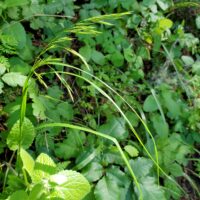
This perennial bunch grass is native to many types of habitat in seasonally moist forests and hillsides throughout much of California. Forms a lush, dense bunch of deep-green, broad blades, spreading slowly by rhizomes. The common name refers to the swollen, onion-like corms at the base of the stems. The inflorescence rises 3 ft. tall or more is made up of long, green, narrow spikelets with purple banding. A perfect grass for dappled shade under oaks and firs. Tolerant of some summer irrigation, but can survive the dry season once established. Goes dormant by early autumn. A host plant of the rural skipper and the white-lined sphinx moth. Deer resistant.
Melica harfordii
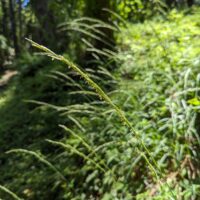
A lovely and useful grass native to dryish slopes and canyons of coniferous forests from central California to British Columbia. Forms a loose vertical clump with slightly arching stems 2 to 4 ft. tall. The delicate, narrow flower spikes add a sparkling effect to the woodland garden. Useful in lightly shaded plantings, where it is drought tolerant especially in cooler areas like western Sonoma County. It would benefit from occasional water during the dry season in warmer regions. Adds a nice vertical touch, as a specimen or in mass. Deer resistant.

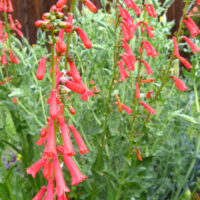
Penstemon eatonii
Adaptable and beautiful perennial native to the western United States including southeastern California. Narrow, leathery leaves form an evergreen rosette of foliage. Flower stalks rise 2-3 ft above the foliage. This form has brilliant red tubular flowers lining the erect stems in early summer. Requires good drainage, full sun to light shade and occasional to little summer water. Tolerates winter cold to 18 degrees and drought once established. Hummingbird favorite.
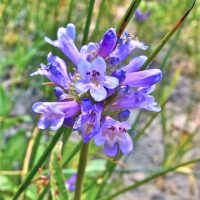
Penstemon rydbergii
A widespread species native to much of the western United States, including California, growing in mountainous regions in moist meadows and along streams. Forms a low rosette of bright green leaves topped with flower stems 1 -2 foot tall. The small, lavender-purple, tubular flowers are clustered in whorls on dense spikes. The blossoms offer an excellent source of nectar and pollen to hummingbirds, bees and butterflies, as well as a larval food source for a number of butterfly species. Considered easy to grow and long lived. Plant in full sun to light shade with regular moisture. Somewhat winter deciduous. Deer resistant.
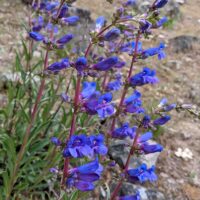
Penstemon speciosus
Found in higher elevation localities of inland Northern California, royal penstemon is a vibrantly colorful addition to the dry, full sun garden. In summer, the large, saturated blue-purple florets are held in clusters on stems rising almost 2’ tall above a low, evergreen rosette of glossy, strap-like foliage, reaching 1' - 2' wide. Attracts a multitude of pollinators. Does best with decent soil drainage, and inland sites that provide seasonality—colder winters, and hotter summers. Drought-tolerant once established.
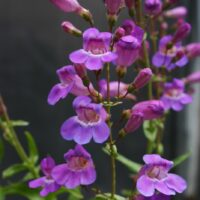
Penstemon spectabilis
A spectacular Penstemon native to dry, gravelly slopes of southern California and northern Baja. Demanding good drainage and full sun, this perennial grows 3 ft. or more tall with striking displays of lavender-purple tubular flowers. A challenging species with a sensational floral display, but can be short lived in northern California. Performs best in hot inland gardens. Take care not to over water. Highly attractive to hummingbirds as well as bees and butterflies.
Penstemon strictus
Showy perennial, native to a number of states in the Rocky Mountains, where it grows in sage brush and coniferous forest communities. Forming clumps of neat evergreen foliage 8 - 10 inches tall by 36 inches wide. Mid to late spring brings flowering stems 2 foot or so above the foliage with deep blue-purple tubular flowers. Considered one of the easier to grow, tolerating heavier soil and moisture better than many Penstemon species. Still, good drainage is best with little summer water once established. Plant in full sun to light shade in hot regions. Very cold tolerant. Penstemons are attractive to hummingbirds, bees and butterflies.
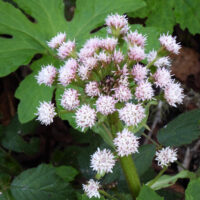
Petasites frigidus var. palmatus
A bold, beautiful and AGGRESSIVE creekside native, found in coastal and montane regions in California, north to Alaska, where it grows along shady creek banks. The large, almost tropical, palmate leaves spread from thick creeping rootstocks to form large colonies. Flowers before the foliage fully emerges in the spring with flat topped clusters of white to pink flowers on 1-2 ft. tall stems. Requires shade and plenty of water and is useful as a soil stabilizer. To control its spreading nature, use in containers or in contained areas. It won't spread into areas which are dry. Dies back to the ground in the winter. Flowers attractive to a wide range of beneficial insects.
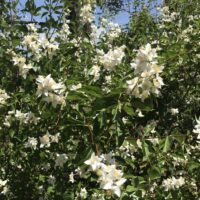
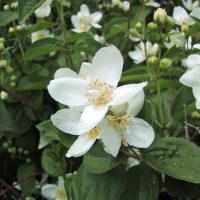
Philadelphus lewisii ‘Covelo’
Sweetly fragrant, pure white blossoms with yellow stamens cover this desirable, deciduous native shrub in late spring, attracting bees and butterflies. Reaches to 8 ft. tall and wide with a vaguely umbrella shape. This selection is somewhat denser than 'Marjorie Schmidt', in both foliage and flower, with leaves that are less serrated. Enjoys full sun to light shade and moderate to occasional summer water. Tolerant of clay soil. Works well in a conatainer.
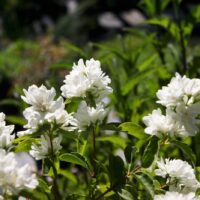
Philadelphus lewisii ‘Goose Creek’
This unusual selection of our native mock orange offers fully double flowers! We aren't usually fans of extra petals on our flowers, but this selection is quite appealing, with blossoms looking like fluffy snowballs held along the stems in late spring. This form was discovered near the Smith River in Del Norte County. Mock orange is a large deciduous shrub up to 8 ft tall and wide with sweetly fragrant, white flowers in late spring and early summer. Useful as a specimen or in mixed plantings. Sun to light shade, moderate to little water when established. A good container plant and clay tolerant.
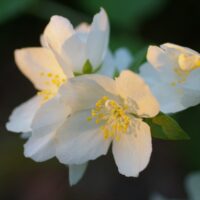
Philadelphus lewisii ‘Marjorie Schmidt’
This native mock orange was selected by Roger Raiche and Ron Lutsko in Shasta County. It caught their eye while driving along Route 36 west of Red Bluff, as being larger-flowered and more floriferous than surrounding shrubs. Large deciduous shrub up to 8 ft tall and wide with fragrant white flowers in early summer. Sun to light shade, most soils, moderate to little water once established. Flowers attractive to bees and butterflies.
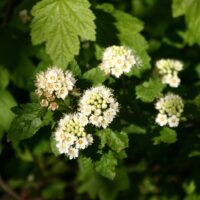
Physocarpus capitatus
Handsome, deciduous shrub favoring wooded streamsides in California. Grows vigorously 4 - 8 ft. tall and wide. After leafing out in the spring, the shrub looks spiraea-like, covered with small clusters of white flowers followed by red capsular fruits. Best with light shade and some summer water, but will accept full sun in cooler areas. Keep bushy and in bounds with pruning.
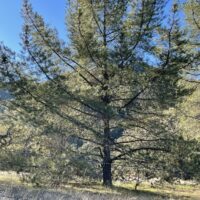
Pinus attenuata
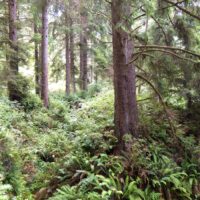
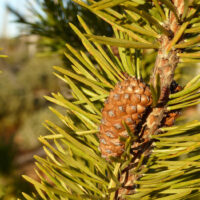
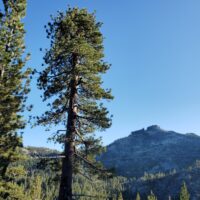
This closed-cone pine is found primarily along the Oregon-California border and in hotter coastal mountains down to Baja. Knobcone pines can reach anywhere from 25 to 80 ft tall, depending on the soil conditions. The conical-shaped, evergreen crown has an open habit with clusters of 4-5” needles on upward-curving branches. Distinctive, asymetrical cones persist on the tree for years, even decades, and add to the tree’s visual appeal. This chaparral and dry-woodland native needs very little water and does best in rocky, well-draining soils with full sun. More tolerant of nutrient-poor soils than most other pines. In very lean soils, trees can develop a stunted and contorted appearance which is quite striking. Deer resistant.
Pinus jeffreyi
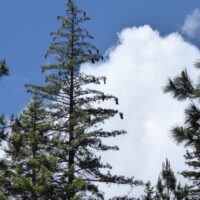
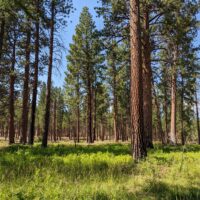
This stately pine hales from many of California’s mountain regions and is the dominant pine of the Tahoe basin. Features long needles and a broad trunk with deeply furrowed bark of orangy-red. Similar to the ponderosa pine but occurs at higher elevations and the bark has a distinctive vanilla scent. The cones are also larger than those of the ponderosa and don’t have sharp, outwardly protruding scales, hence the affectionate name “gentle Jeffrey.” Often reaches heights of over 100 feet with an open canopy. Provide good drainage and full sun to light shade. Drought tolerant and deer resistant.
Pinus ponderosa
Often associated with the Sierra Nevada mountains, this majestic pine can be found in Sonoma County as well. Long, gray-green needles form bushy clusters at the ends of branches with cantaloupe-sized cones that emerge at the very tips. The bark at maturity is a colorful patchwork of orange-tan plates separated by deep grooves of dark brown. It can grow a couple of feet a year, and averages from 60 to more than 100 feet in height in a garden setting. Provide full sun to light shade with occasional deep waterings when young. Needs decent drainage. Deer resistant.
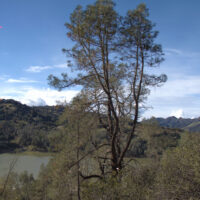
Pinus sabiniana
A distinctive pine native to chaparral areas of California’s foothills. Sometimes called ghost pine due to its long gray needles set against dark, furrowed bark. While fairly slow growing, the gray pine can reach a height of 80 ft or more in well-draining sites with ample sunlight. Native Americans prized the big, prickly cones for their large, edible seeds. Prefers full sun and requires minimal water once established
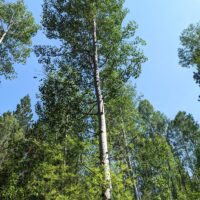
Populus tremuloides
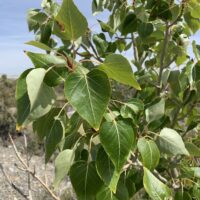
From mountain meadows and hillsides across the Sierra Nevada comes this iconic native poplar. Smooth, white bark and rounded leaves which quake in the wind make this slender tree highly ornamental. Reaches a height of at least 20 ft. and spreads by underground roots to form groves. While the fall color may not be quite as stunning in lower elevation gardens as it is in the mountains, colder parts of our area will still see leaves of yellow, orange and red in the autumn. Easily grown at lower elevations, this form is reported to be particularly disease resistant. Needs full sun to light shade and regular to moderate irrigation once established. Lower irrigation should slow aspen’s ability to multiply.
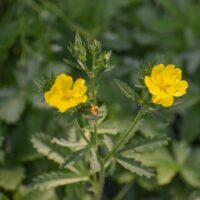
Potentilla gracilis
Prolific displays of bright yellow flowers resembling buttercups make this little cinquefoil a hit from spring through autumn. Flowers are held on two foot stems above low mats of dissected,dark green leaves. Native to mountainous areas throughout California. Provide full sun to light shade and give occasional to regular moisture. Will spread slowly by seed if exposed soil is nearby. A favorite of bees and butterflies. Deer resistant.
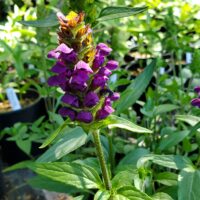
Prunella vulgaris v. lanceolata
Native to moist areas usually near coniferous forests and woodlands. Creeping perennial forms a low dense mat of foliage. Upright spikes of purple flowers over a long period summer - fall. Give some thought to placement because if happy it will reseed vigorously. Plant in full sun or light shade with regular water.
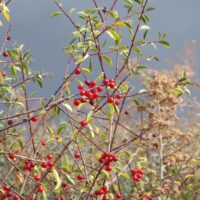
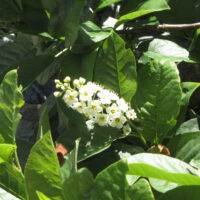
Prunus virginiana v. demissa
Large, deciduous shrub or small tree with red-purple bark and dark green foliage. Growing 8 foot or more tall and spreading slowly to form a thicket. Striking racemes of fragrant white flowers in the spring followed by dark red fruits which can be sweet but astringent. Foliage can take on nice fall color before dropping its leaves. Fabulous habitat plant drawing bees, butterflies and other pollinators to its flowers. Birds, especially bluebirds, adore the fruits and are known to swoop in and finish them off quickly. Where summers are hot, light or part shade is best, with regular to occasional water once established. They often grow where there is seasonal moisture in the spring, but somewhat dry as the season progresses.
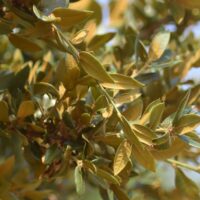
Quercus chrysolepis
A handsome evergreen oak with a rounded, spreading crown, 20 - 60 ft tall and wide. The leaves of its broad, low canopy are dark-green and shiny with fuzzy gold or silver hairs on the underside. Native from Oregon to Baja, it is the most widely distributed oak in California. Often grows near creeks, but requires only occasional water. Plant in full sun to light shade where it will be drought tolerant once established. A good choice for bank stabilization. Like other oaks, it is habitat powerhouse, offering food and cover for a huge variety of wildlife.