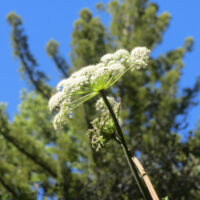
Angelica californica
Striking stalks up to 6 or more feet tall hold flat topped clusters of white flowers above low growing emerald-green leaves. This uncommon member of the carrot family needs only occasional water once established. Naturally occurs under the dappled shade of oaks where it cohabitates with ferns, hound's tongue, yerba buena and woodland strawberries. Excellent for attracting beneficial insects and is a larval food source for the anise swallowtail butterfly. May go summer dormant when allowed to dry out.
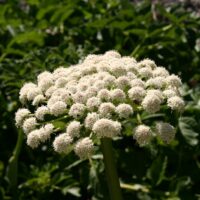
Angelica hendersonii
Found in nature on the immediate coast, though well adapted to the watered inland garden. It has the overall look of a stout cow parsnip with creamy white flowers in umbels and pinnately compound leaves of a deep green. Like many umbels, it is a good nectar source for beneficial insects. 4 - 6 ft. tall. Full sun to light shade. Good drainage with moderate summer water.
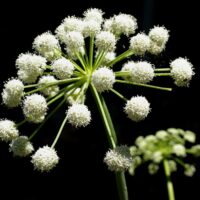
Angelica tomentosa
This species offers striking, flat-topped clusters of white flowers held up dramatically on stalks reaching up to around 5 ft. tall. Handsome, pinnately compound, gray-green leaves mass at their base. A generally inland angelica found in more or less moist, lightly shaded places, usually on serpentine. It can grow in full sun as long as it has plenty of moisture during the growing season. An important plant for the Pomo for its many medicinal and shamanistic uses. Diverse pollinators utilize the flowers, while the anise swallowtail butterfly uses the stems and leaves as a host plant for the catterpillars. Enjoys moderate water in the garden with a late summer rest (low water).
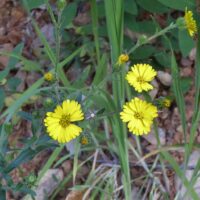
Anisocarpus (Madia) madioides
A quiet perennial, native to woods and coniferous forests of California from sea level to 4000 ft. Dark green, narrow leaves are covered with soft hairs and form a sturdy, low, perennial clump. The bright yellow daisies top 8-10 inch flower stems over a long period, from late spring into summer. Able to thrive in dry shady conditions.May seed about in a friendly way.
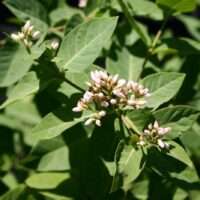
Apocynum cannabinum
Native throughout much of North America, California and our own Santa Rosa Valley. Grows 3 ft. tall and spreads vigorously by roots to form large patches. Small white flowers in summer. Turns beautiful shades of yellow in the autumn then dies back to the ground in the winter. Good for wild meadow or ethnobotanical garden. Important to Native Americans who used the stems for cordage, rope, twine nets etc. Sun to light shade with some moisture. Will tolerate dry conditions after blooming. Very attractive to butterflies. BEWARE! SPREADS VIGOROUSLY!
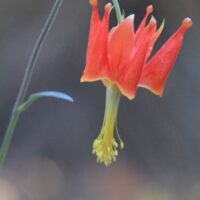
Aquilegia eximia
Large, orangey-red flowers with yellow stamens adorn this beautiful and uncommon native columbine. The pendant, brightly colored blossoms are larger than those of the western columbine but just as attractive to hummingbirds. Forms a 1 ft. high mound of foliage with flowering stalks reaching up to 5 ft. tall. Native to the Coast Ranges from Mendocino to Ventura Counties often on serpentine soils. Provide full sun to part shade and only water enough to prevent the soil from drying out completely. In areas far away from the coast provide a little shade from the hot afternoon sun. This species is a little more drought tolerant than the more common Western columbine.
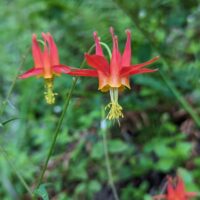
Aquilegia formosa
A popular native perennial with fern-like foliage and wonderful, nodding, spurred blossoms of red and yellow. Best with a little shade and moderate to regular moisture, but will tolerate full sun in somewhat cooler climates. The flower stalks reach 1 1/2’ to 3’ tall, with the grey-green foliage forming a mound of about 1 ft tall and wide. Flowers attract hummingbirds, while the seeds are relished by small birds such as sparrows and Juncos. If seed pods are left on the plants, you may get volunteer seedlings in the fall.
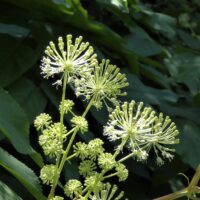
Aralia californica
A striking and dramatic native perennial for shady areas with regular water. The elk clover boasts tropical looking foliage 4 - 8 ft. tall with stalks of white, ball-like flower clusters followed by purple berries. In the autumn the foliage turns yellow and dies to the ground, returning with exuberance in the spring. Birds relish the fruits. Deer resistant.
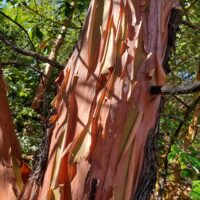
Arbutus menziesii
A beautiful native evergreen tree which features handsome, smooth, reddish bark that peels in thin flakes. Leaves are leathery and shiny dark green. Large clusters of white flowers give way to red-orange berries that can remain into winter if the birds don't get them. It can be tricky to establish, necessitating planting in the fall. MUST have good drainage and just enough water to establish. Once established give only infrequent deep waterings or no water at all. Bees and hummingbirds love the flowers.
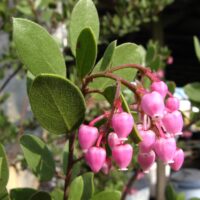
Arctostaphylos bakeri ssp. bakeri ‘Louis Edmunds’
A beautiful and durable upright manzanita reaching 5 - 7 ft. tall and nearly as wide. This species is native to Sonoma Co. where it is considered very rare and threatened by development. Handsome gray-green foliage with wonderful purplish-brown trunks contrast nicely with showy clusters of pink urn-shaped flowers in spring. Great for sunny areas where it endures heat and drought but enjoys an occasional deep watering. The manzanita berries can attract mockingbirds, robins, and cedar waxwings. It provides low shrubby cover for quail and wrentits and its flowers provide nectar for hummingbirds.
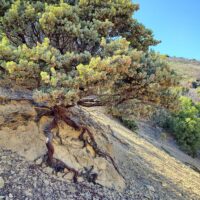
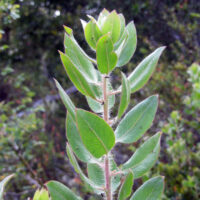
Arctostaphylos columbiana
From Northern California’s coastline and outer Coast Ranges comes one of the larger species of manzanitas. This stately shrub can grow 8 feet to over 15 ft. tall, often developing a contorted shape with age. The large, gray-green leaves contrast well with the burnished, rust-red trunks. Clusters of white flowers emerge in spring followed by matte-red fruits. This is THE upright manzanita for coastal areas with good drainage. Provide full sun and no irrigation once established.
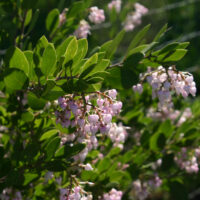
Arctostaphylos densiflora
One of California's rarest natives, this is the pure, true species. Exists only in a very small preserve in western Sonoma Co.. Distinctive for the profusion of beautiful pink to white urn-shaped blossoms they produce in winter and small, shiny bright green leaves. Variable in height but typically grows 3 ft. tall by 6 ft. wide. Does best in its native Sebastopol sandy soils with full sun to light shade and occasional to no summer irrigation.
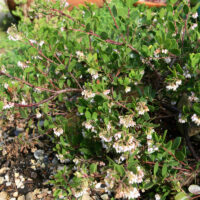
Arctostaphylos densiflora ‘James West’
This wonderful, drought tolerant, low growing manzanita from Sonoma County appears in form and other details to be a selection of the pure species of the very rare Vine Hill Manzanita. It is a very choice cultivar, seldom available in the trade. Grows 18 - 24 inches by 6 ft. in ten years and flowers from January through March with thick heads of shell pink flowers. Good drainage, as with all manzanitas and occasional to no irrigation once established. Full sun.
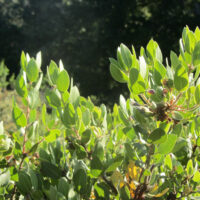
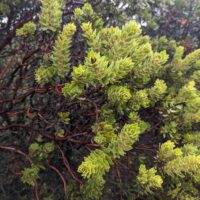
Arctostaphylos glandulosa ‘Super Freak’
This unusual Cal Flora introduction hails from Carson Ridge in Marin County, Arctostaphylos glandulosa ‘Super Freak’ is a wild twist on the classic Eastwood manzanita. Unlike most glandulosa types, ‘Super Freak’ grows in a tight, upright, branched habit that gives it a distinctive candelabra-like silhouette, lending sculptural drama to native landscapes. The typical smooth red bark of this species gleams against clusters of pale pink winter flowers. The leaves are narrow and dense, giving the impression of a confused feather boa. Reaching an ultimate size of 6-plus feet tall, it thrives on neglect while adding personality to dry slopes and sunny borders.
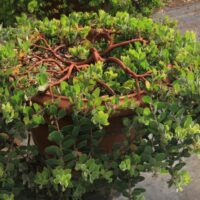
Arctostaphylos glandulosa f. repens ‘Mount Vision’
Found only in the Bishop pine forest of the Point Reyes Peninsula, the repens form has a low and mounding habit. This particular selection was picked for its exceptionally compact and creeping nature and large, gray-green leaves. Clusters of white flowers hang from branch tips in early winter. While slower growing than most other groundcover manzanitas, this cultivar will eventually reach about 6 ft wide with a height of about 1 ft. 'Mount Vision' is best planted as a specimen rather than in mass plantings. Very drought tolerant once established with full sun to light shade. An excellent container plant.
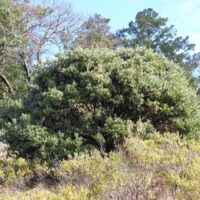
Arctostaphylos manzanita
Good subject for a dry sunny bank where this picturesque native shrub can develop its beautiful form of sinewy branches and smooth red-brown bark. Growing 8-12 ft. tall by 6-10 ft. wide or even larger with time. Flowers heavily in the spring with white to soft pink urn-shaped flowers followed by clusters of tiny apple-shaped fruits. An excellent habitat plant providing food and cover for a wide array of birds. The flowers are an excellent early nectar source for bees and hummingbirds. Very drought tolerant once established.
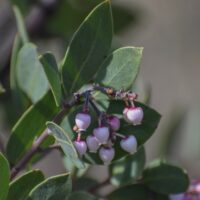
Arctostaphylos manzanita ‘Garrison Canyon’
This large, tree-like selection comes from Garrison Canyon on Pepperwood Preserve above Mark West Springs. Big, round, pewter-green leaves adorn branches covered in smooth mahogany bark. Especially large clusters of soft-pink flowers emerge in late winter and are followed in summer by “little apple” fruits. In time, this selection may reach up to 15 ft. tall and wide. Provide full sun. Very drought tolerant once established.
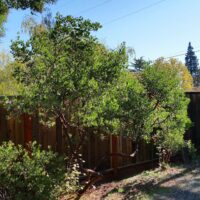
Arctostaphylos manzanita ‘Hood Mountain’
A Nevin Smith introduction from Hood Mountain in Sonoma County, California. A possible natural hybrid with A. canescens, this sturdy upright manzanita offers grayish-green leaves on sculpted, dark pewter-purple branches, growing 10 ft. or more tall and wide at maturity. White, urn-shaped flowers in late winter/early spring are a favorite of hummingbirds and bees. The large upright manzanitas make stunning specimens and, where space allows, excellent hedge or screen plants. Plant in full sun where it will thrive with no summer irrigation once established.
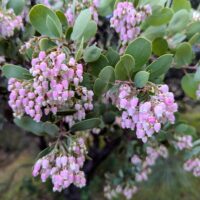
Arctostaphylos manzanita ‘Lake Sonoma Pink’
We discovered this stunning manzanita above Lake Sonoma, which stood out with large, rounded clusters of the pinkest flowers we’ve ever seen on this species. The big, rounded leaves are an appealing grey-green, a pleasing compliment to the colorful blossoms. The smooth, burgundy branches reach up to about 15 ft tall and nearly as wide if left unpruned. Hummingbirds and bumblebees enjoy the late winter flowers, while birds eat the ”little apples” which ripen in the summer. Plant in full sun to light shade and provide little to no irrigation once established. Needs decent drainage. Great as a loose hedge or featured as specimen.

Arctostaphylos manzanita ‘Saint Helena’
A vigorous selection of the common manzanita selected by Nevin Smith from the slopes of Mount St. Helena in Napa County. A beautiful, upright, evergreen shrub with gorgeous, sinewy branches of smooth, red-brown bark and medium green, pointed leaves. Fast growing for a manzanita, this robust and disease resistant selection grows 10 -12 tall and wide with a broad, rounded shape. Pure white, urn-shaped blossoms in late winter and early spring are an important early nectar source for bumblebees and hummingbirds. The bronze, little, apple-like fruits are relished by wildlife. Plant in full sun with good drainage, where it will be drought tolerant once established.
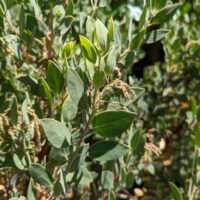
Arctostaphylos manzanita ‘Warm Springs’
From the steep slopes above Lake Sonoma, growing among gray pines, madrones and buckeyes, comes this standout manzanita. We noticed the particularly gray foliage amongst its more green leaved brethren. Has proven to be a vigorous grower, developing gorgeous, smooth, red-purple bark. The winter blooming, urn-shaped flowers are white with a hint of pink. Clusters of beautiful apple-green fruits mature to bronzy-red, decorate the branch tips. Plant this striking evergreen in full sun or very light shade, where it can grow 10 ft. tall or more and will be very drought tolerant once established. An important early nectar source for hummingbirds and bumble bees.
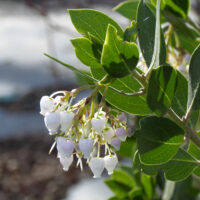
Arctostaphylos manzanita x ‘Laguna White’
Discovered along Guerneville Road near the Laguna de Santa Rosa, this remarkable manzanita boasts dense clusters of clear white flowers in winter with semi-glossy apple green leaves and burgundy colored bark. Plant in full sun where it will reach a height of about 8 -10 ft. tall by 6 ft. wide or more over time. More garden tolerant than many manzanitas, this selection will accept occasional watering after establishment. Though drought tolerant, 'Laguna White' may benefit from deep monthly waterings in the summer, especially in hot interior sites. An excellent early source of nectar for hummingbirds and native bees.
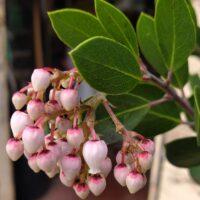
Arctostaphylos manzanita x ‘Mary’s Blush’
This lovely manzanita selection was found along Guerneville Rd. in Sonoma County. Likely a natural cross with the rare Vine Hill manzanita, it has the size and upright form of the common manzanita, with the disease resistance of the A. densiflora hybrids. Initially growing about a foot a year, it will eventually reach 8-10 feet in height. Its slightly-glossy leaves create a dense, tidy appearance, which can be pruned up to show off the deep mahogany trunk. In winter, it blooms prolifically with clusters of pink flowers, followed by beautiful red berries. More tolerant of garden conditions and heavy soil than most, it requires minimal water in summer once established. Its flowers are highly attractive to bees, butterflies, and hummingbirds, and its berries are food for birds.
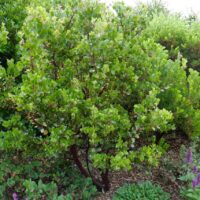
Arctostaphylos manzanita x ‘Molino Corner’
The clear white flowers and attractive, wavy, deep-green leaves make this wild selection from the Sebastopol area a real charmer. Burgundy bark clothes the sinuous trunks on this upright manzanita which reaches 8 ft or more tall and potentially as wide, if left unpruned. The urn-shaped flowers appear in late winter in good-sized clusters, followed by reddish fruits in the summer. This selection is part of a group manzanitas from west Sonoma Co. which naturally share genes with the vine hill manzanita, making them more garden tolerant than most inland forms. Plant in full sun to light shade. Water occasional or let go dry in the summer once established. A great winter food source for hummingbirds and bumblebees.
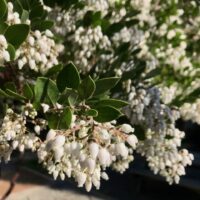
Arctostaphylos manzanita x ‘Sebastopol White’
This upright manzanita displays dense growth of soft green, pointed leaves with clusters of white flowers in winter on a burnished mahogany trunk. Reaches a height of 8 ft or more and a width of at least 6 ft. Discovered along Guerneville Rd. in western Sonoma County. Very drought tolerant once established but will tolerate moderate irrigation when young. A disease resistant selection. Heavy soils are not a problem as long as water does not pool at the crown in winter. Enjoys full sun but will tolerate light shade.
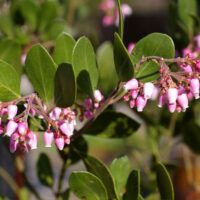
Arctostaphylos manzanita x densiflora ‘Monica’
Found originally along Guerneville Rd. in Sonoma County. It has the form and size of the large common manzanita, 8 ft or more tall with time, and the disease resistance of the Vine Hill manzanita. Features a beautiful dark mahogany trunk and clusters of shell pink flowers set against dark, glossy leaves. The structure is narrower and more upright than most other tall manzanitas, only reaching about 8 ft wide. Give it sun to light shade and summer drought, but it's more tolerant than most of some summer water.Provides food and cover for birds and its flowers provide nectar for hummingbirds and bumble bees.
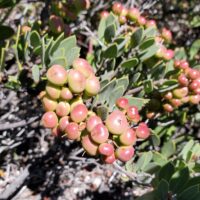
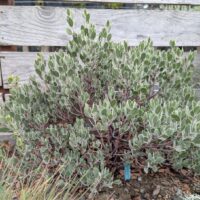
Arctostaphylos montana ssp. montana ‘Lagunitas Grey’
This a strikingly gray and compact form of the rare Mt. Tamalpais manzanita, which is found only in Marin County. Silvery leaves provide all year appeal, set against the smooth, sculptural, burgundy trunks. Winter brings clusters of pink-tinged, white flowers gathered at branch tips, followed by shiny red “little apples” in the summer. Mature plants develop an evenly mounded form, reaching up to about 4’ tall and 5’ wide in about 10 years. They are easily pruned to keep narrower and show of the beautiful bark. While native to serpentine soils, this species does well in most decently draining soil types with full sun and little to no water once established.