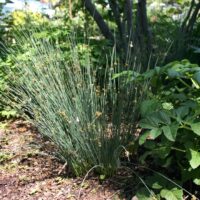
Juncus patens ‘Elk Blue’
Introduced by San Marcos Growers, this form of Juncus patens was selected from the hills southeast of the town of Elk in Mendocino County. Features exceptionally blue foliage and and a vigorous spreading habit. This selection is shorter than the typical grey rush only reaching about 18 inches tall. An adaptable species, will thrive in moist soils, even shallow water but once established tolerates dry conditions too. Grows in sun to moderate shade. An excellent accent plant with its stiff, vertical foliage. Deer resistant.
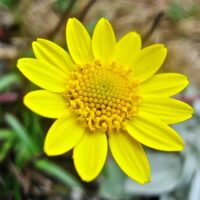
Lasthenia californica ssp. macrantha
Native along the immediate coast of California and just into Oregon, where it forms low, tight mounds of deep green succulent foliage. Cheerful, bright yellow daisies bloom over a long period. Best in full sun with some summer water and good drainage. Long blooming, open faced flowers are excellent sources of nectar and pollen for butterflies, bees and other pollinators.
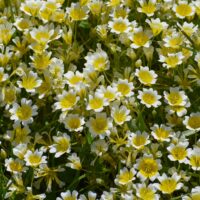
Limnanthes douglasii
California native ANNUAL occurring in grasslands and vernal pools throughout California. Low growing, shiny green foliage is topped with a profusion of sweetly fragrant, cup shaped, bright yellow blossoms with white tips. An excellent choice for low, winter wet areas, drainage swales, retention basins or seasonally dry stream beds. Thrives in heavy soils where it often naturalizes. Plant in full sun to part shade with regular water through the growing season. Fabulous container plant too. Meadowfoam is excellent for encouraging native pollinators, bees and butterflies.
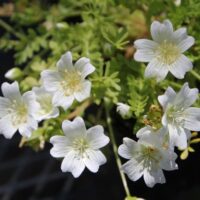
Limnanthes douglasii ssp. nivea
California native ANNUAL occurring in grasslands and vernal pools throughout California. Low growing foliage is topped with a profusion of sweetly fragrant, small white flowers with purple-pink veins on the petals. An excellent choice for low, winter wet areas, drainage swales, retention basins or seasonally dry streambeds. Thrives in heavy soils where it often naturalizes. Plant in full sun to part shade with regular water through the growing season. Good in containers too. Native wildflowers are excellent for encouraging native pollinators.
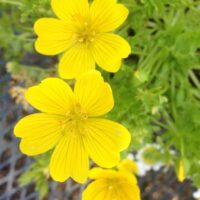
Limnanthes douglasii ssp. sulphurea
Pure yellow flowering form of meadowfoam, rare in the wild but easy to grow in the garden. This native ANNUAL favors seasonally moist areas in full sun. Low growing foliage is topped with a profusion of pure yellow, cup-shaped, fragrant flowers. Useful in low areas, drainage swales, retention basins or seasonally dry stream beds. Thrives in heavy, water retentive soils. Wonderful in containers too. Meadowfoam is excellent for encouraging pollinators and other beneficial insects.
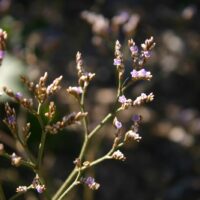
Limonium californicum
Native to coastal areas throughout much of the state, this beautiful statice relative produces clusters of small, lavender-purple flowers on slender stalks up to 18 inches tall. Low rosettes of semi-succulent, dark green leaves provide an excellent contrast to the airy inflorescences. Plant this marsh native in full sun with regular to moderate water. Thrives in wet conditions with poor drainage. Excellent for bees and butterflies. Makes a wonderful dried flower.
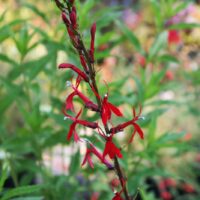
Lobelia cardinalis
Cardinal flower is native to wet places throughout much of North America. A hummingbird favorite with show stopping, intense scarlet-red tubular flowers on erect terminal spikes in late summer. Growing 2 - 3 ft. tall by 2 ft. wide, this clump-forming perennial has dark green, serrated leaves. Tends to be rather short lived, but is a strong re-seeder. Prefers areas with constant moisture and cool sun to part shade, affective in moist areas of woodland gardens, meadows, pond edges, and rain gardens. Attracts hummingbirds and butterflies, but is resistant to deer browse.
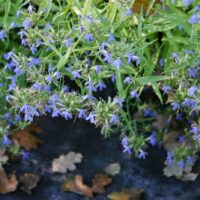
Lobelia dunnii var. serrata
Water loving perennial native to creek sides and other wet places in Southern California. Growing one foot tall and spreading vigorously by rhizomes with clusters of soft blue, one inch flowers in summer. Best with regular water and part shade. A perfect addition for a shady water feature, moist meadow or container planting. The flowers are highly attractive to butterflies of all sorts and are visited by hummingbirds. Winter dormant. Deer resistant.
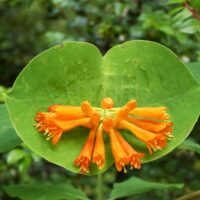
Lonicera ciliosa
Native to north slopes, creeks and river banks from very northern California to British Columbia and Montana. Lovely blue-green, oval-shaped leaves on rapidly growing woody stems will clamber up any support it can find. Terminal flower clusters with narrow, trumpet-shaped, orange flowers are adored by hummingbirds. Red translucent fruits follow that are relished by birds. Plant in cool sun to moderate shade with regular water. Possibly deer resistant.
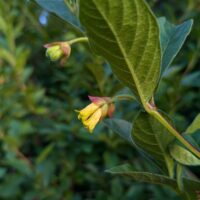
Lonicera involucrata
An interesting native shrub that grows along streams and other moist places. The tubular, red and yellow flowers are borne in pairs on bright red bracts and are hummingbird favorites. Two black shiny fruits follow the flower and are very showy set against the red bracts, making them attractive to birds. Reaches 6 - 10 ft. tall and wide, this neatly branched shrub loses its leaves in the winter. A great addition to the habitat garden in full sun to light shade with regular to occasional deep summer water. Orioles love the fruits. Needs afternoon shade in hot, inland areas. Deer resistant.
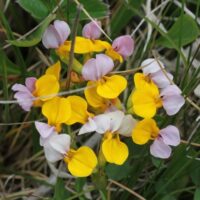
Lotus (Hosackia) formosissimus (gracilis)
A low growing native perennial found in seasonally moist meadows, ditches and seeps along California's coast, north to British Columbia. Small, neat leaves form a pretty, low ground cover spreading up to 2 ft. wide. Pea-like flowers have a bright yellow upper petal and deep pink lower petals which bloom in the spring then sporadically through the summer. Plant in full sun to light shade with regular moisture. Makes a nice container plant, too. Flowers visited by bees and other pollinators. Thought to be the larval food source for the possibly extinct lotus blue butterfly.

Lupinus polyphyllus
The bog lupine is known for its tall flower spikes of blue to purple or sometimes pink, reaching up to almost 5' tall from a bed of large, dark green leaves about 18" in height. Clumps can grow about 3' wide. This species is the dominant parent used in many popular hybrid lupines. Native to moist places from the San Francisco Bay area northward along the coast and in mountainous places in the interior. Prefers full sun along the coast and dappled shade inland. This lupine tends to go winter dormant. Snails and slugs find lupines especially tasty when young. Needs regular water. One can create a wonderful meadow by planting the bog lupine with other moisture loving species such as lady ferns, umbrella plant and seep monkeyflower. Deer resistant.
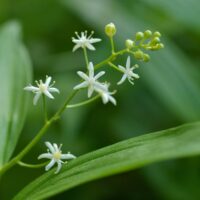
Maianthemum (Smilacina) stellatum
Native to California and much of North America, this woodlander makes a worthy and useful addition to the shade garden. Spreading by stout rhizomes forming colonies of lush, green foliage one foot to 18 inches tall. Small, white, star-shaped flowers top the slender stems in the spring and early summer. Berries follow that are often striped with purple or black, eventually turning red. Thrives in shade with moisture but tolerates dryish conditions once established. Can grow in quite a bit of light as long as there is moisture. A variety of insects seek nectar or pollen from the flowers and woodland song birds love the berries.
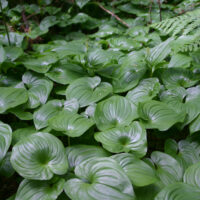
Maianthemum dilatatum
This lush, lily relative is native to coastal forests of Northern California to Alaska. When happy, spreads by underground root stocks to form broad mats of heart-shaped, glossy, green leaves with parallel veins. Bears clusters of tiny white flowers followed by red, translucent berries. Dies back to the ground in winter. Loves shade and moisture. Competes well with tree roots.
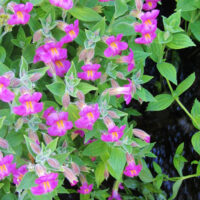
Mimulus (Erythranthe) lewisii – dark flowered form
From cold streams in the Cascade Mountains comes this particularly dark flowered form of Lewis' monkeyflower. Trumpet-shaped blossoms with flared mouths are colored a deep, rich rose-pink, unlike the paler Sierra form. Reaching up to more than a foot tall and spreading to form small clumps, this moisture-loving monkeyflower enjoys part-shade and decent drainage. Hummingbirds love the flowers. Plant with sedges, blue lobelia and false bugbane for a colorful woodland display filled with texture. Great in a container.
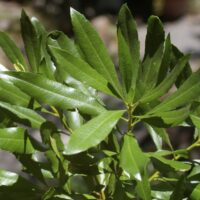
Morella (Myrica) californica
Native evergreen shrub with clean looking shiny foliage 15 ft. or more tall. Useful screen, clipped or informal hedge or even trained as multi-trunked small tree. An adaptable plant for sun to light shade, with moderate to occasional water. Its waxy berries attract flickers, robins and finches. Fairly deer resistant.
Myrica hartwegii
From Sierran streambanks comes this sweet bay, a cousin of our local wax myrtle. Rare in nature, this deciduous shrub can reach a height and width of up to 5 ft. Soft, lance-shaped leaves of gray-green flank the stems. Small red flowers appear in the spring. Enjoys dappled shade and good drainage. Requires regular irrigation. Plant with indian rhubarb, western columbine and ferns for a taste of the mountains in your own garden. Thought to be deer resistant.
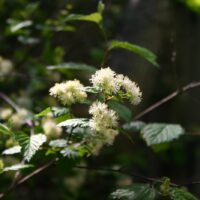
Neviusia cliftonii
Shasta snow-wreath is a rare species not know to science until 1992. Endemic to Shasta County, California, often on limestone embankments, in moist shady areas, this deciduous shrub grows to around 6 ft. tall spreading by underground rootstocks. Looking something like ocean spray or a delicate ninebark, heart shaped leaves with toothed edges are alternately arranged on the slender branches. The flowers are a starburst of white anthers in early spring surrounded by green petal-like sepals. A lovely addition to a woodland planting where it thrives in light shade with some summer water.
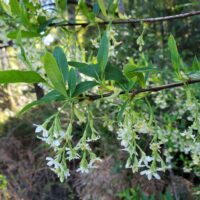
Oemleria cerasiformis
A charming native shrub which grows in moist areas along the coast or when inland on forest edges. Blooms in early spring just as the new leaves are beginning to expand with drooping clusters of fragrant white flowers. Male and female plants are separate and you'll need both to get the small blue-black fruits that birds enjoy. A suckering shrub growing 5 - 6 ft. tall or more. Plant in part shade with regular to occasional water. Can grow in cool full sun such as you find along the coast.
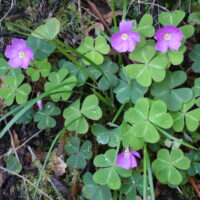
Oxalis oregana
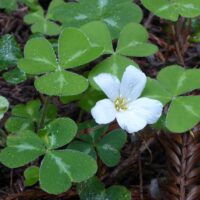
A natural companion of coast redwoods where it forms low carpets of clover-like foliage. Useful ground cover for the woodland garden where it competes well with tree roots and thrives in partial to deep shade. Low and spreading with spring flowers that can range from white through dark pink . Best with humus in the soil and some summer moisture, though it is drought tolerant in coastal zones. Deer resistant.
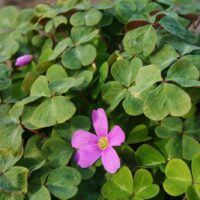
Oxalis oregana ‘American Beauty’
This remarkable selection of our native redwood sorrel has perhaps the largest flowers of any of the forms we've seen. The big pink blooms appear in spring above the lush, green, clover-like foliage. This ground cover competes well with tree roots and thrives in even the shadiest spots. Best with humus in soil and some moisture, though it is drought tolerant in coastal zones. Deer resistant.
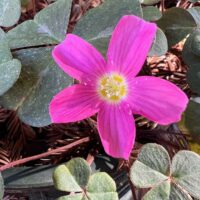
Oxalis oregana ‘Klamath Ruby’
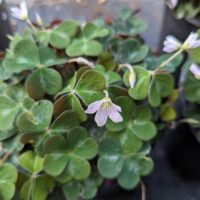
Low spreading groundcover which thrives in the shady conditions of Douglas fir and redwood forests. The cultivar ‘Klamath Ruby’ offers dark green clover-like foliage with beautiful burgundy backed leaves. White flowers with pale pink veining on the petals bloom in the spring. A lovely groundcover for a shady garden with some summer water, though it is drought tolerant in coastal zones, once established. Deer resistant.
Oxalis oregana ‘Smith River White’
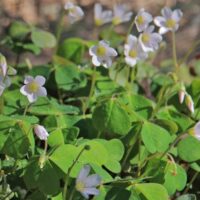
This Cal Flora selection carries white flowers with thin pink lines on the petals held up above the foliage, thus creating an effect somewhat reminiscent of our small native anemones. The foliage is handsome with dark olive green tops and purple-red undersides to the leaves. The perfect ground cover for deep to moderate shade with some summer moisture. Drought tolerant when grown in more coastal areas. Rampant when its needs are met, it competes well with tree roots and is the perfect companion to other redwood forest understory plants. Deer resistant.
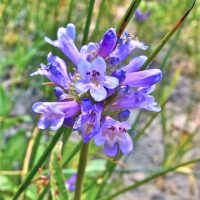
Penstemon rydbergii
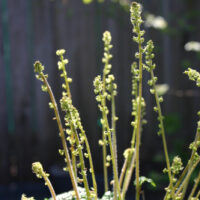
A widespread species native to much of the western United States, including California, growing in mountainous regions in moist meadows and along streams. Forms a low rosette of bright green leaves topped with flower stems 1 -2 foot tall. The small, lavender-purple, tubular flowers are clustered in whorls on dense spikes. The blossoms offer an excellent source of nectar and pollen to hummingbirds, bees and butterflies, as well as a larval food source for a number of butterfly species. Considered easy to grow and long lived. Plant in full sun to light shade with regular moisture. Somewhat winter deciduous. Deer resistant.
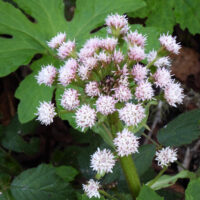
Petasites frigidus var. palmatus
A bold, beautiful and AGGRESSIVE creekside native, found in coastal and montane regions in California, north to Alaska, where it grows along shady creek banks. The large, almost tropical, palmate leaves spread from thick creeping rootstocks to form large colonies. Flowers before the foliage fully emerges in the spring with flat topped clusters of white to pink flowers on 1-2 ft. tall stems. Requires shade and plenty of water and is useful as a soil stabilizer. To control its spreading nature, use in containers or in contained areas. It won't spread into areas which are dry. Dies back to the ground in the winter. Flowers attractive to a wide range of beneficial insects.
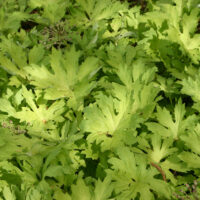
Petasites palmatus ‘Golden Palms’
Here is an exciting introduction of the western coltsfoot with wonderful golden foliage. Native to streamsides in low elevation forests, the broadly palmate leaves spread by creeping rhizomes. Careful thought should be given to its placement as it can be invasive. This bold foliage plant is great in containers or contained areas with regular water and part shade. Dies back to the ground in winter.
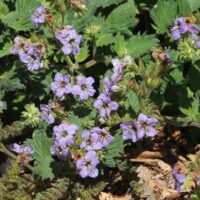
Phacelia bolanderi
Easy to grow perennial for part shade and a little summer water. Native to slopes and canyons of coastal forests in northern California. Forms low mounds of soft foliage 6 - 8 inches tall by 2 ft. or so wide. Pretty powder blue-purple one inch flowers late spring into summer offer nectar to hummingbirds, bees, and butterflies. The seeds are enjoyed by songbirds. Though somewhat short-lived, it often reseeds. Appears to be deer resistant.