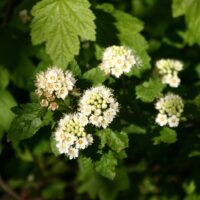
Physocarpus capitatus
Handsome, deciduous shrub favoring wooded streamsides in California. Grows vigorously 4 - 8 ft. tall and wide. After leafing out in the spring, the shrub looks spiraea-like, covered with small clusters of white flowers followed by red capsular fruits. Best with light shade and some summer water, but will accept full sun in cooler areas. Keep bushy and in bounds with pruning.
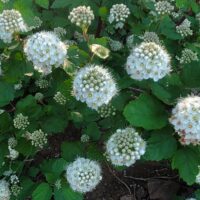
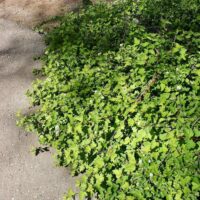
Physocarpus capitatus ‘Tilden Park’
A rare and delightful prostrate form of the native ninebark from San Bruno Mountain. Makes a sturdy groundcover about 3 ft. tall and spreading to at least 6 ft. wide, featuring lush, bright green, maple-like leaves with white flower clusters in the spring. The blossoms give way to bright red seed pods in the summer. Sun to light shade with moderate water, but will tolerate dryish conditions in part shade once established. Clay tolerant.
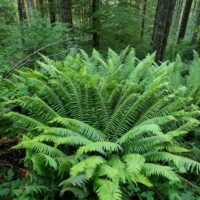
Polystichum munitum
The versatile western sword fern is an evergreen native fern from California to Alaska. In most gardens it will reach about three feet tall and wide. In prime areas near the coast where moisture is readily available and cool temperatures prevail, this fern can get up to 5 feet tall and wide. Excellent for shady beds, along walls, as a large scale groundcover and mixed woodland planting. Best with humusy soil and regular to moderate water, but drought tolerant once established and tolerant of most soil types. Actually quite adaptable and deer resistant.
Populus fremontii
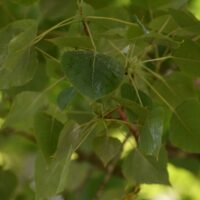
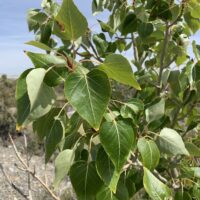
Fast growing riparian tree, native to watercourses throughout California. A tall and dramatic tree, 50 - 75 feet tall, with a spreading, open crown. The leaves are shiny, triangular to heart shaped, with coarsely serrated margins and flattened petioles. Turns beautiful shades of brilliant yellow in the autumn. The wind causes the leaves to flutter and rustle, making a whispering sound. Cottonwoods can be either male or female, with the female trees producing masses of cottony seeds. When young, the bark is smooth and silver gray, becoming thick and furrowed with age. They have wide spreading surface roots and sucker sprouts. An important wildlife plant, providing food and cover for a wide array of insects and birds. This major riparian species provides rich habitat value, soil stabilization, and expansive shade. Plant in full sun with plenty of space and regular to occasional irrigation.
Populus tremuloides
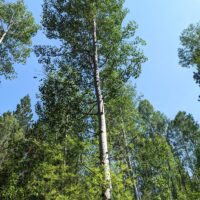
From mountain meadows and hillsides across the Sierra Nevada comes this iconic native poplar. Smooth, white bark and rounded leaves which quake in the wind make this slender tree highly ornamental. Reaches a height of at least 20 ft. and spreads by underground roots to form groves. While the fall color may not be quite as stunning in lower elevation gardens as it is in the mountains, colder parts of our area will still see leaves of yellow, orange and red in the autumn. Easily grown at lower elevations, this form is reported to be particularly disease resistant. Needs full sun to light shade and regular to moderate irrigation once established. Lower irrigation should slow aspen’s ability to multiply.
Potentilla gracilis
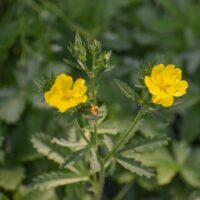
Prolific displays of bright yellow flowers resembling buttercups make this little cinquefoil a hit from spring through autumn. Flowers are held on two foot stems above low mats of dissected,dark green leaves. Native to mountainous areas throughout California. Provide full sun to light shade and give occasional to regular moisture. Will spread slowly by seed if exposed soil is nearby. A favorite of bees and butterflies. Deer resistant.
Prunella vulgaris v. lanceolata
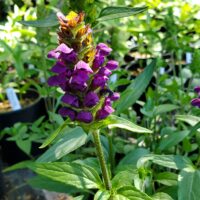
Native to moist areas usually near coniferous forests and woodlands. Creeping perennial forms a low dense mat of foliage. Upright spikes of purple flowers over a long period summer - fall. Give some thought to placement because if happy it will reseed vigorously. Plant in full sun or light shade with regular water.

Prunus virginiana v. demissa
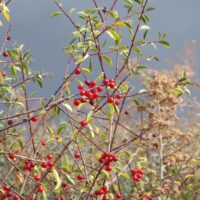
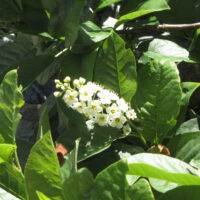
Large, deciduous shrub or small tree with red-purple bark and dark green foliage. Growing 8 foot or more tall and spreading slowly to form a thicket. Striking racemes of fragrant white flowers in the spring followed by dark red fruits which can be sweet but astringent. Foliage can take on nice fall color before dropping its leaves. Fabulous habitat plant drawing bees, butterflies and other pollinators to its flowers. Birds, especially bluebirds, adore the fruits and are known to swoop in and finish them off quickly. Where summers are hot, light or part shade is best, with regular to occasional water once established. They often grow where there is seasonal moisture in the spring, but somewhat dry as the season progresses.
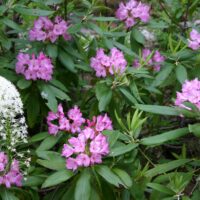
Rhododendron macrophyllum
One of the glories of our coastal redwoods forests, this evergreen rhododendron features clusters of large flowers in the spring which can range in color from deep rose to pale pink. Native from the Big Sur Coast north to Washington. In the wild, this open branched, big leaved shrub can reach a height of 13 feet. Plants in the garden tend to be much smaller, not usually exceeding 8 feet with a slightly narrower width. While somewhat temperamental in cultivation, success can be achieved with dappled shade, well draining soil rich in organic matter and moderate to regular water. Deer resistant.
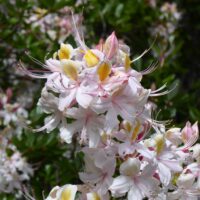
Rhododendron occidentale
A much sought after and admired native deciduous shrub found in moist places and stream banks in many plant communities throughout California. Leafs out in the spring with bright green foliage on a shrubby framework 3-6 ft. or more tall and wide. Glorious displays of fragrant azalea flowers in dense terminal clusters appear in late spring and can be pure white to pale pink often with yellow or orange markings. Needs decent light to bloom well but appreciates light shade, acid soils and regular water. Deer resistant
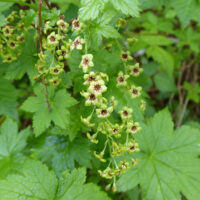
Ribes bracteosum
Native from Mendocino County northwards, this deciduous shrub is distinctive for its long, upright inflorescences and large, shiny leaves up to eight inches wide. As many as fifty of the soft orange, saucer-shaped flowers can occur on a single stem in the spring followed by small blue fruits in late summer. In shaded, moist conditions the blue currant can reach a height and width of about six feet but can get larger in cool, wet areas along the coast. Combine with other plants of the redwood forest such as ferns, sorrel and wild ginger.
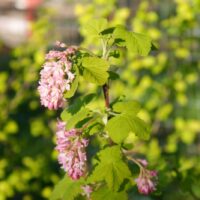
Ribes sanguineum v. sanguineum ‘Brocklebankii’
A distinctive shrub with gorgeous golden foliage on 5 ft. tall stems. Pendulous racemes of pink flowers in early spring just as the leaves are emerging are a favorite of hummingbirds. The leaves will scorch in the hot sun so part shade is best, especially during the hottest time of day. This cultivar prefers even moisture.
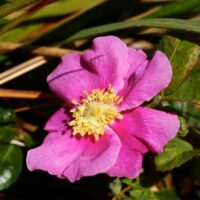
Rosa nutkana
Named for the Nootka Sound in Alaska where it was originally described, this shrub's range runs all the way south into California. Forms prickly thickets at least 6 feet tall with light green foliage. Super fragrant, 2-3 inch single pink flowers appear in summer followed by showy red hips.Favors moist sites in full sun to light shade. Rose thickets provide excellent habitat value, offering food and cover for birds and small mammals, pollen and nectar for many beneficial insects as well as a larval food source for a number of butterflies.
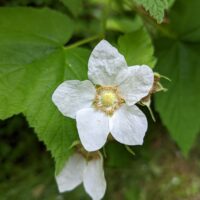
Rubus parviflorus
Thimbleberry is a deciduous native shrub with handsome large pale green velvety leaves. Small clusters of pretty white single flowers in spring and early summer followed by thimble-shaped mild-flavored edible berries in mid summer. Grows 3 - 6 ft. tall and spreading. Needs part shade and moisture.
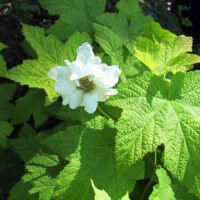
Rubus parviflorus ‘Dr. Stasek’
Bob Hornback found this interesting form of thimbleberry. Instead of the usual single white flowers, this cultivar offers double flowers. The extra petals are a nice touch against the background of large velvety leaves. Thimble-shaped edible berries follow which are mild flavored but sweet and much enjoyed by birds. Grows 3 - 6 ft. tall and spreading. Needs part shade and moisture.
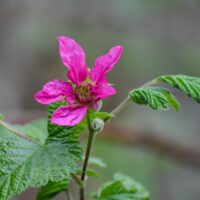
Rubus spectabilis
Native to moist places in and about the woods of coastal Northern California. Forms an upright shrub that arches at the tips, growing easily 6 ft. by 6 ft. Dark green foliage with weak prickles can form a dense hedge. The dark pink flowers resemble small single rose blossoms and are followed by showy orange-red berries that look like salmon eggs. Wildlife relishes the fruit, people too, though they aren’t as tasty as blackberries. Grows best with summer water and some shade.
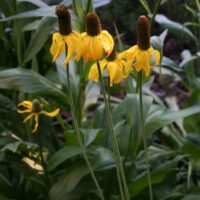
Rudbeckia californica
Large, bold perennial native to montane seeps and meadows where they receive regular moisture. The big leafy clumps can become very large growing 3 foot tall or more. Midsummer brings showy yellow daisies on tall stems with a distinctive long central cone and a skirt of three inch yellow petals. Plant in sun to light shade with regular water. Highly attractive to bees and other pollinators.
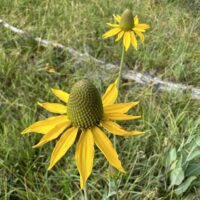
Rudbeckia glaucescens
This uncommon coneflower hails from the Klamath Mountains of northern California and southern Oregon. While similar in flower to the California coneflower, featuring yellowish-brown cones encircled with a skirt of long, yellow petals, this species has waxy leaves tinted a striking blue-gray. The flowers perch atop leafless stalks reaching 3 to 4 ft tall, rising above the large, lance-shaped leaves. A favorite of bees and butterflies. Even though this species normally occurs in serpentine soils, it grows easily in almost any soil type, as long as it is kept moist. Enjoys regular to moderate irrigation and full sun to part shade.
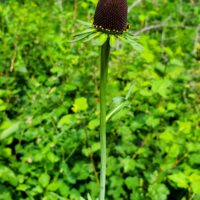
Rudbeckia occidentalis
From mountains in Northern California and throughout the West comes this unusual and distinctive coneflower. Deep purple, almost black cones sit atop a star of green sepals without any petals to distract from the striking form. Large, pointed green leaves climb up the flowering stems which can reach 5 or 6 ft. high. Slowly spreads to form a small clump in moist locations with decent drainage. Will tolerate full sun near the coast, but some afternoon shade is needed in hot, inland areas. An excellent pollinator plant from the sunflower family attracting bees and butterflies. Works well in a container. Winter deciduous.
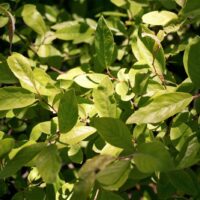
Sambucus racemosa
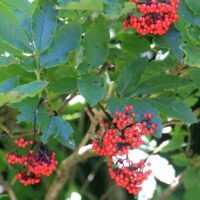
Red elderberry has light-green foliage topped by pretty, white flowers in pyramidal clusters which are followed by bright red berries. This 7-to-18-ft shrub or small tree is native to moist areas along the coast and in the Sierra-Nevada mountains. The fruits are relished by birds but are reputed to be poisonous to humans. Prefers cool sun or light shade, and moisture. Ripe berries are high on many birds’ favorite list!
Schoenoplectus (Scirpus) acutus var. occidentalis
Also called giant bulrush, this large bold plant can form massive colonies on the edges of wet areas. Native to freshwater marshes, lakes and stream banks throughout lower elevations in California and much of North America. Vertical, thick, round, leafless stems grow 10 to 15 ft. tall and spread underground. In large landscapes it can be used as a pond or riparian plant where it will form dense thickets. Can be grown in containers for smaller gardens, set just below water level for a dramatic vertical accent. Plant in full sun with regular water. Provides good habitat for wildlife.