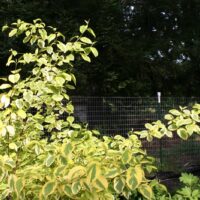
Cornus sericea ‘Hedgerow’s Gold’
A striking selection of redtwig dogwood, discovered near the Deschutes River in Eastern Oregon and introduced by Hedgerows Nursery. The large leaves of soft green have a broad, irregular, bright golden edge. In autumn the leaves turn an attractive ruby color. Forms a thicket that easily reaches 6 ft. tall by 6 ft. wide. The red stems stand out in the winter landscape after the leaves have fallen. Flat topped cluster of white flowers appear in spring and are followed by small white fruits enjoyed by birds. Best with regular water, good light and protection from the hot afternoon sun.
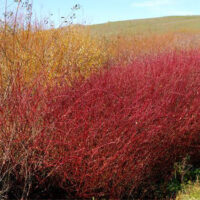
Cornus sericea ssp. occidentalis ‘Tomales Bay’
This selection of the native creek dogwood is from Tomales Bay, Marin County, where it forms broad clumps 6 ft. or more tall and wide. The beautiful red stems stand out in the winter landscape. Flat topped flower clusters are creamy white followed by small white fruits. Good fall color. Plant in full sun to light shade and give regular irrigation. Western tanager and warblers eat the flowers. Grosbeak, Northern oriole, flickers, spotted towhee, Western bluebird, robins, mockingbirds, bandtailed pigeon, waxwing and quail eat the fruits.
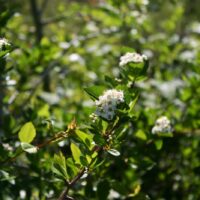
Crataegus gaylussacia
Klamath hawthorn occurs in seasonally wet meadows or borders of forests in northern California. A large deciduous shrub or small tree 6 - 20 ft. tall with reddish-brown bark and formidable thorns. Small, white flowers in flat topped clusters in late spring are followed by red fruits that ripen to black. The fruits are highly attractive to birds. A slight fall/winter chill can turn the leaves a brilliant orangey-red. Plant in full sun to partial shade with regular to moderate water. This shrub tends to sucker and could be encouraged to form a thicket. It is also amenable to pruning, and can be trained into a slender tree. This is our most common, local native hawthorn., and until recently was once thought to be C. douglasii.
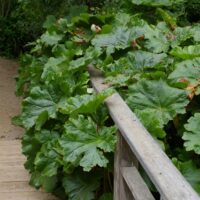
Darmera peltata
Native to mountain streamsides of Northern California and Oregon. A spectacular plant for pond, stream, moist woodland, or anywhere there is regular moisture and lightly shaded conditions. The lovely pink flower clusters on tall naked stems are the first to emerge in the spring. Next the very large bright green round leaves on sturdy stalks unfurl, reaching a height of up to 4 ft.. The foliage turns yellow in the fall and dies back to chunky rhizomes in the winter. A bold and beautiful flowering and foliage plant. Does well in containers too.
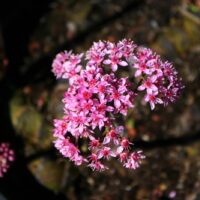
Darmera peltata – dwarf form
This is a surprising dwarf form of the moisture loving umbrella plant. The normally large round leaves of this species are dramatically reduced in height and width in this novel selection. Only about 1 1/2 ft. tall with leaves 8 - 10 inches wide. Deep pink flower clusters, unusually dark for the species, emerge on slender stems in spring and are soon followed by the bright green leaves. The foliage turns yellow in the fall and dies back to chunky rhizomes in the winter. A nice compact alternative for the smaller garden with part shade and regular moisture. Does well in containers.

Dichondra donelliana
Dichondra is a small genus of flowering plants in the morning glory family that form a thick, mat-like ground cover of rounded leaves, once popular as lawn substitutes. This native species is uncommon in the nursery trade and in gardens, but has potential worth exploring. Native to California coastal plant communities on open slopes and moist grasslands, it forms a flat, perennial ground cover with tidy, rounded leaves, densely packed along creeping stems. The flowers are tiny and greenish-white, not real showy but interesting. An obvious application would be a small scale ground cover or meadow planting in areas with some moisture. Could be a candidate for green roofs or walls, where a low and spreading plant is the ticket. Plant in full sun on the immediate coast, otherwise light shade is necessary. Moderate summer water.
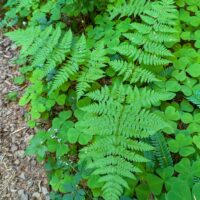
Dryopteris expansa
A very elegant native fern, with soft, bright green, finely divided fronds and a gently arching form. Rarely offered in California nurseries. Mature plants reach up to 3’ tall and wide, make them suitable for most garden spaces. Grows in moist, shady woodlands, mostly along our coast, from the Central Coast north to Alaska. Winter deciduous. Very similar to the lady fern, but with triangular-shaped fronds, not diamond-shaped. Said to be deer resistant.
Dryopteris filix-mas
The male fern is a beautiful, large, deciduous fern, native to much of Europe, Asia as well as North America, where it is uncommon in California. Large and slightly arching, the medium green fronds can reach 3 ft. tall and form a sizable clump. This fern increases slowly from stout rhizomes making it a fine choice for containers. An excellent addition to the woodland garden where it is easy to grow in part to full shade. Prefers humusy soil, rich in organic matter, though it is adaptable and accommodating. Best with regular to moderate watering. Rabbit and deer resistant.

Epipactis gigantea
Here’s a native orchid that’s easy in cultivation. In time it will form a colony producing many flower stems. Each stem holds several interesting orchid blossoms of subtle orange, coral and green tones 12 - 18 inches tall. Dies back to the ground in winter. Best with decent drainage and regular to moderate moisture (NOT soggy soils) and dappled shade part of the day. Wonderful addition to the woodland garden, around pond or near streams. Good in containers too.
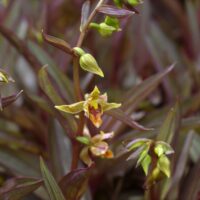
Epipactis gigantea ‘Serpentine Night’
The stream orchid is found in perennial streams, seepages, or other permanently moist places in California. Spreads by runners and will form a colony producing many flower stems. Each stem holds several orchid blosssoms of subtle orange tones 12 - 18 inches tall. The cultivar ‘Serpentine Night’ has wonderful dark purple foliage, emerging in the spring almost black. As the season progresses the color changes to dark bronze then bronzy green. Goes dormant in winter. Best with good light but may need afternoon shade in hot areas. Easy to grow with regular to moderate water. Excellent in containers.
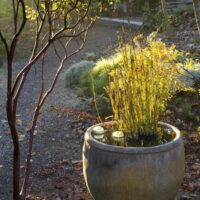
Equisetum hyemale v. robustum
Horsetail’s wonderful, erect form can be very useful in the landscape BUT BEWARE of its invasive nature. Best confined to containers where its slender, hollow, segmented stems can rise 4 ft. tall or more. Provide sun to medium shade and regular water. Deer resistant.
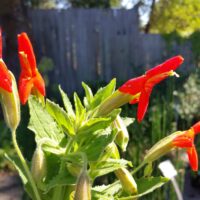
Erythranthe (Mimulus) cardinalis
Native to wet areas throughout the West, this robust perennial can easily grow to more than 2 ft. tall and wide. Tubular scarlet flowers are a hummingbird favorite and are very showy. Plant in sun to part shade with ample water. Perfect beside a pond, stream or water feature. Trim as needed to keep tidy. The flowers provide nectar for hummingbirds.
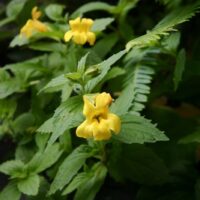
Erythranthe (Mimulus) dentata
Native to coastal streams and wet shady places in Humboldt and Del Norte Counties, north to British Columbia.Handsome bright green leaves with toothed margins,6-15 inches high spreading by slender rhizomes to form perennial patches.Late spring and summer brings funnel shaped bright yellow flowers with tiny red dots in the throat, which bloom over a long period. Excellent for any moist shady spot where the cheerful blossoms brighten. A good container plant too.
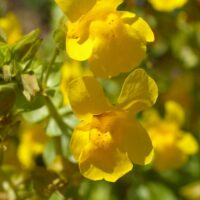
Erythranthe (Mimulus) guttata
This charming monkeyflower is native to wet places throughout the west. Forms mats of bright green foliage topped with flowering stems of cheerful, bright yellow, tubular flower. Needs regular moisture and full sun to light shade. Seeds about when happy. The flowers provide nectar for hummingbirds. Works great in a swale, combined with rushes, Helenium and bee plant.
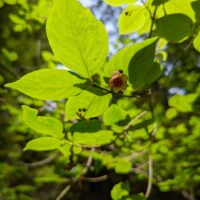
Euonymus occidentalis
Native to moist canyons, the uncommon western burning bush features small, burgundy flowers in the spring followed by dangling orangey-red fruits. The subtle appeal of this medium sized, deciduous shrub will please those native plant enthusiasts looking for a rare find. Reaches a height and width of about 8 ft. in most garden settings and is amenable to pruning. Plant in part shade to full shade. Enjoys moist situations but may become tolerant of drought in shadier locations. Needs good drainage.
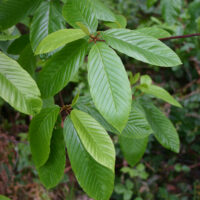
Frangula (Rhamnus) purshiana
Native to moist places from Mendocino County northwards and throughout the Sierra Nevadas, this medium sized deciduous tree is distinctive for its shiny, green leaves with strong venation. Ranges in height from 15 to 30 ft. tall. Bees are attracted to the clusters of small, cream-colored flowers and birds enjoy the dark purple berries which follow. Plant in riparian zones or in areas where it can receive regular moisture. Give full sun to part shade. Requires protection from the afternoon sun in the hottest areas.
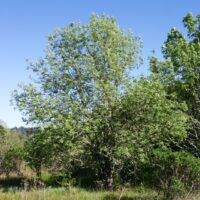
Fraxinus latifolia
Fast growing hardwood tree, native to stream and river banks or other wetland habitats from San Diego to British Columbia. Growing 30 - 70 ft. tall, this deciduous tree has medium green compound leaves. Male and female flowers occur on separate trees and are not particularly showy. They bloom just as the spring foliage is leafing out. Fruits occur on the female trees and are paddle-shaped, single samara-style fruits in drooping clusters. Birds and mammals eat its seed, but probably used more as a nesting site for birds. Plant in sun to light shade with regular to moderate water.
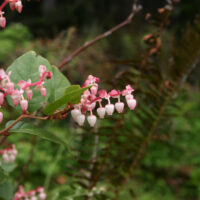
Gaultheria shallon
A handsome evergreen shrub, happiest in fog shrouded coastal zones. Large, leathery, dark green leaves are a gorgeous foil to the loose clusters of white to pinkish urn-shaped flowers. Fat, blue-black berries follow and are relished by wildlife and eaten by people too. Salal can grow tall in moist coastal areas of the Pacific Northwest but usually forms a ground cover 2 - 4 ft. tall and spreading in California. Best with some shade and acidic, humus-rich, moist soils. The foliage is prized for flower arranging. Deer resistant.
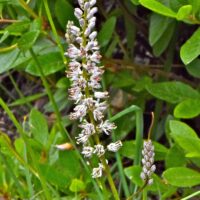
Hastingsia alba
This hard-to-find native bulb features elegant, branched stalks, 3 ft or more high, supporting racemes of sparkling white flowers. The dense blossoms display narrow petals and protruding stamens, giving them a delicate and soft appearance. Grey-green, strap-like leaves grow radially from base of the stalk, creating a tidy rosette 12" - 18" wide. Grows happily in most soils in full sun with regular water, where the bulbs may multiply. In part shade, this lily relative will be a little more drought tolerant. Plants emerge in late winter and go dormant by the end of summer. Hails from the mountains of Northern California, where it makes its home in meadows and open woodlands.
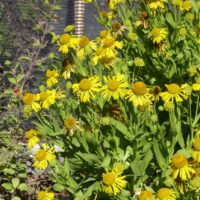
Helenium autumnale
This desirable autumn bloomer is known for its masses of bright yellow daisies up to three inches wide, perched atop stems two to three feet high. Lance-shaped leaves of light green create dense mats six inches high. Native to Northern California and much of North America where it grows in moist meadows. Will slowly increase to form small colonies. Plant in full to part sun and provide regular water. Attracts bees and butterflies. Deer resistant. Despite the common name, this plant is insect pollinated and isn't known to cause hay fever. It was originally used to make snuff, hence the name sneezeweed.
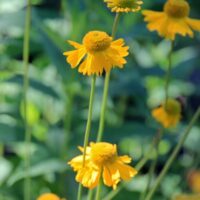
Helenium bigelovii
Native to moist meadows of California and S. Oregon, this summer flowering perennial makes a lovely addition to the garden. The cheerful golden-yellow petals turn down slightly from the rounded dome-like center. The golden daisy-like blossoms are held above the rosette of smooth green leaves on 2 - 3 ft. tall stems and attract a wide variety of insects including bees and butterflies. Despite the common name this plant does not cause allergies. It was originally used for snuff, hence the name sneezeweed. Plant in full sun to light shade with regular water. The seed for this crop is from the Pitkin Marsh in Sonoma County.
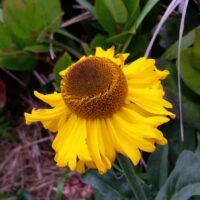
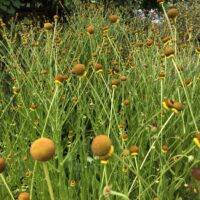
Helenium puberulum
Summer brings clouds of yellow pom-poms which age to brown on this native member of the sunflower family. The round flower clusters sit atop rings of small, down-turned petals, held up on flat stems lined with lanceolate leaves. The flower stalks reach 3 to 5 ft. in height and can be cut down once blooming has finished. Plant in full sun to light shade. Rosilla grows naturally by creeks and seeps and enjoys regular moisture, but will tolerate some drier periods. Attracts a wide variety of insects including bees and butterflies. Goldfinches love the seed. Reseeds readily.
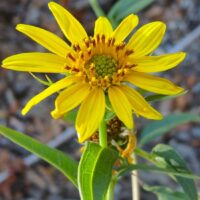
Helianthus californicus
This giant, perennial sunflower is native to riparian habitats in openings with decent light. Dormant in the winter, spring brings rapid growth, with narrow, bright green leaves on tall stalks rising 7 feet or more above a root system which spreads widely. Summer brings many small, golden-yellow sunflowers on the branch tips which are quite dramatic in full bloom. Flowers attract bees and butterflies and the seeds are relished by birds. Perfect for stabilizing soil where there is some summer water and plenty of space. Once established it can take it dryish, but will flower better with water. An excellent cut flower.
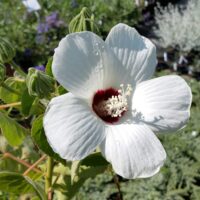
Hibiscus lasiocarpos var. occidentalis (californicus)
A rare species from wetland habitats in the Delta of the Central Valley, which are seriously threatened due to habitat disturbance and development. A large perennial growing 3 - 6 ft. tall with heart-shaped fuzzy leaves on sturdy stems and large showy white flowers with deep pink centers in the summer. Tropical looking and water loving this interesting herbaceous perennial grows best with summer heat. Plant in full sun to light shade with regular water. Tolerates heavy soils and seasonal flooding. Nice container specimen where its needs may be easier to meet.
Hierochloe (Anthoxanthum) odorata
Invite good spirits into your home and garden with this interesting, fragrant grass. Sweet grass is an aromatic, native perennial, with an extensive range in the United States, Canada and Eurasia. Growing in wetlands, prairies and meadows, it prefers rich, moist, soils and at least half day of sun. The grass flowers sit just above the foliage where they can dance with the wind. This cool season grass is sacred to indigenous people, where it is used in herbal medicine, a kind of tobacco, basket making, and burned as a smudge. Growing 1 - 2 ft. tall and spreading widely by sturdy rhizomes that can be difficult to eliminate once well established. Winter dormant in cold areas. Deer resistant.
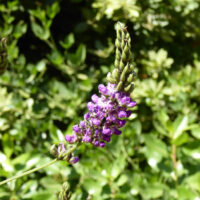
Hoita macrostachya
Leather root is a robust perennial, native to California’s coastal and inland valleys. It forms dense clumps of trailing or ascending stems with trifoliate leaves and showy clusters of purple-to-lavender, pea-like flowers that bloom from late spring through summer. It thrives in full sun to light shade, and prefers well-drained soils, though it tolerates clay. While somewhat drought tolerant, it enjoys deep summer irrigation. This species is ideal for slope stabilization and habitat restoration. It attracts bees and butterflies while fixing nitrogen in the soil, creating a resilient, ecologically-supportive landscape.
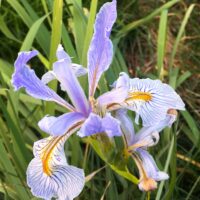
Iris longipetala
Restricted to swales and moist areas in coastal grasslands from San Francisco to Monterey, this uncommon native is well worth growing. Bluish-green evergreen blades form erect clumps one foot to 20 inches tall. Early spring brings beautiful lavender-blue flowers with dark purple venation. Full sun in coastal areas, a little shade inland with regular water through the bloom period. Can go dryer once flowering is finished. Deer resistant.
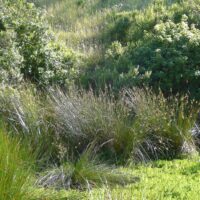
Juncus effusus
Striking plant with bright green, erect, cylindrical blades that arch somewhat toward the tips. Creamy-gold, tassel-like flowers appear near the tips in spring and early summer. Grows 3 ft. or more tall and wide. Native to moist habitats in temperate regions of the world. Can grow in full sun to light shade with regular to moderate water. A natural for water features, making a great foliage accent for pools, ponds, or streamsides. Can grow in shallow water. Great in containers too. Deer resistant.
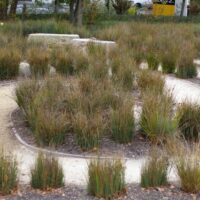
Juncus patens
This handsome evergreen rush provides a striking vertical accent 1-1/2 to 2-1/2 ft. tall with grey-green to grey-blue foliage. Brownish-yellow, tassel-like flowers appear in the spring and early summer. Very adaptable, tolerating a wide range of conditions. Enjoys sun with moisture, but will tolerate dry conditions once established. Accepts moderate shade. Robust root systems are excellent for soil stabilization. Deer resistant.