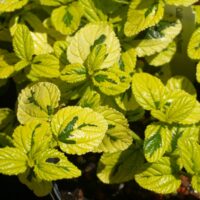
Ceanothus griseus var. horizontalis ‘Diamond Heights’
Grown for its beautiful golden variegated foliage, this low growing shrub spreads 3 - 5 ft. wide and up to 1 ft. high. Scant, light blue flowers in spring contrast nicely with the yellow foliage. Best with light shade in warmer regions. Enjoys some summer water though drought tolerant once established. Discovered from a colony of cultivated Carmel ceanothus in San Francisco in the area known as Diamond Heights.
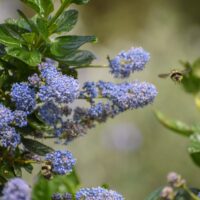
Ceanothus griseus var. horizontalis ‘Yankee Point’
An energetic bright green shrub growing up to 3 ft. tall and spreading rapidly to 10 - 12 ft. wide. Powder blue flowers in the spring. A good evergreen, weed-smothering groundcover for full sun to light shade. Drought tolerant, but appreciates an occasional summer watering and will accept moderate water. Tolerant of hot interior locations as long as some shade and irrigation are provided. Older specimens may reach up to 5 ft. tall, especially when side pruned. Ceanothus are great additions to the habitat garden offering food and cover for birds and nectar for bees and butterflies.
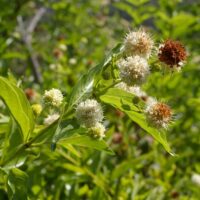
Cephalanthus occidentalis
Button willow is a large deciduous shrub, at times becoming treelike, growing 6-12 ft. (infrequently as much as 20 ft.) tall and wide. It lines waterways in foothills and warm interior valleys. Smooth, glossy bright- green leaves clothe this shrub during the growing season, turning yellow in the autumn. Creamy white flowers are arranged in spherical heads with protruding styles which give the flowers a pincushion-like appearance. The summer blooming, fragrant flowers are extremely rich in nectar and attract bees, butterflies and other pollinators. The globe-like fruits persists into winter and attract birds. Plant in sun to light shade with regular summer water or continuously moist or wet soils. An excellent habitat plant offering food and cover for a wide array of insects and birds.
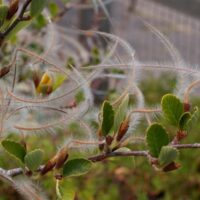
Cercocarpus betuloides
Mountain mahogany is an adaptable, semi-evergreen native shrub (8 to 12 ft. high and wide) or small tree with charming birch-like leaves set against silver-grey bark. Small, honey-scented flowers appear in spring followed by seeds with intriguing silky, curled, feather-like tails. The open habit contrasts nicely with evergreen shrubs or rock walls where its pleasing silhouette can be seen. Flowers are attractive to bees. Mountain mahogany is one of those rare native shrubs which can easily be pruned for narrow garden beds. Grows on dry slopes in chaparral or at the edges of woodlands. Provide full sun to light shade. It is surprisingly adaptable to diferent water regimes, from moderate irrigation to no water once established. Somewhat deer resistant.
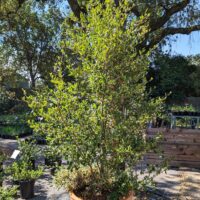
Cercocarpus betuloides var. blancheae
This rare and beautiful variety of our native mountain mahogany offers larger, birch-like leaves with fuzzy and whitish undersides. The highly useful from generally reaches 8 – 15 ft. tall, but only spreads to about 6 ft. wide, making it ideal for narrow locations where a screening, evergreen, fast-growing bush is needed. Small, disk-like, creamy flowers appear in the spring, followed in summer by seed pods with hairy, grey tails which curl upwards, giving the plant a silver halo. Over time, the trunks are covered in a smooth, grey bark. The Island mountain mahogany typically grows much more rapidly than our local variety and is tolerant of moist or dry soils once established and part shade to full sun. Heat isn’t an issue. A great candidate for a container, where it is very amenable to pruning.
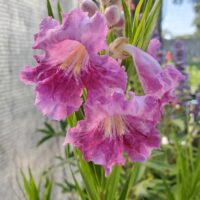
Chilopsis linearis
A graceful, summer-blooming, deciduous shrub, native to desert washes where it grows in gravelly soils and intense heat. Forms a large, multi-branched shrub or small tree reaching up to 15'-20' tall and wide with narrow, willow-like leaves. Terminal clusters of showy, trumpet-shaped flowers in summer come in shades of white, to pink and purple that attract hummingbirds and butterflies. Long, bean-like pods follow and hold on into winter. Enjoys hot climates with plenty of sun, decent drainage and occasional to moderate water. Avoid cool coastal conditions and heavy wet soils. Grows fast when happy with no pest or disease problems, demanding little. A great option for along sidewalks.
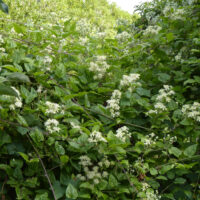
Clematis ligusticifolia
Native to riparian areas where the vining stems will climb and weave their way up and over shrubs and trees. Large masses of fragrant, small creamy-white flowers bloom in summer. Beautiful, silvery, feather-like fruits follow and are as attractive as the blossoms. The intricately divided leaves on long stems can climb 20 - 30 ft. Full sun to light shade with regular to moderate summer water. Deciduous. Generally deer resistant.
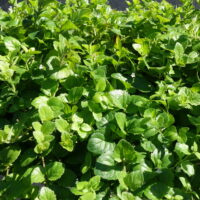
Clinopodium (Satureja) douglasii
Wonderfully fragrant native perennial with trailing stems about 6 inches tall and spreading. Roundish, scallop-edged, deliciously minty leaves have a long history of herbal uses. Tiny white flowers are borne in axils of leaves in the spring. A sweet small scale groundcover for the woodland garden with light shade and moderate to a little summer water.
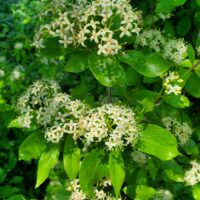
Cornus glabrata
The bluish-white fruits of this species are reputed to be especially good for attracting birds. Small creamy white flowers appear in spring on subtly beautiful arching branches. A type of stream dogwood, it forms thickets with time, 6 - 10 ft. tall. Deciduous. Prefers moisture and some shade. Western tanager and warblers eat the flowers. Grosbeak, Northern oriole, flickers, spotted towhee, Western bluebird, robins, mockingbirds, bandtailed pigeon, waxwing and quail eat the fruits. A great plant for stream restoration.
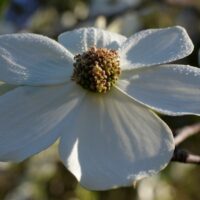
Cornus nuttallii
Spectacular native tree with pleasing horizontal branching, gorgeous white flowers, handsome fruits and good fall color. An elegant specimen tree though notoriously challenging in cultivation. Easiest to grow within its native range. Dislikes poor drainage, fertilizing, pruning, and injury to the tender bark. Drought tolerant in shady, cool situations but enjoys occasional to moderate water in fast draining soils. Once established it can become a show stopping specimen in a wooded garden, under high branching trees, along stream courses and slopes with eastern or northern exposure. Birds relish the red fruits.
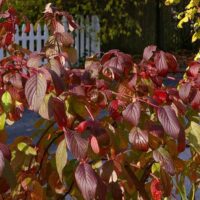
Cornus sericea
Redtwig dogwood is a spreading shrub growing 6 ft. or more tall and at least as wide, forming broad thickets along creeks and rivers. The beautiful red stems stand out in the winter landscape once they loose their leaves in the fall. Flat topped flower clusters are creamy white and are followed by clusters of white fruits. Often takes on nice fall color before loosing its leaves. Plant in full sun to light shade with regular to moderate watering. Does great on heavy clay soils and is a very good soil stabilizer. An excellent habitat plant where it provides food and cover. The fruits are very popular with birds. At the nursery, bluebirds and mockingbirds compete aggressively for the fleshy white fruits.
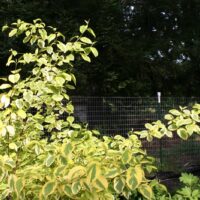
Cornus sericea ‘Hedgerow’s Gold’
A striking selection of redtwig dogwood, discovered near the Deschutes River in Eastern Oregon and introduced by Hedgerows Nursery. The large leaves of soft green have a broad, irregular, bright golden edge. In autumn the leaves turn an attractive ruby color. Forms a thicket that easily reaches 6 ft. tall by 6 ft. wide. The red stems stand out in the winter landscape after the leaves have fallen. Flat topped cluster of white flowers appear in spring and are followed by small white fruits enjoyed by birds. Best with regular water, good light and protection from the hot afternoon sun.
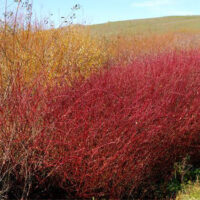
Cornus sericea ssp. occidentalis ‘Tomales Bay’
This selection of the native creek dogwood is from Tomales Bay, Marin County, where it forms broad clumps 6 ft. or more tall and wide. The beautiful red stems stand out in the winter landscape. Flat topped flower clusters are creamy white followed by small white fruits. Good fall color. Plant in full sun to light shade and give regular irrigation. Western tanager and warblers eat the flowers. Grosbeak, Northern oriole, flickers, spotted towhee, Western bluebird, robins, mockingbirds, bandtailed pigeon, waxwing and quail eat the fruits.

Cornus sessilis
Native to moist ravines and stream banks of the coast ranges and the Sierra Nevada Mts, this deciduous shrub or small tree grows 5-10 ft. or more tall and wide. Beautiful shiny, jade green leaves with prominent lateral veining decorate the graceful green barked stems. Small, yellow flowers appear early as it leafs out in the spring and are followed by oval fruits. Fruit color changes as it matures from greenish-white to yellow, red and finally shiny black which attract a wide range of fruit eating birds. Foliage can take on pretty tones of yellow and red in the autumn. Thrives in moist shady locations, but will grow well with just part shade and moderate to occasional summer water once established.
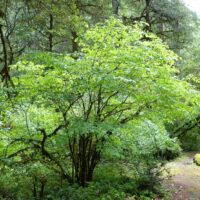
Corylus cornuta ssp. californica
Western hazelnut is a handsome, open, multi-stemmed shrub native to forests from Santa Cruz northwards in the Coast Range, and from Sequoia northwards in the Sierra foothills. Winter deciduous with decorative dangling catkins in winter. The soft, somewhat hairy leaves turn yellow in the fall. Small amounts of tasty nuts are produced in late summer and are relished by wildlife and people. Part shade with some moisture, but will tolerate fairly dry conditions once established. Usually grows 6 - 10 ft. tall. Somewhat deer resistant.
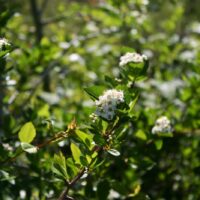
Crataegus gaylussacia
Klamath hawthorn occurs in seasonally wet meadows or borders of forests in northern California. A large deciduous shrub or small tree 6 - 20 ft. tall with reddish-brown bark and formidable thorns. Small, white flowers in flat topped clusters in late spring are followed by red fruits that ripen to black. The fruits are highly attractive to birds. A slight fall/winter chill can turn the leaves a brilliant orangey-red. Plant in full sun to partial shade with regular to moderate water. This shrub tends to sucker and could be encouraged to form a thicket. It is also amenable to pruning, and can be trained into a slender tree. This is our most common, local native hawthorn., and until recently was once thought to be C. douglasii.
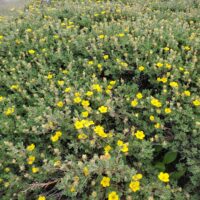
Dasiphora (Potentilla) fruticosa
A popular landscape subject, valued for its long bloom period, hardiness and carefree nature. A member of the rose family, this deciduous shrub can be found across the northern hemisphere, often growing at higher elevations. Here in California, it ocurrs in the Sierras, the Klamath Mountains and the Warners. Grows 2 -3 ft tall and wide with handsome, pinnately compound leaves. Cheerful, rich-yellow, saucer-shaped flowers bloom over a long period, summer into fall. Plant in full sun to light shade with moderate watering. Drought tolerant once established. Attracts bees and butterflies. Great in a pot. Deer resistant.
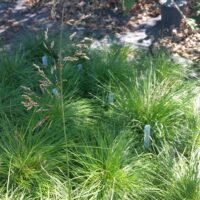
Deschampsia cespitosa ssp. cespitosa
Tufted hairgrass has a large natural distribution, in both the northern and southern hemispheres, in high elevation mountains as well as lower elevations along the coast. The seed for this crop is from coastal Sonoma County, a good choice for low elevation gardens. Forms a deep-green bunch of finely textured blades up to one foot tall with airy flower panicles extending two foot or more above the foilage. Useful framework among wildflowers or with perennials and shrubs. Sun to light shade and a little summer water. Deer resistant.
Deschampsia cespitosa ssp. holciformis
This native bunchgrass makes its home on windswept coastal bluffs from Central CA north to British Columbia. The tidy, evergreen clumps of foliage reach 6 – 12 inches tall and get at least as wide. Stiff, green leaf blades can give plants a spiky appearance, but also make this variety look more symmetrical than many native grasses. The narrow Inflorescences can reach up to 2 ft tall. Does best with full sun near the coast, but enjoys some afternoon shade in hotter areas, where moderate irrigation is recommended. Grows well with iris, seaside daisies and other coastal species. Deer resistant.
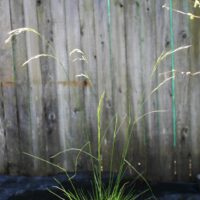
Deschampsia elongata
Graceful fine-textured perennial bunch grass, native to partly shaded, seasonally moist areas in California. Features bright green blades and gently arching flower stalks 12-18 inches tall. Yellowish-green in spring, turns soft gold in summer. Deer resistant.
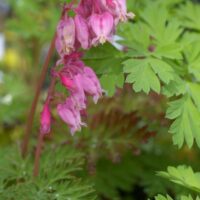
Dicentra formosa
Ferny foliage makes a lacy groundcover in shady areas. Clusters of pendulous, pink, heart-shaped flowers in spring and into summer. Will spread rapidly when happy, enjoying moist but not soggy woodland conditions. Tolerates dry shade where it goes dormant with drought. Early nectar source for hummingbirds and bumble bees. Deer resistant.
Dichondra donelliana
Dichondra is a small genus of flowering plants in the morning glory family that form a thick, mat-like ground cover of rounded leaves, once popular as lawn substitutes. This native species is uncommon in the nursery trade and in gardens, but has potential worth exploring. Native to California coastal plant communities on open slopes and moist grasslands, it forms a flat, perennial ground cover with tidy, rounded leaves, densely packed along creeping stems. The flowers are tiny and greenish-white, not real showy but interesting. An obvious application would be a small scale ground cover or meadow planting in areas with some moisture. Could be a candidate for green roofs or walls, where a low and spreading plant is the ticket. Plant in full sun on the immediate coast, otherwise light shade is necessary. Moderate summer water.
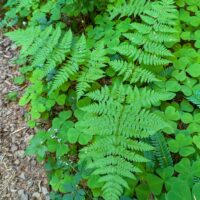
Dryopteris expansa
A very elegant native fern, with soft, bright green, finely divided fronds and a gently arching form. Rarely offered in California nurseries. Mature plants reach up to 3’ tall and wide, make them suitable for most garden spaces. Grows in moist, shady woodlands, mostly along our coast, from the Central Coast north to Alaska. Winter deciduous. Very similar to the lady fern, but with triangular-shaped fronds, not diamond-shaped. Said to be deer resistant.
Dryopteris filix-mas
The male fern is a beautiful, large, deciduous fern, native to much of Europe, Asia as well as North America, where it is uncommon in California. Large and slightly arching, the medium green fronds can reach 3 ft. tall and form a sizable clump. This fern increases slowly from stout rhizomes making it a fine choice for containers. An excellent addition to the woodland garden where it is easy to grow in part to full shade. Prefers humusy soil, rich in organic matter, though it is adaptable and accommodating. Best with regular to moderate watering. Rabbit and deer resistant.
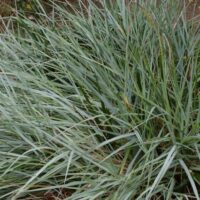
Elymus (Leymus) condensatus ‘Canyon Prince’
A beautiful selection from the Channel Islands off Southern California. Distinctive for the lovely, broad, silver-blue blades 2 1/2 to 3 ft. tall with wand-like grass flowers reaching up to 2 feet above the foliage. Accepts sun to very light shade and moderate to little water. Tolerates heavy soil. Spreads by rhizomes to form striking silver drifts, but is vigorous and aggressive. Best to use where a large patch is desired or where it is contained, such as a parkway strip. Cut back in winter to rejuvenate and remove old leaves. Drought and deer resistant.
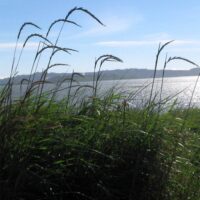
Elymus (Leymus) triticoides
Spreading, turf forming, perennial grass found in somewhat moist areas in many plant communities throughout California. An important restoration species, useful for holding soil and enhancing wildlife habitat value. Growing 2-4 ft. tall and spreading widely with an extensive network of rhizomatous roots which both hold soil and help prevent exotic weed establishment within their dense mats of roots and foliage. Slender blue-green blades are topped with narrow flower spikes 4-6 inches long. Excellent for seasonally moist bottom land and riparian areas where it can grow in full sun to light shade and tolerates many soil types. Will tolerate some drought in heavier soils. May spread too vigorously for small gardens.
Elymus (Leymus) triticoides x ‘Lagunita’
Discovered by grass expert and John Greenlee, who describes it as his personal favorite ground cover grass for meadow installations. Often this species has blue-grey blades and grows tall and floppy, but 'Lagunitas' grows just 10 - 16 inches tall, with rich green blades. This form rarely flowers and is quite adaptable to soil types and watering regimes. The ability to tolerate both wet and dry conditions makes it valuable for areas that seasonally flood like rain gardens. A vigorous spreader, especially when well watered, but is better behaved in dryer sites. Once established, can be maintained with one or two waterings a month, keeping it green and fire safe. Tolerates trimming to about 4 inches, possibly more. Grows in full sun to light shade. Host plant to the Woodland Skipper butterfly.
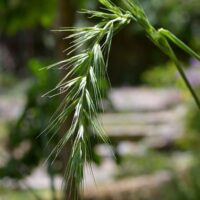
Elymus californicus
California bottlebrush grass is a tall robust grass with broad, bright green blades and nodding brushlike flower spikes. Uncommon in the wild it can be found in coastal counties on shaded banks and wooded areas, including redwood forests. Displays 3 - 6 ft. tall flower stalks with low foliage up to 1 ft. high. Provide moderate to infrequent irrigation. Deer resistant.
Epilobium ‘Bert’s Bluff’
A Las Pilitas Nursery selection, named for the founder, Bert Wilson. This California fuchsia sports grey foliage, growing 2 -3 foot tall and spreading. Blooming in late summer, the bright orange-red, tubular flowers are beloved by hummingbirds, but visited by bees as well. This cultivar is reputed as being particularly tolerant of a wide range of soil conditions and growing environments. Plant in full sun with occasional deep summer watering.
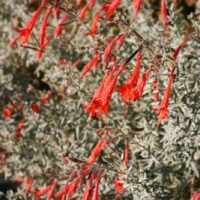
Epilobium ‘Chaparral Silver’
This California fuchsia that we obtained from another grower appears to be identical to our ‘Roger’s U. C. Hybrid’ - same lovely gray foliage 12 -18 inches tall, spreading, with narrow red tubular flowers that the hummingbirds love. Provide full sun to bright shade. Flowers best with occasional deep watering. Pruning plants down to a few inches in late autumn helps to rejuvenate them for the following year.