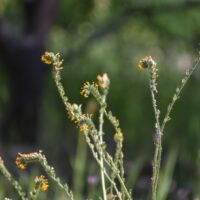
Amsinckia menziesii
A bright, yellow-orange ANNUAL with curled clusters of little trumpet-shaped flowers resembling the scrolled head of a violin. Flower stalks of one-to-three feet tall gradually unfurl with new blooms from mid-spring to early summer. The warmly-colored blossoms are a great nectar source for butterflies and develop into seeds adored by goldfinches and other songbirds. This grassland native adapts to the garden setting, where it prefers full sun and occasional irrigation. Will self-sow.
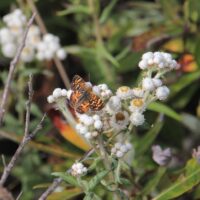
Anaphalis margaritacea
An adaptable plant with silver-green leaves that are densely white and woolly beneath. The flowers appear in summer and are made up of pearly white papery bracts surrounding yellow centers. The “straw flowers” retain their shape and color and are often used in dried arrangements. Tolerant of almost any soil type, it prefers full sun where it will grow in moist to somewhat dry conditions. Can spread vigorously, perhaps best used in meadow plantings or other naturalistic settings. Grows 1 - 3 ft. tall and spreading. Dies back to the ground in the winter. Larval food source for the painted lady and American lady butterflies. Deer resistant.
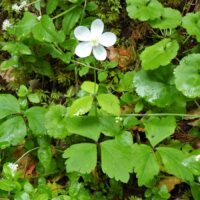
Anemone deltoidea
Rhizomatous perennial native to coniferous forests in the coastal mountains of Northern California through Washington. Forming low colonies, 6 inches or so tall with slender stems holding three leaflets. Simple, pure white flowers with a central shaft of anthers hold themselves just above the foliage. Spreads vigorously and best used with shrubs, ferns or other sturdy subjects. Can romp over smaller perennials. Sweet addition to the woodland garden where it will grow in full to part shade with regular to a occasional summer watering. Good in containers too. Dies back to the ground in winter.
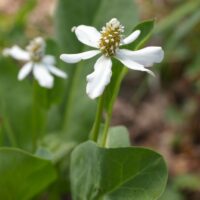
Anemopsis californica
An unusual plant - native to wet areas, but adaptable to regular or moderate garden water. The low rosettes of leaves spread into attractive colonies. The white flowers, or actually, flower bracts, are very showy in late spring. Sun to light shade with moisture. Herbalists use roots and leaves for a topical antibiotic and other uses.

Angelica arguta
A remarkable form of this native mountain Angelica with striking bluish-gray foliage. Umbrella-shaped clusters of white flowers sit on stalks up to 6 feet in height. Needs moderate irrigation and dappled shade inland. Combine with native Heleniums, lilies and columbines to create a beautiful woodland flower patch. Great for native pollinators. A larval food source for the anise swallowtail butterfly.
Angelica breweri
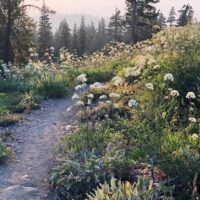
From the Sierras and the Klamath mountains comes this elegant member of the carrot family. Clear white flowers perch like little stars in flat-topped clusters up to 10 inches wide. Flower stalks can reach 6 feet in height with green serrated leaves forming 2 foot tall mounds at the base. Enjoys dappled shade away from the coast and moderate water. Great for native bees and butterflies. A larval food source for the anise swallowtail butterfly.
Angelica hendersonii
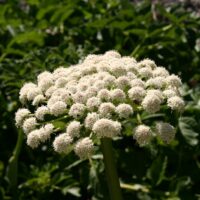
Found in nature on the immediate coast, though well adapted to the watered inland garden. It has the overall look of a stout cow parsnip with creamy white flowers in umbels and pinnately compound leaves of a deep green. Like many umbels, it is a good nectar source for beneficial insects. 4 - 6 ft. tall. Full sun to light shade. Good drainage with moderate summer water.
Angelica lucida
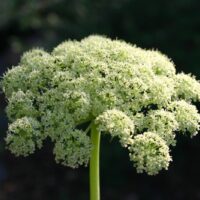
Large white flower clusters up to one foot across are held on stalks up to 5 feet tall above coarsely dissected leaves. Greener leaves and a more refined character distinguish this species from the more common Angelica hendersonii. While it is rare on the sea cliffs of northern California, sea-watch has a large distribution along coasts throughout the northern hemisphere. Give regular moisture and part shade in areas away from the coast. Attracts bees and butterflies.
Angelica tomentosa
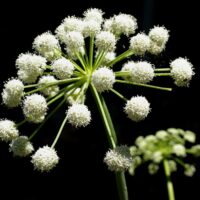
This species offers striking, flat-topped clusters of white flowers held up dramatically on stalks reaching up to around 5 ft. tall. Handsome, pinnately compound, gray-green leaves mass at their base. A generally inland angelica found in more or less moist, lightly shaded places, usually on serpentine. It can grow in full sun as long as it has plenty of moisture during the growing season. An important plant for the Pomo for its many medicinal and shamanistic uses. Diverse pollinators utilize the flowers, while the anise swallowtail butterfly uses the stems and leaves as a host plant for the catterpillars. Enjoys moderate water in the garden with a late summer rest (low water).
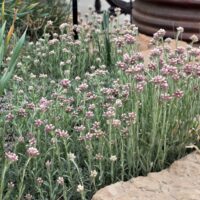
Antennaria rosea
A charming, native, mountain dweller which grows among rocks and onto boulders at meadow edges. Forms low mats only a couple of inches high of woolly, gray leaves that creep and cascade. Short flower stems with small, creamy-white and rosy-pink papery bracts, bloom summer into fall. Plant in full sun to very light shade with good drainage and a little summer water. Good addition for the pollinator garden and is the larval food source for a number of butterflies including the American lady. This is one of the few natives which is so low growing you can plant it between stepping stones.
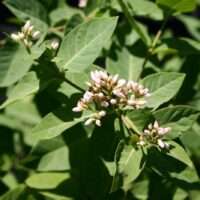
Apocynum cannabinum
Native throughout much of North America, California and our own Santa Rosa Valley. Grows 3 ft. tall and spreads vigorously by roots to form large patches. Small white flowers in summer. Turns beautiful shades of yellow in the autumn then dies back to the ground in the winter. Good for wild meadow or ethnobotanical garden. Important to Native Americans who used the stems for cordage, rope, twine nets etc. Sun to light shade with some moisture. Will tolerate dry conditions after blooming. Very attractive to butterflies. BEWARE! SPREADS VIGOROUSLY!
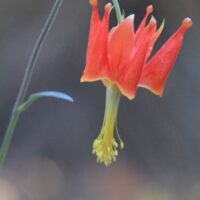
Aquilegia eximia
Large, orangey-red flowers with yellow stamens adorn this beautiful and uncommon native columbine. The pendant, brightly colored blossoms are larger than those of the western columbine but just as attractive to hummingbirds. Forms a 1 ft. high mound of foliage with flowering stalks reaching up to 5 ft. tall. Native to the Coast Ranges from Mendocino to Ventura Counties often on serpentine soils. Provide full sun to part shade and only water enough to prevent the soil from drying out completely. In areas far away from the coast provide a little shade from the hot afternoon sun. This species is a little more drought tolerant than the more common Western columbine.
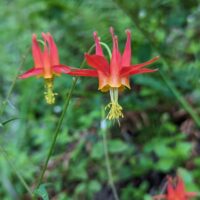
Aquilegia formosa
A popular native perennial with fern-like foliage and wonderful, nodding, spurred blossoms of red and yellow. Best with a little shade and moderate to regular moisture, but will tolerate full sun in somewhat cooler climates. The flower stalks reach 1 1/2’ to 3’ tall, with the grey-green foliage forming a mound of about 1 ft tall and wide. Flowers attract hummingbirds, while the seeds are relished by small birds such as sparrows and Juncos. If seed pods are left on the plants, you may get volunteer seedlings in the fall.
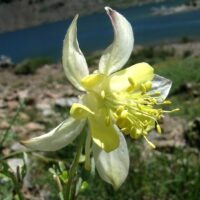
Aquilegia pubescens
Found on open, rocky slopes in the southern Sierra Nevadas in sub-alpine and alpine plant communities. Low rosettes of divided, blue-green foliage, sprout from a taproot. Flower stems rise 10 - 20 inches above the fragrant foliage and carry upward facing, nectar rich, long spurred flowers, perfectly positioned for pollinating hawk moths, hummingbirds and butterflies. The flower color is variable and runs the gamut from cream to yellow to pink, often in delicate hues rather than solid colors, except for an occasional pure white. Hybridizes freely with the native red columbine, which invites various shades of red to the flower color possibilities. Grows well in low elevation gardens, given light shade and summer water.
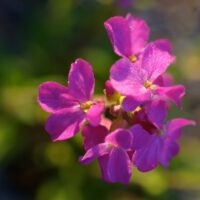
Arabis blepharophylla
A charming spring blooming perennial, native to rocky places of coastal scrub, Santa Cruz to Sonoma counties. The neat foliage grows in tight low rosettes and are topped with vibrant rose-purple mustard-like flowers 8 to 10 inches tall. A natural for coastal areas, it requires some relief from the hot sun and additional water inland. Perfect with other non rampant plants of similar requirements on a slope, rock garden, or along a border. Excellent container plant. Good nectar source for butterflies.
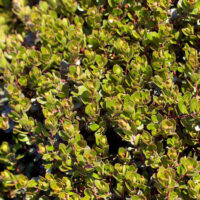
Arctostaphylos ‘Emerald Carpet’
This popular manzanita forms a wonderful, dense, green groundcover around 1 ft. tall by 6 ft. wide. Clusters of small, white, urn-shaped flowers decorate the plant in early winter. A natural hybrid discovered on Haven's Neck on the southern Mendocino Coast. Often planted en mass to create a large scale groundcover. Somewhat slower growing than bearberry and slightly taller over time. Enjoys full sun near the coast but does best in hotter areas with some afternoon shade. Needs moderate water once established.
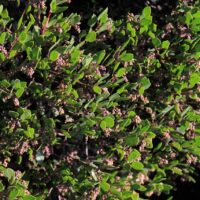
Arctostaphylos ‘Howard McMinn’
One of the most popular of the manzanitas, for several good reasons. It is rounded in form and profusely branched, growing 5 - 7 ft. tall. It has shiny green leaves and abundant light pink flowers. Beautiful mahogany trunks create a wonderful sculptural effect. The dense foliage responds exceptionally well to pruning - even shearing, and tolerates a far greater range of soils and watering regimes than most manzanitas.
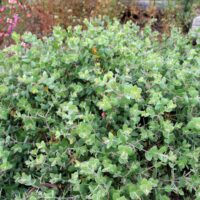
Arctostaphylos cruzensis
This rare, low-growing manzanita comes from the San Luis Obispo coast. Features grey-green, wedge-shaped leaves and soft pink flowers in the winter. Its distinctive creeping habit makes it ideal for crawling over walls or lining walkways. Provide full sun to light shade and moderate to infrequent irrigation once established. Good in containers.
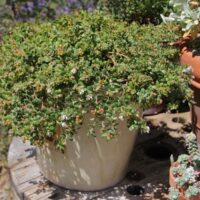
Arctostaphylos edmundsii ‘Bert Johnson’
Choice, low growing manzanita introduced by the Tilden Botanic Garden. Dense, mounding or cascading habit growing to around a foot tall by 6 ft. wide with small dark green leaves and bronzy new growth. Not as fast growing as 'Carmel Sur'. Clusters of tiny pink to white urn-shaped flowers in winter attract hummingbirds and are followed by handsome cinnamon colored little apple-shaped fruits. Excellent cascading over walls, rocks, or containers in sun to light shade. This manzanita has proven adaptable and fairly garden tolerant putting up with heavy soils and more summer water than many. Full sun along the coast with light shade in hot inland sites. Drought tolerant once established but appreciates occasional summer water.
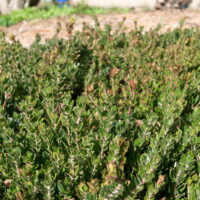
Arctostaphylos edmundsii ‘Carmel Sur’
Perhaps the fastest growing variety of this species. Attractive gray-green foliage with a dense, spreading habit under 1 ft. tall and 6 ft. across. Light pink flowers appear in winter but are few and infrequent. A handsome alternative to other groundcover manzanitas. More drought and heat tolerant than the bearberries and 'Emerald Carpet'. Likes full sun but may enjoy a little afternoon shade in especially hot inland sites.
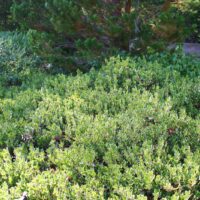
Arctostaphylos franciscana
This distinctive clone of the very rare franciscan manzanita displays luxuriant growth of shiny, dark green leaves spreading fairly quickly to form a dense drift up to eight ft wide and 2 - 3 ft tall. An excellent groundcover similar in appearance to A. uva-ursi but more drought tolerant and somewhat taller. A good manzanita for serpentine but still does well in other soils. Produces a modest display of pinkish white flowers in winter. Plant in full sun but light shade is fine especially in hotter climates. Requires moderate to occasional irrigation once established.
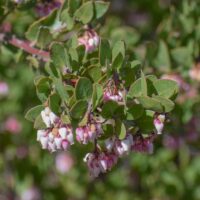
Arctostaphylos hookeri x pajaroensis – Tilden form
We thank Tilden Botanic Garden for this natural cross from the Pajaro River area of Monterey Bay. While similar to ‘Sunset’, this selection has somewhat denser foliage and thicker, more rigid stems. A vigorous and disease resistant manzanita with dark green, wedge-shaped leaves and bronzy-red new growth. In late winter, small, whitish flowers draw native bees into the garden for nectar. The slightly shaggy, cinnamon-colored bark covers the contorted trunks to great effect. Reaches up to a height of about 5 or 6 ft. and a width of around 7 ft. Provide full sun to part shade. Is more tolerant of heavy soils than many manzanitas and will accept moderate to infrequent irrigation in the garden.
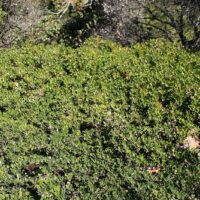
Arctostaphylos uva-ursi ‘Green Supreme’
A superior garden hybrid of the trailing bearberry. A volunteer seedling discovered by staff at Tilden Regional Parks Botanic Garden. Ultimately spreads 6 - 12 ft. across and less than a foot tall. Enjoys moderate to occasional irrigation. The glossy bright green leaves create a beautiful groundcover. Tolerates a wide range of soil types with reasonable drainage. Very disease resistant and fast growing. Shy to bloom or set berries. Sun to part-shade.
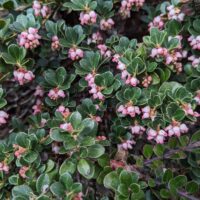
Arctostaphylos uva-ursi ‘Point Reyes’
An unusual selection of our native bearberry discovered near the Point Reyes lighthouse in Marin County. Dark green, leathery leaves form distinctive whorls along the stems with pale pink, urn-shaped flowers emerging in early winter. The showy red berries contrast nicely with the dark green leaves. Reaching a height of about 18” and a width of at least 6 ft., this groundcover works well in a rock garden or mixed with other low shrubs and grasses from our coastal areas. Give moderate water in interior locations and protect from the hot afternoon sun.
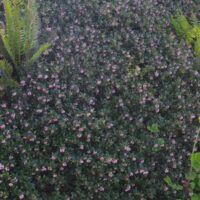
Arctostaphylos uva-ursi ‘Radiant’
A very low mat of glossy, dark green foliage 6 - 8 inches high and creeping at least 6 ft. across. Light pink flowers in early winter are followed by showy red berries. In hot inland areas give moderate water and light afternoon shade. A sturdy evergreen groundcover.
Arctostaphylos uva-ursi ‘Samoa Dunes’
This Humboldt County selection of the ubiquitous bearberry distinguishes itself with large, rounded, glossy leaves of deep green. Reaching a height of about 6 inches and a width of at least 6 feet, this durable groundcover spreads quickly to form a weed-smothering carpet. Little urn-shaped flowers colored soft pink appear in spring and are followed by shiny red berries. Provide full sun to part shade and moderate to occasional irrigation once established. Protect from the hot afternoon sun in warmer areas. The shiny, dark green foliage combines well with grey-leaved plants such as Artemisia ‘David’s Choice’ and the fescue ‘Patrick’s Point’.
Arctostaphylos uva-ursi ‘San Bruno Mountain’
A beautiful selection of bearberry from San Bruno Mountain south of San Francisco. This groundcover manzanita forms a luxuriant mat of large, glossy, spatulate leaves spreading to around 6 feet wide. The soft pink urn-shaped flowers lead to big red showy berries. A natural for coastal plantings where it can grow in full sun with little to no summer water needed. Inland, bearberry does best with shade from the hot afternoon sun and moderate summer watering.
Arctostaphylos uva-ursi ‘Wood’s Compact’
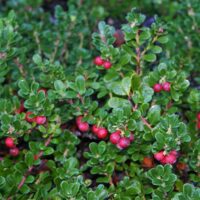
A low growing, spreading manzanita with lustrous green, rounded foliage, little pink urn-shaped flowers and pretty red berries, quite large for the species. This selection from coastal Oregon spreads at a moderate pace to 6-8 feet wide and only getting 6-8 inches tall. Full sun to light shade in hot areas with moderate summer water.
Arctostaphylos x media – Point Arena forms
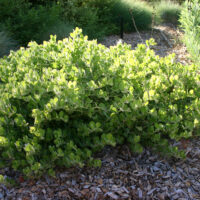
This special and diverse group of manzanitas come from Point Arena on the southern Mendocino Coast. These naturally occurring hybrids involve at least two species: A. uva-ursi, A. columbiana and sometimes A. nummularia. The resulting offspring have wonderfully varying features. The leaves range from large, light-green, and fuzzy to small, dark-green and glossy. The plants can form a mounding habit reaching up to 4 feet tall or hug the ground to form dense mats. Plant in full sun to light shade and give moderate to infrequent irrigation once established. Plants grown in hot areas will benefit from extra irrigation and some afternoon shade.