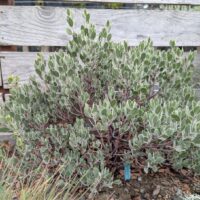
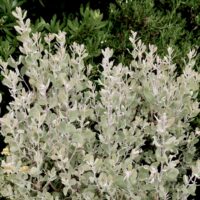
Arctostaphylos montana ssp. montana ‘Lagunitas Grey’
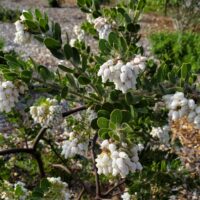
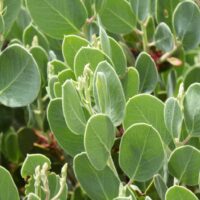
This a strikingly gray and compact form of the rare Mt. Tamalpais manzanita, which is found only in Marin County. Silvery leaves provide all year appeal, set against the smooth, sculptural, burgundy trunks. Winter brings clusters of pink-tinged, white flowers gathered at branch tips, followed by shiny red “little apples” in the summer. Mature plants develop an evenly mounded form, reaching up to about 4’ tall and 5’ wide in about 10 years. They are easily pruned to keep narrower and show of the beautiful bark. While native to serpentine soils, this species does well in most decently draining soil types with full sun and little to no water once established.
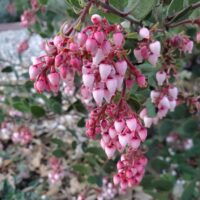
Arctostaphylos montereyensis
Beautiful pink flowers in winter and bright green leaves make this very rare manzanita from the Monterey Bay a must-have for the discerning collector. Slowly mounds to 5 or 6 ft. tall and wide with a classic reddish trunk. Provide full sun to very light shade and occasional to no irrigation once established. So far we have found it to be surprisingly adaptable, tolerating some irrigation as it ages. Decent drainage will probably be needed.
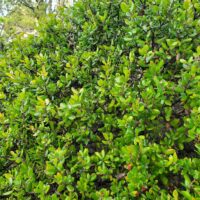
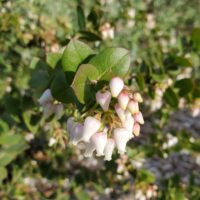
Arctostaphylos osoensis
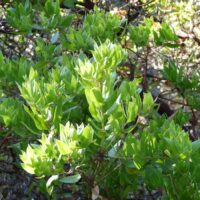
A beautiful and extremely rare manzanita from a small area above Morro Bay. The bright green leaves are auriculate, meaning “ear-shaped”, and have a distinctive matte finish, with new growth emerging in a reddish bronze color. Small clusters of dainty, pinkish-white flowers emerge in late winter/early spring and are adored by hummingbirds. The contorted branches are smooth and colored reddish-brown, aging to gray. Oso manzanita is attractively rounded and dense when young, only reaching to about 5 ft. or so in height with a slightly larger width. With age, it will begin to open, revealing its striking, sculptural trunks. Needs full sun and enjoys occasional irrigation, though it is quite drought tolerant once established.
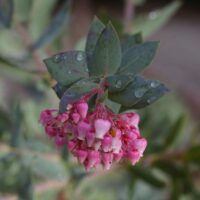
Arctostaphylos pajaroensis ‘Paradise’
This rare species offers striking foliage and flowers. Large flower clusters of a lovely shade of pink and are followed by prominent rusty-red berries, enjoyed by birds. Beautiful bronze new growth ages to an appealing blue-green which contrasts nicely with the shaggy cinnamon-colored bark. Approximately 6 ft. or more tall and 8 - 10 ft. across in 10 years. Full sun to light shade, excellent drainage with little to no water once established. Flowers are an excellent early source of nectar for hummingbirds and bumble bees.
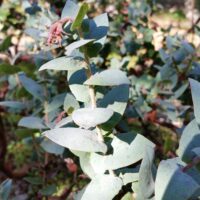
Arctostaphylos pajaroensis ‘Warren Roberts’
This stunning manzanita displays coral-pink flowers in early winter set against chalky blue-green leaves. In the spring the burnished red new growth emerges creating a striking contrast with the older leaves. The widely curving branches covered with shaggy cinnamon colored bark create a wonderfully sculpted look. If left unpruned, this selection will form a broad drift, about 6 ft. high and up to 8 ft. wide. 'Warren Roberts' is denser and has more intense blue-green leaves than its sister, 'Paradise'. Provide full sun to very light shade and occasional to no irrigation once established. Needs decent drainage. Discovered by Roger Raiche.
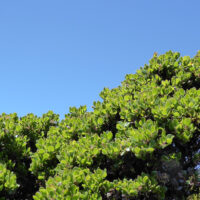
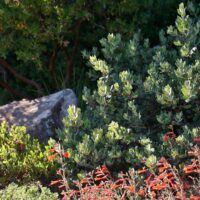
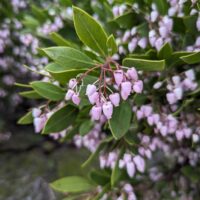
Arctostaphylos stanfordiana
One of the most beautiful of manzanitas with handsome dark mahogany bark, dense shiny green leaves and flowers ranging in color from intense pink to white. Its upright form ranges in height from 4 to 8 ft with a somewhat narrower width. Native to warmer areas of northern California's Coast Range, this species requires excellent drainage, full sun and NO water once established.
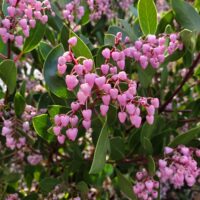
Arctostaphylos stanfordiana ‘Sonoma’
Masses of deep pink flowers and glossy, deep green leaves are an enticing feature of this uncommon selection. But what really distinguishes this cultivar from other Stanford manzanitas is the fact that it actually survives in the garden! Most other selections of this species are notoriously challenging to keep alive in cultivation. While fairly slow growing, the dense foliage mounds up over time to reach a height and width of about 5 ft. The striking burgundy-red trunks contrast nicely with the green leaves. Needs full sun and excellent drainage. No summer water once established.
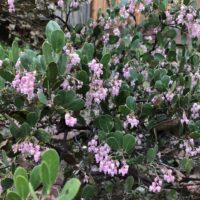
Arctostaphylos stanfordiana ssp. decumbens
A Sonoma County endemic, this rare manzanita is from Rincon Ridge east of Santa Rosa. Low growing mounding shrub to as much as 4 ft tall by more than 6 ft. wide. Charming pink urn-shaped flowers in early spring. Handsome, rugged and drought tolerant. Best in full sun with good drainage, no water necessary once established. A good choice for lean soils, summer heat and drought.

Artemisia californica
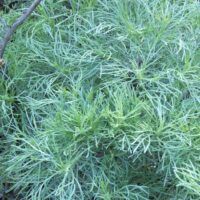
Native to coastal regions from Northern California to Baja. Densely branched shrub with finely divided gray-green scented foliage. Grows 2 - 6 ft. tall and wide. Light pruning or pinching help keep it dense. Grown for its wonderful texture and foliage color, flowers are inconspicuous. Requires decent drainage and full sun. Thrives in coastal environments, but has performed well inland, especially on slopes where cold air and winter wet drains away. Drought and deer tolerant.
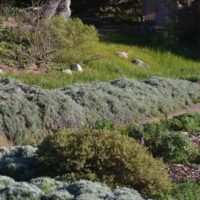
Artemisia californica ‘Canyon Gray’
An unusual prostrate form of our coastal native sagebrush, forming a loose, nearly flat mat of finely cut, silvery, fragrant foliage around 4 ft. wide. Useful as a bank cover or for the top of a retaining wall where it can cascade over the edge. Combines beatifully with ceanothus, buckwheats and iris. Should be cut back from time to time to keep dense. Enjoys full sun to light shade and is very drought tolerant once established. Deer resistant.
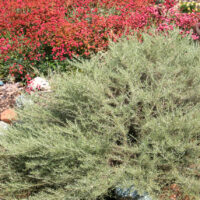
Artemisia californica ‘Montara’
Selected by Roger Raiche at Montara Ridge in San Mateo County. Forms a mound of finely cut fragrant foliage to around 2 ft. tall by 3 ft. (or more) wide. Requires full sun with decent drainage and is drought tolerant once established. Occasional summer water helps retain fresh look. Thrives in coastal environments. Deer resistant.
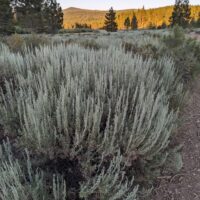
Artemisia tridentata
This long-lived, highly-aromatic shrub is emblematic of the American West, dominating high-desert landscapes east of the Sierras and along the Southern California and Baja coast. Its evergreen foliage is dense, silvery and held on tall stems that are woodier and more upright than the more coastal California sagebrush. In late summer, long flower stalks bear clusters of inconspicuous yellow blooms. Essential to wildlife in sagebrush ecosystems of the eastern Sierras and Great Basin, it also supports birds and bees in the garden setting. Although it can get quite statuesque, it averages 4-6 feet, with a rounded habit and architecturally twisty trunk. It thrives in well-draining soils with minimal water once established. This drought-tolerant species is excellent for erosion control and is nitrogen-fixing. Its fragrant leaves are deer resistant.
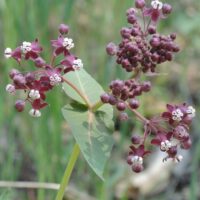
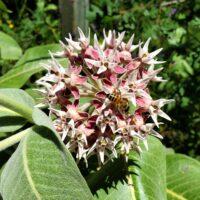
Asclepias speciosa
Bold and beautiful native milkweed that forms a large patch of tall stems with broad pale green leaves. Fragrant clusters of pinkish-purple flowers, followed by interesting seed pods. Spreads by underground shoots. Great in semi-dry naturalistic plantings. Host to Monarch butterflies. Deer resistant.
Baccharis pilularis
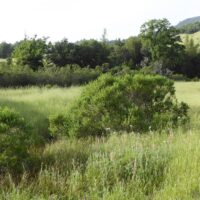
This is the upright form of coyote bush, growing 4 - 8 ft. tall and wide. Valued for its ability to flourish in a wide range of conditions. Also valued as an excellent habitat plant offering food and cover to a wide variety of wildlife. Flowers are not showy and the male and female flowers are borne on separate shrubs. This crop of plants are a mix of males and females and one can’t tell until they bloom. Plant in sunn or light shade. Not fussy about soils. Quite drought tolerant once established. Responds well to pruning or shearing, working well as a screen. Deer resistant.
Baccharis pilularis – female
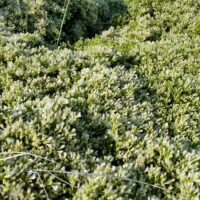
Upright form of coyote brush, growing 4 - 8 ft. tall and wide. Valued for its ability to flourish in a wide range of conditions. Also valued as an excellent habitat plant offering food and cover to a wide variety of wildlife. Flowers are not showy and the male and female flowers are borne on separate shrubs. Theses plants are FEMALE and will produce seed (when male plants are present). An abundance of pollinators and beneficial insects use Baccharis flowers and birds love their seeds. Plant in sun to light shade. Not fussy about soils. Quite drought tolerant once established. Responds well to pruning or shearing and is useful as a screen. Deer resistant.
Baccharis pilularis – male
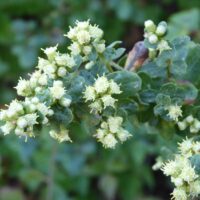
Upright form of coyote brush, growing 4 - 8 ft. tall and wide. Valued for its ability to flourish in a wide range of conditions. Also valued as an excellent habitat plant offering food and cover to a wide variety of wildlife. Flowers are not showy and the male and female flowers are borne on separate shrubs. These plants are MALE and produce ivory colored flowers with pollen and nectar. An abundance of pollinators and beneficial insects use Baccharis flowers. Plant in sun to light shade. Not fussy about soils. Quite drought tolerant once established. Responds well to pruning or shearing and is useful as a screen. Deer resistant.
Baccharis pilularis ‘Mayacama Mound’
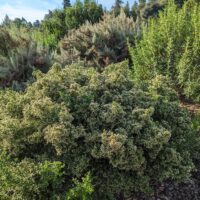
This dense, bright green, gumdrop-shaped coyote bush only reaches about 3 ft tall and spreads a wider. We discovered this heat and drought tolerant selection in a batch of seedlings from inland Sonoma Co.. A great alternative for the ubiquitous ‘Twin Peaks’, which is a coastal selection and less suitable for hot, dry sites. Plant in full sun to light shade where mature plants won’t need supplemental water, but an infrequent deep soak will keep them looking fresh. The small, whitish flowers are relished by pollinators in the early autumn. This selection is female, so the late autumn seeds provide an important food source for birds. A sturdy, low, evergreen shrub for tough situations.
Balsamorhiza deltoidea
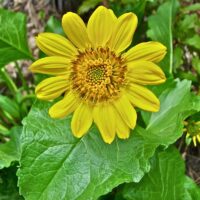
A bold and beautiful western native perennial, with bright-yellow, sunflower like blooms. Large, triangular shaped leaves rise from a deep taproot, forming a rosette a foot or so tall. Flower stalks rise mid to late spring, carrying large, yellow daisies which attract a myriad of pollinators. Best in full sun or light shade with good drainage, where it will be very drought tolerant once established. Care should be taken to allow plants to become dryish between waterings, though well established plants require no summer water. Historically used by native people for food and medicine. Attractive to bees and butterflies, and the seeds are relished by birds.
Berberis (Mahonia) aquifolium var. repens
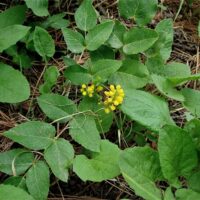
This little cousin of the much larger Oregon grape only gets 1 - 3 ft. tall and spreads underground to create dense, evergreen drifts. The divided leaves have a matte finish with a grey-green color which turns purple-red with frost. Clusters of bright yellow flowers open in spring and are followed by deep blue "grapes" much loved by birds. The sweet-scented flowers are enjoyed by bees and butterflies. Provide full sun to shade and moderate to infrequent irrigation. Deer resistant.
Berberis (Mahonia) nevinii
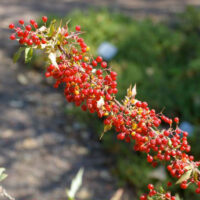
Nevin's barberry is a very rare southern California shrub with rigidly arching stems densely clothed in pointy silver gray leaflets. Heavy blooming with clear yellow flowers followed by heavy fruiting with bright red translucent fruit. 8 ft. by 8 ft. Does well in sunny well drained locations in the Bay Area. Great companion to matilija poppy and Salvia clevelandii. Very drought tolerant but best with occasional water. Deer resistant.