
Allium amplectens ‘Graceful Beauty’
This western native onion grows in sunny openings in forests and woodlands, often on serpentine. Narrow, fragrant leaves make way for globe shaped flower heads on sturdy stems 12 - 16 inches tall. The flower heads which emerge in late spring and early summer are made up of many starry, white florets with elegant lavender anthers and pale pink veins. Papery bracts persist after blossoms fade, adding interest. If happy can reseed readily. Attractive to bees and butterflies. Very drought tolerant. Reported to be gopher resistant, but may need further analysis. Deer resistant.

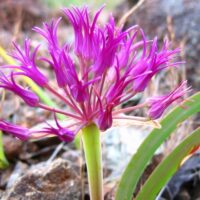
Allium falcifolium
This is one of our favorite native bulbs and it is rarely available in nurseries. In spring or summer, dense, rounded clusters of flowers, ranging in color from light to deep pink, sit atop thick, flattened stems up to 10 inches high. The strap-like leaves are few and don't distract from the chunky blooms. Needs excellent drainage and a lean, rocky soil. Once the flowers are done, allow the plant to go dormant with no irrigation. Native to rocky, sunny outcrops from Santa Cruz up to southwestern Oregon. Nestle among rocks and little succulents to show this unusual onion off to your friends. Works well in a container where its somewhat tricky requirements can be more easily met.
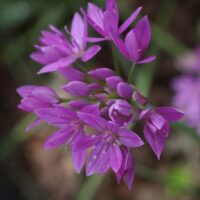
Allium unifolium
An adaptable and easy to grow native onion with handsome blue-green foliage. Late spring brings beautiful lavender-pink flowers on short stems 6 - 8 inches tall. Native in the Coast Range from the Central Coast, northwards. The flowers on this form have a particularly appealing saturated color. The original plants were given to us by the internationally known bulb expert and native plant horticulturist, Wayne Roderick. Fairly water tolerant, often found on seasonally moist and heavy soils. Spreads vigorously by seeds or bulb offsets. Goes dormant after bloom and will tolerate dry conditions at that time. Attractive to bees and butterflies. Reported to be gopher resistant. Deer resistant.

Brodiaea californica ‘Babylon’
A beautiful selection of a robust species, native to the North Coast Ranges and northern Sierra Nevada. Instead of the more typical lavender-purple colored blossoms, 'Babylon' offers particularly large flowers of pink-lavender. The star shaped flowers are in dense clusters on stout stems up to 24 inches tall. Best in full sun and tolerant of different soil types. Allow to go dry once foliage begins to go dormant. This beauty flowers in late spring/early summer and is favored by butterflies. A good container subject.
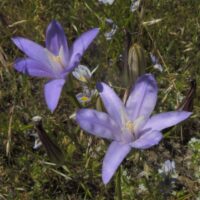
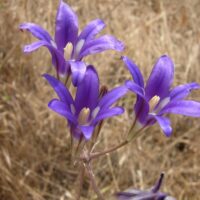
Brodiaea elegans
From grassy meadows and open woodlands comes this drought tolerant and colorful wildflower. Open clusters of dainty violet flowers sit atop stems reaching 8 to 20 inches in height. Plant in full sun to bright shade and provide decent drainage. As the name suggests, the harvest Brodiaea is the latest blooming of the Brodiaeas, sometimes not flowering until the end of summer after the grass-like leaves have gone dormant. It spreads rapidly but not invasively to form broad drifts. After blooming, this bulb will sleep until the return of winter rains. Do not irrigate. An excellent candidate for the rock garden where its graceful form will contrast wonderfully with the rigid stone.
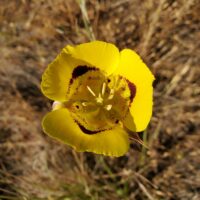
Calochortus luteus
This showy mariposa lily offers vibrant, golden-yellow flowers, often with reddish brown markings at the base of each of the three petals. The upward facing, bowl-shaped flowers seem to hover over grasslands on stems reaching one to two feet tall. In early winter, grass like leaves emerge from the soil, followed by the butterfly-favored blossoms in late spring and early summer. Once the flowers are done, this native bulb will go dormant. Plant in full sun to light shade with well-draining soil. Allow to go completely dry in the summer. Said to be one of the easiest of the mariposa lilies to grow in gardens.
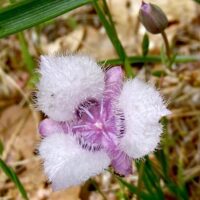
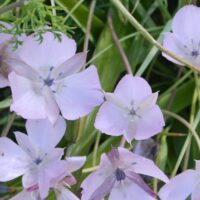
Calochortus uniflorus ‘Cupido’
While many Calochortus are known to be challenging in the garden, this selection is quite easy and blooms in abundance! Blue-grey, iris-like leaves emerge in the winter, followed by soft lavender-pink, tulip-like flowers in late spring. After flowering they will go dormant. Plant in full sun to light shade. Very drought tolerant but will tolerate occasional irrigation. This rare species has a surprisingly wide-ranging distribution, from the coast to the mountains of Northern California. Attracts native pollinators.
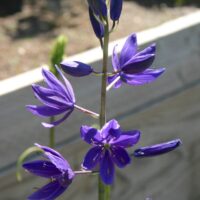
Camassia leichtlinii ssp. suksdorfii
Similar to the common camas, but with larger, star-shaped flowers ranging in color from soft to dark violet-blue on stems up to 3 ft tall. Native to grasslands and moist meadows that dry out in the summer. Also found in open, well lit woodlands. Easy to grow in full sun to light shade in a variety of soil types, including heavy clay. Allow to go dry after seed is set, where it will go completely dormant. This eye catching beauty is appealing to bees, butterflies and hummingbirds. An excellent container plant and cut flower. Deer resistant.
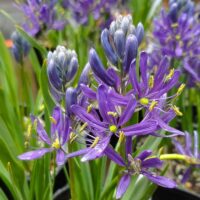
Camassia quamash
Camas lily is a beautiful native bulb, producing stunning displays of sky blue to violet-purple, star-shaped flowers. Found throughout much of the western United States, growing in moist meadows and grasslands that dry out in the summer. Important species to native peoples, who encouraged the bulb through fire management. Historical accounts describe fields of blue from the massive floral displays. Easy to grow in full sun to very light shade and tolerant of a wide variety of soils, including heavy clay. Long, slender leaves give way to erect racemes of blossoms, to 2 ft. tall in late spring. Allow to go dry once seed set commences. Dormant in the winter. An excellent container plant and cut flower. A favorite of bees, butterflies and hummingbirds. Deer resistant.
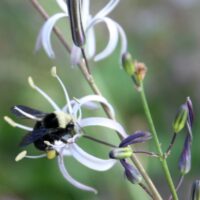
Chlorogalum pomeridianum v. pomeridianum
Known for their large, fibrous bulbs historically used by indigenous peoples and early settlers for soap, food and to stupefy fish. Long, wavy-margined leaves form a rosette in winter followed in late spring by tall, airy flower stems bearing small white flowers that open in the late afternoon and evening. Great in naturalistic settings in full sun to light shade. Needs to go summer dry once established. Larval food source for the Western Brown Elfin butterfly.
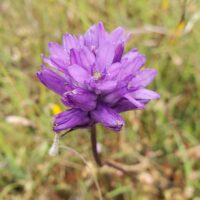
Dichelostemma congestum
A perennial wildflower with rounded, purple flower clusters held atop slender, naked stems. In late spring and early summer, the cheerful floral umbels rise 2 to 3 feet above low, grass-like leaves. Native to hillside grasslands and mountain meadows throughout western North America, this wild hyacinth species is taller than its Brodiaea relatives, with larger inflorescences than the similar blue dick. Usually spreads slowly by corms and seed to form colonies. An excellent nectar plant for the dry borders of pollinator gardens, alongside other native bulbs, and in meadow plantings. Plant in full sun to light shade with decent drainage. Water minimally and leave dry during summer dormancy.

Dichelostemma ida-maia
Blooming firecracker flowers are a sight to behold. Native to grassy slopes and woodland edges from Mendocino County to Southern Oregon, this distinctive native bulb is truly unique. Long, strap-shaped leaves give rise to tall, naked stems, 20 - 25 inches in height. Generous clusters of pendulous, one inch floral tubes of striking crimson with reflexed green tips reveal protruding little fringes of white. Bloom in late spring to early summer. Prefers lightly shaded areas that will go dry in summer after flowering. Does well in containers, as long as it is allowed to go dry once dormant. Flowers are custom built for hummingbirds and butterflies.
Dichelostemma ida-maia x multiflorum ‘Pink Diamond’
A natural occurring hybrid involving the red firecracker flower and a blue flowering species, producing bright, magenta-pink tubular flowers with charming reflexed tips like it's firecracker parent. Strap shaped leaves emerge in the spring with leafless flower stems following, 8-20 inches tall. The umbels of deep pink flowers are favored by hummingbirds and butterflies. Tolerant of different soil types in full sun to light shade. Dry conditions once it goes dormant is a must. Good container plant.
Erythronium ‘Pagoda’
This delightful woodland bulb offers soft yellow, lily flowers in early spring, held on delicate stems up to a foot high above broad, speckled leaves. The charming flowers point gently downwards with stamens protruding from the reflexed petals. Creates a beautiful accent in the shade garden where it can form small drifts overtime, mingling with ferns, bleeding hearts and fringecups. The leaves emerge in late winter when the soil is moist and disappear shortly after flowering. Needs well-draining soil with a little organic matter and only occasional irrigation after it goes dormant in summer. A cross between 2 rare native fawn lilies: E. tuolumnense and E. revolutum.
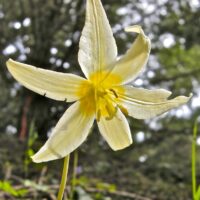
Erythronium oregonum
The giant fawn lily adds a delicate accent in the spring to the bright shade garden featuring starlike flowers of creamy-white with yellow centers. Reaching to a height of about 1 ft when in bloom with low, broad leaves attractively mottled. This bulb will slowly increase to form little clumps, ideal for the forest rock garden. Provide good drainage and water infrequently during its summer dormancy.
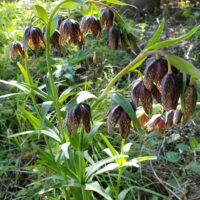
Fritillaria affinis
Charming, spring blooming, bulbous plant in the lily family, with beautiful, pendulous, bell-shaped flowers. This is California's most common fritillary and the most variable, in both size and flower color. Flowers vary greatly and can be yellow-green to purple-brown and may be beautifully checkered with brown and green, sometimes red-purple patterns. Can grow 12 inches - 3 ft tall depending on the habitat and substrate. Native to grasslands, woodlands and chaparral plant communities including serpentine soils. The easiest of the fritillaries to grow, preferring light, well drained soils, sun along the coast to light shade in hotter areas. Plants accept water in their growing season, but should be allowed to go dry once dormant. Protect from gophers, slugs and deer.
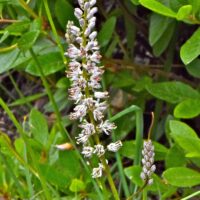
Hastingsia alba
This hard-to-find native bulb features elegant, branched stalks, 3 ft or more high, supporting racemes of sparkling white flowers. The dense blossoms display narrow petals and protruding stamens, giving them a delicate and soft appearance. Grey-green, strap-like leaves grow radially from base of the stalk, creating a tidy rosette 12" - 18" wide. Grows happily in most soils in full sun with regular water, where the bulbs may multiply. In part shade, this lily relative will be a little more drought tolerant. Plants emerge in late winter and go dormant by the end of summer. Hails from the mountains of Northern California, where it makes its home in meadows and open woodlands.
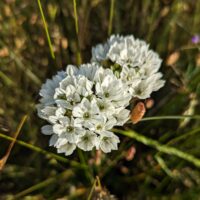
Triteleia hyacinthina
One of the easier to grow native bulbs that adapts well to garden conditions. Native to vernally moist areas that become summer dry in the Coast Ranges, Central Valley and Sierra Nevada into southwestern Oregon. Slender flowering stems rise one to two feet above the narrow leaves, with umbels of white, star-shaped flowers with green centers. If happy, the corms will multiply, forming drifts among grasses and shrubs and in open woodland settings. Easy to grow in containers, where they can be stashed in the shade once they go dormant. Bee and butterfly favorite.
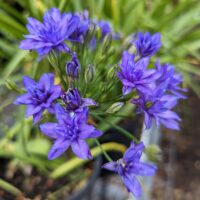
Triteleia laxa ‘Corrina’
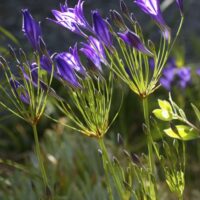
A beautifully dark flowered form of our Ithuriel’s spear, with flowers a darker blue-purple than the more common ‘Queen Fabiola’. The trumpet-shaped flowers form circular clusters at the top of slender stalks 12 to 18 inches high. This easy to grow bulb sends up slender, grass-like leaves in late winter followed by the striking flowers in late spring. Multiplies readily forming colorful drifts which mix well with grasses and smaller perennials. Tolerant of pretty much all soil types and can be allowed to dry out completely in summer when it goes dormant. Unlike most grassland bulbs, this species will also tolerate moderate irrigation. Plant in full sun to light shade. Attracts bees, butterflies and hummingbirds.
Triteleia laxa ‘Queen Fabiola’
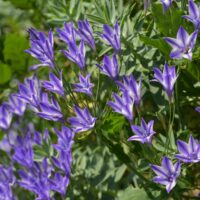
Trumpets of bluish-purple blossoms make a dazzling display at the height of spring on this easily grown lily relative. The showy flowers rise up to 18 inches tall in dense whorls on slender stalks above grasslike leaves. The small bulbs increase rapidly to form small, colorful drifts. Give full sun to light shade. Tolerant of dry conditions but accepts occasional irrigation. Will go dormant by mid-summer but reemerges in early winter. Attracts bees, butterflies and hummingbirds. Plant in openings between low, evergreen plants or in meadows with yarrow, California fuchsia and grasses.
Triteleia laxa ‘Rudy’
An interesting flower color variation of this easy to grow native bulb. Grasslike blades 12 - 18 inches tall produce flower stems with large clusters of showy, funnel-shaped, pale blue-lavender blossoms with a vivid violet stripe down the center of each petal. An eye catching addition to a naturalistic planting, in sun to light shade. A willing grower which will multiply if happy. Enjoys dry conditions once done flowering, but will accept some moisture. Good container subject. Attracts bees, hummingbirds and butterflies.
Triteleia laxa ‘Silver Queen’
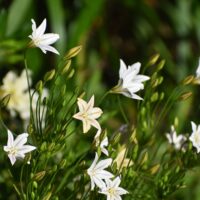
A white form of Ithuriel’s spear! We kid you not. You may be familiar with this species and its traditionally blue-purple, trumpet-shaped flowers perched in whorls atop stalks a foot or more tall. We now have a selection featuring soft white flowers. This native bulb sends up grass-like foliage in the winter followed by the charming flowers in spring and early summer. The bulbs multiply readily, forming small colonies over time. While it tolerates dry conditions in summer, it will also accept occasional irrigation, making it very useful in the garden. Enjoys full sun to light shade and will tolerate clay soil.