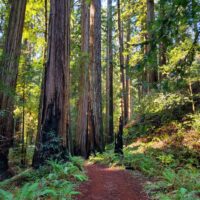
Sequoia sempervirens
A beautiful and fast growing conifer, famous, as it is the world’s tallest tree. Outside its native range or in a garden setting, it provides a symmetrical pyramid of soft fragrant foliage 70 to 150 ft. The columnar trunks are covered with thick fibrous red-brown bark. Small one inch cones form in clusters at the branch tips. Grows easily in areas with coastal influence and fog but will grow in drier interior sites with regular summer water. Performs well in the regular watering regimes of many urban gardens and lawns. Can be planted as a specimen, in groves, or even pruned as a hedge. As long as its watering requirements are met it has very few pest or disease problems.
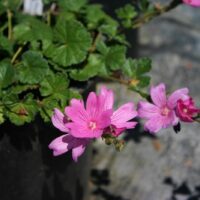
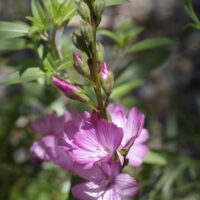
Sidalcea malviflora
Beautiful spring blooming native perennial found in moist meadows along the coast and inland from Southern Oregon to the Mexican border. Reliable and easy to grow, and an excellent addition to a grasslands or meadow planting. Grow in full sun to partial shade where it thrives with moisture and tolerates moderate to little water once established. With drought will go summer dormant. Light to dark pink, small to large flowered; they are all beautiful. A nectar and larval food source for the West Coast Lady, Painted Lady, Common Checkered Skipper, and the Gray Hairstreak butterflies.
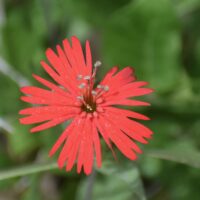
Silene laciniata ssp. californica
Native to open woods from Southern California north to Oregon, this native perennial is a knock out in bloom. Late spring and early summer bring brilliant, deeply lobed scarlet petals over the low growing mound of foliage 1-2 feet tall and about as wide. Best suited for well drained soils in lightly shaded settings where water can be withheld once plants begin to go dormant. A top notch rock garden subject and hummingbird favorite.
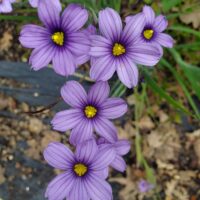
Sisyrinchium bellum
A beloved native perennial wildflower with grass-like foliage and six-petaled spring blossoms that range from blue to purple with occasional pure white forms. Grows 6 - 12 inches tall in small clumps where it is useful in meadow or grassland plantings as well as mixed borders. Sun to partial shade, with moderate to infrequent summer water. Goes summer dormant in dry gardens. Does well in heavy soils and often seeds about when happy.
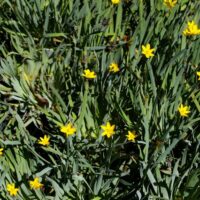
Sisyrinchium californicum
Native mostly to coastal areas where this easy perennial thrives in moist locations. From spring through to the end of summer, the bright yellow flowers rise above narrow, pale-green, iris-like leaves. Grows 6 inches to a 1.5 ft tall and at least a foot wide. Plant in sunny areas with regular water. Reseeds readily. Occurs from San Luis Obispo County north to British Columbia.
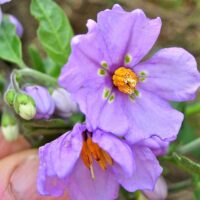
Solanum umbelliferum
A perennial subshrub from chaparral and oak woodland plant communities, often growing on the edge where they may receive some relief from the full sun. Grows quickly, to as much 3 ft. high with pale green oval leaves on green stems, often sprawling wider. Blooms over a long period with a multitude of blue-purple saucer shaped flowers followed by small tomato-like fruits. Plant in full sun to partial shade with little to no summer water. May go summer deciduous with drought, becoming twiggy and leafless until the rains return. All parts of the plant are poisonous which should make them dependably deer resistant.
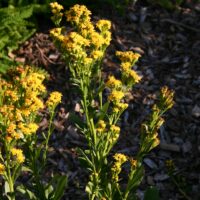
Solidago spathulata
Native to coastal strand and coastal scrub communities where it forms low mats of spreading bright green foliage. Summer brings flower stems a foot or so tall made up of small bright golden-yellow daisies. Full sun to light shade with some summer water. Tolerates heavy soils. The flowers support native bees, honey bees, beneficial insects and butterflies. It is a larval food source for the northern checkerspot butterfly.
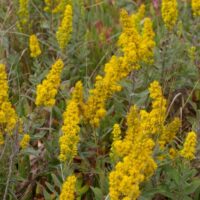
Solidago velutina ssp. californica
A showy and easy to grow late blooming native perennial. Spreads by creeping rootstocks where it can form a good-sized colony. Has spread slowly in our heavy clay soils with minimal water, but has the potential to spread aggressively in lighter soils especially with regular water. Late summer through fall brings slender wand-like flower stalks of golden yellow daisies 2 - 3 ft. tall which are visited by bees, butterflies and other insects. Plant in a sunny area where it is drought tolerant, but some supplemental summer water keeps it blooming longer.
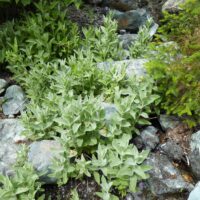

Stachys bullata
A native perennial from the mint family, found primarily near the coast from San Francisco southward, where it inhabits oak, pine and fir woodlands. Medium-green leaves are softly fuzzy with scalloped edges, growing around 2 ft. or more tall and spreading by underground rhizomes to form a colony. Blooming spring through summer, with lavender-pink tubular flowers in whorls, which attract bees, butterflies and hummingbirds. Tends to grow in somewhat drier areas, but responds well to moisture and also tolerates inundation. A natural with rushes, ferns and snowberries. Useful for partly shaded bioswales and oak/mixed conifer woodlands. The underground rhizomes make it a good choice for erosion control. Deer resistant.
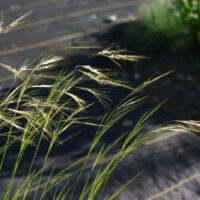
Stipa (Nassella) cernua
A beautiful native grass said to be a more impressive horticultural subject than the tough and useful Stipa pulchra. Forms a tufted bunch of foliage with elegant flower stems to about 2-3 ft. tall. The panicles of thin, fine, nodding awns have a silky aspect and are purplish at first drying silver. They glimmer when backlit. Prefers full sun (but will tolerate light shade) and well drained soils, but has proven adaptable. Drought tolerant. Often self sows. Deer resistant.
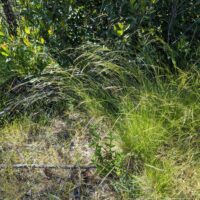
Stipa (Nassella) lepida
The native foothill needlegrass is a fine-bladed, medium-sized, perennial bunchgrass perfectly adapted to our Mediterranean climate. Growing vegetatively during the cool season and flowering in mid to late spring, going dormant with the dry of summer. Tufts of fine-textured blades 8 - 12 inches tall, give rise to slender, graceful flowering stems, 2 ft or more tall with panicles of silky awns which shimmer when back lit. Well suited for the dry garden, open woods, meadows and rocky slopes. Easy to grow, disease and pest resistant, tolerating more shade than other Stipa species. A strong re-seeder and deer resistant. Host plant for a number of butterflies. Deer resistant.
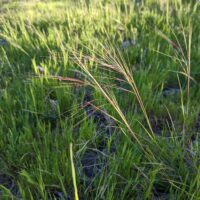
Stipa (Nassella) pulchra
Purple needlegrass is a major species in California grasslands. An excellent choice for naturalistic settings, native plantings, meadows or dry slopes in full sun. Handsome in mass where its purple awns shimmer. The entire plant turns golden come summer then goes dormant, reviving with the rainy season. Very drought tolerant. Can reseed vigorously. Deer resistant.
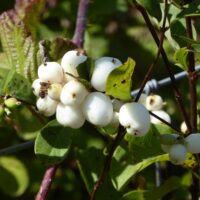
Symphoricarpos albus var. laevigatus
Snowberry is a deciduous, native shrub for dry or moist shade. Reaches about 4 - 6 ft. tall and spreading. Clusters of tiny, pinkish, urn-shaped flowers are followed by showy white berries on arching branches. Responds well to shearing. A good choice for under native oaks. Fruit may be toxic to humans. Hummingbirds like the flowers. Berries are palatable to hermit thrush, Swainson’s thrush, robins and other birds. Also creates good cover for birds.
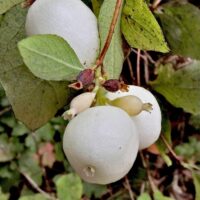
Symphoricarpos mollis
Low growing, spreading groundcover, usually staying around a foot tall by 3-6 feet wide. Rounded blue-green leaves on arching stems makes an excellent low growing thicket which competes well with tree roots. An amenable plant, able to grow in full sun in coastal areas and different depths of shade elsewhere, even fairly deep shade. The tiny, pink, bell shaped flowers are attractive to bees and hummingbirds and the white fruits that follow are eaten by birds. Good for erosion control and does well under oaks. Offers excellent habitat value with its flowers and fruits and provides cover for ground nesting birds. Drought tolerant once established. Deer often leave it alone.
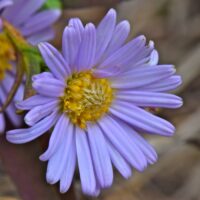
Symphyotrichum (Aster) chilense
This native aster is found throughout much of Sonoma County, usually in moist soils. More slender in form than the burly Point St. George selection. Spreads vigorously but with a lighter touch, integrating itself well with native grasses and bulbs. Its summer-to-fall blossoms are white to lavender blue and provide excellent nectar for butterflies and beneficial insects. 1-3 ft. tall and spreading. Thrives in sun to light shade with moderate to little summer irrigation.
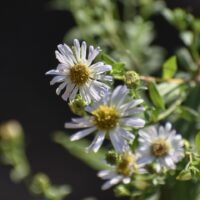
Symphyotrichum (Aster) chilense ‘Olema White’
Clear white flowers replace the class purple ones in this unusual selection of California aster that we found near the town of Olema in Marin County. In summer and into fall, a profusion of flowers bursts forth on this VIGOROUSLY spreading native perennial. An extremely adaptable groundcover reaching up to 3 ft. tall. Accepts regular to very little irrigation and full sun to light shade. This prolific bloomer is a bee magnet and also enjoyed by butterflies. Tolerant of clay and periodic flooding. Looks best when sheared to the ground after blooming.
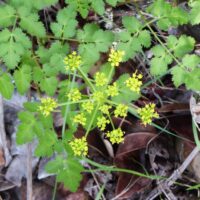

Tellima grandiflora
Fringe cups is a sweet native perennial for the shade garden. Slender flower stalks rise above the soft mounds of foliage 18 inches to 2 ft. The small, urn-shaped flowers have tiny fringed petals which open green and then age to pink. Seeds about in a nice way. Tolerates dry shade. Deer resistant.
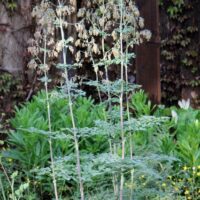
Thalictrum fendleri v. polycarpum
This native meadowrue has charm and adds a delicate, graceful quality to a woodland setting. Finely cut bluish-green foliage unfurls from purplish shoots. The tiny unisexual flowers are produced atop 2 - 5 ft. tall stalks on separate plants. The male flowers are showier with dangling cream-colored stamens; the females are clusters of greenish pistils. Useful in the woodland garden where it will thrive with some summer water or manage on winter rainfall. One way or the other it goes dormant in late summer where it can be allowed to go dry. Group several plants for best effect.
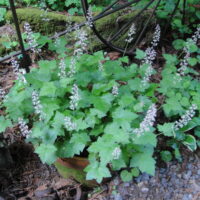
Tiarella trifoliata v. unifoliata
The native sugar-scoop makes an attractive groundcover in a shady spot with some moisture. Blooms in early summer with spikes of little white stars; seed pods are shaped like little scoops. Removing spent flower stalks often prompts reblooming. Native to the dark and damp forest floor of northern California. A sweet addition to the woodland garden where there is summer moisture.
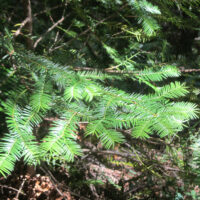
Torreya californica
Rarely seen in cultivation, this unusual conifer is endemic to California. Found in the coast ranges and foothills of the Sierra Nevada, where it is scattered here and there, usually in cool habitats of canyons and steep ravines. Growing at a leisurely pace 15 to 40 ft. tall with dark- green, stiff, rather broad needles. Male and female flowers occur on separate trees, with cream colored pollen cones on the males and unusual plum-like fruits on the females, which become purplish with age. Does well in part shade with moderate to little watering. Useful as a specimen tree or pruned into a hedge. An excellent container plant too.
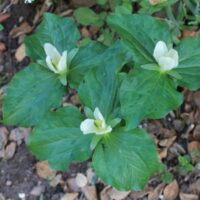
Trillium chloropetalum
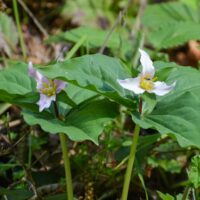
The beautiful and distinctive giant Trillium is an elegant addition to the woodland garden. Native to coastal and interior open forests and woodlands of the San Francisco Bay Area and North Coast Ranges.Emerges in February with three broad leaves surrounding a leafless stem 10-18 inches tall. A single large flower arises directly from the whorl of leaves and can vary from white, pink, to maroon red. The leaves often have green or maroon mottling. After flowering it dies back to the ground. Prefers the dappled light of a woodland setting with humusy well drained soil and some summer moisture.
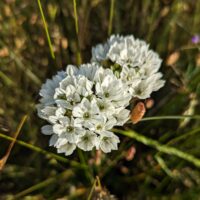
Triteleia hyacinthina
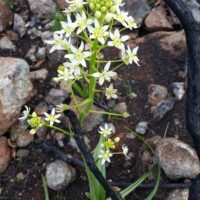
One of the easier to grow native bulbs that adapts well to garden conditions. Native to vernally moist areas that become summer dry in the Coast Ranges, Central Valley and Sierra Nevada into southwestern Oregon. Slender flowering stems rise one to two feet above the narrow leaves, with umbels of white, star-shaped flowers with green centers. If happy, the corms will multiply, forming drifts among grasses and shrubs and in open woodland settings. Easy to grow in containers, where they can be stashed in the shade once they go dormant. Bee and butterfly favorite.
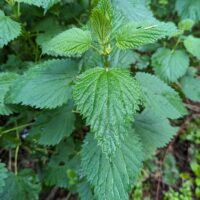
Urtica dioica
Found in moist woodlands and meadows throughout the state, stinging nettle is a habitat powerhouse. Growing at least 3 ft. tall and spreading vigorously to form large colonies, it's a great addition to any shady habitat garden or swale, where it stays moist throughout the year. Plant away from high traffic areas, as both the stems and foliage have small, stinging hairs that can cause skin irritation upon contact. This nettle has distinctive gray stalks, serrated leaves, and produces white, firework-like inflorescences that grow on stems in clusters throughout summer and early fall. Not only has it been used for centuries for a multitude of edible and medicinal purposes by indigenous tribes, it is also a larval host to several native butterflies including the painted lady and red admiral. Good cover for birds and small mammals.
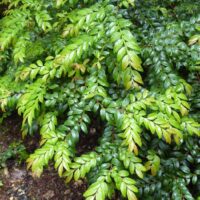
Vaccinium ovatum
A handsome evergreen shrub native to moist forests of the Pacific Coast. Leathery dark green leaves with new growth flushed bronzy-red. Small pinkish flowers in the spring are followed by delectable black berries prized in pies and jams. A slow growing shrub for shady situations or cool sun along the coast with moderate to regular water. Grows 4 - 5 ft. tall and wide or as much as 8 ft. in especially prime locations given time. Flowers provide nectar for hummingbirds and bees, fruit for many species including humans. Fire resistant. Deer resistant.
Vaccinium ovatum (Inverness)
This Marin County selection of the evergreen huckleberry was chosen by landscape architect Ron Lutsko for its dense and compact habit. The leaves appear to us to be smaller than usual for this species and spaced more closely together. It has the classic, tasty huckleberries and blooms and fruits readily. Plant in part shade and provide regular to moderate irrigation. Will grow in full sun near the coast. While tolerant of somewhat shadier locations, evergreen huckleberries fruit best with adequate light. Fire resistant. Deer resistant.