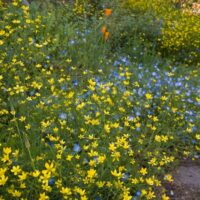
Ranunculus occidentalis
Native to open woodlands and meadows, this buttercup often occurs under deciduous oaks and buckeyes or on edges of forests. Perennial, with basal foliage, the flower stems rise 12 to 20 inches with bright yellow shiny petals. Has been surprisingly adaptable. Does fine with moderate summer irrigation, where it stays evergreen and long blooming. Once established can be allowed to go summer dry, where it will go dormant after setting seed, and returning with the winter rains.
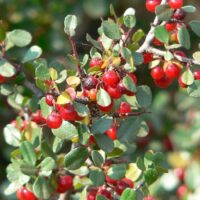
Rhamnus crocea
An under-used evergreen shrub native to chaparral, woodland, and coastal-sage scrub communities in California. Spiny redberry can grow up to 6 feet tall and wider, but is typically in the 2 - 4 ft. height range, spreading to 6 ft. or more across. Small, leathery, dark-green ovate leaves give this tough shrub a delicate look once established. The flowers on both male and female plants are inconspicuous, blooming from late winter into early spring. Female plants produce sporadic, jelly-like red berries. Great for dappled light under oaks, or a dry, shady woodland slope with California fescue. Can tolerate more sun near the coast, but prefers afternoon shade inland. Drought-tolerant once established. Larval host for a multitude of butterflies and moths, including the pale tiger swallowtail butterfly, Ceanothus silk moth, and Hermes copper butterfly. Deer resistant.

Rhamnus ilicifolia
A handsome evergreen shrub with small, dark green, leathery, serrated leaves. Found in the foothills and mountains of southern and central California, the Sierras and west of the Sacramento Valley up to 3,500 feet. Slow-growing, reaching 6-10 feet tall and wide, with a somewhat open, upright habit. Male and female plants are separate, producing inconspicuous yellow-cream flowers from spring into early summer. Female plants produce sporadic, gelatinous red fruits. Hollyleaf redberry can be planted in full sun to shade, but prefers a bit of relief from the afternoon sun in inland sites. It requires decent drainage and is drought-tolerant once established. Larval host for the pale swallowtail butterfly. Reportedly deer resistant.
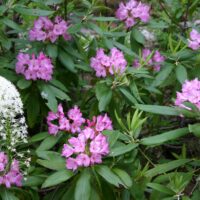
Rhododendron macrophyllum
One of the glories of our coastal redwoods forests, this evergreen rhododendron features clusters of large flowers in the spring which can range in color from deep rose to pale pink. Native from the Big Sur Coast north to Washington. In the wild, this open branched, big leaved shrub can reach a height of 13 feet. Plants in the garden tend to be much smaller, not usually exceeding 8 feet with a slightly narrower width. While somewhat temperamental in cultivation, success can be achieved with dappled shade, well draining soil rich in organic matter and moderate to regular water. Deer resistant.
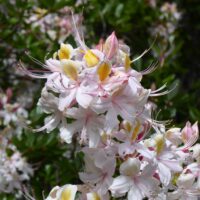
Rhododendron occidentale
A much sought after and admired native deciduous shrub found in moist places and stream banks in many plant communities throughout California. Leafs out in the spring with bright green foliage on a shrubby framework 3-6 ft. or more tall and wide. Glorious displays of fragrant azalea flowers in dense terminal clusters appear in late spring and can be pure white to pale pink often with yellow or orange markings. Needs decent light to bloom well but appreciates light shade, acid soils and regular water. Deer resistant
Rhus aromatica
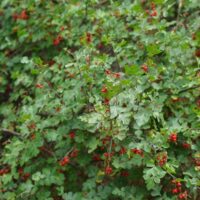
An arching, mounding native shrub related to sugar bush and lemonade berry. Early spring brings a profusion of soft yellow flowers followed by orange-red fruits relished by wildlife. The leaves turn shades of yellow, orange and red in the fall. Plant in sun to light shade where it is drought, cold and heat tolerant. Useful addition to the naturalistic garden, as a shrubby groundcover, along seasonally moist streams, and for erosion control. Used by the native people for basketry.
Ribes californicum
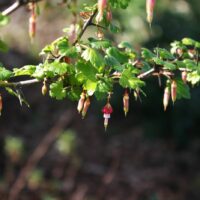
Undemanding, winter blooming, deciduous shrub, native to Coast Range mountains of California, from Mendocino County south to Orange County. Excellent choice for habitat gardens, where it provides abundant flowers and fruits plus thorny, protective cover. Variable in size, this spiny shrub can grow 4 - 6 ft. tall and wide. The pendant flowers are tiny but numerous and charming on close inspection. The tubular flower parts are white and extend beyond the reflexed red sepals, and are highly attractive to hummingbirds and other pollinators. Red, bristly, globular fruits follow and are adored by birds. The bright green leaves often take on striking crimson colors in the late summer before going dormant with drought. Host plant to several butterfly species as well as the white-lined sphinx moth. Best with light shade and a little irrigation, though once established it is completely drought tolerant.
Ribes divaricatum var. pubiflorum
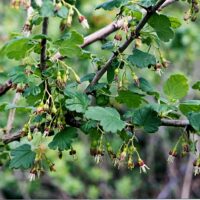
Native to coastal scrub, moist woods and shady canyons of the Pacific coast from British Columbia south through much of coastal California. This gooseberry is perhaps the most tasty of all of our native Ribes. The berries have the added benefit of being free of thorns. Forms an arching shrub 3-6 ft. tall and a bit wider with thorns at the leaf nodes. The tiny flowers are composed of reddish sepals and white petals that dangle beneath the branches and are attractive to hummingbirds. The small, blue-black berries are relished by birds. Plant in light shade with some summer moisture. Will tolerate full sun near the coast. Useful as a barrier, hedgerow or habitat plant where it provides excellent food and thorny cover for birds.
Ribes malvaceum
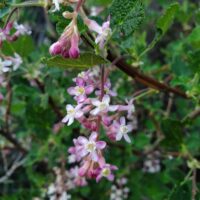
Chaparral currant is a tough and durable native shrub 5 to 8 ft. tall. This deciduous shrub will grow in full sun to light shade and is quite drought tolerant. Flowers early, often midwinter with dangling clusters of pink blossoms. Good early nectar source for hummingbirds. Berries attract many birds including grosbeak and mockingbirds.
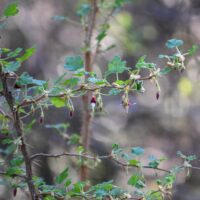
Ribes menziesii
A gooseberry of low elevation forests, growing to around 5-8 ft. tall with an open, arching habit. Bright green scalloped leaves with pale undersides are set on spiny stems. The charming flowers are small but sweet, with maroon sepals and white petals dangling beneath the thorny branches offering nectar to hummingbirds. The spiny red fruits that follow are decorative and attractive to birds. Often found on the edge or in openings of forests, the canyon gooseberry does best with light shade. It is drought tolerant especially near the coast, though it appreciates occasional summer water. An excellent habitat plant that provides shelter and food for a wide variety of birds.
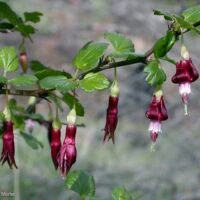
Ribes roezlii
The Sierra gooseberry's natural range is far beyond the Sierras, with varieties growing in the mountains of northern, southern and central California. Forms an arching shrub of thorny branches with pretty, little scalloped leaves, 2 - 4 ft. tall and wide. Pendant flowers are made up of burgundy-red sepals and small white to pink petals with protruding stamens, looking something like miniature fuchsias. Custom built for hummingbirds. In spring, showy, rounded fruits covered with prickles follow the flowers, starting out green and ripening to red, spiny globes which are relished by birds. This charming shrub is a lovely addition to the woodland garden where they receive light to moderate shade and are drought tolerant once established. Needs good drainage.
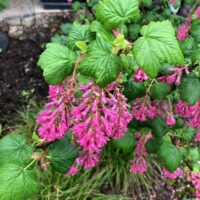
Ribes sanguineum v. glutinosum ‘Heart’s Delight’
A coastal Marin County selection of one of the West's choicest native shrubs. Deciduous, grows 6 ft. tall or more. In early spring it produces long drooping racemes of deep rosy-pink blossoms. Best with light shade inland, humusy soil and some summer water. Hummingbirds love the flowers and the berries attract many birds including robins, grosbeak and mockingbirds.
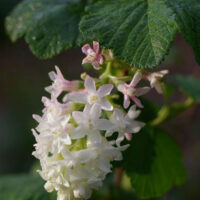
Ribes sanguineum v. glutinosum ‘Inverness White’
Selected by Roger Raiche on Inverness Ridge in Marin County. Distinguished from other white flowering cultivars in that the pure white blossoms develop a rosy cast as they fade. Deciduous shrub about 6 ft. tall by 6 ft. wide. Best with a little shade, woodsy soil and a little summer water. Berries attract many birds including grosbeak and mockingbirds.
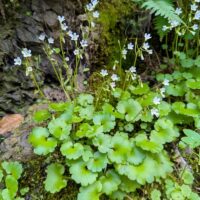
Romanzoffia californica
The California mistmaiden is diminutive, reaching a bit over a foot tall when its dainty white flowers are in bloom. The bell-shaped blossoms appear in winter, perched in clusters on tall, thin stems above lush foliage. Summer dormant until the first autumn rains, this plant is often the first garden greenery to return after a hot, dry summer. At home in the Coast Range from the Santa Cruz Mountains north to Oregon, it requires light shade and decent moisture during the growing season. Allow to go dry when the rains stop. Great for rock gardens and small nooks with excellent drainage.
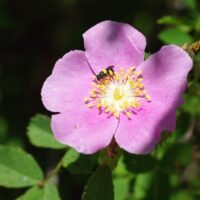
Rosa californica
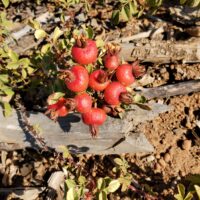
A thicket forming, deciduous shrub native to riparian zones throughout the state. Fragrant, pink blossoms with yellow centers are followed by attractive red fruits or rosehips. The stems are lined with little thorns and gray-green, pinnately divided leaves. A good screen or living fence, where it will grows at least 5 ft. tall and usually spread wider. Very important for erosion control along streams. This is one of our most popular hedgerow plants due to the cover it provides for foraging wildlife and the value it offers to pollinators and birds. Prefers full sun to light shade and seasonally moist soils, but can go a little drier in the summer. A larval host to several butterflies.
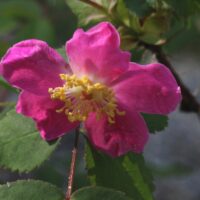
Rosa gymnocarpa
Delicate, native rose of woodlands, growing 3 - 4 ft. tall. Sprinkled with sweetly fragrant single pink flowers followed by small red rose hips. Best in woodsy shade where it tolerates drought. Bees, butterflies and other pollinators are attracted to rose blossoms and the fruits are enjoyed by birds.
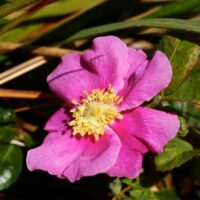
Rosa nutkana
Named for the Nootka Sound in Alaska where it was originally described, this shrub's range runs all the way south into California. Forms prickly thickets at least 6 feet tall with light green foliage. Super fragrant, 2-3 inch single pink flowers appear in summer followed by showy red hips.Favors moist sites in full sun to light shade. Rose thickets provide excellent habitat value, offering food and cover for birds and small mammals, pollen and nectar for many beneficial insects as well as a larval food source for a number of butterflies.
Rubus parviflorus
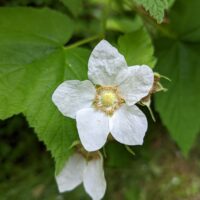
Thimbleberry is a deciduous native shrub with handsome large pale green velvety leaves. Small clusters of pretty white single flowers in spring and early summer followed by thimble-shaped mild-flavored edible berries in mid summer. Grows 3 - 6 ft. tall and spreading. Needs part shade and moisture.
Rubus spectabilis
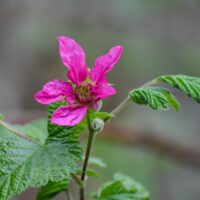
Native to moist places in and about the woods of coastal Northern California. Forms an upright shrub that arches at the tips, growing easily 6 ft. by 6 ft. Dark green foliage with weak prickles can form a dense hedge. The dark pink flowers resemble small single rose blossoms and are followed by showy orange-red berries that look like salmon eggs. Wildlife relishes the fruit, people too, though they aren’t as tasty as blackberries. Grows best with summer water and some shade.
Rubus ursinus
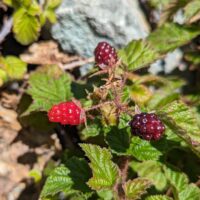
Not to be confused with the weedy non-native Himalaya berry that has taken over acres in northern California. The native blackberry when happy can form a good sized patch, growing to about 3 ft. tall and spreading more than 6 ft. wide depending on available moisture. This thorny, spreading evergreen has excellent habitat value. The berries are widely used as a food source for wildlife. Offers excellent escape and nesting cover and is good for erosion control. People relish the berries and its fruits are highly prized for pies and jam. Best with some shade and moisture, but is drought tolerant once established.
Salvia sonomensis
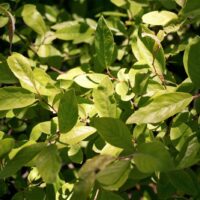
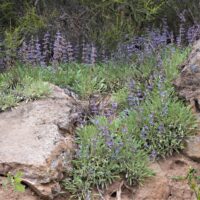
Sonoma sage is a wonderful native perennial and can be a serviceable groundcover if its needs are met. Good drainage is a must and it performs best with light shade. Water plants to get established-very drought tolerant, will NOT tolerate regular summer water. Mat forming, flowers rise to about 6 inches above the foliage and are lavender-blue. This species attracts bees and hummingbirds. Deer resistant.
Sambucus mexicana (nigra ssp. caerulea)
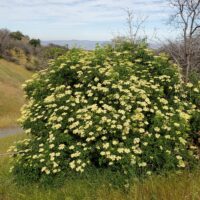
Our native blue elderberry, often seen on banks above rivers and streams, or even on somewhat drier slopes. A fast growing deciduous shrub or small tree 8 to 30 ft. tall with pinnately divided leaves. Creamy yellow flowers appear in late spring in flat-topped clusters, followed by blue berries. High on the birds’ favorite list! Ripe berries feed many species of birds. Moderate to infrequent summer water.
Sambucus racemosa
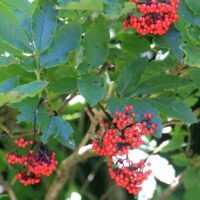
Red elderberry has light-green foliage topped by pretty, white flowers in pyramidal clusters which are followed by bright red berries. This 7-to-18-ft shrub or small tree is native to moist areas along the coast and in the Sierra-Nevada mountains. The fruits are relished by birds but are reputed to be poisonous to humans. Prefers cool sun or light shade, and moisture. Ripe berries are high on many birds’ favorite list!
Schoenoplectus (Scirpus) acutus var. occidentalis
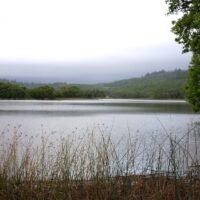
Also called giant bulrush, this large bold plant can form massive colonies on the edges of wet areas. Native to freshwater marshes, lakes and stream banks throughout lower elevations in California and much of North America. Vertical, thick, round, leafless stems grow 10 to 15 ft. tall and spread underground. In large landscapes it can be used as a pond or riparian plant where it will form dense thickets. Can be grown in containers for smaller gardens, set just below water level for a dramatic vertical accent. Plant in full sun with regular water. Provides good habitat for wildlife.
Scrophularia californica
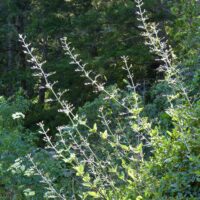
Native to open places of the coastal scrub and woodlands where it can form large colonies in moist areas. Grows 3 to 6 ft. tall and wide in cool full sun to light shade. Pretty purplish-red new growth matures to deep green. The flower spikes carry many small open-mouthed maroon-red flowers followed by attractive seed stalks which are nice in dried flower arrangements. This prolific nectar producer attracts all sorts of pollinators including bees and hummingbirds. Larval food source for the Chalcedon Checkerspot and Common Buckeye butterfly.
Scutellaria californica
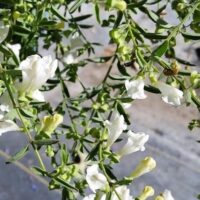
A charming perennial native to gravelly soils of low and mid elevation mountains of Northern California where it grows on the edge of woodlands and chaparral communities. Leaves are arranged oppositely on erect stems around one foot tall. The very sweet, small, creamy-white snapdragon-like flowers occur in pairs at the leaf axils. Spreads by underground rootstocks to form colonies. In our nutritious, water-retentive soils has spread quite vigorously, in dryer leaner soils less so. Plant in full sun to light shade. Drought tolerant but would appreciate a little summer water.
Sedum spathulifolium
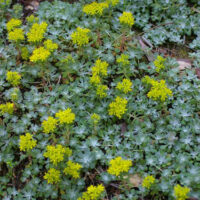
A mat forming native succulent often seen on rocky cliffs and shady banks in California’s Coast Ranges and Sierra Nevada north to British Columbia. Small, spoon-shaped leaves form flat rosettes where bright yellow star-like flowers appear in late spring and early summer. A natural for the rock garden or container plantings where they are best with part shade. Very drought tolerant.