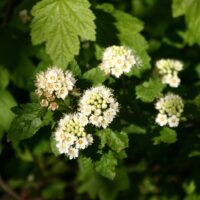
Physocarpus capitatus
Handsome, deciduous shrub favoring wooded streamsides in California. Grows vigorously 4 - 8 ft. tall and wide. After leafing out in the spring, the shrub looks spiraea-like, covered with small clusters of white flowers followed by red capsular fruits. Best with light shade and some summer water, but will accept full sun in cooler areas. Keep bushy and in bounds with pruning.
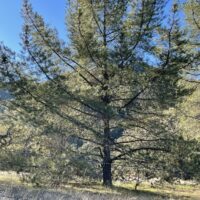
Pinus attenuata
This closed-cone pine is found primarily along the Oregon-California border and in hotter coastal mountains down to Baja. Knobcone pines can reach anywhere from 25 to 80 ft tall, depending on the soil conditions. The conical-shaped, evergreen crown has an open habit with clusters of 4-5” needles on upward-curving branches. Distinctive, asymetrical cones persist on the tree for years, even decades, and add to the tree’s visual appeal. This chaparral and dry-woodland native needs very little water and does best in rocky, well-draining soils with full sun. More tolerant of nutrient-poor soils than most other pines. In very lean soils, trees can develop a stunted and contorted appearance which is quite striking. Deer resistant.
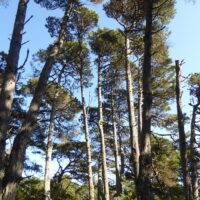
Pinus muricata
The Bishop pine is native to the northern California coast from Marin to Mendocino. A medium to large sized tree with a beautifully rounded crown and long, gray-green needles. Distinguished from the more southerly Monterey pine by its smaller cones which prick the hand when held. The Bishop pine often cohabitates with redwoods and other coastal conifers. Drought tolerant once established except in interior locations where an occasional deep watering may be required. Generally reaches 40 to 70 feet in height. Deer resistant.
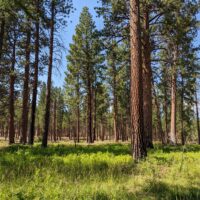
Pinus ponderosa
Often associated with the Sierra Nevada mountains, this majestic pine can be found in Sonoma County as well. Long, gray-green needles form bushy clusters at the ends of branches with cantaloupe-sized cones that emerge at the very tips. The bark at maturity is a colorful patchwork of orange-tan plates separated by deep grooves of dark brown. It can grow a couple of feet a year, and averages from 60 to more than 100 feet in height in a garden setting. Provide full sun to light shade with occasional deep waterings when young. Needs decent drainage. Deer resistant.
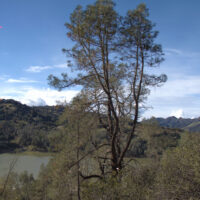
Pinus sabiniana
A distinctive pine native to chaparral areas of California’s foothills. Sometimes called ghost pine due to its long gray needles set against dark, furrowed bark. While fairly slow growing, the gray pine can reach a height of 80 ft or more in well-draining sites with ample sunlight. Native Americans prized the big, prickly cones for their large, edible seeds. Prefers full sun and requires minimal water once established

Plantago maritima
From coastal bluffs up and down the California coast comes this charming little plantain. Starting in late spring and continuing through summer, small, greenish-yellow flowers flank the top of slender stems up to 6 inches tall. The dense rosettes of narrow, succulent leaves provide a striking accent in a rock garden or nestled in crevices between pavers or stones. A good container specimen. Recognized for its edible and medicinal uses. Plant in full sun to light shade. Tolerates low to regular moisture. May spread vigorously by seed.
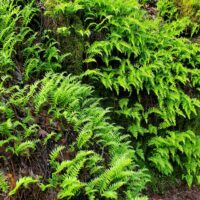
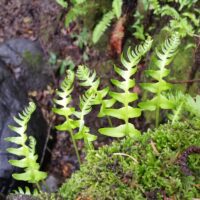
Polypodium glycyrrhiza
Native to moist coastal forests from Monterey County to Alaska. This epiphytic fern enjoys shady environments where it grows on trees, logs and stumps, mossy rocks and slopes. The long, narrow, deeply lobed fronds spread by creeping rhizomes, which have a sweet licorice flavor and a history of use by various native American peoples. They grow happily in moist shady gardens, going summer dormant once conditions get too dry, returning with the autumn rains and coolness. Drought tolerant in somewhat coastal conditions. Good container subject. Deer resistant.
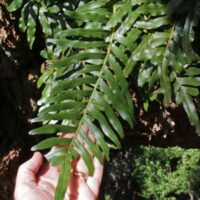
Polypodium scouleri
A choice species native to moist coastal forests of the western U.S. where this fern will grow on trees, rocks and logs. Beautiful, leathery, deeply lobed, evergreen fronds grow on creeping rhizomes to about 8-12 inches tall and slowly spreading. Requires good drainage with a humusy soil and some summer moisture, but not overly wet. Wonderful on rocks, cracks in walls, and logs in shady locations. Excellent in containers. Makes a lovely hanging basket.
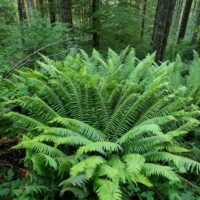
Polystichum munitum
The versatile western sword fern is an evergreen native fern from California to Alaska. In most gardens it will reach about three feet tall and wide. In prime areas near the coast where moisture is readily available and cool temperatures prevail, this fern can get up to 5 feet tall and wide. Excellent for shady beds, along walls, as a large scale groundcover and mixed woodland planting. Best with humusy soil and regular to moderate water, but drought tolerant once established and tolerant of most soil types. Actually quite adaptable and deer resistant.
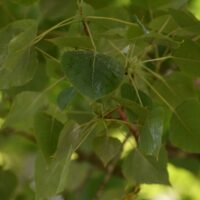
Populus fremontii
Fast growing riparian tree, native to watercourses throughout California. A tall and dramatic tree, 50 - 75 feet tall, with a spreading, open crown. The leaves are shiny, triangular to heart shaped, with coarsely serrated margins and flattened petioles. Turns beautiful shades of brilliant yellow in the autumn. The wind causes the leaves to flutter and rustle, making a whispering sound. Cottonwoods can be either male or female, with the female trees producing masses of cottony seeds. When young, the bark is smooth and silver gray, becoming thick and furrowed with age. They have wide spreading surface roots and sucker sprouts. An important wildlife plant, providing food and cover for a wide array of insects and birds. This major riparian species provides rich habitat value, soil stabilization, and expansive shade. Plant in full sun with plenty of space and regular to occasional irrigation.
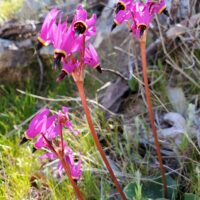
Primula (Dodecatheon) hendersonii
Description coming soon! Also known as: Primula hendersonii
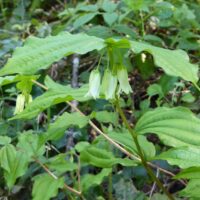
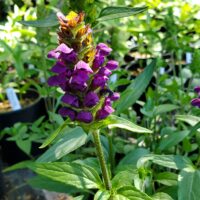
Prunella vulgaris v. lanceolata
Native to moist areas usually near coniferous forests and woodlands. Creeping perennial forms a low dense mat of foliage. Upright spikes of purple flowers over a long period summer - fall. Give some thought to placement because if happy it will reseed vigorously. Plant in full sun or light shade with regular water.
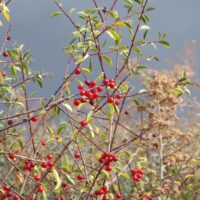
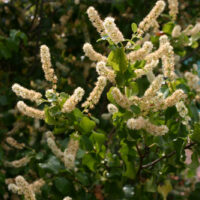
Prunus ilicifolia ssp. ilicifolia
Hollyleaf cherry is a large, evergreen shrub that can grow more than 15 feet tall and wide, but is easily pruned to be more compact. This adaptable foothill native can be clipped into a formal hedge, pruned to be treelike, or left to its own natural gumdrop-shaped habit. Often it is used for background or screen plantings. Glossy, holly-like leaves are accompanied by showy displays of creamy-white flowers in narrow spikes from late spring to early summer. Plant in full sun to very light shade. Looks best with occasional deep waterings, but can tolerate very dry conditions once established. Although it requires good drainage, it is tolerant of heat, drought, wind and oak root fungus. An excellent habitat plant, offering food and cover for wildlife. Birds enjoy the small reddish-purple cherries. Generally deer resistant.

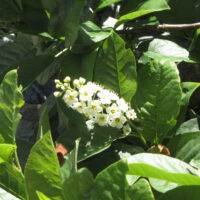
Prunus virginiana v. demissa
Large, deciduous shrub or small tree with red-purple bark and dark green foliage. Growing 8 foot or more tall and spreading slowly to form a thicket. Striking racemes of fragrant white flowers in the spring followed by dark red fruits which can be sweet but astringent. Foliage can take on nice fall color before dropping its leaves. Fabulous habitat plant drawing bees, butterflies and other pollinators to its flowers. Birds, especially bluebirds, adore the fruits and are known to swoop in and finish them off quickly. Where summers are hot, light or part shade is best, with regular to occasional water once established. They often grow where there is seasonal moisture in the spring, but somewhat dry as the season progresses.
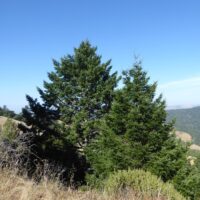
Pseudotsuga menziesii
We are not currently growing this plant due to flammability and reduced demand.
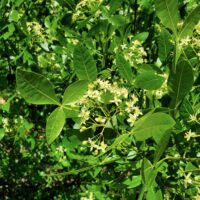
Ptelea crenulata
This interesting California endemic deserves wider use in California gardens. Hoptree is a deciduous, large shrub/small tree, growing 6 - 15 ft. tall, in the citrus family. Native to hot, interior coast ranges and the Sierra Nevada foothills, often growing in canyons where residual moisture can be found. Glossy, green, fragrant, trifoliate leaves with panicles of small creamy-white flowers decorate the branch tips in spring. Handsome, circular, flattened, fruits which look like hop seeds, start out green and age to tan and may hold on after the leaves have fallen in the autumn. Plant in full sun to light shade with occasional, deep summer watering. The fragrant flowers are attractive to a variety of pollinators including butterflies. A larval host for the two-tailed swallowtail butterfly.
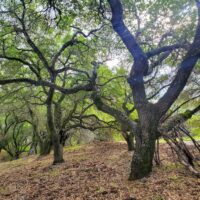
Quercus agrifolia
A beautiful and stately evergreen oak, native to many plant communities from Mendocino County south to Baja. One of the fastest growing California oaks and a versatile landscape subject as long as space allows. Young trees have a dense rounded canopy covered with thick, dark green, oval and convex leaves with spiny margins. Smooth gray bark becomes furrowed with age. Flowers are produced on short yellow hanging catkins followed by long tapered acorns. In time, develops a magnificent architecture with broad spreading branches. Planting native oaks provides beauty, shade, food and cover to a dazzling array of wildlife. Plant in sun to light shade. No additional summer water required once established.
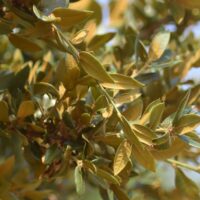
Quercus chrysolepis
A handsome evergreen oak with a rounded, spreading crown, 20 - 60 ft tall and wide. The leaves of its broad, low canopy are dark-green and shiny with fuzzy gold or silver hairs on the underside. Native from Oregon to Baja, it is the most widely distributed oak in California. Often grows near creeks, but requires only occasional water. Plant in full sun to light shade where it will be drought tolerant once established. A good choice for bank stabilization. Like other oaks, it is habitat powerhouse, offering food and cover for a huge variety of wildlife.
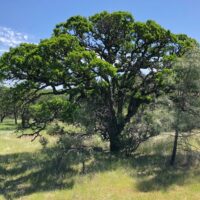
Quercus douglasii
This is the oak of California’s interior, where hot and dry summer conditions prevail. A medium-sized oak, growing 20 to 50 feet tall, The canopy is compact and round with bluish-green lobed leaves. The acorns are oval shaped with shallow caps. Grows slowly but is long lived. A well sited oak is a gift to future generations of humans as well as a myriad of wildlife. Plant in full sun where it will be extremely drought tolerant once established.
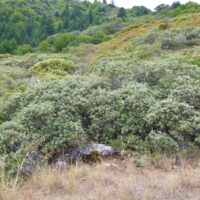
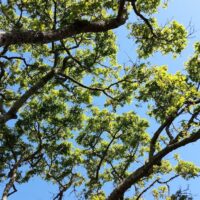
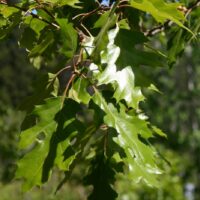
Quercus kelloggii
Beautiful in all seasons, the native black oak makes a fine specimen. Found mostly in foothills and low mountains away from the immediate coast, often in association with conifers, from California to Oregon. Growing 35 - 80 ft tall, this graceful, deciduous tree starts the spring with gorgeous, rosy-pink new growth. The soft pink leaves soon mature to a lustrous, shiny, dark green and are deeply lobed with pointed tips. Gold-green catkins dangle from the branch tips in the spring, leading to plump acorns, set deep in their scaly cups. In the autumn, the bold, leathery leaves take on golden hues before they fall. Oak trees are the ultimate habitat plant, offering food and cover for a myriad of species, including invertebrates, mammals and birds. Plant in full sun to light shade where it will be drought tolerant once established.
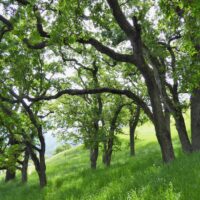
Quercus lobata
This majestic oak once covered the Santa Rosa Valley and many other fertile valleys throughout the state. Becomes large and picturesque with long drooping branches and beautiful thick, checked bark. Best in deep soils with room to develop. Wonderful planted for wildlife. Deciduous, long lived. Oaks are some of the greatest trees for birds. Oak titmice, acorn woodpeckers, and many other species utilize them for nest sites, cover, insects and acorns.
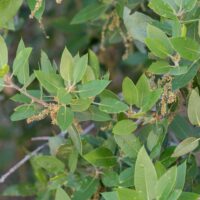
Quercus wislizeni
Typically more compact in stature than the coast live oak, this evergreen oak has similar dark-green, leathery leaves, though often narrower and flatter. A native of dry foothills, the interior live oak has a range that extends throughout much California, and is the dominant live oak in the western Sierra-Nevadas. While it can flourish in the shade, it may remain shrublike. In full sun, its densely-foliated canopy has a pleasingly broad, rounded habit. This adaptable oak takes inland heat, and once established is drought tolerant and generally deer resistant. It tolerates clay, but does best in well-draining soils. Like other oaks, it’s a great habitat plant that supports a wide range of wildlife.
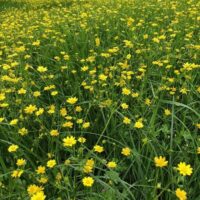
Ranunculus californicus
Cheerful harbinger of spring, this western native grows in vernally moist sites in a number of plant communities throughout California. Easy to grow perennial, sports bright green succulent foliage topped with slender stems 1 to 2 ft. tall and wide. A profusion of shiny, bright yellow blossoms bloom freely until soil dries out. Goes dormant with drought, returning in spring, often reseeding. Full sun to light shade. Excellent early pollen and nectar source, attractive to bees and other beneficials.