Epilobium canum ‘Bowman’s Hybrid’
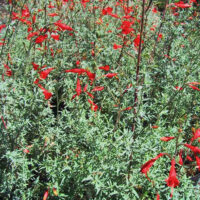
This California fuchsia has distinctive narrow, olive-green foliage and an upright habit about 2-3 ft. tall and spreading widely. The orange-red tubular flowers are petite but profuse. Plant in sunny areas. Flowers best with occasional deep watering. Pruning plants down to a few inches in late autumn helps to rejuvinate them for the following year. Hummingbird favorite.
Epilobium canum ‘Calistoga’
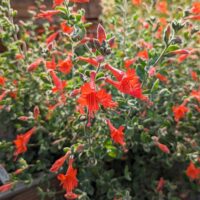
Phil Van Soelen’s selection of California fuchsia from the Palisades east of Calistoga. Forms a spreading mat of unusually wide, fuzzy, gray leaves. The flowers are the typical hummingbird attracting orange-red trumpet shape and appear on stalks reaching up to 18 inches high. For sunny areas. Flowers best with occasional deep watering. Pruning plants down to a few inches in late autumn helps to rejuvenate them for the following year.
Epilobium canum ‘Carman’s Grey’
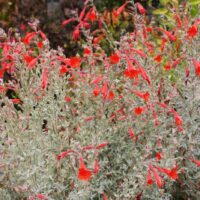
We love California fuchsias and have grown this cultivar for over twenty years. Valued for their beauty and important late season nectar source for hummingbirds, California fuchsias offer many forms and foliage colors. 'Carman's Grey' has gorgeous grey foliage which contrasts beautifully with the masses of orangey-red, tubular flowers, late summer and fall. The grey, narrow leaves form soft mounds 2 foot tall, spreading by underground rhizomes, 4 foot or so wide. Plant in full sun to very light shade where it is tolerant of many soil types, even heavy clay, drought tolerant, but best with occasional summer watering. Hummingbird magnet and bees use it too.
Epilobium canum ‘Catalina’
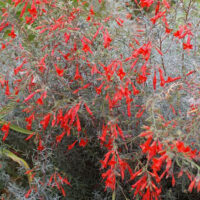
An outstanding selection of California fuchsia growing 3 ft. tall or more. This may be the tallest cultivar available, sometimes reaching as much as 5 ft. tall. The foliage is silvery-gray with an abundance of large, brilliant orangey-red tubular flowers late summer through fall. This species from southern California is particularly drought tolerant. Hummingbird favorite. Flowers best with occasional deep watering. Pruning plants down to a few inches in late autumn helps to rejuvenate them for the following year.
Epilobium canum ‘Cloverdale’
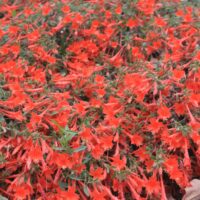
This form of California fuchsia was selected by U.C. Santa Cruz Arboretum from along the Russian River north of Cloverdale. Low, slightly mounding fuzzy olive-green foliage with an abundance of orangey-red tubular flowers the hummingbirds love. Usually stays bellow one ft. in height. 'Cloverdale' is one of the most orange selections of California fuchsia. Plant in full sun. Flowers best with occasional deep watering. Pruning plants down to a few inches in late autumn helps to rejuvenate them for the following year.
Epilobium canum ‘Coral Canyon’
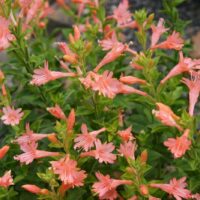
This elegant and unusual form of the California fuchsia offers a prolific display of peachy-pink flowers, a departure from the more common orangey-red blossoms. The late-summer, autumn blooms are held on distinctly upright stems reaching 1 ½ ft. high above broader, bright green foliage. Unlike most native fuchsias, this selection is somewhat shy to spread, generally forming a rounded mound about 2 ft. wide. Enjoys full sun, but will benefit from a little afternoon shade in hot areas. Likes moderate to occasional irrigation. Hummingbirds and bees partake from the flowers. We must thank Cistus Nursery for discovering the parent plant on a high ridge above the North Fork of the American River.
Epilobium canum ‘Everett’s Choice’
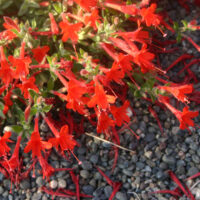
A low, spreading form of Californica fuchsia staying below one ft. in height. Distinctive for its fuzzy, gray-green foliage with many scarlet tubular flowers from summer through to fall. Good for sunny areas, though tolerates light shade. Flowers best with occasional deep watering. Attracts hummingbirds. Pruning plants down to a few inches in late autumn helps to rejuvenate them for the following year.

Epilobium canum ‘John Bixby’
A Rancho Santa Ana Botanic Garden introduction, 'John Bixby' is a chance seedling of Epilobium 'Everett's Choice'. Forming a broad patch with a dense rounded form of grey-green foliage 12 -18 inches tall or more. Showy, vivid red-orange tubular flowers put on a spectacular display from summer into fall and are highly attractive to hummingbirds. Vigorous perennial, spreading by underground rhizomes to form large colonies. Plant in full sun to light shade with occasional deep watering for best appearance. Cutting plants down after flowering rejuvinates them for the following year.
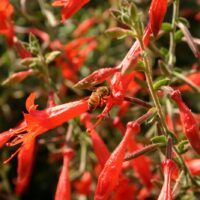
Epilobium canum ‘Liz’s Choice’
This selection of California fuchsia features particularly large, trumpet-shaped, scarlet flowers atop stems reaching 3 ft. tall. The flowers, blooming from summer into fall, are a favorite of hummingbirds and bees. The lance-shaped leaves are a pewter green, providing a striking contrast to the brilliant flowers. It spreads over time to create small colonies. Trim plants down to about 4 inches in winter for vigorous, tidy growth the next year. Provide moderate to infrequent irrigation and full sun. This beautiful cultivar was selected by Milo Baker Chapter CNPS Fellow Liz Parsons.
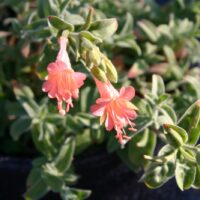
Epilobium canum ‘Marin Pink’
California fuchsias are appreciated for their abundant tubular flowers that bloom in late summer and fall, predominantly in different shades of orange-red. This unusual selection has beautiful PINK tubular flowers produced on sage green mounds of foliage to about 2 ft. tall and spreading by underground rhizomes. Vigorous and easy to grow in full sun to very light shade. Touted as drought tolerant, they will survive dry conditions but will thrive with occasional summer water. Beautiful against a rock wall, in dry stream beds, or naturalistic plantings where they have some room to spread. Hummingbird favorite. Pruning plants down to a few inches in late autumn helps to rejuvenate them for the following year.
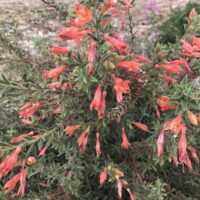
Epilobium canum ‘Sierra Salmon’
California fuchsias have many charms, blooming in late summer into fall with hummingbird attracting, tubular flowers, mostly in shades of red and orange. 'Sierra Salmon' offers unusual salmon-colored blossoms on soft blue-green foliage. This cultivar doesn't tend to wander like some can and forms dense clumps of erect stems 12 - 24 inches tall and wide. Looks wonderful amongst rocks or boulders, in perennial borders or to add pizazz with grass and shrub plantings. Plant in full sun with occasional summer water. Prune down to a few inches after blooms are done.
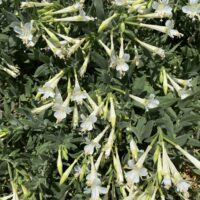
Epilobium canum ‘Summer Snow’
While CA fuchsias are generally known for their abundant showy red flowers, this unusual variety offers surprising clean-white blossoms on low growing green foliage up to 10 inches tall. Spreading by underground rhizomes, this mat forming perennial grows in full sun to light shade with occasional to little summer water once established. Perfect in naturalistic plantings, on slopes amongst boulders, dry creek beds or rock walls. California fuchsias bloom heavily late summer into fall and their tubular flowers are hummingbird favorites. The habit of this plant can be improved with shearing in the winter.
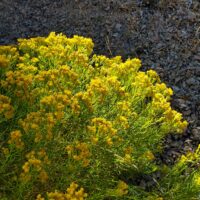
Ericameria arborescens
Native to chaparral regions throughout California, this tall, billowy shrub stands out with its soft and narrow, bright green leaves and, in the summer and early fall, clusters of small yellow flowers. Goldenfleece reaches 6 ft. or more tall with a width of around 4 ft. A wonderful accent plant for the dry garden, especially when combined with dark-foliaged plants such as ceanothus, toyon and manzanitas. Prefers full sun and excellent drainage. Very drought tolerant once established. Excellent for bees and butterflies. Deer resistant.
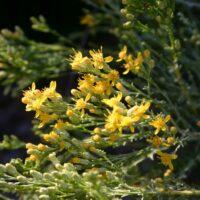
Ericameria ericoides
Native to sand dunes from Long Beach north to Bodega Bay, this low shrub resembles a heather, covered with clusters of small yellow daisies in late summer and fall. Reaching a height of up to 3 feet and spreading to 4 feet, making it an ideal shrub for the smaller garden. Needs occasional water in interior locations and full sun to light shade. Requires well-draining soil. Plant with Ceanothus, low manzanitas and pacific reed grass for a taste of the coast in your own garden. Excellent late season nectar source for bees and butterflies. A light winter pruning will help keep it dense and compact. Said to be deer resistant.
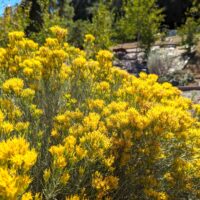
Ericameria nauseosa
This classic plant of the high desert grows in dry, hot, rocky areas throughout much of interior California and throughout the West. In summer and autumn, clusters of golden, star-like flowers cover the tips of the white branches on this low, rounded shrub which reaches up to 3 - 4 ft. tall and wide. Fine, white hairs cover the narrow leaves, giving the plant a ghostly grey-white appearance. Needs a sunny location with excellent drainage and little to no irrigation once established. Bees and butterflies love the flowers. A larval host for the northern checkerspot butterfly.
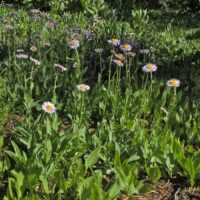
Erigeron glacialis
From mountain meadows throughout much of California and the West comes this endearing little daisy. Features clusters of refined, lavender-pink daisies with yellow centers held on stalks up to 10 inches tall above low, mat-forming leaves. Plant in full sun except in hot, inland areas where some afternoon shade would be appreciated. Needs moderate irrigation. This summer bloomer provides excellent habitat for bees and butterflies. A superlative candidate for a rock garden or narrow planting bed. Works well in containers.
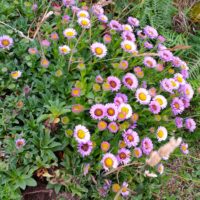
Erigeron glaucus
Low growing native perennial to 1 ft. tall with lovely, lavender, daisy-like flowers blooming over a long part of the year. Native to coastal dunes and bluffs, but does well inland with some afternoon shade and a little extra summer water. A natural along the coast where it thrives with little to no summer water and tolerates wind and salt spray. Good nectar source for butterflies and many different pollinators. Their seeds are favored by juncos and finches.
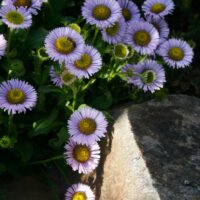
Erigeron glaucus ‘Bountiful’
Forms a lush mound of foliage 10 inches - 1 ft. tall by 2 ft. wide. Exceptionally floriferous and long blooming, 'Bountiful' offers masses of lavender daisies with yellow centers held above loose rosettes of green foliage. It slowly spreads to form drifts which combine wonderfully with Iris and low grasses. A natural along the coast where it grows in full sun and is drought tolerant. Appreciates some afternoon shade and summer water inland. A reliable and easy to grow perennial. Butterfly and bee favorite. Their seeds are favored by juncos and finches.
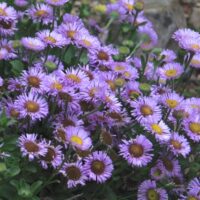
Erigeron glaucus ‘Cal Flora’
This seedling appeared at the base of a decorative pot planted with Erigeron glaucus ‘Cape Sebastian’. The seedling's foliage and form appears to be intermediate between Erigeron glaucus 'Cape Sebastian’ and Erigeron glaucus 'Bountiful'. It has a nice dense habit, though a bit taller than ‘Cape Sebastian', with larger and darker flowers held just above the foliage at about 10 inches in height. A natural along the coast where it thrives with little to no summer water once established and tolerates wind and salt spray. In hotter inland conditions give some afternoon shade and additional summer water. Good pollen and nectar source for bees and butterflies. Their seeds are favored by juncos and finches.
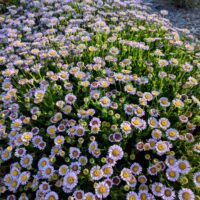
Erigeron glaucus ‘Cape Sebastian’
This selection of the West Coast native seaside daisy is from Oregon, just north of the California border. A compact and dense mound up to 6 inches high, topped with lavender daisies over a long period. Full sun near coast, light shade in hot regions. Best with moderate to occasional summer water in hotter climates. A favorite of pollinators. Their seeds are favored by juncos and finches.
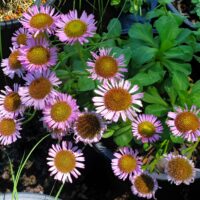
Erigeron glaucus ‘Ron’s Pink’
A delightful pink-flowered version of the useful seaside daisy, an easy to grow perennial native to the coast. Mounds of compact foliage topped with large, pink daisies, spring through autumn. At home on coastal bluffs in full sun with wind and salt spray. Requires afternoon shade and some summer water when grown in hotter interior locations. Looks beautiful when planted with Douglas iris, low fescues and woolly sunflowers. Attractive to a wide array of pollinators, including native bees and butterflies.
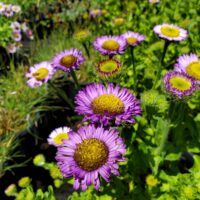
Erigeron glaucus ‘Wayne Roderick’
This selection offers the darkest flowers of any of the seaside daisies. Deep purple petals surround golden discs on flowers 1 ½ inches wide. The prolific blooms begin in spring and can continue into autumn if the spent flowers are removed. Bright green leaves create a slowly spreading mound up to a foot high with the flowers perched just above. Plant in full sun near the coast but protect from the hot afternoon sun in inland locales. Enjoys moderate to occasional irrigation. The seaside daisies make a great addition to the meadow garden, combining beautifully with iris, blue fescues and spreading gumplant.
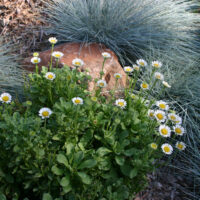
Erigeron glaucus ‘White Lights’
This unusual white flowering form of seaside daisy was discovered along a coastal bluff in Sonoma County by Roger Raiche. It has been a long bloomer, starting in spring and continuing into autumn. Reaches a height of up to 1 ft. and spreads to form a small clump. Prefers sun, decent drainage, and is drought tolerant once established. A little shade and moderate to occasional water is best in hot inland sites. A member of the sunflower family, seaside daisies are excellent sources of both nectar and pollen for butterflies, bees and other pollinators. Their seeds are favored by juncos and finches.
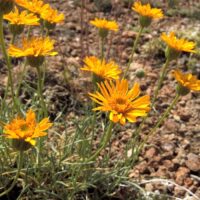
Erigeron linearis
This native Erigeron grows in a number of western states, including California, where it is found in the mountains, on rocky slopes, sagebrush scrub and desert plant communities. Most Erigeron species flowers are white, pink or shades of purple, but this low growing, tufted perennial sports dime-sized, yellow daisies, in the late spring to early summer. The flower buds nod at first, then straighten as they open above the mound of narrow leaves, rising to around 8 inches or so tall and getting about as wide. A natural for the dry garden, rock garden, crevice, wall or container, where it gets full sun and excellent drainage. Bees and butterflies are attracted to the flowers, including several checkerspot butterfly species and the white-lined sphinx moth.
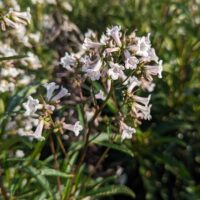
Eriodictyon californicum
Uncommon in the nursery trade, this aromatic, evergreen shrub is native to dry habitats of chaparral and mixed evergreen forest plant communities in North and Central California and into Oregon. An opportunist, this shrub stump sprouts after fires and grows with renewed vigor after any soil disturbance. The dark green, leathery leaves are covered in a shiny, fragrant, resin and are sticky to touch. The common name means, holy herb, and the pungent leaves have a long history of medicinal uses. Grows 3 - 5 ft. tall and spreads by underground roots to form a colony. Late spring brings clusters of small, trumpet-shaped flowers of pale lavender, sometimes white or pale blue, which are highly attractive to butterflies, hummingbirds and bees. Plant in full sun with good drainage and little water once established. Deer resistant.
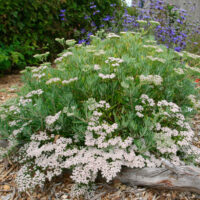
Eriogonum arborescens
A large, shrubby buckwheat with narrow, pale green foliage and sturdy, flat-topped inflorescences of creamy white to pink flowers. The flowers age over time, eventually turning reddish brown, remaining ornamental for a long period. Grows 3 to 4 ft. tall and slightly wider. Normal to very lean well-drained soils. Especially drought tolerant along the coast, may need infrequent summer water inland and possibly a little afternoon shade. Buckwheats are excellent additions to habitat gardens, providing pollen and nectar for bees and butterflies and seeds for many creatures. Deer resistant.
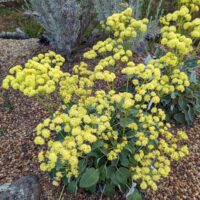
Eriogonum compositum – yellow flowered form
This unusual form of the native arrowleaf buckwheat features soft yellow flowers, as opposed to the more come cream-colored ones. In spring, flattened clusters of blossoms emerge on stout stems held at least a foot above rounded mounds of large, fuzzy, gray-green leaves, reaching up to 2 ft wide. Found in gravelly soils in seasonally dry areas which bake in summer but freeze in the winter. Plant in full sun and water infrequently once plants are established. A surprisingly adaptable species which does well in local gardens. As with other buckwheats, butterflies and bees love the flowers. Numerous butterfly species use this plant as a larval host. Native from Sonoma and Napa Counties north to Washington and east to Idaho.
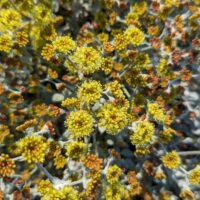
Eriogonum crocatum
A rare buckwheat grown for its beautiful gray, felty foliage and bright, clear yellow flowers. The yellow flowers open from brown buds and then age to a dark rusty brown. Grows 1 - 2 ft. tall and wide, this perennial requires full sun and good drainage. Little to no summer water once established. This Ventura County, California native is hardy to about 15°F. Good nectar source for bees and butterflies. Deer resistant.
Eriogonum elongatum
This buckwheat is native to dry, rocky places, from Monterey Bay south to Baja, in coastal scrub and chaparral plant communities. Super drought tolerant and late blooming, supporting native bees, parasitic and predatory insects and butterflies. Forms a low mound of gray foliage, topped with long, leafless, flower stems, rising 2 - 3 ft. tall. Flowers late in the summer with ball-like clusters of tiny white and pink flowers spaced along the tall, gray, tomentose stems. Full sun, good drainage. Tolerant of serpentine soils. Deer resistant.