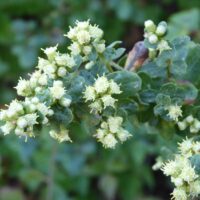
Baccharis pilularis – male
Upright form of coyote brush, growing 4 - 8 ft. tall and wide. Valued for its ability to flourish in a wide range of conditions. Also valued as an excellent habitat plant offering food and cover to a wide variety of wildlife. Flowers are not showy and the male and female flowers are borne on separate shrubs. These plants are MALE and produce ivory colored flowers with pollen and nectar. An abundance of pollinators and beneficial insects use Baccharis flowers. Plant in sun to light shade. Not fussy about soils. Quite drought tolerant once established. Responds well to pruning or shearing and is useful as a screen. Deer resistant.
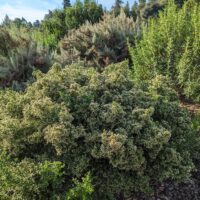
Baccharis pilularis ‘Mayacama Mound’
This dense, bright green, gumdrop-shaped coyote bush only reaches about 3 ft tall and spreads a wider. We discovered this heat and drought tolerant selection in a batch of seedlings from inland Sonoma Co.. A great alternative for the ubiquitous ‘Twin Peaks’, which is a coastal selection and less suitable for hot, dry sites. Plant in full sun to light shade where mature plants won’t need supplemental water, but an infrequent deep soak will keep them looking fresh. The small, whitish flowers are relished by pollinators in the early autumn. This selection is female, so the late autumn seeds provide an important food source for birds. A sturdy, low, evergreen shrub for tough situations.
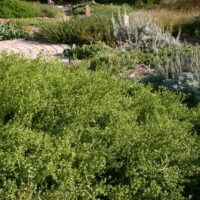
Baccharis pilularis ‘Pigeon Point’
Adaptable and dependable low growing form of the native coyote bush. Forms a mound of bright green leaves with an undulating habit 2 - 3 ft. tall and 6-8 ft. wide. Able to tolerate many soil types and watering regimes this shrub is best in full sun to light shade. Extremely drought tolerant along the coast but best with moderate to occasional summer water inland. When watered and annually trimmed to keep low and free of debris it is recommended for fire resistance landscapes. A good addition to the habitat garden, coyote bush offers excellent cover to a wide variety of wildlife. ‘Pigeon Point’ is a male selection and does not make seed. Deer resistant.
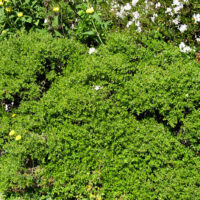
Baccharis pilularis ‘Twin Peaks’
One of the fastest, toughest, densest evergreen native large scale groundcovers. Discovered on Twin Peaks in San Francisco. Grows at least to 6 ft. wide and 2 - 3 ft. tall. Extremely drought tolerant along the coast but best with moderate to occasional summer water inland. Shear hard annually in spring to keep rejuvenated. Sun on coast, afternoon shade inland. This is a male selection so it won't produce seeds. Deer don’t seem to eat it.
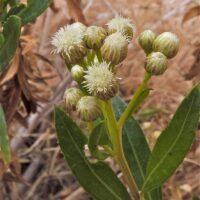
Baccharis salicifolia
This native shrub looks something like a willow in foliage and is found in similar habitats in California and the southwest US. Not a willow at all, but a member of the aster family, this evergreen shrub blooms nearly year round, making it a powerhouse for pollinators. The profusion of small, creamy white, fuzzy flowers, tinged with pink or red are highly attractive to butterflies, bees and other beneficial insects. Extremely tough and easy to grow in full sun with summer water, where it will grow 6 - 10 feet tall and wide with rich, green foliage. Able to survive drier conditions than a willow could handle, but it will look rough if it gets too dry. Responds well to pruning and can be cut down to six inches to refresh. Excellent screen, windbreak and for soil stabilization. Stellar for attracting pollinators.

Bouteloua gracilis
Here’s a wonderful grass - an important species of the original North American shortgrass prairie. In California it occurs in desert regions. Fine textured light green-gray foliage topped with interesting flowers 8 - 36” tall. The flowers are attached to the stem at right angles and resemble tiny combs. The whole plant turns purple with frost then fades to blonde. Use in mass or as a specimen in rock garden or containers. Often suggested for a mowed or unmowed lawn where it tolerates extreme cold, heat, drought and foot traffic. Deer resistant.
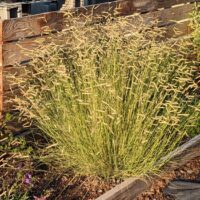
Bouteloua gracilis ‘Blonde Ambition’
An exceptionally robust selection of grama grass, with 2-1/2 to 3 ft. tall flowering stems above the narrow grey-green tufts of foliage, forming clumps up to 3 ft. wide. The curious flowers look like tiny brushes on tall stems, start out chartreuse aging to blonde. They are persistent and will hold on through winter providing many months of ornamental interest. Retains some green foliage in winter in mild areas, goes winter dormant in hot inland situations. Native to the North American shortgrass prairie, this is a rugged species enduring heat, drought, cold, a wide range of soil types and even foot traffic. An excellent water conserving grass for full sun. Deer resistant.
Bouteloua gracilis ‘Pestanas de Angeles’
Long lived, warm season, perennial grass, native to North America. The selection ‘Pestanas de Angeles’ is from San Bernardino County in Southern California. Fine textured, grey-green blades about 6 inches tall. Intriguing flower heads look like little flags or eye lashes on wiry stems under a foot tall. Tolerant of heat, drought and poor soils, this grass is at home in the arid west. Plant in full sun where it will be drought tolerant once established. Blades go dormant in the winter. Excellent in rock gardens, with succulents or as a meadow subject. Good cut flower. Deer resistant.
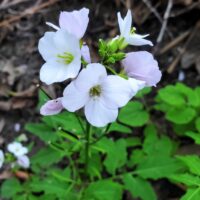
Cardamine californica
One of California's most widespread and earliest spring wildflowers, often beginning to bloom in the winter. Found in somewhat shady locations in a number of plant communities, this slender perennial has rounded basal leaves. Flower stems 10 inches to 20 inches tall are topped with four petaled flowers of pure white to soft pink. This sweet harbinger of spring is easy to grow given a little shade and winter rain. After flowering and setting seed it dies back to its roots where it goes dormant until next year's rains awaken it. Good under oaks.
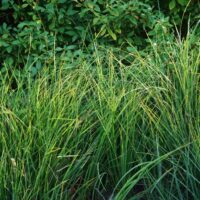
Carex barbarae
Widely distributed native sedge that is an important traditional basket fiber plant. Bright green sharp blades in clumps 1 - 3 ft. tall and spreading. Oval-shaped tufts of small reddish-brown flowers on spikes at the tip of the flowering stems. An attractive sedge, though it can be invasive. For sunny or partly shaded areas with regular to moderate moisture. Drought tolerant in clay soils or with some shade. Handsome container plant too. Often used in bio swales and riparian restoration. Deer resistant.
Carex globosa
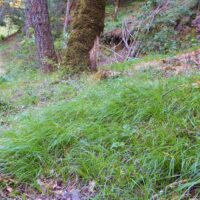
Here is a sturdy and useful woodland sedge native to well-drained soils in wooded areas. Grows 6 - 12 inches tall and spreads slowly to form bright green tussocks. Useful as a filler among shrubs or trees in filtered shade where it tolerates drought; but some summer water will keep it looking fresh for longer. Great under oaks. Deer resistant.
Carex nudata
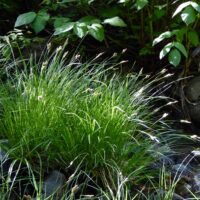
Native to below the high water mark along perennial water courses. Forms a bright green, dense, arching mound with interesting black flowers in spring. Best in moist soils, full sun to light shade. 1 - 2 1/2 ft. tall and wide. Lovely yellow fall color in colder locations. Winter deciduous. Beautiful in containers too. Deer resistant.
Carex obnupta
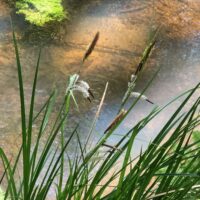
From moist coastal sites to shady redwood forests comes this tall sedge, one of the tallest of our native sedges. Spreads vigorously to form dense drifts up to 4 feet in height. One of the more shade tolerant sedges, the slough sedge can grow under the darkness of a redwood canopy but will also accept full sun as long as it has access to moisture. A great plant for naturalizing in moist areas. Used by native peoples for basket making.
Carex pansa
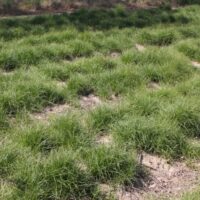
A durable spreading sedge which can be used as a lawn substitute or unmowed meadow. Growing 8 -12 inches tall and spreading by rhizomes to form dense colonies of curling dark green foliage. The foliage is evergreen in mild climates and grows well in full sun to partial shade with regular to occasional water. Too much drought causes summer dormancy. Flowers appear in early spring but are not real showy. Deer resistant.
Carex praegracilis
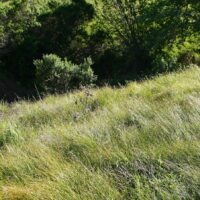
Similar to Carex pansa but growing taller. The fine textured grass-like blades can reach a foot or more tall and spreads freely by rhizomes to form a thick weed smothering groundcover. Useful for meadows, green roofs, bio-swales, erosion control and as a lawn substitute. Can be left natural where it has a lush tousled appearance or trimmed occasionally for a low turf-like appearance. Tolerates drought, inundation, poor soils, salt spray, heat, cold, shade and foot traffic. Plant in sun to light shade where it requires some summer moisture but far less than a conventional lawn. Will go summer dormant if allowed to get too dry. Deer resistant.
Carex praegracilis ‘Chisai’
An excellent cultivar of the native field sedge, selected for it's compact form and slower spreading habit. Increases by short rhizomes to form a sturdy, dark-green carpet, 6 -8 inches tall and 1 - 2 ft wide. Grows more clumping and significantly tighter than the rapidly spreading forms more typical of the species. Still, it will form a solid, small scale ground cover or turf substitute, between stepping stones or mixed with bulbs and perennials for a meadow affect. Plant in full sun to light shade with occasional to moderate water. Tolerates light foot traffic. Deer resistant.
Carex serratodens
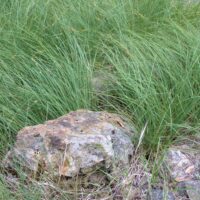
From serpentine meadows comes this lush, blue-green sedge. Our form grows 1 - 2 ft. tall and spreads at a moderate pace, creating broad drifts over time. Needs moderate to regular moisture and full sun to part shade. Often goes semi-dormant in winter at which time the plants can be cut back to just a few inches. A useful sedge for gardens on serpentine or for bank stabilization where it can provide cover for tree frogs and other critters. Does not require serpentine soils to thrive. Deer resistant.
Carex tumulicola
This is the TRUE Carex tumulicola, the foothill sedge, not to be confused with the so called Berkeley sedge which is correctly identified as Carex divulsa and is non-native AND invasive. Foothill sedge has a wide distribution in California and north to Washington. A tough and adaptable tufted evergreen growing 12 inches (or more) tall and spreading slowly by underground rootstocks. Useful as an informal groundcover under shrubs or trees, for a meadow planting or for soil stabilization where the spreading roots help control erosion. Best with some shade unless right along the coast. Responds to water but is able to tolerate periods of dryness.
Ceanothus ‘Frosty Blue’
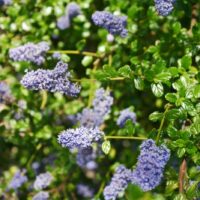
A Rancho Santa Ana introduction from the mid 1970's. This upright evergreen shrub reaches 8 to 12 feet tall and 10 to 15 feet wide with glossy green, textured foliage. Flowers in late spring with 2-4 inch panicles of beautiful blue flowers with a frosted appearance due to the white bracts on the buds. Useful as a specimen or screen due to its rapid growth. Amenable to pruning and can be trained into a small tree or espaliered subject. This reliable cultivar tolerates heavy soils better than most upright Ceanothus. Does best in full sun and will be drought tolerant once established. California lilac are valuable additions to the habitat garden.
Ceanothus arboreus ‘Cliff Schmidt’
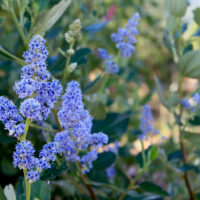
Selected from Santa Cruz Island by Native Son's Nursery, this handsome cultivar has a strong upright habit, growing into a tall and spreading shrub as much as 15-20 ft. tall and wide. Large dark green glossy leaves have white felted undersides. Medium blue flower spikes blossom in late winter to early spring and often again in fall. Excellent for coastal gardens in full sun, give some afternoon shade and a little summer water in warmer inland sites. This large shrub can be pruned into a lovely small tree. Ceanothus are excellent additions to habitat gardens where they provide food, cover and nesting sites for birds and beneficial insects.
Ceanothus cuneatus
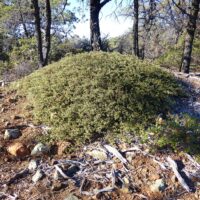
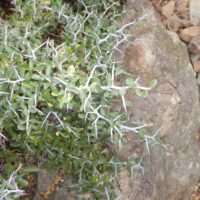
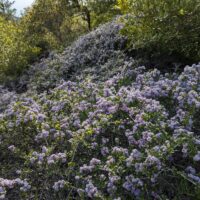
One of California's most widespread species offering a variety of forms. Typically buckbrush grows as an arching shrub growing 5 - 8 ft. or more tall and wide with small, thick, leathery leaves. Flowers can range from white to lavender to purple and are produced in small tight clusters in early spring. When in full bloom, the powerfully sweet scent of the flowers engulfs the visiting hiker. An excellent choice for hot dry conditions and difficult sites where it will grow in full sun with little to no water once established. Valuable addition to the habitat garden where it provides food and cover for a wide array of wildlife, birds, bees and butterflies. Said to be deer resistant.
Ceanothus cuneatus – flat form
This unusual form of the ubiquitous buckbrush comes to us from Yerba Buena Nursery. Reaches a height of only 1 - 2 ft. and spreads out to 6 ft. or more. Pale blue flowers appear in early spring and perfume the air with their sweet fragrance. Bees and butterflies are drawn to the flowers while birds enjoy the seeds which follow. An excellent groundcover for hot, dry banks requiring no irrigation once established. Needs full sun and good drainage. Likely to be deer resistant.
Ceanothus divergens ssp. confusus
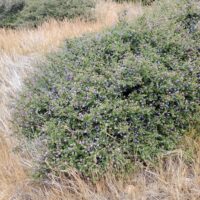
A species of special concern due to its limited distribution in the wild and continued habitat loss. The Rincon Ridge ceanothus is worth considering for those hot inland gardens where some of the more commonly available coastal ceanothus may not be as long lived. Forms a low growing mound of decumbent stems with small holly-like leaves usually under a foot tall. Flowers in dense clusters in early spring are lavender-purple. Plant in sunny areas with good drainage and little to no water once established. Ceanothus are wonderful additions to the habitat garden attracting a wide array of wildlife. This species is likely to be deer resistant.
Ceanothus foliosus
Not commonly found in the trade, this rugged shrub is native to dry slopes of the Coast Ranges nearly throughout the state. Grows to around 3 - 4 ft. tall by 6 ft. wide, with glossy wavy-edged leaves and brilliant blue flower clusters in the spring. Perfectly suited for dry banks and slopes in hot summer areas where it tolerates heat, drought and even winter cold. Not tolerant of summer water once established. Excellent for the habitat garden where it provides nectar to pollinators, larval food for moths and butterflies and cover and seed for birds.
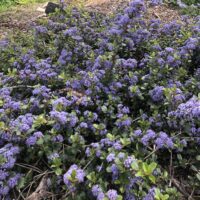
Ceanothus gloriosus var. exaltatus ‘Emily Brown’
One of the earliest blooming California lilacs. A low spreading evergreen shrub 2 - 4 ft. tall, 8 - 10 ft. wide with dark green hollylike leaves. Flowers of dark violet blue in 1 inch clusters cover the shrub in early spring. Sun and drought tolerant, but will need some afternoon shade in hot areas. Shrubby ceanothus provide seeds eaten by bushtits, mockingbirds, quail and finches, as well as cover for birds. Perhaps the most deer resistant of the ceanothus.
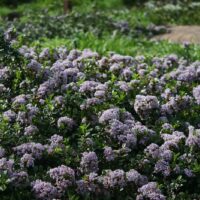
Ceanothus gloriosus var. gloriosus ‘Anchor Bay’
This Point Reyes ceanothus grows 1 - 2 ft. high or more and spreads 8 ft. wide or more with an attractively dense and luxuriant appearance. The evergreen foliage is dark green and holly-like in shape. Flowers of blue-violet cover the plant in spring. Sun to light shade. Drought tolerant along the coast - a little extra water inland but will tolerate up to moderate irrigation. Ceanothus are great additions to the habitat garden offering food and cover for birds and nectar for bees and butterflies. This species is somewhat deer resistant.
Ceanothus gloriosus var. gloriosus ‘Heart’s Desire’
One of the lowest growing ceanothus, under one foot tall and spreading three or more feet wide. The small, holly-like leaves line stems which tightly hug the ground. Performs better than most ground cover ceanothus on relatively hot inland sites. Flowers of lavender-blue appear in early spring. Sun, decent drainage, moderate to little summer water once established. Ceanothus are excellent additions to the habitat garden offering flowers for pollinators and seeds for birds. Deer resistant.
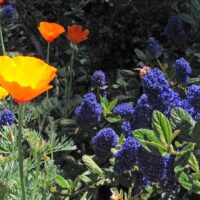
Ceanothus griseus ‘Kurt Zadnik’
Selected by Roger Raiche of the UC Berkeley Botanic Garden from the northern Sonoma Coast. Grows about 3 ft. tall and 10 - 15 ft. wide. The flower buds are very dark with beautiful rich indigo blue flowers, perhaps the darkest of any ceanothus. This fine selection is a prolific bloomer and works well to cover large banks in a hurry. Low to moderate irrigation. Shrubby ceanothus provide seeds eaten by bushtits, mockingbirds, quail and finches, as well as cover for birds.