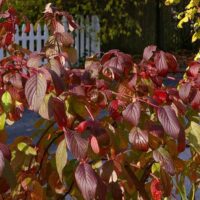
Cornus sericea
Redtwig dogwood is a spreading shrub growing 6 ft. or more tall and at least as wide, forming broad thickets along creeks and rivers. The beautiful red stems stand out in the winter landscape once they loose their leaves in the fall. Flat topped flower clusters are creamy white and are followed by clusters of white fruits. Often takes on nice fall color before loosing its leaves. Plant in full sun to light shade with regular to moderate watering. Does great on heavy clay soils and is a very good soil stabilizer. An excellent habitat plant where it provides food and cover. The fruits are very popular with birds. At the nursery, bluebirds and mockingbirds compete aggressively for the fleshy white fruits.
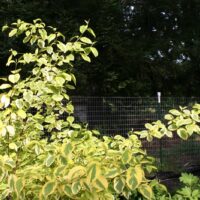
Cornus sericea ‘Hedgerow’s Gold’
A striking selection of redtwig dogwood, discovered near the Deschutes River in Eastern Oregon and introduced by Hedgerows Nursery. The large leaves of soft green have a broad, irregular, bright golden edge. In autumn the leaves turn an attractive ruby color. Forms a thicket that easily reaches 6 ft. tall by 6 ft. wide. The red stems stand out in the winter landscape after the leaves have fallen. Flat topped cluster of white flowers appear in spring and are followed by small white fruits enjoyed by birds. Best with regular water, good light and protection from the hot afternoon sun.
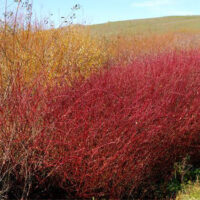
Cornus sericea ssp. occidentalis ‘Tomales Bay’
This selection of the native creek dogwood is from Tomales Bay, Marin County, where it forms broad clumps 6 ft. or more tall and wide. The beautiful red stems stand out in the winter landscape. Flat topped flower clusters are creamy white followed by small white fruits. Good fall color. Plant in full sun to light shade and give regular irrigation. Western tanager and warblers eat the flowers. Grosbeak, Northern oriole, flickers, spotted towhee, Western bluebird, robins, mockingbirds, bandtailed pigeon, waxwing and quail eat the fruits.

Cornus sessilis
Native to moist ravines and stream banks of the coast ranges and the Sierra Nevada Mts, this deciduous shrub or small tree grows 5-10 ft. or more tall and wide. Beautiful shiny, jade green leaves with prominent lateral veining decorate the graceful green barked stems. Small, yellow flowers appear early as it leafs out in the spring and are followed by oval fruits. Fruit color changes as it matures from greenish-white to yellow, red and finally shiny black which attract a wide range of fruit eating birds. Foliage can take on pretty tones of yellow and red in the autumn. Thrives in moist shady locations, but will grow well with just part shade and moderate to occasional summer water once established.
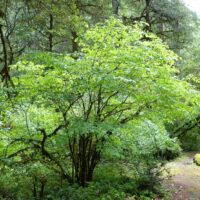
Corylus cornuta ssp. californica
Western hazelnut is a handsome, open, multi-stemmed shrub native to forests from Santa Cruz northwards in the Coast Range, and from Sequoia northwards in the Sierra foothills. Winter deciduous with decorative dangling catkins in winter. The soft, somewhat hairy leaves turn yellow in the fall. Small amounts of tasty nuts are produced in late summer and are relished by wildlife and people. Part shade with some moisture, but will tolerate fairly dry conditions once established. Usually grows 6 - 10 ft. tall. Somewhat deer resistant.
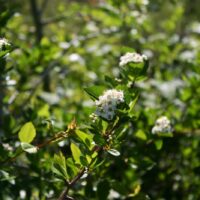
Crataegus gaylussacia
Klamath hawthorn occurs in seasonally wet meadows or borders of forests in northern California. A large deciduous shrub or small tree 6 - 20 ft. tall with reddish-brown bark and formidable thorns. Small, white flowers in flat topped clusters in late spring are followed by red fruits that ripen to black. The fruits are highly attractive to birds. A slight fall/winter chill can turn the leaves a brilliant orangey-red. Plant in full sun to partial shade with regular to moderate water. This shrub tends to sucker and could be encouraged to form a thicket. It is also amenable to pruning, and can be trained into a slender tree. This is our most common, local native hawthorn., and until recently was once thought to be C. douglasii.
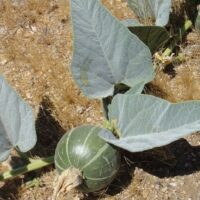
Cucurbita foetidissima
Found in valley grasslands and coastal scrub environments of Central and Southern California, the buffalo gourd is a deciduous perennial ground cover or vine that is sure to grab attention. In late winter and early spring, this vigorously spreading gourd emerges from a tuberous root, potentially spreading to 20’ feet or more, producing big, triangular, gray-green fuzzy leaves, followed by large, showy, orange-yellow, bell-shaped flowers in summer which attract bees. The round fruits, about 4 inches across, are green-striped when young, maturing to yellow. As the fruit matures, it is too bitter for humans to eat. The mature fruit is used by native peoples for decorative purposes or for making musical rattles. Plant in full sun. Drought-tolerant once established.
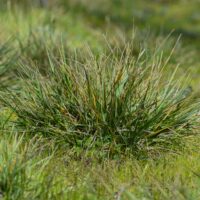
Danthonia californica
California oatgrass is a native bunchgrass found throughout mountains and coast ranges in both open and partly shaded areas. Forms dense leafy tufts with flower stalks of nodding spikelets to 1 1/2 ft. tall. Not to be confused with the invasive alien wild oats, this native makes a good basic grass for a meadow planting. Withstands trampling and traffic. Good for soil stabilization. Sun to very light shade. Little to no summer water once established. Deer resistant.
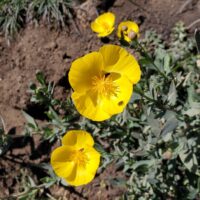
Dendromecon rigida
This is our local bush poppy, growing 4 - 8 ft. tall with bluish-gray foliage and a showy display of brilliant yellow poppy blossoms from spring into early summer. Scattered flowers may be seen throughout the year in mild climates. The leaves are narrower than those of the island bush poppy and the plant has a more open form. Requires full sun, good drainage, and little to no irrigation once established.
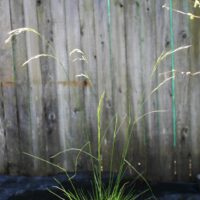
Deschampsia elongata
Graceful fine-textured perennial bunch grass, native to partly shaded, seasonally moist areas in California. Features bright green blades and gently arching flower stalks 12-18 inches tall. Yellowish-green in spring, turns soft gold in summer. Deer resistant.
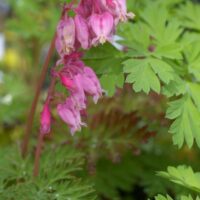
Dicentra formosa
Ferny foliage makes a lacy groundcover in shady areas. Clusters of pendulous, pink, heart-shaped flowers in spring and into summer. Will spread rapidly when happy, enjoying moist but not soggy woodland conditions. Tolerates dry shade where it goes dormant with drought. Early nectar source for hummingbirds and bumble bees. Deer resistant.
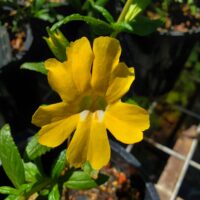
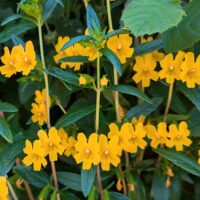
Diplacus (Mimulus) aurantiacus
Sticky monkeyflower is the native monkeyflower species that brightens the hills and coast around Sonoma County. From spring through summer, its profuse yellow-orange tubular flowers decorate evergreen foliage reaching 2-4 feet tall and wide. An unbeatable habitat plant that is highly attractive to hummingbirds. Give it good drainage and keep on the dry side. Thrives in full sun near coast with light shade inland, and benefits from light annual trimming. A larval food source for the common checkerspot and buckeye butterflies. Deer resistant.
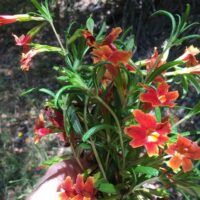
Diplacus (Mimulus) aurantiacus ‘Freezeout Creek’
This stand-out form of our local native monkeyflower was found growing on a slope near a lush redwood forest in western Sonoma County. Instead of the more typical yellow-orange, the trumpet-shaped flowers of 'Freezeout Creek' are larger and boast velvety red petals edged with gold. Monkeyflowers are evergreen sub-shrubs, that grow 2 -4 ft. tall, and bloom profusely in the late spring and into summer. Plant in full sun on the coast to light shade inland and give it decent drainage. Drought tolerant once established but responds to occasional summer water, especially when blooming. Benefits from annual pruning and pinching. The flowers are pollinated by bees and hummingbirds and are a host plant for checkerspot and buckeye butterflies. Deer resistant.
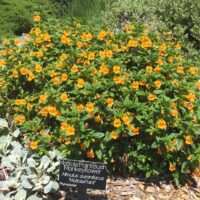
Diplacus (Mimulus) aurantiacus ‘Mattole Point’
Found along the Lost Coast near the mouth of the Mattole River by Mark Moore of the Humboldt Botanic Garden, this fine selection of our native sticky monkeyflower has particularly beautiful evergreen foliage and a compact habit with glossy, dark-green, deeply veined leaves. The abundant orange, tubular flowers are tucked into the dense foliage which grows 2 ft. or so tall and wide. Plant in full sun on the coast to light shade inland and provide good drainage and occasional summer water. Hummingbirds and bees use the flowers and it is a larval food source for checkerspot and buckeye butterflies. Deer resistant.
Diplacus (Mimulus) aurantiacus ‘Rodeo Gold’
This form of sticky monkeyflower offers warm yellow tubular flowers with a golden throat, rather than the more usual orange flowers. This Cal Flora Nursery selection was found in southern coastal Marin County. Evergreen foliage grows roughly 3 ft. tall and wide. Benefits from pinching back of older stems to keep it denser. Plant in full sun on the coast to part shade insland, and provide with occasional summer water. Monkeyflowers are attractive to hummingbirds, butterflies and other pollinators. The checkerspot and buckeye butterflies use it as a larval food source. Deer resistant.
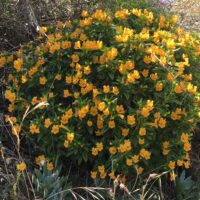
Diplacus (Mimulus) aurantiacus ‘Russian Gulch’
From the bluffs of the Sonoma Coast comes this beautifully compact form of sticky monkeyflower. The shiny, evergreen leaves are spaced to form a tight mound, 2 ft or so tall and wide. From late spring into autumn, cheerful, orange, tubular flowers cover the dense foliage. Makes a colorful, drought-tolerant addition to the garden where it can grow in full sun on the coast to part shade inland. Benefits from pinching to form a strong framework to support the flower display. Requires good drainage and responds to occasional watering, but resents drip irrigation systems that deliver water on a regular basis. Hummingbirds and bees relish the flowers and it is the larval food source for checkerspot and buckeye butterflies. Deer resistant.
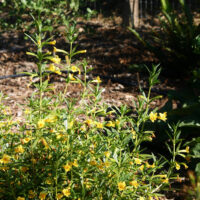
Diplacus (Mimulus) aurantiacus ‘Ted’s Yellow’
Grows 2 - 3 ft. tall with yellow tubular flowers. Full sun near coast, light shade inland. Good drainage, keep on the dry side and fertilize minimally. Benefits from annual trimming. Larval food source for the common checkerspot and buckeye butterflies. The flowers provide nectar for hummingbirds. Deer resistant.
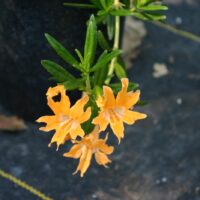
Diplacus (Mimulus) bifidus ‘Esselen’
We have been impressed with this fine selection from Big Sur, which offers compact habit, shiny green foliage and broad bright-orange flowers over a long period. Plant in sun to light shade with little to occasional summer water. Bees, butterflies and hummingbirds all work the flowers and it is a larval food source for the Checkerspot butterfly. Deer resistant.
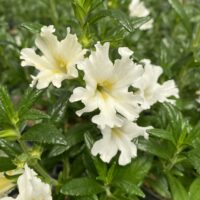
Diplacus (Mimulus) bifidus ‘White’
This elegant monkeyflower has extra frilly, creamy-white, azalea-like flowers, with soft yellow throats. The abundant blossoms stand out against the slender, deep green foliage and bloom over a long period, late spring and into fall. Reaches about 2 ft. tall and 3 ft. wide. Plant in sun to light shade with good drainage and occasional summer water. Hummingbirds, bees and butterflies are all drawn to the flowers and it is a larval food source for checkerspot and painted lady butterflies. Great in a container. Deer resistant.
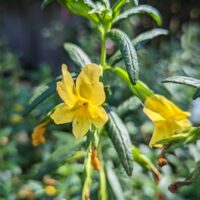
Diplacus (Mimulus) calycinus
From central and southern California, this species is similar to our local sticky monkeyflower but has large, creamy-yellow, trumpet-shaped flowers. Grows 2 - 3 ft tall, and at least as wide, and flowers from late spring through summer. For sun to light shade with good-draining soils and occasional summer water. Flowers attract hummingbirds, bees and butterflies and it is a larval food source for checkerspot and painted lady butterflies. Deer resistant. Previously: Mimulus longiflorus ssp. calycinus.
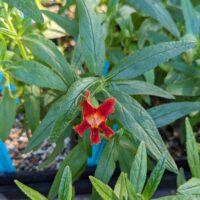
Diplacus (Mimulus) longiflorus
Hummingbirds love the abundant deep red flowers of this stand-out monkeyflower. Hailing from Southern California and growing 2 -3 ft. tall, and at least as wide, this drought-tolerant, floriferous shrublet blooms late spring into fall. Plant in sun to light shade with good drainage and occasional summer water. Besides hummingbirds, other pollinators will be attracted to the flowers, and the foliage is used by checkerspot and painted lady butterfly larvae. Deer resistant.
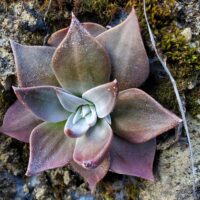
Dudleya cymosa
This charming succulent is in native to California where it grows in between rocks on inland cliffs in sun or bright shade. Best in the garden in a rock wall or terra-cotta pot with some afternoon shade. Height in flower is under one foot. The yellow to orange flowers are attractive to hummingbirds. Occasional to infrequent water in the ground. In pots, let dry out between waterings.
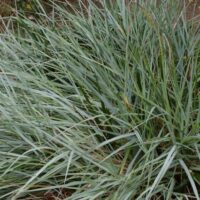
Elymus (Leymus) condensatus ‘Canyon Prince’
A beautiful selection from the Channel Islands off Southern California. Distinctive for the lovely, broad, silver-blue blades 2 1/2 to 3 ft. tall with wand-like grass flowers reaching up to 2 feet above the foliage. Accepts sun to very light shade and moderate to little water. Tolerates heavy soil. Spreads by rhizomes to form striking silver drifts, but is vigorous and aggressive. Best to use where a large patch is desired or where it is contained, such as a parkway strip. Cut back in winter to rejuvenate and remove old leaves. Drought and deer resistant.
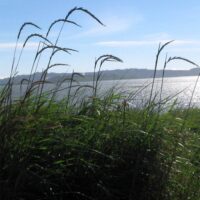
Elymus (Leymus) triticoides
Spreading, turf forming, perennial grass found in somewhat moist areas in many plant communities throughout California. An important restoration species, useful for holding soil and enhancing wildlife habitat value. Growing 2-4 ft. tall and spreading widely with an extensive network of rhizomatous roots which both hold soil and help prevent exotic weed establishment within their dense mats of roots and foliage. Slender blue-green blades are topped with narrow flower spikes 4-6 inches long. Excellent for seasonally moist bottom land and riparian areas where it can grow in full sun to light shade and tolerates many soil types. Will tolerate some drought in heavier soils. May spread too vigorously for small gardens.
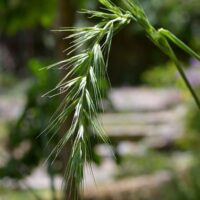
Elymus californicus
California bottlebrush grass is a tall robust grass with broad, bright green blades and nodding brushlike flower spikes. Uncommon in the wild it can be found in coastal counties on shaded banks and wooded areas, including redwood forests. Displays 3 - 6 ft. tall flower stalks with low foliage up to 1 ft. high. Provide moderate to infrequent irrigation. Deer resistant.
Elymus elymoides
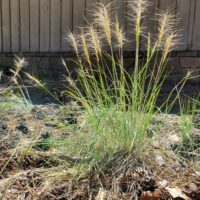
A species of wild rye, this tough, native, widespread, perennial grass, sports distinctive seed heads with a bottlebrush or squirrel tail appearance. Super adaptable and willing to withstand a wide range of soil types and depths. Even tolerates serpentine soils. Able to make a living in full sun where it is extremely drought tolerant. Grows one foot to 18 inches tall with shimmering, purple-toned flower spikes that age to beige, bristly, seed heads. A dependable re-seeder, perfect for sunny, low water using landscapes and erosion control. Host plant for a number of butterfly and moth species including the woodland skipper. Deer resistant.
Elymus glaucus
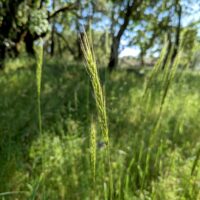
A stiffly upright, clump-forming grass with blue-green blades, native to much of the western U. S.. The flowers form bristle-tipped, narrow, vertical spikes, rising 2-4 feet tall. Easy to grow and a strong reseeder for full sun to light shade. Summer water keeps plants green longer, but will go dormant with drought. This very adaptable grass is excellent for bank stabilization in challenging soils. Deer resistant.
Elymus spicatus
Native to mountainous regions of the western US, where it lives in many plant communities. Grows to around 3 ft. tall with blue-gray blades and blooms in early summer. Narrow flower spikes have long awns that bend at right angles to the stem. Widely used in revegetation for its adaptability where it grows in many soil types, except for high alkalinity or excessive moisture. Plant in full sun to light shade, where it will be drought tolerant once established. Host to a number of butterfly and moth species. Deer resistant.
Encelia californica
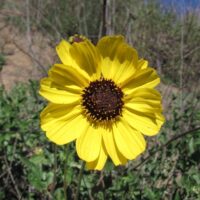
Cheery yellow daisies with purplish-brown centers cover this sunflower from late winter all the way into summer, making it one of our longest blooming natives. The 2-inch-wide blossoms make for stupendous cut flowers and are loved by bees and butterflies. Goldfinches enjoy the seeds which follow. This somewhat short-lived subshrub features dark green, diamond-shaped leaves and reaches about 3 – 4 ft. tall, spreading a little wider. Should reseed if the spent flowers aren’t removed. Enjoys full sun to light shade and occasional to infrequent irrigation with decent drainage to look its best. Native to generally coastal areas in southern California. While not especially cold sensitive, it will freeze if the temperature gets down to the mid 20s.