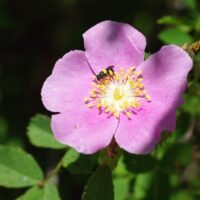
Rosa californica
A thicket forming, deciduous shrub native to riparian zones throughout the state. Fragrant, pink blossoms with yellow centers are followed by attractive red fruits or rosehips. The stems are lined with little thorns and gray-green, pinnately divided leaves. A good screen or living fence, where it will grows at least 5 ft. tall and usually spread wider. Very important for erosion control along streams. This is one of our most popular hedgerow plants due to the cover it provides for foraging wildlife and the value it offers to pollinators and birds. Prefers full sun to light shade and seasonally moist soils, but can go a little drier in the summer. A larval host to several butterflies.
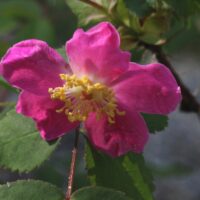
Rosa gymnocarpa
Delicate, native rose of woodlands, growing 3 - 4 ft. tall. Sprinkled with sweetly fragrant single pink flowers followed by small red rose hips. Best in woodsy shade where it tolerates drought. Bees, butterflies and other pollinators are attracted to rose blossoms and the fruits are enjoyed by birds.
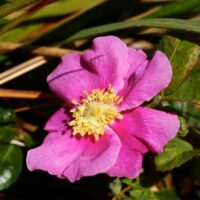
Rosa nutkana
Named for the Nootka Sound in Alaska where it was originally described, this shrub's range runs all the way south into California. Forms prickly thickets at least 6 feet tall with light green foliage. Super fragrant, 2-3 inch single pink flowers appear in summer followed by showy red hips.Favors moist sites in full sun to light shade. Rose thickets provide excellent habitat value, offering food and cover for birds and small mammals, pollen and nectar for many beneficial insects as well as a larval food source for a number of butterflies.
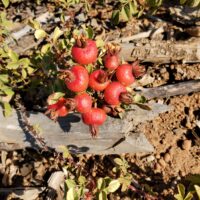

Rubus leucodermis
West coast native found in open or wooded places from British Columbia south to California.Forms an arching deciduous shrub 3-4 foot tall and wide.The stems and back of the leaves are covered in beautiful white blooms. White flowers are followed by tasty red to purple fruits.Tolerates many soil types, preferring some moisture and a little shade from the hottest sun. Excellent habitat plant where the the prickly shoots and thorny canes provide safe cover for birds, flowers attract a wide array of pollinators and tasty berries are a favorite of animals of all sorts.
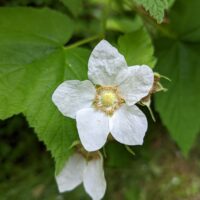
Rubus parviflorus
Thimbleberry is a deciduous native shrub with handsome large pale green velvety leaves. Small clusters of pretty white single flowers in spring and early summer followed by thimble-shaped mild-flavored edible berries in mid summer. Grows 3 - 6 ft. tall and spreading. Needs part shade and moisture.
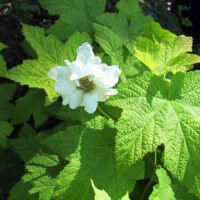
Rubus parviflorus ‘Dr. Stasek’
Bob Hornback found this interesting form of thimbleberry. Instead of the usual single white flowers, this cultivar offers double flowers. The extra petals are a nice touch against the background of large velvety leaves. Thimble-shaped edible berries follow which are mild flavored but sweet and much enjoyed by birds. Grows 3 - 6 ft. tall and spreading. Needs part shade and moisture.
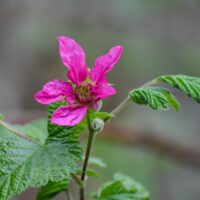
Rubus spectabilis
Native to moist places in and about the woods of coastal Northern California. Forms an upright shrub that arches at the tips, growing easily 6 ft. by 6 ft. Dark green foliage with weak prickles can form a dense hedge. The dark pink flowers resemble small single rose blossoms and are followed by showy orange-red berries that look like salmon eggs. Wildlife relishes the fruit, people too, though they aren’t as tasty as blackberries. Grows best with summer water and some shade.
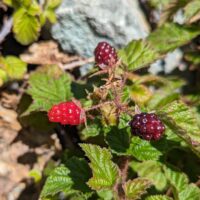
Rubus ursinus
Not to be confused with the weedy non-native Himalaya berry that has taken over acres in northern California. The native blackberry when happy can form a good sized patch, growing to about 3 ft. tall and spreading more than 6 ft. wide depending on available moisture. This thorny, spreading evergreen has excellent habitat value. The berries are widely used as a food source for wildlife. Offers excellent escape and nesting cover and is good for erosion control. People relish the berries and its fruits are highly prized for pies and jam. Best with some shade and moisture, but is drought tolerant once established.
Scrophularia californica
Native to open places of the coastal scrub and woodlands where it can form large colonies in moist areas. Grows 3 to 6 ft. tall and wide in cool full sun to light shade. Pretty purplish-red new growth matures to deep green. The flower spikes carry many small open-mouthed maroon-red flowers followed by attractive seed stalks which are nice in dried flower arrangements. This prolific nectar producer attracts all sorts of pollinators including bees and hummingbirds. Larval food source for the Chalcedon Checkerspot and Common Buckeye butterfly.
Sidalcea hendersonii
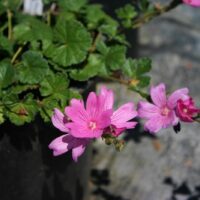
A striking, rare checkerbloom from western Oregon northwards, featuring stalks up to 3 ft high densely clothed in substantial, rich pink flowers. The rounded, scalloped leaves create low mounds on the ground. Will slowly spread to from small drifts, blending beautifully with other showy perennials in the moist garden bed. Enjoys full sun to light shade. If the spent blooms are removed, it can bloom from spring through to autumn! Attractive to bees and butterflies. Works well in a container.
Sidalcea malviflora
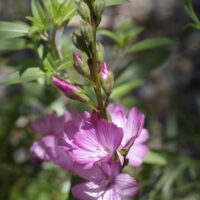
Beautiful spring blooming native perennial found in moist meadows along the coast and inland from Southern Oregon to the Mexican border. Reliable and easy to grow, and an excellent addition to a grasslands or meadow planting. Grow in full sun to partial shade where it thrives with moisture and tolerates moderate to little water once established. With drought will go summer dormant. Light to dark pink, small to large flowered; they are all beautiful. A nectar and larval food source for the West Coast Lady, Painted Lady, Common Checkered Skipper, and the Gray Hairstreak butterflies.
Sidalcea malviflora ‘Palustre’
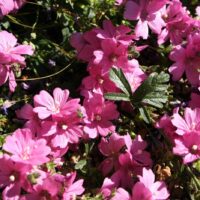
This selection of our native checkerbloom has particularly large, saturated pink flowers held on stems which spread across the ground. Leathery, dark-green, scalloped leaves form a carpet on this small-scale groundcover. Plant in full sun to light shade and provide moderate irrigation. Butterflies nectar on the flowers and also use checkerbloom as a larval host plant. West Coast lady, painted lady, checkered skipper and gray hairstreak butterflies all depend on this species to support their caterpillars.
Sidalcea malviflora ssp. virgata
This beautiful, perennial mallow can be found in grasslands, meadows, and roadsides of Oregon. Forms a low rosette 1 to 2 ft. wide with trailing branches and rounded, lobed leaves. The showy, hollyhock-like flowers are arranged on upright spikes, ranging from light to deep pink and bloom for a long period beginning in late spring. Plant in full sun to light shade with moderate to occasional water once established. Lovely in meadow plantings with other perennials, bulbs and grasses. An important nectar source for bees, butterflies and other beneficial insects and a host plant for several butterfly species.
Solidago spathulata
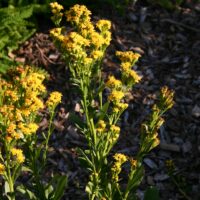
Native to coastal strand and coastal scrub communities where it forms low mats of spreading bright green foliage. Summer brings flower stems a foot or so tall made up of small bright golden-yellow daisies. Full sun to light shade with some summer water. Tolerates heavy soils. The flowers support native bees, honey bees, beneficial insects and butterflies. It is a larval food source for the northern checkerspot butterfly.
Sphaeralcea ambigua
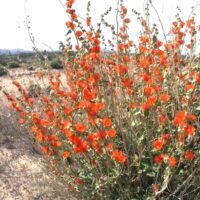
Native to desert plant communities, apricot mallow is a showy evergreen shrublet growing 2-4 foot tall and wide. Soft-green, woolly, scalloped leaves provide the foil for long wands with an abundance of small hollyhock-like flowers in delicious shades of orange. Plant in full sun with good drainage and occasional summer water. Adaptable, tolerating cold, dry conditions but not heavy wet soils. When happy can bloom for months- trim back flowering stems after bloom for repeat performance. A beautiful addition to the dry sunny garden, ideal for inland gardens. Relatively short lived but grows rapidly and occasionally reseeds. Honeybees, native bees and hummingbirds are attracted to its flowers.
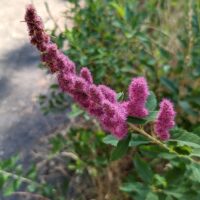
Spiraea douglasii
In summer, wands of violet-pink flower clusters decorate the branch tips of this deciduous shrub. Forms broad thickets 3 - 6 ft. tall with bluish-green leaves. Enjoys regular moisture and full sun to light shade. Great for a naturalistic planting in a woodland garden or along streams. Attracts bees and butterflies and is a larval host for various butterflies and moths in its native range. Native to the coast and into the mountains from northern California to Alaska.
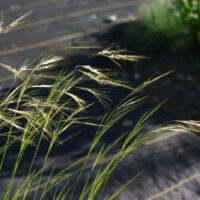
Stipa (Nassella) cernua
A beautiful native grass said to be a more impressive horticultural subject than the tough and useful Stipa pulchra. Forms a tufted bunch of foliage with elegant flower stems to about 2-3 ft. tall. The panicles of thin, fine, nodding awns have a silky aspect and are purplish at first drying silver. They glimmer when backlit. Prefers full sun (but will tolerate light shade) and well drained soils, but has proven adaptable. Drought tolerant. Often self sows. Deer resistant.
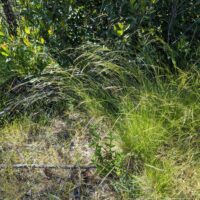
Stipa (Nassella) lepida
The native foothill needlegrass is a fine-bladed, medium-sized, perennial bunchgrass perfectly adapted to our Mediterranean climate. Growing vegetatively during the cool season and flowering in mid to late spring, going dormant with the dry of summer. Tufts of fine-textured blades 8 - 12 inches tall, give rise to slender, graceful flowering stems, 2 ft or more tall with panicles of silky awns which shimmer when back lit. Well suited for the dry garden, open woods, meadows and rocky slopes. Easy to grow, disease and pest resistant, tolerating more shade than other Stipa species. A strong re-seeder and deer resistant. Host plant for a number of butterflies. Deer resistant.
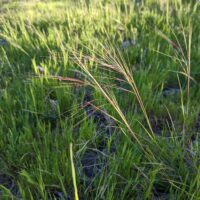
Stipa (Nassella) pulchra
Purple needlegrass is a major species in California grasslands. An excellent choice for naturalistic settings, native plantings, meadows or dry slopes in full sun. Handsome in mass where its purple awns shimmer. The entire plant turns golden come summer then goes dormant, reviving with the rainy season. Very drought tolerant. Can reseed vigorously. Deer resistant.
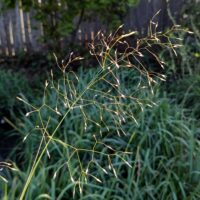
Stipa hymenoides
This rugged, incredibly drought tolerant bunchgrass hails from hot, sunny locations in desert areas and juniper woodlands of California. The inflorescences which emerge above the green foliage in spring and summer, are incredible airy and delicate. By the end of summer, plants take on an ivory color, appearing like billowing little clouds which create a wonderfully soft texture for the late season garden. Plants reach to about 2’ around. In winter, plants will go dormant. Little to no water once established. Needs decent drainage. Deer resistant.
Symphyotrichum (Aster) foliaceum
Native to the western United States where it grows in open woods, mountain meadows and along streams at mid to high elevations. The erect flower stems hold daisies of light blue to violet blue with yellow centers, surrounded by leafy bracts. An important pollinator plant, offering pollen and nectar late in the season to bees, butterflies and other beneficial insects. Grows 1 - 2 ft. tall from a leafy base that slowly increases. Prefers full sun with regular to moderate moisture. Winter deciduous.
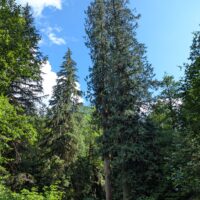
Thuja plicata
This stately conifer with deep green, scale-like needles and cinnamon-red bark, makes its home on the northern coast of California all the way up to Alaska. A large tree over time, eventually reaching up to 90 ft. tall in the garden and higher in its native habitat. The needle-covered branches hang gracefully in fern-like cascades. Looks best when the branches are allowed to touch the ground when young, allowing its elegant conical shape to be fully utilized. One of the most shade tolerant of our native conifers, but will be happy in full sun, except in hot, interior climates. Needs moderate to occasional irrigation. Tolerates moist soil. One way to identify this species from the other native cedars is by the white butterfly shape on the back of the needles, created by stomatal bloom.
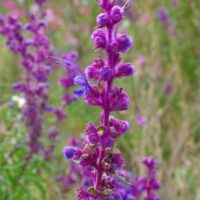
Trichostema lanatum
Woolly blue curls is a much sought after evergreen shrub with pungent, dark green, narrow leaves and spectacular flower spikes. Grows up to 5 ft tall and often wider, and blooms over a long period. Blue-purple to pink flowers, covered in purple hairs with protruding, long, curving stamens are a sight to behold. Native to coastal scrub and chaparral communities from Monterey county to northern Baja. Requires full sun, good drainage and is drought tolerant once established. Avoid regular irrigation, fertilizer and organic mulches. Pollinated by hummingbirds and visited by bumblebees and butterflies. Deer resistant.
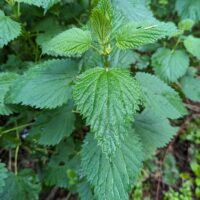
Urtica dioica
Found in moist woodlands and meadows throughout the state, stinging nettle is a habitat powerhouse. Growing at least 3 ft. tall and spreading vigorously to form large colonies, it's a great addition to any shady habitat garden or swale, where it stays moist throughout the year. Plant away from high traffic areas, as both the stems and foliage have small, stinging hairs that can cause skin irritation upon contact. This nettle has distinctive gray stalks, serrated leaves, and produces white, firework-like inflorescences that grow on stems in clusters throughout summer and early fall. Not only has it been used for centuries for a multitude of edible and medicinal purposes by indigenous tribes, it is also a larval host to several native butterflies including the painted lady and red admiral. Good cover for birds and small mammals.