Vaccinium ovatum
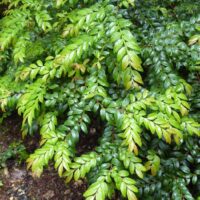
A handsome evergreen shrub native to moist forests of the Pacific Coast. Leathery dark green leaves with new growth flushed bronzy-red. Small pinkish flowers in the spring are followed by delectable black berries prized in pies and jams. A slow growing shrub for shady situations or cool sun along the coast with moderate to regular water. Grows 4 - 5 ft. tall and wide or as much as 8 ft. in especially prime locations given time. Flowers provide nectar for hummingbirds and bees, fruit for many species including humans. Fire resistant. Deer resistant.

Vaccinium ovatum ‘Scarlet Ovation’
A round of applause for this cultivar of the evergreen huckleberry, featuring an especially compact habit and stand out bronzy-red new growth. Forms a small, dense shrub, 3 -4 ft. tall and wide. The new growth in the spring is dependably fiery-red, contrasting beautifully with the neat, dark-green older foliage. Small, urn-shaped, pinkish-white flowers are rich in nectar and attract an array of pollinators, including hummingbirds. The small, dark-blue berries are tasty and enjoyed by wildlife and humans. Huckleberries can grow in full sun along the coast, but require some shade in hot areas. Moderate to regular summer water. Fire and deer resistant.
Vaccinium ovatum (Inverness)
This Marin County selection of the evergreen huckleberry was chosen by landscape architect Ron Lutsko for its dense and compact habit. The leaves appear to us to be smaller than usual for this species and spaced more closely together. It has the classic, tasty huckleberries and blooms and fruits readily. Plant in part shade and provide regular to moderate irrigation. Will grow in full sun near the coast. While tolerant of somewhat shadier locations, evergreen huckleberries fruit best with adequate light. Fire resistant. Deer resistant.
Viburnum ellipticum
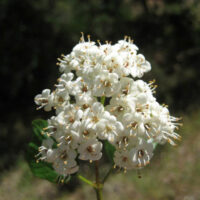
Loosely branched deciduous shrub 6-10 feet tall. Common in Washington and Oregon and rare in California where it can be found in chaparral and coniferous forests generally on north facing slopes. Soft reddish new growth makes way for the neat deep green oval leaves with a serrated edge. Small white flowers in terminal clusters followed by shiny black fruits which are enjoyed by birds. Attractive reddish fall color. Best with some shade and a little summer water. A candidate for the high banks of creeks, margins of wetlands or edges of forests.
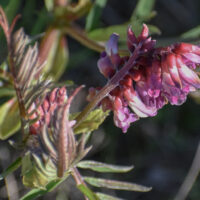
Vicia gigantea
This native pea-relative is a climbing perennial with delicate, arching clusters of magenta flowers. Leaves are dense rows of narrow leaflets culminating in tendrils that help it vine over shrubs, fences or up trellises. With its slender but vigorous stems, giant vetch can spread or climb 3 to 7 feet. This species has a primarily coastal range from San Luis Obispo up to Alaska and does best in temperate or moist areas with moderate water. Grows in full sun but prefers part shade inland. Its rich reddish-purple blooms attract butterflies and other pollinators, and roots fix nitrogen in the soil. A host for a number of butterfly and moth species that use plants in the pea family.
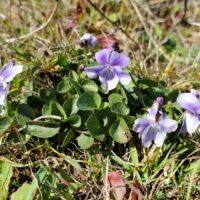
Viola adunca
Native to both coastal and mountain plant communities, this violet can be seen locally blooming in coastal meadows and bluffs. Forms low-growing, slowly creeping, neat clumps of heart-shaped leaves. Sweetly fragrant, nodding, blue to purple flowers with white interiors and purple nectar guides bloom in the spring. This pretty little wildflower is visited by bees and other pollinators and is a host plant for a number of butterflies, some of which are rare and endangered. Grows in sun along the coast and light shade inland with moderate summer water. Can reseed if happy.
Viola palustris
Native to moist environments in both coast and mountain plant communities of N. America and Eurasia. Rare in California, where it is found in the northern counties of Mendocino, Humboldt and Del Norte. Rounded to heart shaped leaves with shallow scalloped edges grow from basal rosettes and spread by slender rhizomes. The charming flowers bloom April through July and range from white through lavender in color with dark-purple nectar guides. Used by Fritillary butterflies as a larval food source. Easy to grow, this is not a violet for heavy shade, but prefers brighter locations with light shade and moist, but well drained soils.
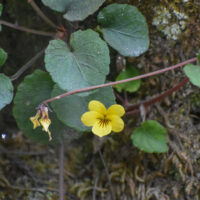

Vitis californica
California wild grape is a vigorous deciduous vine, native to watercourses in California and Oregon. Lush foliage on woody vines create leafy draperies in riparian areas. Useful in the garden for trellises, arbors, fences or to spill down a bank. Round green leaves take on nice yellow tones in the autumn. Flowers are very attractive to bees.Fruits are small and seedy but tasty. Excellent habitat value providing food and cover for wildlife.
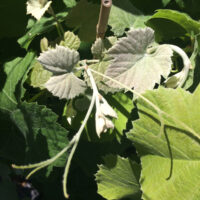
Vitis girdiana
This close relative of Vitis californica is native to southern California where it grows stream side or in moist canyons. Fast growing and heat tolerant, this vigorous vine can climb up to 50 ft. The growing tips, tendrils and new leaves are covered in downy hairs, providing gorgeous silvery colored new growth. Beautiful when allowed to spill and climb over walls or when trained to a fence or arbor. A good choice for hotter inland gardens. The purple-black fruits are highly attractive to birds and other mammals, including humans!