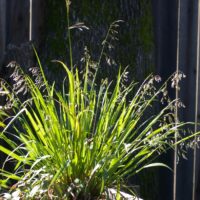
Hierochloe (Anthoxanthum) occidentalis
Here is an interesting and elegant grass native to coniferous forests. Broad, bright green, sweetly scented blades grow a foot or more tall. Flowering culms rise another 6 inches or so above the foliage with tight panicles of spikelets. The leaves offer a sweet, vanilla fragrance when dried. Excellent for woodland gardens, compatible with many redwood forest plants. Best with some summer water, but is drought tolerant near the coast. A larval host for the Western branded skipper butterfly. Deer resistant.

Hierochloe (Anthoxanthum) odorata
Invite good spirits into your home and garden with this interesting, fragrant grass. Sweet grass is an aromatic, native perennial, with an extensive range in the United States, Canada and Eurasia. Growing in wetlands, prairies and meadows, it prefers rich, moist, soils and at least half day of sun. The grass flowers sit just above the foliage where they can dance with the wind. This cool season grass is sacred to indigenous people, where it is used in herbal medicine, a kind of tobacco, basket making, and burned as a smudge. Growing 1 - 2 ft. tall and spreading widely by sturdy rhizomes that can be difficult to eliminate once well established. Winter dormant in cold areas. Deer resistant.
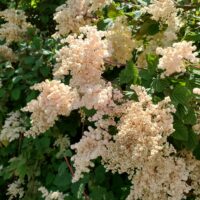
Holodiscus discolor
An elegant, deciduous, native shrub growing 5 - 6 ft. tall or more, depending on the site, and at least as wide. Beautiful, cascading clusters of creamy white flowers hang from branch tips in early summer. The fragrant flowers attract pollinators and a number of butterflies use it as a host plant. Best with light shade. Drought tolerant, but will accept some moisture.
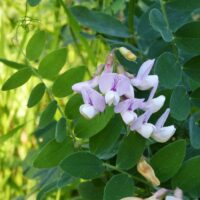
Lathyrus vestitus
From woodland to chaparral throughout much of the California coast ranges comes this charming sweet pea relative. Clusters of dainty flowers ranging in color from white to pink and lavender grace this evergreen vine in the spring, followed by clusters of small peapods. Plant along a fence or amongst shrubs where it will climb up to 8 ft. tall and wide. Provide light shade inland but will tolerate full sun near the coast. Drought tolerant once established but will also accept occasional irrigation. This vine is a host plant to the silvery blue butterfly and the arrowhead blue butterfly.
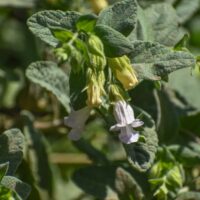
Lepechinia calycina
A super fragrant sage relative with a wide distribution in California’s coastal ranges. White to pale pink or lavender, open-mouthed, tubular flowers appear in late spring and early summer. Fuzzy, grey leaves clothe the plant all year but less densely in the winter. Can grow 2 - 4 ft. tall and wide with a rather lank form which can be improved with regular pinching. A fast growing perennial for sunny to lightly shaded areas with good drainage. Very drought tolerant once established. Attracts hummingbirds. Deer resistant.
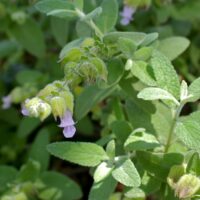
Lepechinia calycina ‘Rocky Point’
An excellent form of a native pitcher sage selected by Tilden Botanic Garden. Features a more compact habit, growing 2 ft. or more tall by 4 ft. or so wide. Pale lavender, tubular flowers appear in spring and summer, drawing hummingbirds into the garden. The fragrant, felted foliage is basically evergreen but is less dense in the winter. Plant in full sun to very light shade and provide good drainage. Very drought tolerant once established and deer resistant.
Lepechinia fragrans
This fragrant sage relative is endemic to Southern California, native to chaparral and woodlands of the Santa Monica and San Gabriel Mountains and the Northern Channel Islands. Softly hairy and strongly fragrant, this woody perennial grows around 4 - 5 feet tall and wide. Showy, lavender-purple, wide-mouthed, tubular flowers bloom in mid to late spring, attracting bumble bees and hummingbirds. Will thrive in full sun to light shade, where it will be drought tolerant once established. Pinching back foliage helps form a dense growth habit. Deer resistant.
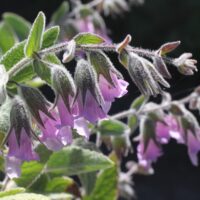
Lepechinia fragrans ‘El Tigre’
A wonderful addition to the dry garden, this rare fragrant pitcher sage is native to the Channel Islands off of California but is quite happy in Sonoma County gardens. Forms a shrub 4 - 5 ft. tall, with soft lavender flowers in the spring hanging gracefully from slender, arching stems. The long, angular leaves are colored soft, gray-green and covered in white hairs. This selection was chosen for its more saturated flowers with darker calyces. Adored by hummingbirds and bees. Plant in full sun on the coast, but provide partial shade inland. Needs good drainage and is drought tolerant once established. Deer resistant.
Lepechinia hastata
A bold and beautiful sage relative which grows 4’-6’ tall and slowly spreads to form a small thicket. Large, fragrant, grey-green leaves are an excellent foil to the reddish-purple flowers which appear on branch tips in summer and early fall. Great in the flower border or out in the “wild” part of the garden. Easy and tough. Full sun to light shade with moderate to occasional water. Looks best when cut to the ground after blooming is done. Attractive to hummingbirds. Deer don’t seem to eat it.
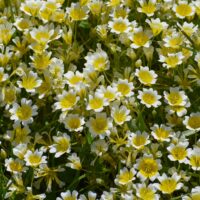
Limnanthes douglasii
California native ANNUAL occurring in grasslands and vernal pools throughout California. Low growing, shiny green foliage is topped with a profusion of sweetly fragrant, cup shaped, bright yellow blossoms with white tips. An excellent choice for low, winter wet areas, drainage swales, retention basins or seasonally dry stream beds. Thrives in heavy soils where it often naturalizes. Plant in full sun to part shade with regular water through the growing season. Fabulous container plant too. Meadowfoam is excellent for encouraging native pollinators, bees and butterflies.
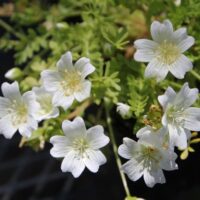
Limnanthes douglasii ssp. nivea
California native ANNUAL occurring in grasslands and vernal pools throughout California. Low growing foliage is topped with a profusion of sweetly fragrant, small white flowers with purple-pink veins on the petals. An excellent choice for low, winter wet areas, drainage swales, retention basins or seasonally dry streambeds. Thrives in heavy soils where it often naturalizes. Plant in full sun to part shade with regular water through the growing season. Good in containers too. Native wildflowers are excellent for encouraging native pollinators.
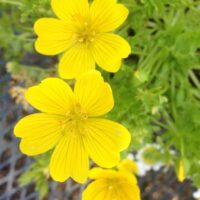
Limnanthes douglasii ssp. sulphurea
Pure yellow flowering form of meadowfoam, rare in the wild but easy to grow in the garden. This native ANNUAL favors seasonally moist areas in full sun. Low growing foliage is topped with a profusion of pure yellow, cup-shaped, fragrant flowers. Useful in low areas, drainage swales, retention basins or seasonally dry stream beds. Thrives in heavy, water retentive soils. Wonderful in containers too. Meadowfoam is excellent for encouraging pollinators and other beneficial insects.
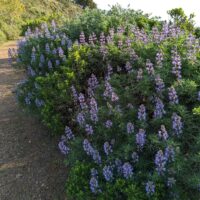
Lupinus arboreus – blue flowered form
Native to coastal areas from Sonoma Co. down to Southern California, the blue bush lupine is distinctive for its grand size (reaching up to 6 ft. tall) and racemes of scented, blue and white flowers. The showy blooms which appear in spring and continue into summer are an excellent nectar source for native bees and hummingbirds. Various butterflies use this species as a larval host plant. The seeds are enjoyed by birds. Grow in full sun with good drainage and occasional to no irrigation once established. Not suitable for areas which get very cold in the winter. Not suitable for Mendocino Co. northwards where it can invade natural areas. Deer resistant.
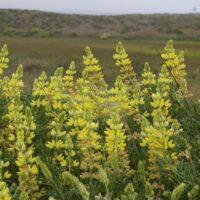
Lupinus arboreus – yellow flowered form
Native to coastal plant communities from Sonoma County south to Ventura County. Showy, fragrant, clear-yellow flowers in long, dense spikes in mid spring and into summer. A fast-growing, floriferous shrub, 3-6 ft. tall and wide. Excellent choice for coastal areas in full sun with good drainage. Not suggested for gardens in coastal Mendocino County due to its ability to quickly naturalize and take over fragile plant communities. Drought and wind tolerant. Lupines have great habitat value, offering nectar for pollinators and nourishing seeds for birds. Great for hummingbirds and a larval food source for various butterflies. Deer resistant.
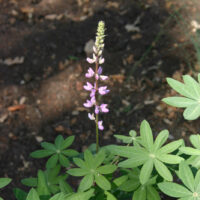
Lupinus latifolius var. parishii
A moisture loving lupine that grows along streambanks and throughout woodlands in central and southern California. A lush perennial, growing 3-4 feet tall and wide, with foot long flower spikes of scented, pink to lavender flowers in late spring-early summer. The large, dark green leaves create a bold texture beneath the slender flower stalks. Plant in lightly shaded conditions with some summer water. Dies back to the ground in winter. Attractive to bees and hummingbirds. Deer resistant.
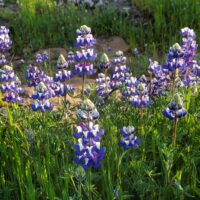
Lupinus nanus
This beautiful ANNUAL lupine can be seen on grassy hills, open slopes and fields, often casting a blue haze of color from a distance in the spring. Low growing, 6 - 20 inches tall and wide, with wonderfully fragrant, rich blue flowers with white markings. Prefers full sun, lean and well drained soils with minimal supplemental watering. Contrasts beautifully with California poppies, providing the classic, blue and gold displays of spring. Attractive to a myriad of pollinators and a larval food source for a number of butterfly and moth species. Deer resistant.
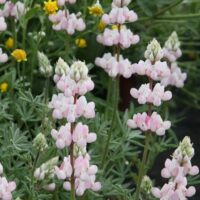
Lupinus nanus – Pacific Pink
Unusual, soft pink flowers distinguish this seed strain of the iconic California sky lupine, the traditionally blue flowered, ANNUAL species which blankets grasslands throughout California in the spring. The blossoms sit in whorls on upright stems above dissected, palmate leaves. This low plant reach 6 – 20 inches tall and wide, combining nicely with low, native perennials and grasses. Enjoys well-draining soil in full sun to light shade. Reseeds fairly readily if exposed soil surrounds the plants. Attractive to a diverse array of pollinators and a larval food source for a number of butterfly and moth species. Deer resistant.
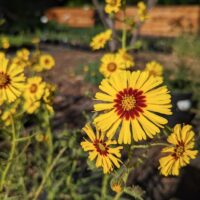
Madia elegans
Native ANNUAL growing 3-4 ft. tall with multi branching aromatic stems. Cheerful bright yellow daisies top the stems in the summer and can be solid yellow or may have a maroon spot at the base of each petal. Tarweeds are an important late nectar source for butterflies, bees and other beneficial insects. The seeds are relished by small mammals and birds, especially finches. Native to grasslands and open forests, well adapted to clay soils and full sun, perfectly adapted to our long, dry summers.
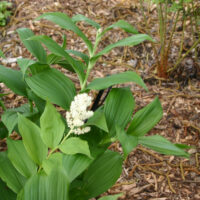
Maianthemum (Smilacina) racemosum
Choice herbaceous perennial native to moist woodlands in California and throughout North America. Forms robust clumps of arching branches 2-3 ft. tall. The branch tips carry dense panicles of sweetly fragrant, white, star-shaped flowers in late spring. Clusters of red berries follow in summer and fall. A lovely addition to the shade garden where it thrives in well drained, woodsy soil with some summer moisture. In cooler coastal environments can go summer dry once established. This lily family member slowly spreads to form striking clumps which die back to the ground in the winter. An elegant and long lived beauty.
Monardella purpurea
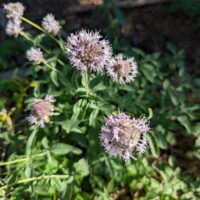
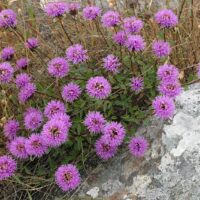
A locally rare and more refined version of our common coyote mint, often with darker flowers, colored purple. Mature plants typically stay under a foot tall, but will get a little wider. Leaves are narrow and dark green, lining burgundy-tinged stems. While native to serpentine soils, it does well in most soils with good drainage. Plant in full sun to part shade and water infrequently. A great, rarely offered native for rock gardens or smaller areas, where butterflies and bees will enjoy the summer blossoms. Deer resistant.
Monardella villosa ssp. franciscana ‘Pomo Canyon’
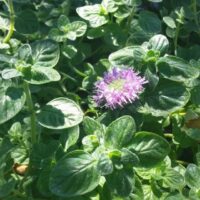
This low growing, dense selection of our native coyote mint was discovered near the mouth of the Russian River. Large, round, deeply veined leaves colored dark blue-green give this groundcover a lush appearance. In summer, soft lavender flowers which look like pincushions cover the plant. Reaches a height of up to 12 inches and spreads fairly quickly to form drifts. Provide full sun to light shade and moderate to infrequent irrigation. A stellar plant for bees, butterflies and hummingbirds. Coyote mint is not a true mint and won’t spread invasively by roots. Deer resistant.
Monardella villosa ssp. franciscana ‘Russian River’
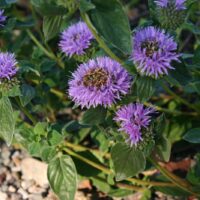
Our own selection of coyote mint from a rocky slope along the lower Russian River. Although Monardella is sometimes difficult in cultivation, this plant has proven to be vigorous. Grows 12 to 18 inches tall with ball-like clusters of pinkish-purple above the fragrant evergreen foliage. Good for a dry sunny site. Attracts bees and butterflies. Deer resistant.
Monardella villosa ssp. villosa – Mark West seed strain
This sweet little coyote mint hails from the dry, inland hills above the Mark West watershed in North East Santa Rosa. It is more compact than the ‘Russian River’ selection, mounding to about 1’ high and spreading to 3’ across. The aromatic foliage is a light minty green, and the round lavender-pink flower heads bloom from late spring through summer. Best with a bit of protection from the hot afternoon sun, this coyote mint is great to tuck under a large, upright, drought tolerant shrub, such as manzanita or Ceanothus. Drought tolerant once established, but blooms best with occasional deep soaks. Needs good drainage. Like other coyote mints, it is a butterfly and native bee magnet. Deer resistant.
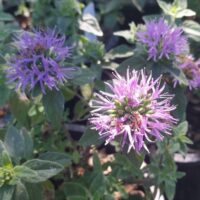
Monardella villosa ssp. villosa – Mark West seed strain ‘Mark West’
This sweet little coyote mint hails from the dry, inland hills above the Mark West watershed in North East Santa Rosa. It is more compact than the ‘Russian River’ selection, mounding to about 1’ high and spreading to 3’ across. The aromatic foliage is a light minty green, and the round lavender-pink flower heads bloom from late spring through summer. Best with a bit of protection from the hot afternoon sun, this coyote mint is great to tuck under a large, upright, drought tolerant shrub, such as manzanita or Ceanothus. Drought tolerant once established, but blooms best with occasional deep soaks. Needs good drainage. Like other coyote mints, it is a butterfly and native bee magnet. Deer resistant.
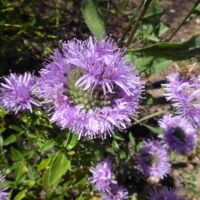
Monardella viridis
A pollinator magnet! Found in inland Sonoma County, and in Lake and Napa Counties, on hot, dry, rocky slopes, green coyote mint entices the senses with its minty, sage-like aroma, small, pointed, ovate, green-gray foliage, and its saturated lavender inflorescences that bloom in summer. Growing to 4’ across, this low mounding woody perennial prefers decent drainage and a bit of relief from afternoon sun in hotter, inland sites. The flowers are especially attractive to native bees and butterflies. Deer resistant and drought-tolerant once established.
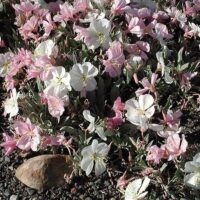
Oenothera californica
California primrose forms low mats of gorgeous, grey foliage, up to 2 to 3 ft. across. The soft leaves, covered with dense hairs, becomes nearly hidden by large, white, sweetly fragrant flowers. The long succession of blooms pop open in early evening from drooping flower buds and last just one night, becoming pink with age. Native to sandy or gravely soils of southern California, southwestern U.S. and Baja, where it can be found in chaparral, high elevation deserts and open woodland habitats. Perfect for the dry garden with well draining soils in full sun to very light shade. The luscious flower display can last from late spring into early summer. Goes completely dormant by mid-summer, returning the next winter. Pollinated by a number of interesting moth species including the Sphinx moth.
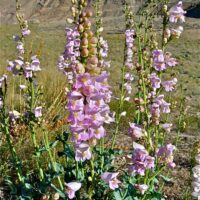
Penstemon palmeri
Showy, grape-scented, pale pink flowers top blue-green, succulent-like foliage on vertical stalks reaching an astonishing 4 to 5 ft. in height. The bulbous flowers have given rise to the common name, ballon flower. Native to desert mountains of southern California and throughout the western United States. This penstemon is attractive to a multitude of pollinators, especially hummingbirds. Plant in full sun to light shade and provide good drainage. Drought tolerant once established. The tall but narrow flower stalks make this penstemon useful in narrow spaces where height is desired.
Phacelia grandiflora
Native to southern California coastal sage scrub and chaparral communities, this native ANNUAL is often a fire follower. Fast growing to 3 ft. tall and topped with clusters of large fragrant blossoms of lavender- blue. Abundant nectar and pollen is highly attractive to bees and a great addition to the habitat garden. Plant in full sun with a little water to encourage long blooming. Often self sows.