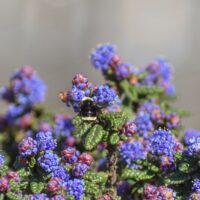
Ceanothus ‘Dark Star’
This popular small leaved shrub reaches 4 - 6 ft. high by 6 - 10 ft. wide. The electric cobalt-blue flowers cover the plant in spring and are very popular with bees and butterflies. Plant in full sun and provide decent drainage. Not a good choice for hot, inland areas. Drought tolerant. 'Dark Star' is VERY similar to 'Julia Phelps' but differs mainly in size. 'Dark Star' tends to stay a little smaller. Shrubby Ceanothus provide seeds eaten by bushtits, mockingbirds, quail and finches, as well as cover for birds.
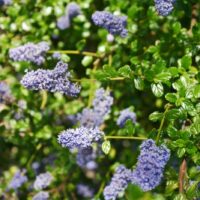
Ceanothus ‘Frosty Blue’
A Rancho Santa Ana introduction from the mid 1970's. This upright evergreen shrub reaches 8 to 12 feet tall and 10 to 15 feet wide with glossy green, textured foliage. Flowers in late spring with 2-4 inch panicles of beautiful blue flowers with a frosted appearance due to the white bracts on the buds. Useful as a specimen or screen due to its rapid growth. Amenable to pruning and can be trained into a small tree or espaliered subject. This reliable cultivar tolerates heavy soils better than most upright Ceanothus. Does best in full sun and will be drought tolerant once established. California lilac are valuable additions to the habitat garden.
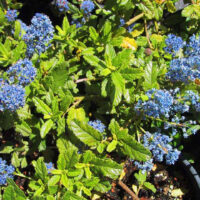
Ceanothus ‘Joyce Coulter’
A very useful medium sized mounding evergreen groundcover discovered in 1956 by John Coulter. Grows 2 - 5 ft. tall and spreads 12 ft. or more wide. Medium-blue flowers cover this shrub in spring. Tolerates garden conditions better than most Ceanothus. Responds well to shearing and can easily be kept to a more compact size. Plant in full sun where it is drought tolerant but best with some summer water in hot interior sites. Shrubby ceanothus provide seeds eaten by bushtits, mockingbirds, quail and finches, as well as cover for birds.
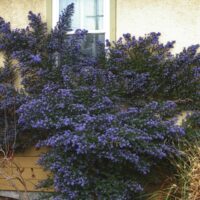
Ceanothus ‘Julia Phelps’
This much admired hybrid Ceanothus features a compact and bushy form, about 6 to 8 ft. tall and 8 to 10 ft. wide. Spectacular in spring when glowing dark indigo flowers cover the plant, accented by reddish buds. Small and crinkled dark green leaves provide an excellent backdrop for the richly colored flowers. Plant in full sun. Needs good drainage and summer drought once established. Does not do well in hot, interior climates. Very hard to distinguish from 'Dark Star', 'Julia Phelps' is somewhat larger. Shrubby Ceanothus provide seeds eaten by bushtits, mockingbirds, quail and finches, as well as cover for birds.
Ceanothus ‘Ray Hartman’
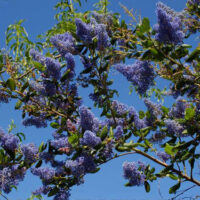
Beautiful large shrub rapidly grows 12 - 20 ft. tall and wide. Dark, shiny green foliage with large, medium blue spike-like flower clusters in the spring. Tolerates pruning and can be trained as a small tree or sheared to create a tall hedge. This selection is especially adaptable, tolerating heat, some summer water and drought. Plant in sun or very light shade. 'Ray Hartman' is a cross between the species C. arboreus and C. thyrsiflorus var. griseus. Ceanothus provide habitat and forage for a wide variety of birds, bees and butterflies.

Ceanothus cuneatus – flat form
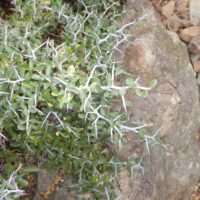
This unusual form of the ubiquitous buckbrush comes to us from Yerba Buena Nursery. Reaches a height of only 1 - 2 ft. and spreads out to 6 ft. or more. Pale blue flowers appear in early spring and perfume the air with their sweet fragrance. Bees and butterflies are drawn to the flowers while birds enjoy the seeds which follow. An excellent groundcover for hot, dry banks requiring no irrigation once established. Needs full sun and good drainage. Likely to be deer resistant.
Ceanothus gloriosus var. gloriosus ‘Anchor Bay’
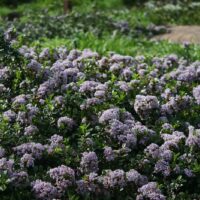
This Point Reyes ceanothus grows 1 - 2 ft. high or more and spreads 8 ft. wide or more with an attractively dense and luxuriant appearance. The evergreen foliage is dark green and holly-like in shape. Flowers of blue-violet cover the plant in spring. Sun to light shade. Drought tolerant along the coast - a little extra water inland but will tolerate up to moderate irrigation. Ceanothus are great additions to the habitat garden offering food and cover for birds and nectar for bees and butterflies. This species is somewhat deer resistant.
Ceanothus incanus
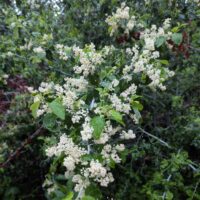
A common and widespread Ceanothus found in the coast ranges of northern California but rarely cultivated in gardens. Probably best suited to conditions similar to where it would be found in the wild. Sunny slopes, canyons, the dappled shade in woodlands, with decent drainage, no to little summer water and full sun to light shade. Growing 5-10 ft. tall with arching rigid branches, whitish bark, stout twiggy spines and evergreen oval leaves of grey-green. Plumes of fragrant white flowers in the spring attract a wide array of insects, birds and butterflies.
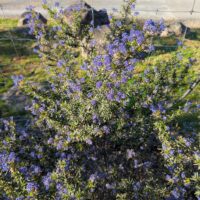
Ceanothus papillosus – upright Baja form
This cold hardy selection from Baja California is highly useful in the garden setting thanks to its tall, upright form and narrow, vaselike shape. Many customers ask us for a big but narrow form of ceanothus. This is one of the few selections that fits the bill. Plants reach 8 – 10 ft tall, but only reach 3 – 4 ft wide, making it ideal for a privacy screen in a small area. Indigo blue flowers cover plants in spring, followed by little seed capsules which are relished by birds. The crinkly, dark-green leaves are elongated and create a nice foil for brighter green plants, such as Salvia and Artemisia. As with all ceanothus, the flowers are loved by a large array of pollinators. Plant in full sun to very light shade and water infrequently once established. Needs decent drainage. This is the variety papillosus.
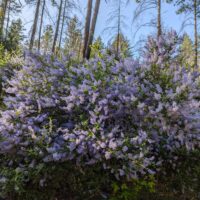
Ceanothus parryi
Nicknamed ladybloom, this ceanothus is underused in California gardens. Native to chaparral plant communities in the coast ranges of California and Oregon. Upright habit with arching branches growing 8-12 ft tall and wide with dark green, narrow leaves. Long, narrow flower clusters of medium to deep blue blossoms in the spring. A useful screen, specimen or informal hedge in full sun with little to no water once established. Tolerant of inland heat and conditions. Ceanothus are great additions to the habitat garden offering food and cover for birds and nectar for bees and butterflies.
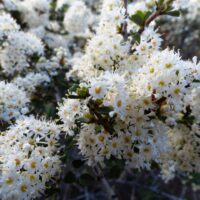
Ceanothus rigidus ‘Snowball’
A good selection for a dry sunny hillside or as a cascading plant for a wall. A densely mounding shrub 3 - 5 feet tall and wide. Covered with ball-like clusters of white flowers in late winter. Plant in full sun with occasional to no summer water once established. Ceanothus are great additions to the habitat garden offering food and cover for birds and nectar for bees and butterflies. Deer resistant.
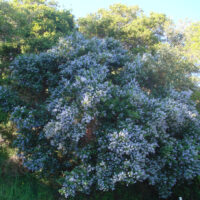
Ceanothus thyrsiflorus
One of the larger ceanothus, forming a good sized shrub or small tree 6-25 ft. tall. Shiny, bright green leaves and good sized clusters of flowers which can range from pure white to pale blue, sky blue through rich darker shades of blue in the spring. Easy, fast growing. Can be trained into a single trunk if desired. Useful as a specimen tree, background shrub or informal hedge. Drought tolerant when established. Ceanothus are fantastic habitat plants providing food and cover for a wide range of creatures. Bees and other pollinators frequent the flowers as do butterflies. Several butterflies and moths use it as a larvel food source. Bushtits, mockingbirds, quail and finches eat the seeds.
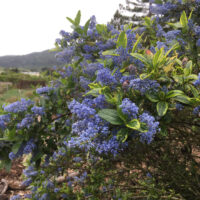
Ceanothus thyrsiflorus ‘El Dorado’
Fast growing upright evergreen shrub 6 - 10 ft. tall and wide. Dark green foliage with golden yellow variegation is a nice foil for the medium blue flowers in spring. Plant in full sun along the coast, some shade for hot interior sites. Drought tolerant once established. Occasional summer irrigation can be helpful, but allow soil to dry between waterings. Good for an informal hedge. An excellent habitat plant.
Ceanothus thyrsiflorus ‘Skylark’
Valued for its compact habit and late flowering, this selection offers clusters of dark blue flowers on short stems appearing just as other ceanothus are finishing their show. 4 - 5 ft. tall and 6 - 7 ft. wide with shiny evergreen foliage. This would be a ceanothus to try in hot areas. 'Skylark' is believed to be a cross between Ceanothus thyrsiflorus and C. velutinus. Shrubby ceanothus provide seeds eaten by bushtits, mockingbirds, quail and finches, as well as cover for birds.
Ceanothus thyrsiflorus ‘Snow Flurry’
A beautiful large shrub or small tree 12 ft. (or more) tall and wide. Rich deep green foliage and profuse clusters of radiant pure white flowers in the spring. Adaptable, dependable and garden tolerant. Does well in coastal and inland situations. Best in full sun. 'Snow Flurry' is drought tolerant, but would appreciate a little summer water in hot regions. Not tolerant of very cold winter conditions. Selected from the Big Sur coast. Shrubby ceanothus provide seeds eaten by bushtits, mockingbirds, quail and finches, as well as cover for birds.
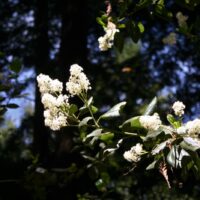
Ceanothus velutinus
Found primarily in the northern half of the state in the Coast Ranges, Sierras, Klamath and Modoc regions, in coniferous forests, chaparral, and various woodland environments up to 11,000 ft in elevation, the resinous floral scent and plumes of soft white flowers from spring to early summer make tobacco brush a choice evergreen shrub for dry, sunny to part-shade garden sites that drain well. Grows to 6-10 ft tall, and has large, sticky dark-green, aromatic, leathery foliage. A larval host for many native butterfly species such as the ceanothus silk moth, California tortoiseshell butterfly, and the hedgerow hairstreak butterfly. The flowers are also attractive to native bee and butterfly pollinators. Drought-tolerant once established.
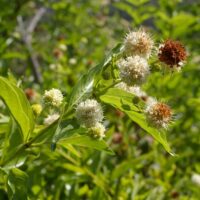
Cephalanthus occidentalis
Button willow is a large deciduous shrub, at times becoming treelike, growing 6-12 ft. (infrequently as much as 20 ft.) tall and wide. It lines waterways in foothills and warm interior valleys. Smooth, glossy bright- green leaves clothe this shrub during the growing season, turning yellow in the autumn. Creamy white flowers are arranged in spherical heads with protruding styles which give the flowers a pincushion-like appearance. The summer blooming, fragrant flowers are extremely rich in nectar and attract bees, butterflies and other pollinators. The globe-like fruits persists into winter and attract birds. Plant in sun to light shade with regular summer water or continuously moist or wet soils. An excellent habitat plant offering food and cover for a wide array of insects and birds.
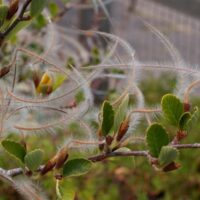
Cercocarpus betuloides
Mountain mahogany is an adaptable, semi-evergreen native shrub (8 to 12 ft. high and wide) or small tree with charming birch-like leaves set against silver-grey bark. Small, honey-scented flowers appear in spring followed by seeds with intriguing silky, curled, feather-like tails. The open habit contrasts nicely with evergreen shrubs or rock walls where its pleasing silhouette can be seen. Flowers are attractive to bees. Mountain mahogany is one of those rare native shrubs which can easily be pruned for narrow garden beds. Grows on dry slopes in chaparral or at the edges of woodlands. Provide full sun to light shade. It is surprisingly adaptable to diferent water regimes, from moderate irrigation to no water once established. Somewhat deer resistant.
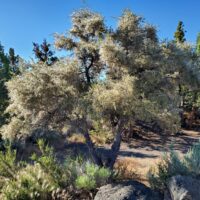
Cercocarpus ledifolius
Large shrub or small, multitrunked, evergreen tree, 6 - 30 ft. tall, native to arid mountains of the western US. Often takes on a gnarled, picturesque form depending on the conditions it is growing in. Adapted to dry, rocky slopes where it weathers drought, extreme heat and cold, wind and snow. Slow growing, densely branching, with dark green, leathery leaves with curled under edges and silvery undersides. Trunks develop beautiful, red-brown bark with silvery new growth. The flowers are similar to our local mt. mahogany species, small, greenish- yellow, smelling of honey, and attractive to pollinators. The fruits are long, silvery, plumes that glow when back lit. Plant in full sun to light shade with good drainage where it will blend well with other dryland shrubs and perennials and requires little input. Fixes nitrogen. Interesting container or bonsai subject.
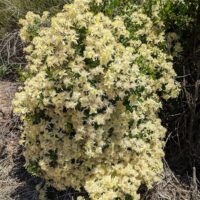
Clematis lasiantha
This deciduous native vine climbs over shrubs and trees in full sun to part shade. Produces a wealth of one inch, creamy-white flowers in spring and summer followed by large fluffy attractive seed heads. Use clematis to adorn a pergola or archway, or to train up trees or other structures. Plant in full sun to light shade. Little water once established. Generally deer resistant.
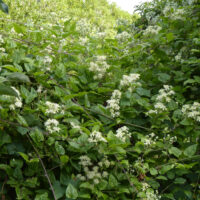
Clematis ligusticifolia
Native to riparian areas where the vining stems will climb and weave their way up and over shrubs and trees. Large masses of fragrant, small creamy-white flowers bloom in summer. Beautiful, silvery, feather-like fruits follow and are as attractive as the blossoms. The intricately divided leaves on long stems can climb 20 - 30 ft. Full sun to light shade with regular to moderate summer water. Deciduous. Generally deer resistant.
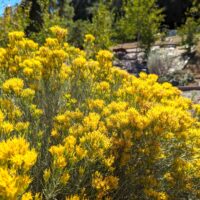
Ericameria nauseosa
This classic plant of the high desert grows in dry, hot, rocky areas throughout much of interior California and throughout the West. In summer and autumn, clusters of golden, star-like flowers cover the tips of the white branches on this low, rounded shrub which reaches up to 3 - 4 ft. tall and wide. Fine, white hairs cover the narrow leaves, giving the plant a ghostly grey-white appearance. Needs a sunny location with excellent drainage and little to no irrigation once established. Bees and butterflies love the flowers. A larval host for the northern checkerspot butterfly.
Eriodictyon californicum
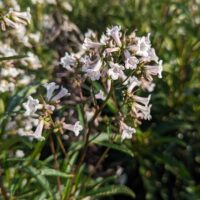
Uncommon in the nursery trade, this aromatic, evergreen shrub is native to dry habitats of chaparral and mixed evergreen forest plant communities in North and Central California and into Oregon. An opportunist, this shrub stump sprouts after fires and grows with renewed vigor after any soil disturbance. The dark green, leathery leaves are covered in a shiny, fragrant, resin and are sticky to touch. The common name means, holy herb, and the pungent leaves have a long history of medicinal uses. Grows 3 - 5 ft. tall and spreads by underground roots to form a colony. Late spring brings clusters of small, trumpet-shaped flowers of pale lavender, sometimes white or pale blue, which are highly attractive to butterflies, hummingbirds and bees. Plant in full sun with good drainage and little water once established. Deer resistant.
Erysimum franciscanum
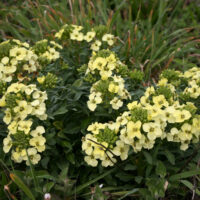
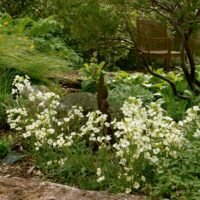
This rare and threatened species makes its home in the sand dunes and hills of the San Francisco Bay area. Development has seriously impacted its native habitat. Fragrant, four-petaled flowers ranging in color from creamy white to yellow rise up to 18” above dark green foliage in the spring and early summer. Thrives with good drainage and occasional water once established. Plant this special wallflower in full sun with other small perennials such as buckwheats, checkermallows and coyote mint. Attractive to butterflies.
Erysimum menziesii
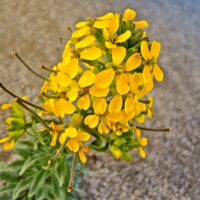
A rare species native to sand dunes along the north coast of California. Forms tight mounds of narrow leaves 8-12 inches tall and wide. Bright-yellow fragrant flowers bloom in late spring and will continue into summer with a little additional summer watering. The fragrant flowers are butterfly favorites. Adaptable and can seed about if happy, though not weedy. Requires good drainage, full sun, to light shade inland, with moderate to occasional summer water. Said to be deer tolerant.
Hazardia squarrosa v. squarrosa
For a splash of color in late summer and fall, this goldenbush is a great choice, providing clusters of cheery, golden flowers at the height of the dry season, which supply food for butterflies. Birds enjoy the seeds which follow. Rounded leaves with sawtooth margins line the stems and emit a wonderfully sweet scent. This seed strain comes from a hot area in Big Sur and is remarkably compact and rounded, reaching about 3 ft. tall and wide. We’ve found it to be very adaptable, tolerant of clay soils and zero to occasional irrigation. Likes full sun but will accept a little shade. Plant with buckwheats, Salvias, and California fuchsias. Not usually available in Northern California nurseries.
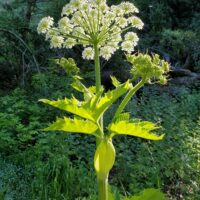
Heracleum maximum
Big, bold, native perennial 3 - 8 ft. tall, is striking in mass or as a specimen. Forms a rosette of large lobed leaves followed by stout flower stems carrying large umbels of white flowers. Thrives in rich soils with some moisture. Full sun along coast, part shade inland. As a member of the carrot family (Apiaceae) the flowers are very effective at attracting beneficial insects. Larval food source for anise swallowtail butterfly. Formerly known as Heracleum lanatum.
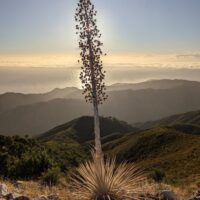
Hesperoyucca whipplei
Bold and dramatic architectural accent plant native to southern California coast and mountains south to Baja. Forms a dense rosette of rigid silver-blue blades, 2 foot tall by 3 - 4 foot wide. Each blade has a VERY SHARP tip and careful thought should be given to its placement to avoid injury. Plants can take 3 to 15 years to bloom with impressive stalks rising 6 foot or more above the rosette with drooping, creamy white, bell shaped, fragrant flowers. The flowering rosette dies after blooming often being replaced by vegetative offsets. Best with good drainage in full sun to light shade. No water once established. Deer resistant