
Aesculus californica
Beautiful in all its seasons, this native tree is perfectly adapted to our summer dry climate. Broad headed, deciduous tree rapidly growing to 15 feet or more with smooth grey bark and a rounded shapely habit. Bright green palmate leaves unfurl in the spring. Striking, fragrant white to pink flowers in long spikes are followed by pear shaped fruits that split open to reveal large chestnut-brown shiny seeds dangling from branch tips. Buckeyes lose their leaves in summer to avoid the long dry season. Adaptable and tolerant of a wide range of conditions. Sun to light shade, little to no water once established. Flowers provide nectar for hummingbirds, butterflies and native bees.
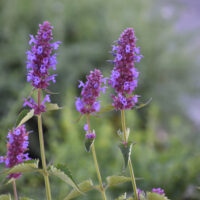
Agastache ‘Blue Boa’
This stunning hybrid hummingbird mint from Terra Nova Nurseries in Oregon has won awards at a number of plant trials. Flower spikes of deep violet-blue reach 2-1/2 ft. tall and 2 ft. wide atop foliage with a spicy mint fragrance. The large and sturdy terminal flower clusters dazzle mid to late summer into fall and are highly attractive to hummingbirds, bees and butterflies. Best in full sun with good drainage. Drought tolerant, but happiest with moderate to occasional summer water. Deer resistant.

Agastache ‘Coronado Red’
Agastaches are rewarding perennials with fragrant foliage and abundant flowers, which are highly attractive to hummingbirds and butterflies. ‘Coronado Red’ has a vertical growth habit with silvery foliage to 2.5 ft. tall and 2 ft. wide. Spikes of orangy-red flowers bloom over a long period in the summer delighting the hummingbirds. Requires good drainage and full sun with moderate to occasional summer water. Deer resistant.

Agastache ‘Morello’
Calling all pollinators! Hummingbirds, bees and butterflies will delight in the large, dense flower spikes of deep, burgundy-rose on this fragrant perennial. This summer bloomer has minty scented foliage which has a purple blush early in the season, growing 2 -3 ft. tall and 2 ft. wide. Plant in full sun with good drainage and moderate to occasional watering. Good in container plantings, too. Deer resistant.

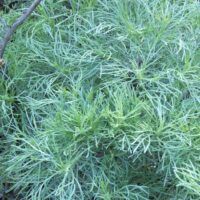
Artemisia californica
Native to coastal regions from Northern California to Baja. Densely branched shrub with finely divided gray-green scented foliage. Grows 2 - 6 ft. tall and wide. Light pruning or pinching help keep it dense. Grown for its wonderful texture and foliage color, flowers are inconspicuous. Requires decent drainage and full sun. Thrives in coastal environments, but has performed well inland, especially on slopes where cold air and winter wet drains away. Drought and deer tolerant.
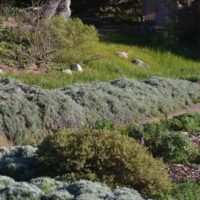
Artemisia californica ‘Canyon Gray’
An unusual prostrate form of our coastal native sagebrush, forming a loose, nearly flat mat of finely cut, silvery, fragrant foliage around 4 ft. wide. Useful as a bank cover or for the top of a retaining wall where it can cascade over the edge. Combines beatifully with ceanothus, buckwheats and iris. Should be cut back from time to time to keep dense. Enjoys full sun to light shade and is very drought tolerant once established. Deer resistant.
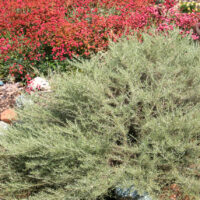
Artemisia californica ‘Montara’
Selected by Roger Raiche at Montara Ridge in San Mateo County. Forms a mound of finely cut fragrant foliage to around 2 ft. tall by 3 ft. (or more) wide. Requires full sun with decent drainage and is drought tolerant once established. Occasional summer water helps retain fresh look. Thrives in coastal environments. Deer resistant.
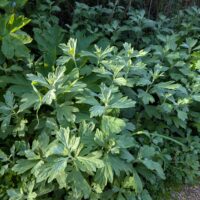
Artemisia douglasiana
Mugwort is native to many plant communities where there is at least some year round moisture: streams and riverbanks, road cuts, ditches, and moist meadows. A stout, rhizomatous perennial with aromatic foliage that is green on top and silvery beneath. The flowers are small and not particularly showy. The foliage is beautiful and fragrant with a long history of medicinal uses. Plant in sun to light shade where it will grow 3 ft. tall and spreading to form a colony. Well watered plants can grow even taller. Provides excellent cover and seeds for birds. Deer resistant.
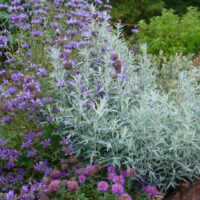
Artemisia suksdorfii
Rhizomatous perennial with sturdy upright stems of whitish-gray felted foliage. Native to coastal California where it grows in seasonal drainages near the ocean. Growing 1 1/2 ft. to 3 ft. tall and spreading to form colonies of beautiful wooly foliage with a pleasant sage scent. The tiny flowers are not particularly showy but are attractive to pollinators. Useful in informal gardens for sunny areas with some summer moisture. Probably best in areas with some coastal influence. Cut to the ground annually to freshen and make room for new spring growth. Deer resistant.
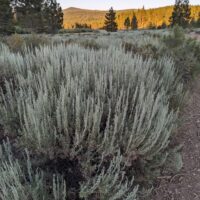
Artemisia tridentata
This long-lived, highly-aromatic shrub is emblematic of the American West, dominating high-desert landscapes east of the Sierras and along the Southern California and Baja coast. Its evergreen foliage is dense, silvery and held on tall stems that are woodier and more upright than the more coastal California sagebrush. In late summer, long flower stalks bear clusters of inconspicuous yellow blooms. Essential to wildlife in sagebrush ecosystems of the eastern Sierras and Great Basin, it also supports birds and bees in the garden setting. Although it can get quite statuesque, it averages 4-6 feet, with a rounded habit and architecturally twisty trunk. It thrives in well-draining soils with minimal water once established. This drought-tolerant species is excellent for erosion control and is nitrogen-fixing. Its fragrant leaves are deer resistant.
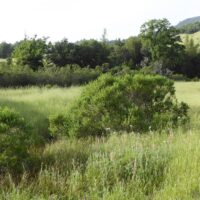
Baccharis pilularis
This is the upright form of coyote bush, growing 4 - 8 ft. tall and wide. Valued for its ability to flourish in a wide range of conditions. Also valued as an excellent habitat plant offering food and cover to a wide variety of wildlife. Flowers are not showy and the male and female flowers are borne on separate shrubs. This crop of plants are a mix of males and females and one can’t tell until they bloom. Plant in sunn or light shade. Not fussy about soils. Quite drought tolerant once established. Responds well to pruning or shearing, working well as a screen. Deer resistant.
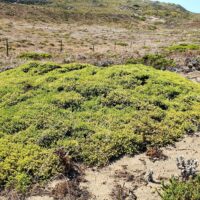
Baccharis pilularis – Bodega Dunes form
Coyote bush is a tough, native, evergreen shrub, forming mounds of dense foliage that hold soil and provide food and cover for birds and mammals. Flowers are small and cream-colored and appear in the autumn. This crop is grown from seed collected in the Bodega Bay Dunes from parents that were under two feet tall and around 6 ft or so wide. Time will reveal the exact form and sex of each plant in this crop. Both male and female plants have significant habitat value, with their combined contributions of abundant pollen, nectar and copious seed late in the season. It will be a surprise as well as a useful addition to the habitat garden. Plant in full sun, though a little shade is helpful in hotter sites. Shear occasionally to renovate and keep dense. Drought tolerant on the coast, but best with occasional water inland. Deer resistant.
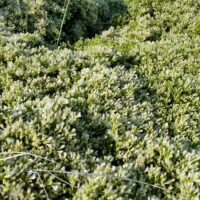
Baccharis pilularis – female
Upright form of coyote brush, growing 4 - 8 ft. tall and wide. Valued for its ability to flourish in a wide range of conditions. Also valued as an excellent habitat plant offering food and cover to a wide variety of wildlife. Flowers are not showy and the male and female flowers are borne on separate shrubs. Theses plants are FEMALE and will produce seed (when male plants are present). An abundance of pollinators and beneficial insects use Baccharis flowers and birds love their seeds. Plant in sun to light shade. Not fussy about soils. Quite drought tolerant once established. Responds well to pruning or shearing and is useful as a screen. Deer resistant.
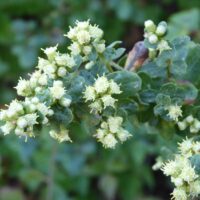
Baccharis pilularis – male
Upright form of coyote brush, growing 4 - 8 ft. tall and wide. Valued for its ability to flourish in a wide range of conditions. Also valued as an excellent habitat plant offering food and cover to a wide variety of wildlife. Flowers are not showy and the male and female flowers are borne on separate shrubs. These plants are MALE and produce ivory colored flowers with pollen and nectar. An abundance of pollinators and beneficial insects use Baccharis flowers. Plant in sun to light shade. Not fussy about soils. Quite drought tolerant once established. Responds well to pruning or shearing and is useful as a screen. Deer resistant.
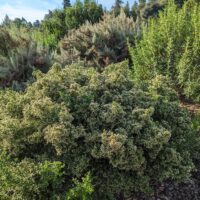
Baccharis pilularis ‘Mayacama Mound’
This dense, bright green, gumdrop-shaped coyote bush only reaches about 3 ft tall and spreads a wider. We discovered this heat and drought tolerant selection in a batch of seedlings from inland Sonoma Co.. A great alternative for the ubiquitous ‘Twin Peaks’, which is a coastal selection and less suitable for hot, dry sites. Plant in full sun to light shade where mature plants won’t need supplemental water, but an infrequent deep soak will keep them looking fresh. The small, whitish flowers are relished by pollinators in the early autumn. This selection is female, so the late autumn seeds provide an important food source for birds. A sturdy, low, evergreen shrub for tough situations.
Baccharis pilularis ‘Pigeon Point’
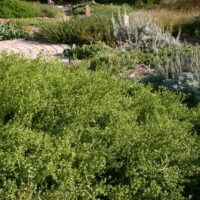
Adaptable and dependable low growing form of the native coyote bush. Forms a mound of bright green leaves with an undulating habit 2 - 3 ft. tall and 6-8 ft. wide. Able to tolerate many soil types and watering regimes this shrub is best in full sun to light shade. Extremely drought tolerant along the coast but best with moderate to occasional summer water inland. When watered and annually trimmed to keep low and free of debris it is recommended for fire resistance landscapes. A good addition to the habitat garden, coyote bush offers excellent cover to a wide variety of wildlife. ‘Pigeon Point’ is a male selection and does not make seed. Deer resistant.
Baccharis pilularis ‘Twin Peaks’
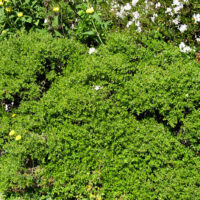
One of the fastest, toughest, densest evergreen native large scale groundcovers. Discovered on Twin Peaks in San Francisco. Grows at least to 6 ft. wide and 2 - 3 ft. tall. Extremely drought tolerant along the coast but best with moderate to occasional summer water inland. Shear hard annually in spring to keep rejuvenated. Sun on coast, afternoon shade inland. This is a male selection so it won't produce seeds. Deer don’t seem to eat it.
Berberis (Mahonia) aquifolium
This attractive, western native evergreen has a long history in cultivation for good reason. Erect stems rise 4 to 7 feet or more tall and wide, spreading slowly by underground rhizomes to form dense clumps. Bronzy-red new growth gives way to dark-green, glossy leaves with spiny margins that are prickly to the touch. Cold winters can darken the foliage with purple-red tones. Late spring brings clusters of bright yellow, sweetly scented flowers. Edible blue-black fruits follow and are pretty and tasty. A useful and adaptable shrub in a hedge or a shrubby border. Takes full sun to part shade. Performs best with some afternoon shade in hot areas and moderate to infrequent water. A great habitat plant which provides cover, nectar rich flowers and fruits relished by all. Deer resistant.
Berberis (Mahonia) aquifolium var. repens
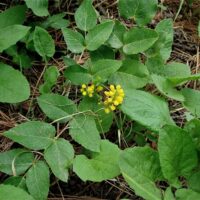
This little cousin of the much larger Oregon grape only gets 1 - 3 ft. tall and spreads underground to create dense, evergreen drifts. The divided leaves have a matte finish with a grey-green color which turns purple-red with frost. Clusters of bright yellow flowers open in spring and are followed by deep blue "grapes" much loved by birds. The sweet-scented flowers are enjoyed by bees and butterflies. Provide full sun to shade and moderate to infrequent irrigation. Deer resistant.
Calamintha nepetoides
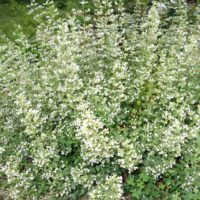
A pretty, little, non-spreading mint relative, forming a rounded shrublet of shiny, bright green foliage to around 1’ tall and about 2 ft wide. Covered with hundreds of tiny, pale blue, nearly white blossoms over a long period in summer. Good for full sun to light shade with moderate watering. Tolerant of clay soil. One of our bee magnets. Deer resistant.
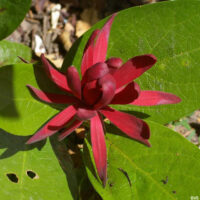
Calycanthus occidentalis
Native along streams, rivers and moist places in California. This attractive deciduous shrub is well worth growing. Bright green aromatic foliage with interesting maroon-red flowers in spring-summer that resemble small waterlilies and have a wine-like fragrance. Can be grown as a multi-stemmed small tree, trimmed hedge or left alone to become a large background shrub. 5 - 12 ft. tall and wide. Part-shade is ideal. Tolerates full sun with lots of moisture in somewhat cooler areas. Accepts full shade but will grow more slowly with a more open habit. Regular to moderate water. Somewhat deer resistant.
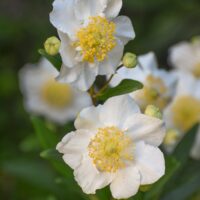
Carpenteria californica
Long in cultivation, this native, evergreen shrub is rare in the wild, with a limited distribution in their native habitat. Forms a multi-branched shrub, 5 - 7 foot tall or more and nearly as wide, with dark green, leathery, lanceolate shaped leaves, which provides a dark foil to the brilliant white flowers. Late spring brings terminal clusters of white, 2 -3 inch, sweetly scented, anemone-like blossoms with yellow centers. An adaptable shrub which makes a striking specimen or foundation plant in a woodland area with morning sun and afternoon shade. Responds well to pruning and can be trained as an espalier. Drought tolerant, but appreciates occasional summer water. Flowers enjoyed by bees and butterflies.
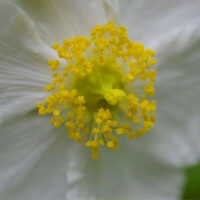
Carpenteria californica ‘Elizabeth’
A beautiful native evergreen shrub 5 - 7 ft. tall and 4 ft. or more wide. Blooms May-July with sweetly scented, pure white, yellow-stamened, camellia-like single flowers. This cultivar is especially free flowering with smaller than usual (2 inch) flowers in masses of up to 20 in each of the terminal clusters. Said to be more disease resistant. Has a narrow upright appearance which is unusual for a native shrub. Best with light shade or morning sun. Drought tolerant, but appearance is improved with some summer water. Does want decent drainage.
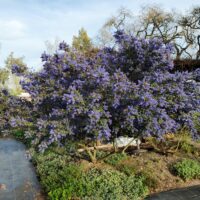
Ceanothus ‘Antonette’
An exciting introduction by Native Sons Nursery which was discovered in their landscape. ‘Antonette’ is believed to be a cross between Ceanothus arboreus and Ceanothus ‘Cynthia Postan’ with unusual elongated leaves which remind us of a rockrose. Grows 8 – 10 feet tall and 6 – 8 feet wide with spectacular displays of frosted, violet-blue flowers in early spring. Before they fully emerge, the flower buds display a pleasing rosy color. Plant in full sun with occasional to little summer water once established. Valuable habitat plant, providing food and cover for birds, bees and butterflies.
Ceanothus ‘Better Than Ray Hartman’
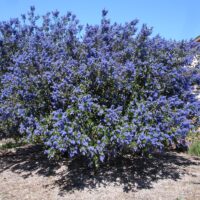
A friend of ours, Eric Nelson, discovered this spectacular selection growing on a property near where he lived. Masses of rich, blue-purple flowers held in large sprays cover the plant in spring, attracting bees and butterflies. The seeds which follow feed an array of birds. Reaches 10 – 15 ft. tall and wide with larger, deep-green, rounded leaves. We believe this plant is an existing cultivar, but none of the Ceanothus experts have been able to reach a consensus on exactly which one, hence the peculiar name referencing a selection which it resembles. Plant in full sun to light shade and water occasionally or less once established.
Ceanothus ‘Blue Jeans’
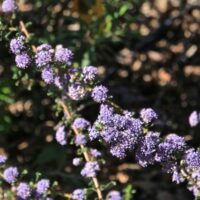
Not the color of denim exactly, the profuse springtime blossoms of 'Blue Jeans' are a rich lavender-purple. Erect evergreen shrub 6 ft. tall and wide with small shiny green leaves. Vigorous and fast growing. Best in full sun with little to no water once established. Tolerates heavy soils. Shrubby Ceanothus provide seeds eaten by bushtits, mockingbirds, quail and finches, as well as cover for birds.
Ceanothus ‘Blue Ray’
A Suncrest Nursery introduction, this is a cross between two popular cultivars, Ceanothus 'Ray Hartman' and Ceanothus 'Dark Star'. Grows 10 feet tall by 15 ft. wide with deep green textured leaves on sturdy stems forming a large mound. Deep vivid blue flowers in dense clusters cover the shrub in spring. Plant in full sun with occasional to no summer water once established. Ceanothus, when in flower, are highly attractive to pollinators of all sorts.
Ceanothus ‘Celestial Blue’
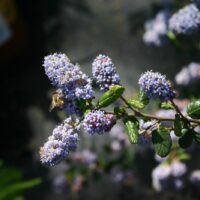
A beautiful hybrid California lilac selected and introduced by Las Pilitas Nursery. Luminous, rich blue flowers, in tight, conical clusters put on a massive display in spring with the added bonus of sporadic blooming through summer and into fall. Growing 6-8 ft. tall and wide with a mounding habit. Useful as an accent, informal hedge or screen shrub where it grows in full sun to light shade with little to no water once established. Ceanothus are an excellent addition to the habitat garden attracting a myriad of insects and birds.
Ceanothus ‘Concha’
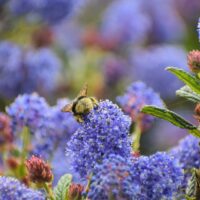
An adaptable shrub growing 6 ft. tall and wide, with a dazzling display of glowing purple-blue flowers in the spring. The gracefully arching branches carry dark green shiny leaves and are tolerant of light pruning. Thrives in full sun with little or no water once established. More tolerant of heavy soils and summer watering than most ceanothus. Shrubby Ceanothus provide seeds eaten by bushtits, mockingbirds, quail and finches, as well as cover for birds.