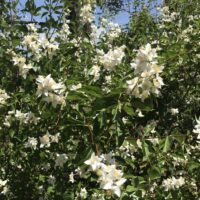
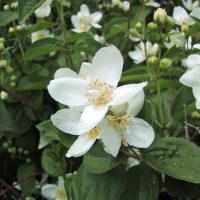
Philadelphus lewisii ‘Covelo’
Sweetly fragrant, pure white blossoms with yellow stamens cover this desirable, deciduous native shrub in late spring, attracting bees and butterflies. Reaches to 8 ft. tall and wide with a vaguely umbrella shape. This selection is somewhat denser than 'Marjorie Schmidt', in both foliage and flower, with leaves that are less serrated. Enjoys full sun to light shade and moderate to occasional summer water. Tolerant of clay soil. Works well in a conatainer.
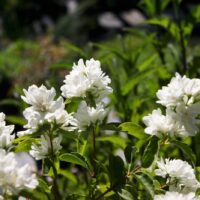
Philadelphus lewisii ‘Goose Creek’
This unusual selection of our native mock orange offers fully double flowers! We aren't usually fans of extra petals on our flowers, but this selection is quite appealing, with blossoms looking like fluffy snowballs held along the stems in late spring. This form was discovered near the Smith River in Del Norte County. Mock orange is a large deciduous shrub up to 8 ft tall and wide with sweetly fragrant, white flowers in late spring and early summer. Useful as a specimen or in mixed plantings. Sun to light shade, moderate to little water when established. A good container plant and clay tolerant.
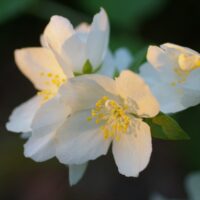
Philadelphus lewisii ‘Marjorie Schmidt’
This native mock orange was selected by Roger Raiche and Ron Lutsko in Shasta County. It caught their eye while driving along Route 36 west of Red Bluff, as being larger-flowered and more floriferous than surrounding shrubs. Large deciduous shrub up to 8 ft tall and wide with fragrant white flowers in early summer. Sun to light shade, most soils, moderate to little water once established. Flowers attractive to bees and butterflies.
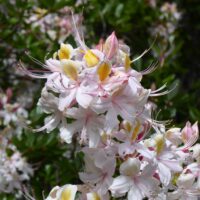
Rhododendron occidentale
A much sought after and admired native deciduous shrub found in moist places and stream banks in many plant communities throughout California. Leafs out in the spring with bright green foliage on a shrubby framework 3-6 ft. or more tall and wide. Glorious displays of fragrant azalea flowers in dense terminal clusters appear in late spring and can be pure white to pale pink often with yellow or orange markings. Needs decent light to bloom well but appreciates light shade, acid soils and regular water. Deer resistant
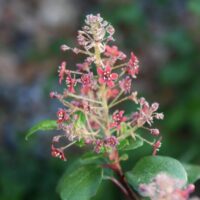
Ribes viburnifolium
Native to Santa Catalina Island, this Ribes is unique for the genus, being evergreen and low growing. Leathery, dark green, glossy leaves with a spicy fragrance on red stems forms a spreading shrubby groundcover to 2- 3 ft. tall. Small clusters of interesting, star-shaped, salmon-pink flowers decorate the arching branches in late winter to early spring, followed by little, red fruits. Requires part shade and is drought tolerant once established. Adaptable to a variety of soil types including heavy clay. Tip pruning is recommended to encourage a dense growth habit. Deer resistant.
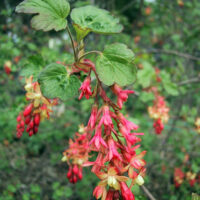
Ribes x gordonianum
A special hybrid flowering currant created in England by Donald Beaton in 1837 between our western U.S. Ribes sanguineum and the central U.S. Ribes odoratum. The fragrant flowers hang in dense dangling clusters in late spring and produce a dazzling color display with warm coppery red on the outside and yellow on the inside. The green maple-like leaves are deciduous. Robust and spreading, this currant grows to about 6 ft. tall and 8 ft. wide. Provide full sun to light shade and give moderate water.
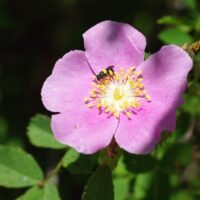
Rosa californica
A thicket forming, deciduous shrub native to riparian zones throughout the state. Fragrant, pink blossoms with yellow centers are followed by attractive red fruits or rosehips. The stems are lined with little thorns and gray-green, pinnately divided leaves. A good screen or living fence, where it will grows at least 5 ft. tall and usually spread wider. Very important for erosion control along streams. This is one of our most popular hedgerow plants due to the cover it provides for foraging wildlife and the value it offers to pollinators and birds. Prefers full sun to light shade and seasonally moist soils, but can go a little drier in the summer. A larval host to several butterflies.
Rosa gymnocarpa
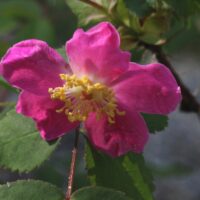
Delicate, native rose of woodlands, growing 3 - 4 ft. tall. Sprinkled with sweetly fragrant single pink flowers followed by small red rose hips. Best in woodsy shade where it tolerates drought. Bees, butterflies and other pollinators are attracted to rose blossoms and the fruits are enjoyed by birds.
Rosa nutkana
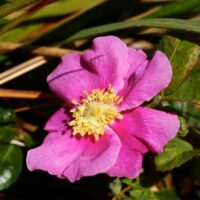
Named for the Nootka Sound in Alaska where it was originally described, this shrub's range runs all the way south into California. Forms prickly thickets at least 6 feet tall with light green foliage. Super fragrant, 2-3 inch single pink flowers appear in summer followed by showy red hips.Favors moist sites in full sun to light shade. Rose thickets provide excellent habitat value, offering food and cover for birds and small mammals, pollen and nectar for many beneficial insects as well as a larval food source for a number of butterflies.

Salvia ‘Aromas’
A hybrid between Salvia clevelandii & Salvia leucophylla, this aromatic shrubby sage grows 4 ft. tall and 4 ft. wide. Early summer brings flower stalks with whorls of lavender-blue blossoms. Good for sunny areas with good drainage. Occasional to little summer water. Flowers are attractive to bees, hummingbirds and butterflies. Deer and drought tolerant.
Salvia ‘Bee’s Bliss’
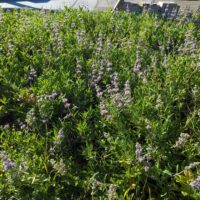
A beautiful native hybrid sage grows around 18 inches tall by 6 ft. wide or more. The handsome gray foliage is topped with a profusion of lavender flowers on long spikes in the spring. Sun, decent drainage, occasional to little water. Deer tolerant. A bee and hummingbird favorite.
Salvia ‘Calamity Jane’
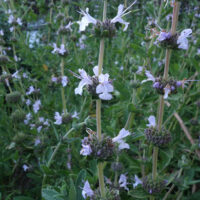
A cross between Salvia leucophylla and a prostrate form of Salvia mellifera. Forms a fragrant mounding shrub up to 4 ft. tall and spreading, with flower spikes of light lavender blossoms. An excellent choice for a dry sunny bank with little to no summer water once established. Flowers are highly attractive to bees and hummingbirds. Deer resistant.
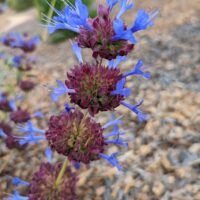
Salvia ‘Celestial Blue’
A pollinator powerhouse, this sage attracts hummingbirds, bees and butterflies with its vibrant blossoms. Selected and introduced by Las Pilitas Nursery, thought to be a hybrid between Salvia clevelandii and S. pachyphylla, or perhaps a three way hybrid involving Salvia 'Pozo Blue'. Gray-green, sweetly fragrant foliage, grows 3 to 5 ft. tall and wide. The striking blue flowers are on widely spaced whorls of eye-catching violet-blue. The decorative, architectural seed heads that follow provide food for songbirds. Plant in full sun with good drainage and occasional water. Drought and deer tolerant tolerant.
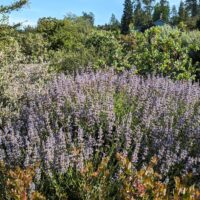
Salvia ‘Mrs. Beard’
This cultivar has been around since 1965, a chance seedling discovered in a Berkeley garden. A hybrid between Salvia sonomensis and Salvia mellifera, 'Mrs. Beard’ has proven durable and disease resistant. Forms a dense mat of gray fragrant foliage up to 2 ft. tall and 4-6 ft. wide. Spring brings an abundance of tiny pale lavender-blue flowers in ball-like clusters that are highly attractive to bees and hummingbirds. Plant in full sun along coast and light shade in hot inland sites, where it will be quite drought tolerant once established. Deer resistant.
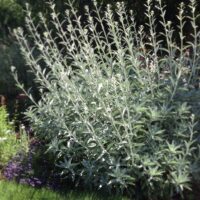
Salvia apiana
A striking native sage with large, silvery-white, aromatic leaves and tall flower stalks reaching above the foliage displaying lavender tinged white blossoms. The foliage of this shruby sage reaches 3 - 4 ft. tall with flowering stalks adding another 2 ft. or more above that. A useful plant for sunny, dry areas with good drainage. Combine with dark-leaved plants such as ceanothus and manzanitas to create a dramatic display. Used in smudge bundles as a natural incense. A bee and hummingbird favorite. Deer resistant.
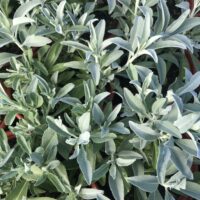
Salvia apiana ‘Compacta’
Having all the attributes of white sage, but growing about half the size, topping out at around 3 ft. tall. Gorgeous silver-gray foliage and stately flower stems of white, pollinator attracting blossoms. Heat and drought tolerant, this striking sage makes a wonderful specimen and contrasts beautifully with greener foliage. Plant in full sun with good drainage where it thrives with summer heat and drought. The powerfully fragrant foliage is dependably deer resistant.
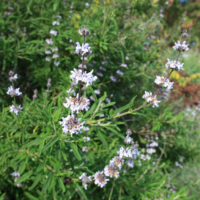
Salvia brandegeei
Native to Southern Spain and North West Africa, this herbaceous perennial spends much of the growing season as a low mound of gray-green wavy leaves. Early summer, tall flower stems rise 3 - 5 feet, with branched spikes of lovely light lavender-blue blossoms, that last about one month. Cut down old spikes or allow to go to seed for future propagation. Plant in sun with good drainage and moderate summer water. Pollinators of all sorts love sages.
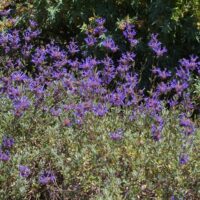
Salvia clevelandii ‘Winnifred Gilman’
Floriferous native shrubby sage prized for its intense violet-blue flowers and sweetly fragrant foliage. ‘Winnifred Gilman’ has a nice compact habit to around 3 ft. tall. Well suited for sunny areas with good drainage and occasional summer water. Deer and drought tolerant; attracts bees and hummingbirds.
Salvia clevelandii x ‘Allen Chickering’
Delightfully fragrant hybrid sage between S. clevelandii and S. leucophylla. Blue lavender flowers in whorls during summer. Grows 3 - 5 ft. tall and wide. Good for dry sunny areas. Attractive to hummingbirds, bees and butterflies. Deer resistant.
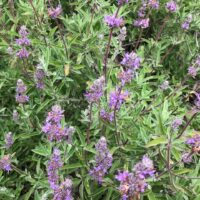
Salvia clevelandii x ‘Kaleidoscope’
This striking new introduction features rosy-purple flowers in whorls atop dense, grey foliage. ‘Kaleidoscope’ is a nice and compact sage, only reaching to 2 – 3 ft. high and slowly spreading to form a small drift about 4 ft. wide. It is proving to be quite a garden tolerant Salvia and resistant to disease, though we are still evaluating it. Enjoys full sun and occasional to no irrigation once established. Needs decent drainage. An excellent plant for bees and butterflies. This selection was discovered by Terry Loveton in her west Sonoma County garden. Deer resistant.
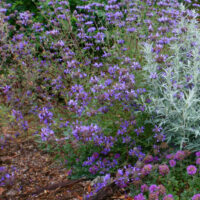
Salvia clevelandii x ‘Pozo Blue’
This hybrid of Salvia clevelandii and Salvia leucophylla was selected by Las Pilitas Nursery and is getting very good reviews. It appears to be a good substitute for Cleveland sage tolerating less than perfect soil conditions and colder low temperatures. Growing 3-5 ft tall and wide with gray-green fragrant foliage. Blue-lavender flowers in ball-like clusters top the shrub in late spring through early summer and are highly attractive to bees, butterflies and hummingbirds. Best in full sun with decent drainage. Drought tolerant once established. Deer resistant.
Salvia clevelandii x ‘Whirly Blue’
Large native sage growing 4.5 - 6 ft. tall and wide with aromatic gray-green foliage and rich violet flowers. Very large flower whorls and deeper color distinguish it from Salvia ‘Aromas’ and Salvia ‘Allen Chickering’. Good for dry sunny areas. Deer resistant. Attractive to hummingbirds, bees and butterflies.
Salvia greggii ‘Furman’s Red’
Selected in the 1970’s and a Plant Select winner in 2005, this dependable selection persists in the trade for its profuse displays of dark-red flowers and cold tolerance. Growing 3 to 4 feet tall and 2 to 3 ft. wide with light-green, aromatic foliage. The magenta blossoms can bloom spring through fall and attract hummingbirds, butterflies and other pollinators. Prefers full sun with decent drainage and is drought tolerant once established. Deer resistant.
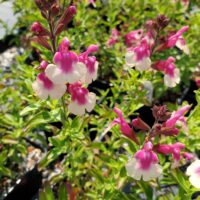
Salvia greggii ‘Mirage Rose Bicolor’
Top winner at the Welby Flower Trials in Colorado, this hybrid sage was bred for long blooming and heat tolerance. Compact and tidy, growing 12 -14 inches tall and a bit wider. The fragrant foliage is topped with a profusion of nectar-rich, two toned flowers of deep rose-pink and creamy-white, summer into fall. The appealing, bold display attracts hummingbirds, butterflies and bees. Plant in full sun to light shade with moderate to occasional water. Makes a good container subject. Deer resistant.
Salvia greggii ‘Radio Red’
This new cultivar of autumn sage offers larger, vivid red flowers and a more compact habit. Despite it's common name, autumn sage blooms over a long period, beginning in late spring, into summer and through autumn. Well branched shrubby habit with neat, fragrant foliage growing 2 - 3 foot tall and wide. Can be grown as a single specimen, lightly clipped as a low, informal hedge or in a container. Plant in full sun with moderate to occasional summer watering. The true, bright red flowers are highly attractive to hummingbirds as well as bees and butterflies. Deer resistant.
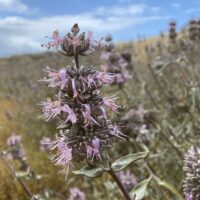
Salvia leucophylla
Purple sage is a highly-aromatic shrub, native to coastal scrub and chaparral from the Big Sur to San Diego. This delightful and dependable salvia boasts lavender-pink floral whorls arranged along spike-like stems. In summer, the spent flower stalks retain attractive showy bracts, good for seasonal interest and seeds for birds. The foliage has a mounding habit with soft-green-to-silvery leaves. This species generally reaches 3-5 ft tall and considerably wide, but some popular cultivars range from more upright to a 2-foot spreading groundcover. Easy to grow in full sun with occasional-to-infrequent water. A great choice for a sunny bank. Deer resistant.
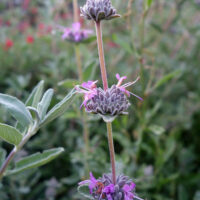
Salvia leucophylla ‘Amethyst Bluff’
Selected by Carol Bornstein for its vivid rosy-pink flowers, this willing grower starts out as a low mounding shrub, eventually getting very large, reaching 5 ft. or more tall by 8 ft. wide. The fragrant silvery foliage is a lovely foil for the large flower heads on 12 inch stalks. Perfect choice for sunny banks where it can sprawl freely and is excellent for erosion control. Drought tolerant, particularly along the coast, but appreciates an occasional summer watering. A bee and hummingbird favorite. Deer and drought resistant.
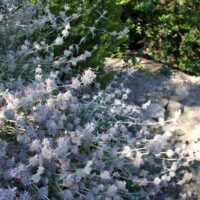
Salvia leucophylla ‘Figueroa’
A beautiful selection of the native gray sage. Forms a compact shrub 3 - 4 ft. tall and more than 6 ft. wide. The gorgeous whitish-gray foliage is topped with long stems of lavender-pink flowers in whorls. Good choice for a dry sunny bank where it is heat, drought and deer tolerant. This species attracts bees and hummingbirds.