How to Create a California Native Plant Butterfly Garden
By Kaitlin Magoon
As with many pollinators, one of the side benefits of supporting the butterflies in our gardens is that their favorite foods tend to be highly decorative and aesthetically pleasing. However, even if a particular landscaped space can’t be a flower garden, it’s still possible to make it an inviting stop for some of the most elegant of our native wildlife. In fact, planting for butterflies can look like everything from colorful beds of blossoms to a well-chosen hedge, fruiting shrub, or shade tree. Whether one’s goal is to create a butterfly haven or just encourage the occasional visit, this can be achieved with the right selection of native plants.
While the most valuable food sources for adult butterflies are mainly flowering perennials and shrubs, the list of their larval host plants may look a bit different. Which plants butterflies and moths can eat as caterpillars is determined by a long history of co-evolving with local native flora. Only very specific plant species are palatable and nourishing for them. Given the exceptional biodiversity of California, the plants with which they form these unique relationships are as diverse and interesting to look at as the landscape and the ecosystems in which they are found.
Butterflies, with their delicate, brightly-colored wings, will add to the appeal of any planting. Although butterflies get the most attention, moths can be just as beautiful (even if their habits, such as night-time pollination, make them less often seen). Many moths are also an important part of wildlife gardens as their larvae are used as food by birds and other creatures.
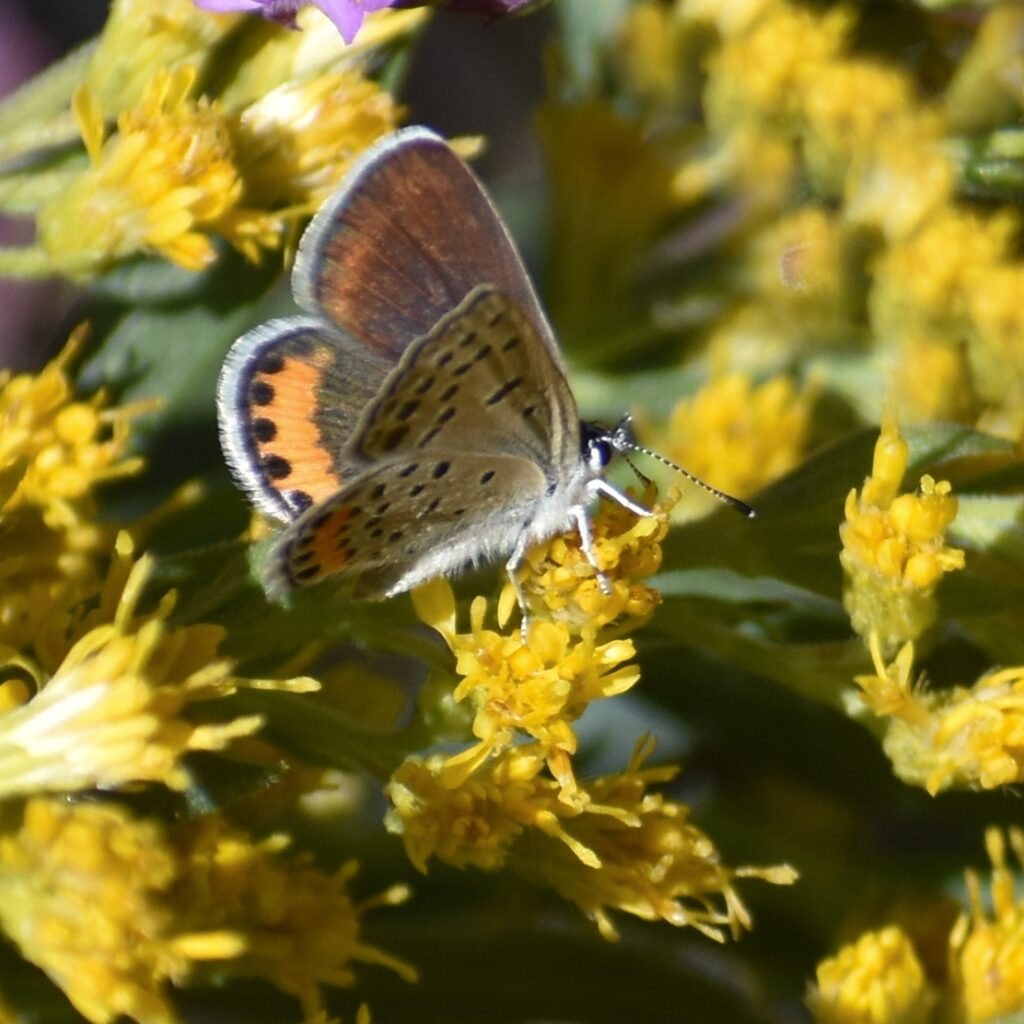
It is generally agreed that the best butterfly gardens are the ones that support a variety of Lepidoptera species as both adult butterflies and caterpillars. This means not only planting their preferred species for nectar, but also the native plants that they feed on in their larval stage. Fortunately, there is a wide range of California native perennials, shrubs, trees, vines, grasses and annuals that we can plant to meet these needs.
Butterfly Nectar Plants
The key to attracting visiting butterflies is choosing the right flowering plants. In order to sustain themselves in their search for compatible host plants, butterflies and moths require nectar, and more often than not, the best source for a butterfly species is not their larval host. Instead, adult butterflies will seek out other flowering plants with nectar that is more plentiful and easier to access. Adding these popular nectar plants to a garden creates a way station for butterflies as they migrate, and fuels them as they seek out mates or hosts.
The following are California native plant species that are not only important larval hosts themselves, but also have broad pollinator appeal, and are clearly the favored nectar plants of multiple butterfly species:
- Achillea millefolium (common yarrow)
- Aesculus californica (California buckeye)
- Arctostaphylos spp., (manzanitas) such as Arctostaphylos manzanita (manzanita)
- Asclepias spp., (milkweeds) e.g., A. fascicularis (narrow-leaf milkweed) and A. speciosa
- Baccharis spp. e.g., B. pilularis (coyote brush); B. salicifolia (mulefat)
- Ceanothus spp. (California lilac)
- Cirsium occidentale (cobweb thistle)
- Corethrogyne filaginifolia (sand aster)
- Dichelostemma congestum (ookow) and Dipterostemon capitatus (blue dicks)
- Ericameria spp such as Ericameria nauseosa (rubber rabbitbrush)
- Erigeron glaucus (seaside daisy)
- Eriophyllum spp. (woolly sunflower) such as E. lanatum and E. staechadifolium.
- Eriodictyon californica (yerba santa)
- Eriogonum spp. such as E. nudum (naked buckwheat) and E. latifolium (coastal buckwheat)
- Euthamia occidentalis (western flat-topped goldenrod)
- Grindelia spp. (gum plants) such as Grindelia stricta and Grindelia camporum
- Monardella spp. (coyote mint) such as M. villosa, M. purpurea ,and M. viridis
- Phyla nodiflora (turkey tangle/common lippia)
- Salvia spp. (sages)
- Solidago velutina ssp californica (goldenrod)
- Symphyotrichum chilense (Pacific aster)
- Verbena spp. (vervain)/Glandularia (Verbena) lilacina ‘De la Mina’
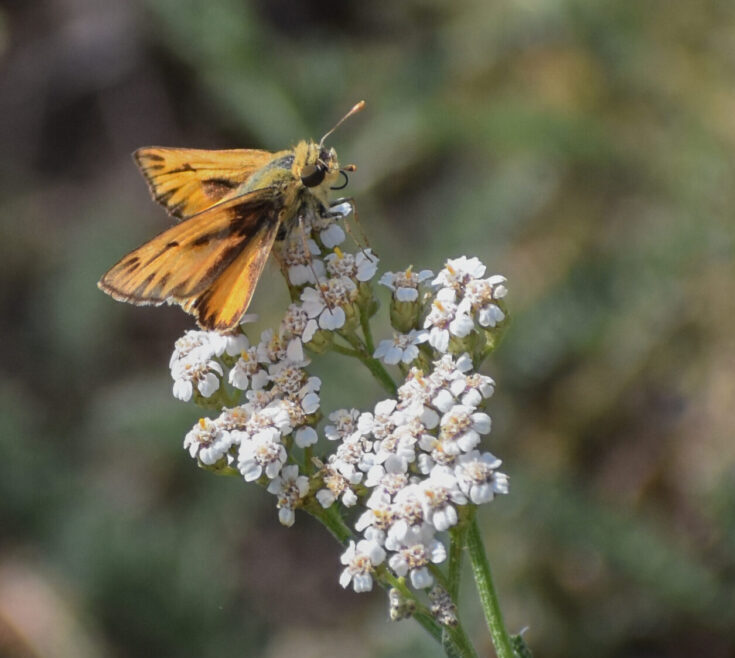
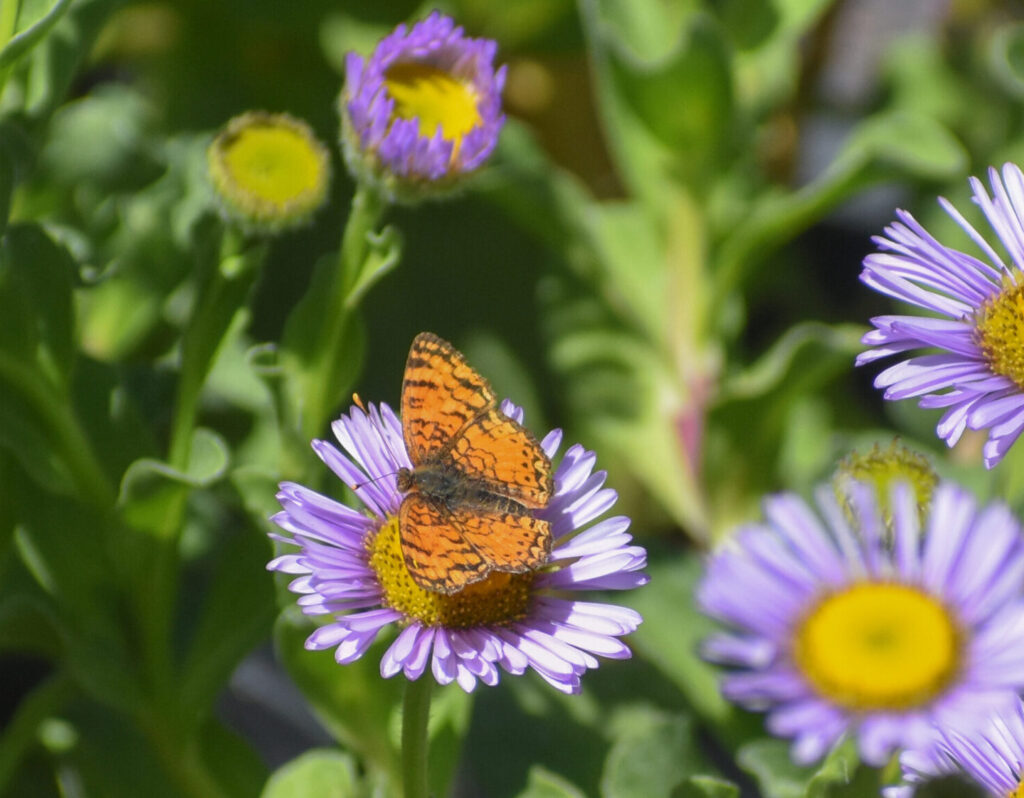

Painted lady butterfly on Ceanothus ‘Concha’
Species in the daisy family (Asteraceae) are especially prized by butterflies and moths for their clusters of tiny flowers and flat, disk-shaped flower heads that provide a convenient landing pad. This rather enormous plant family includes North-Bay-native perennials such as common yarrow, Pacific aster, goldenrod, seaside daisy, gum plants, and woolly sunflowers —but also some shrubs that defy expectations of what a butterfly nectar plant looks like. While showy flower clusters and bright colors certainly catch the attention of our winged visitors, the butterflies themselves clearly know that understated bloomers can be equally nectar-rich sources. Coyote bush (Baccharis pilularis) and mule fat (Baccharis salicifolia) are excellent examples. These shrubs may be less ornamental but have many other uses. Coyote brush makes for an excellent hedge, as well as seeds and cover for birds; mule fat works for wet spots, for erosion control, or as a wind break.
A number of native annuals are also worth mentioning as attractive food sources for butterflies. These plants tend to only live for one glorious season, but if left to reseed, will return each year:
- Amsinckia spp. e.g. menziesii (common fiddleneck)
- Claytonia perfoliata (miner’s lettuce or rooreh)
- Hemizonia congesta (hayfield tarweed)
- Layia platyglossa (tidy tips)
- Nemophila menziesii (baby blue eyes)
Planting annuals can also be a way of adding more early-blooming plants to a garden. Common fiddlenecks, miner’s lettuce, and baby blue eyes are among the many annual wildflowers that emerge and blossom from winter through spring.
Selecting plants with different bloom times can make one’s garden an inviting spot all year long. You may want to ensure that you include early bloomers, late bloomers, and long bloomers among the butterfly nectar plants that you choose for your garden.
Specialist Hosts
Another important component in a butterfly habitat garden is the larval host plant. With the gradual disappearance of wildlands, many butterfly and moth species struggle to find the plants that support their caterpillars. Successful reproduction is most challenging for those with just a few host options. For just this reason, gardeners have rallied on behalf of monarch butterflies (Danaus plexippus) by planting the various milkweed species (Asclepias) that monarchs eat in their larval stage. While the plight of monarch butterflies is particularly urgent, there are other butterfly species that are equally dependent on the continued availability of one particular habitat plant. The California dogface butterfly and the pipevine swallowtail (Battus philenor) are both similarly limited in their choice.
All three of these species have fairly large native ranges in California. Adding the host plants of these species to your garden can help ensure it stays that way. However, these butterflies aren’t found everywhere in the state. You can find out if your garden is where certain a butterfly and moth species lives and breeds from the California Native Plant Society’s Calscape site or by visiting iNaturalist.
Amorpha californica (California false indigo)
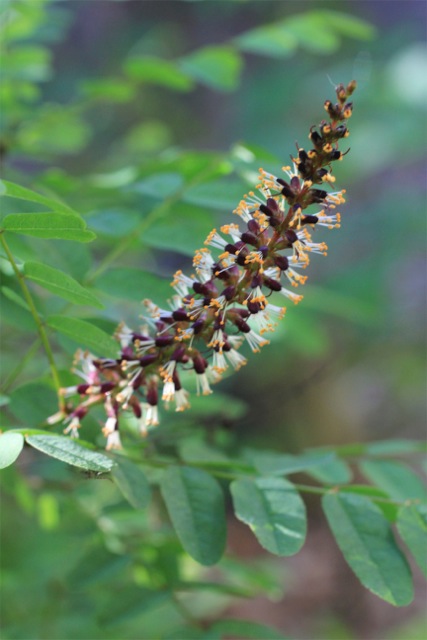
California false indigo (Amorpha californica) is one of two plant species — both in the genus Amorpha —that sustain the caterpillars of the California dogface butterfly. It is also host to nearly a dozen others, but only the dogface relies on it entirely. Native to shady areas of woodland and chaparral, it reaches about 6 feet tall and wide. Our local variety (var. napensis) grows exclusively in the Bay Area. The flowers are long, purple-ish spikes that provide nectar for pollinators. In the garden, it tolerates occasional irrigation but is great option for low-water, part-shade areas.
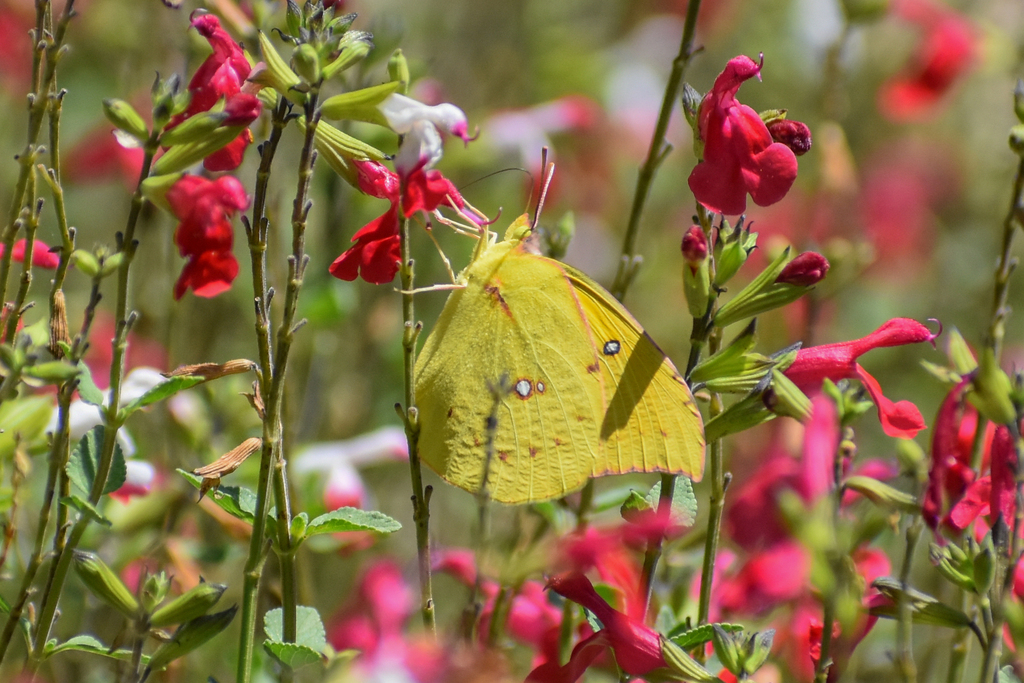
California Dogface (Zerene eurydice)
California’s official state insect can be distinguished from the more common orange sulphur, by its pointed wing tips. It is known to nectar on Salvia species (native and non-native), as well as Cirsium occidentale (cobweb thistle), and Aesculus californica (California buckeye).
Aristolochia californica (Dutchman’s pipevine)
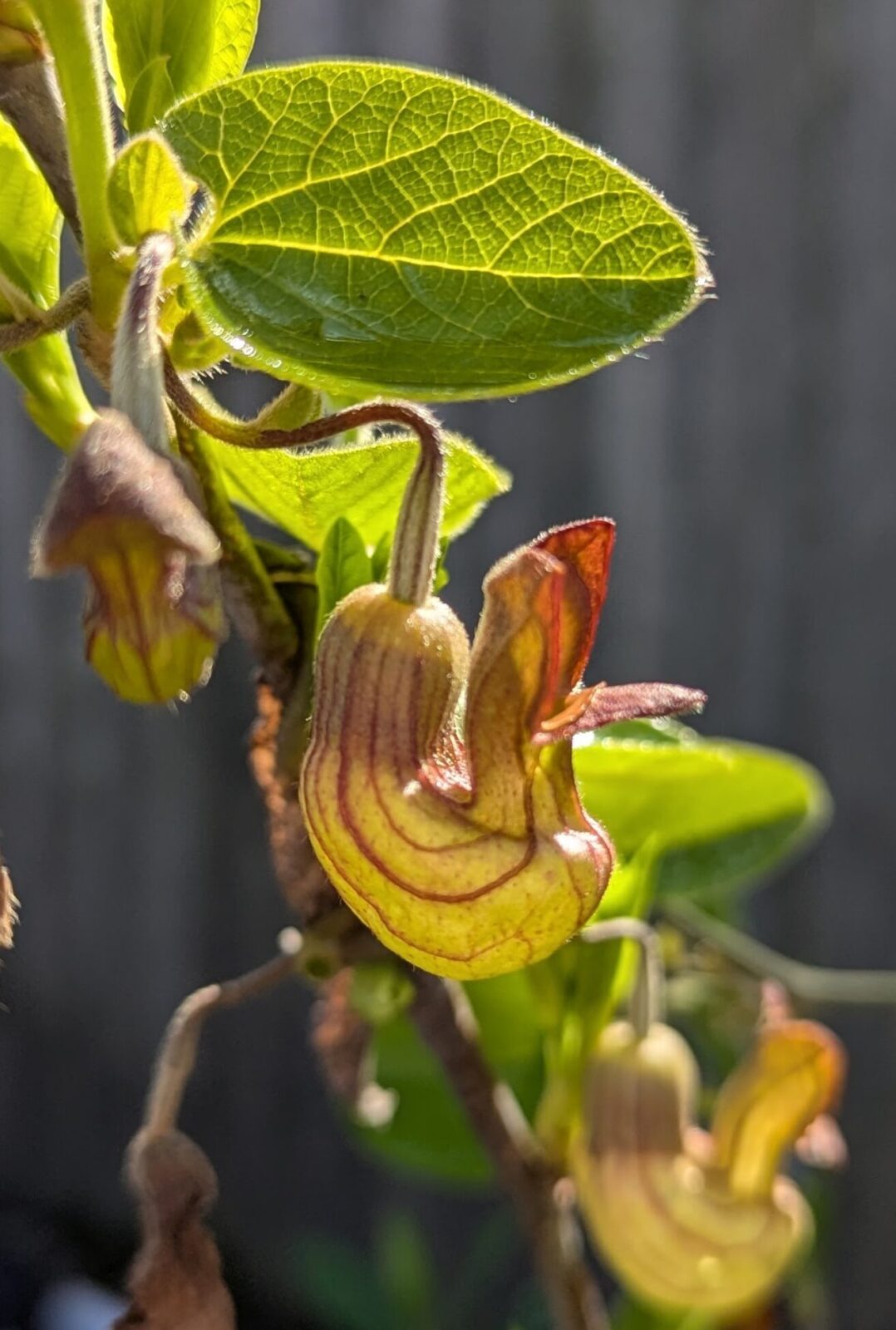
This sprawling vine is named for its uniquely-shaped flowers, but what interests the pipevine swallowtail (Battus philenor) are the heart-shaped leaves that feed their young. Like false indigo, Dutchman’s pipevine is most often found in shady woodlands. It goes seasonally dormant, losing its leaves in the fall (or earlier if it gets insufficient moisture), and it requires a few years of establishment before it begins to really spread. However, once it takes off it will easily cover a fence or wind its way through a trellis. If you live in pipevine swallowtail territory, they will find it, and you will be treated to the sight of their rather distinguished-looking, black-and-red caterpillars.
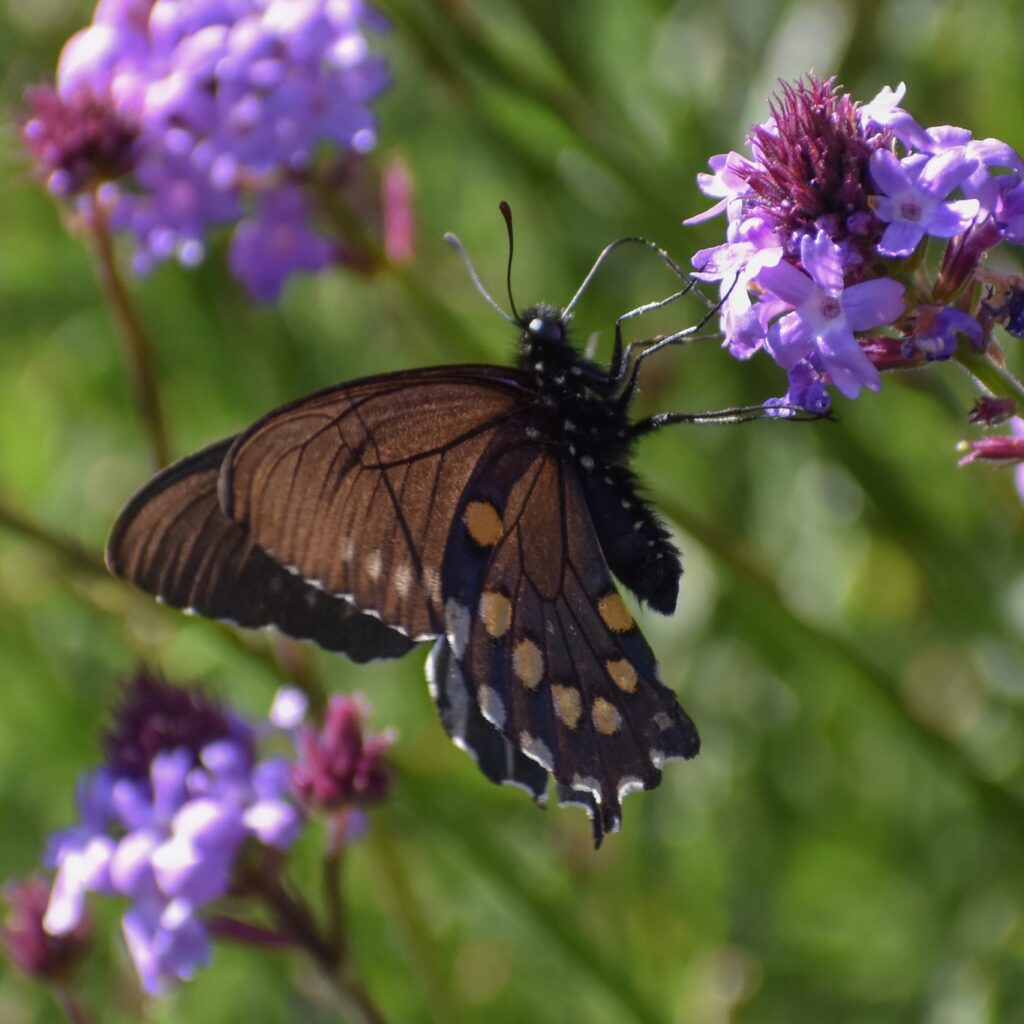
Pipevine Swallowtail (Battus philenor)
Pipevine swallowtails are known to prefer nectar from plants in the mustard (Brassicaceae) and verbena (Verbenaceae) families, as well as: blue dicks (Dipterostemmon capitatus), ookow (Dichelostemma congestum), and California buckeye (Aesculus californica)
Asclepias fascicularis (narrow-leaf milkweed)
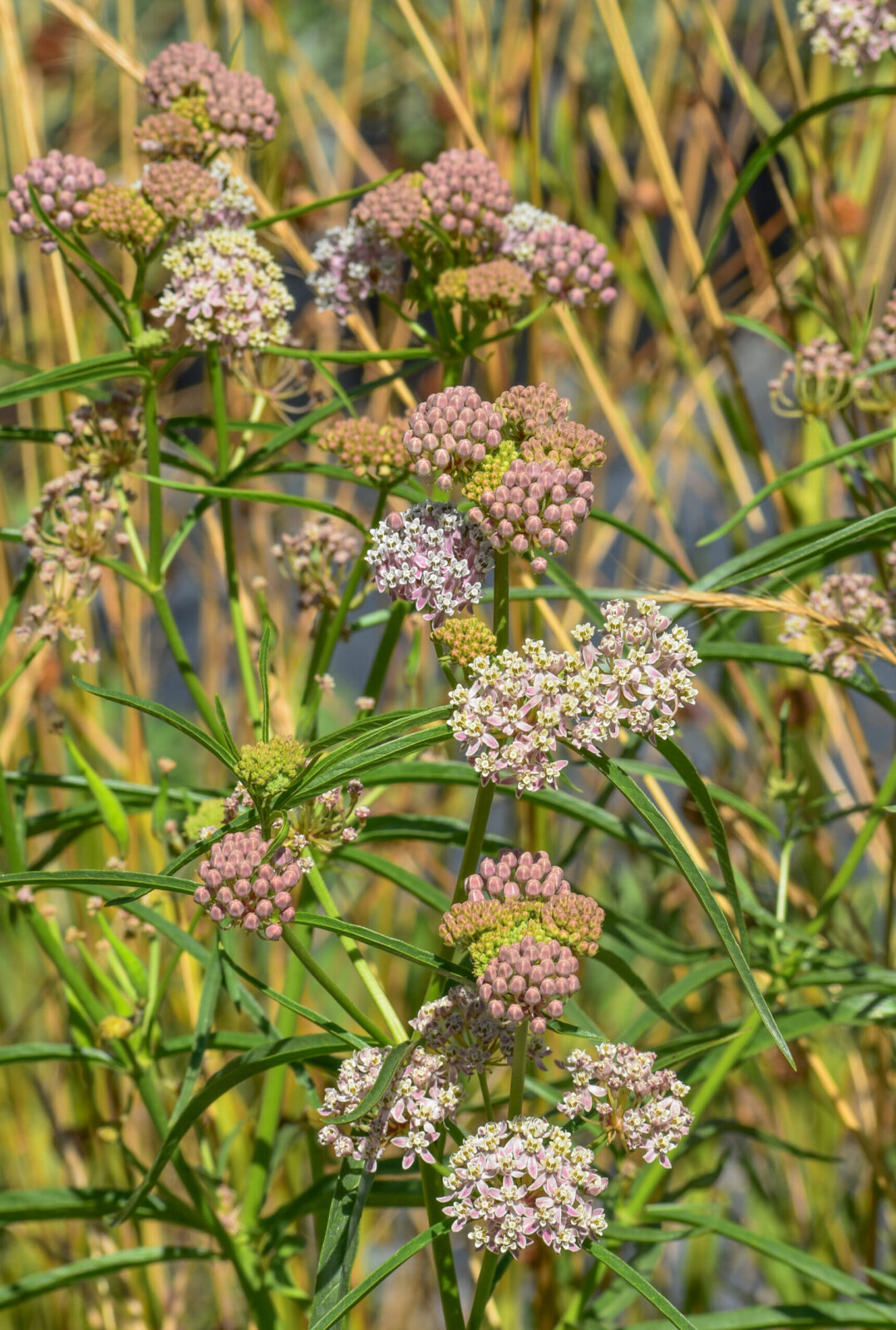
This delightful plant grows throughout California in seasonally-moist meadows and near ponds. It is a good choice to support monarch butterflies (Danaus plexippus) in various regions of California. Tall, thin stalks with the namesake narrow leaves balance large, lovely umbels that start out pale mauve and open with bright cream-and-pink flowers. Flowers and foliage will reach 1 – 3 feet in height each year before going dormant in late summer or fall. Roots spread by underground rhizomes to form small colonies. It can be planted in full sun to part shade and is drought tolerant.

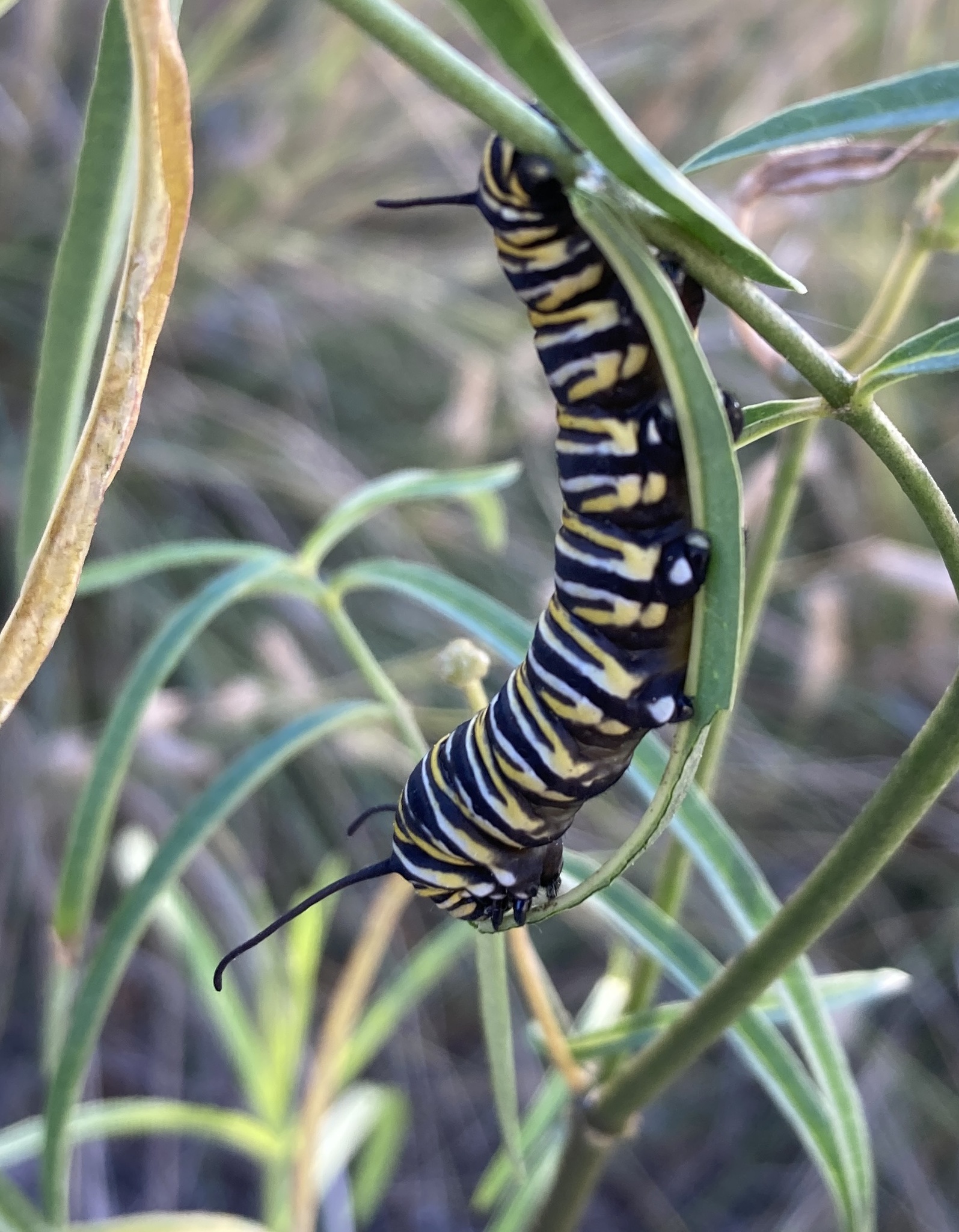
Monarch (Danaus plexippus)
Monarch butterflies will nectar on milkweed species, especially narrow-leaf milkweed, as well as a variety of other native flowering plants, most notably: common yarrow, manzanitas , Pacific aster, and salvias. You can also find a list of monarch nectar plants compiled by the Xerces Society.
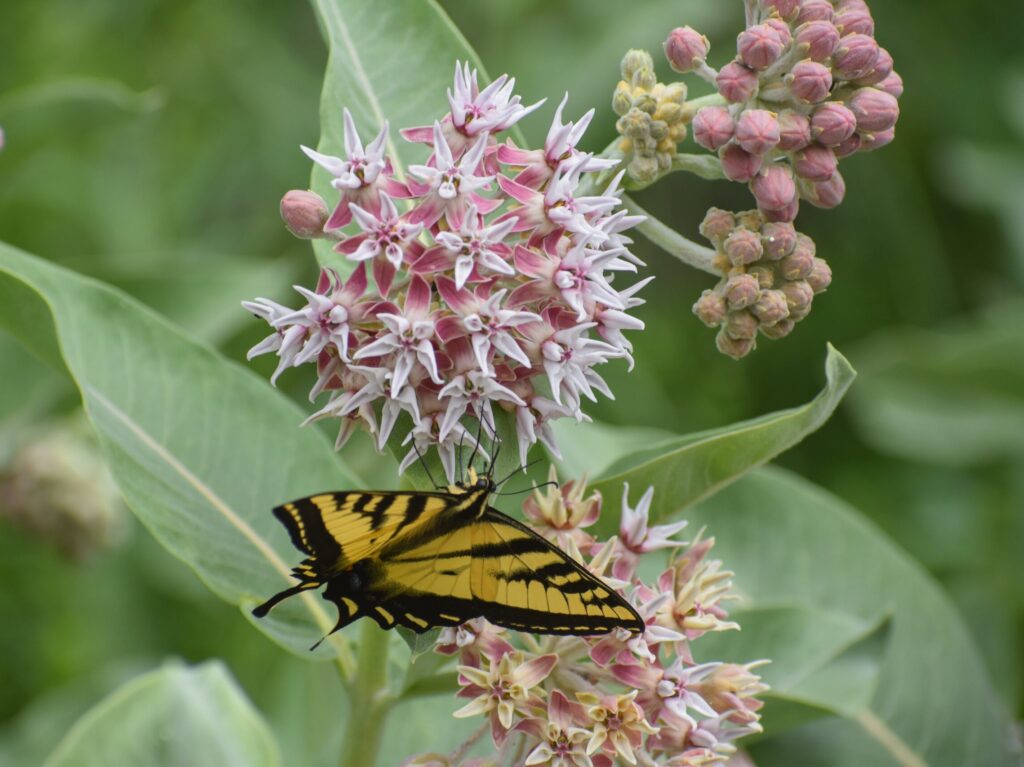
While adult monarch butterflies may be attracted to both native and non-native milkweeds (Asclepias), their caterpillars depend on regionally specific species. Narrowleaf milkweed has the most extensive native distribution in California of the milkweed species, but in the North Bay, there are three additional species that are appropriate for the monarchs that breed in our area: Asclepias speciosa (showy milkweed); Asclepias eriocarpa (Kotolo milkweed)and Asclepias cordifolia (heart-leaf milkweed). Milkweeds tend to be drought tolerant, but each of these has their own specific water and exposure needs that should be noted before planting them.
A Butterfly Host for Every-birdy (and Bee)
Especially if butterflies and moths don’t favor their host for nectar, they can easily share these plants with other wildlife. Some native plants are not only the larval food source for potentially hundreds of different butterfly and moth species, but also highly prized by bees, birds, and other pollinators for their nectar, pollen, seeds or fruit. These are some noteworthy options for maximizing habitat:
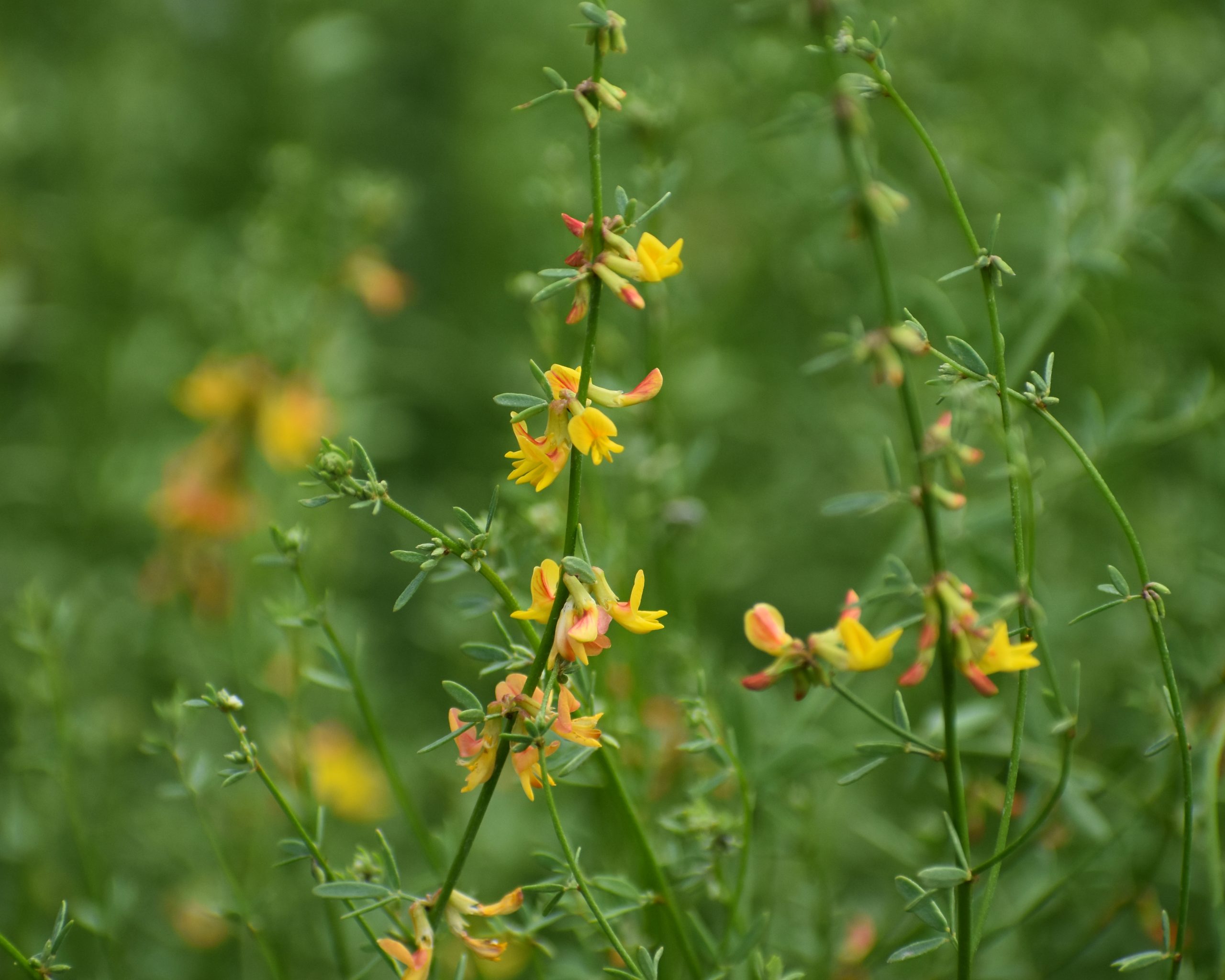
Acmispon glaber (deer weed)
Commonly found in woodlands, deerweed is a 3-foot subshrub that often goes unnoticed until summer when its slender stems are covered with numerous tiny yellow blossoms. A main host for the orange sulphur butterfly (Colias euytheme), it is also used by acmon blues (Icaricia acmon), funereal duskywings (Erynnis funeralis), and dozens of other Lepidoptera species, especially those with a special relationship with plants in the ‘pea’ family (Fabaceae). It can grow in full sun to light shade with minimal water, but needs good drainage. Bees and other small pollinators adore it, making it an all around excellent habitat plant.
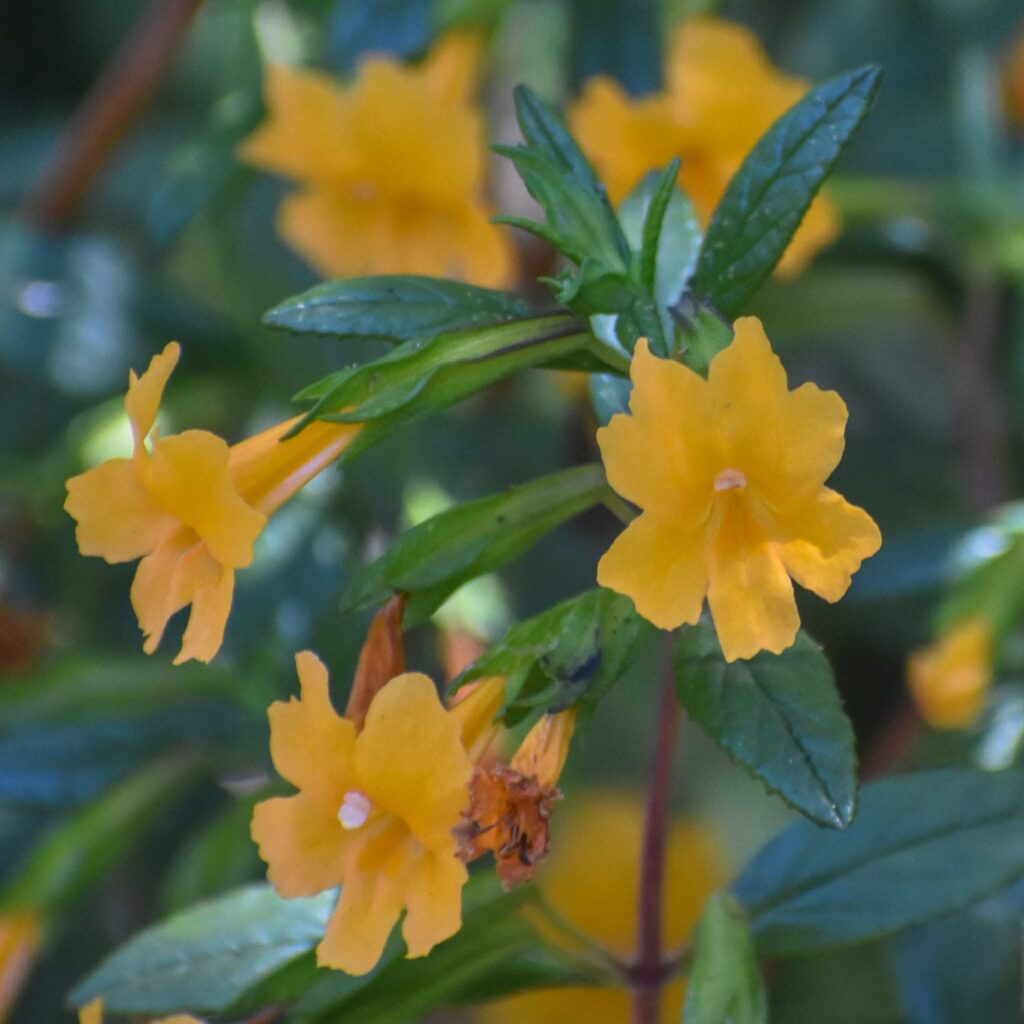
Diplacus aurantiacus (orange bush sticky monkeyflower)
Diplacus aurantiacus could be mistaken for an ornamental, and many decorative hybrids have been derived from it. The straight species is one of two preferred host plants for the variable checkerspot butterfly. Bees are attracted to it, but its main appeal is for hummingbirds, who find the plant’s trumpet-shaped blooms tailor-made for them. The wild form of our local species comes in a soft orange and sometimes red or yellow. It needs occasional water in warm areas, but is relatively unfussy in more coastal locations.
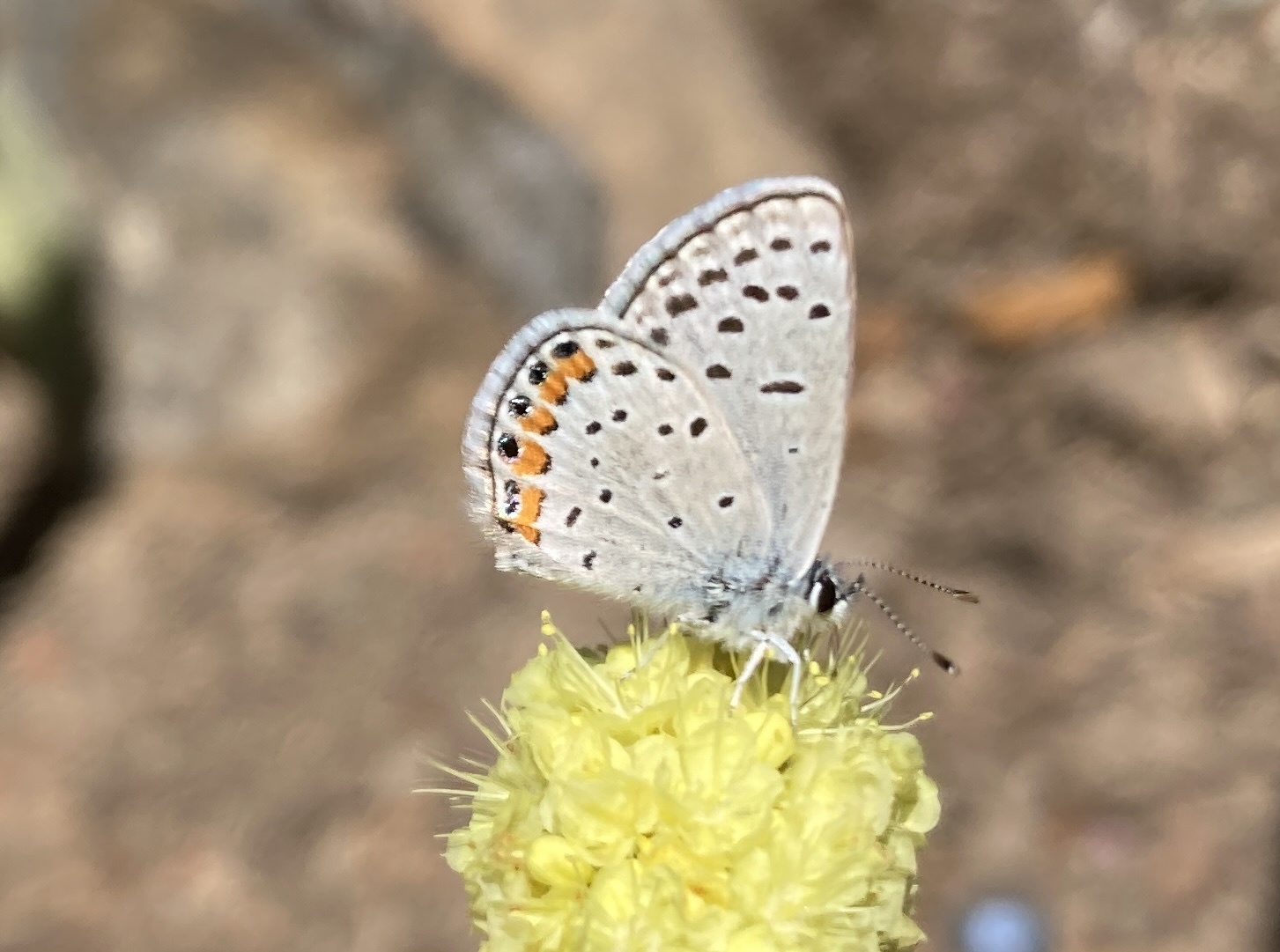
Eriogonum spp (wild buckwheat)
Some butterfly and moth species feed exclusively on buckwheats (Eriogonum), which is thankfully an enormous genus, especially in California. For those in the San Francisco Bay Area, frequently-found examples include naked buckwheat (Eriogonum nudum) and coastal buckwheat (eriogonum latifolium). Plants in the genus have dense flower clusters in cream, yellow or pink that provide nectar for both butterflies and bees. Birds will eat their seeds. Wild buckwheats tend to have very low water needs and are a great option for full-sun gardens.
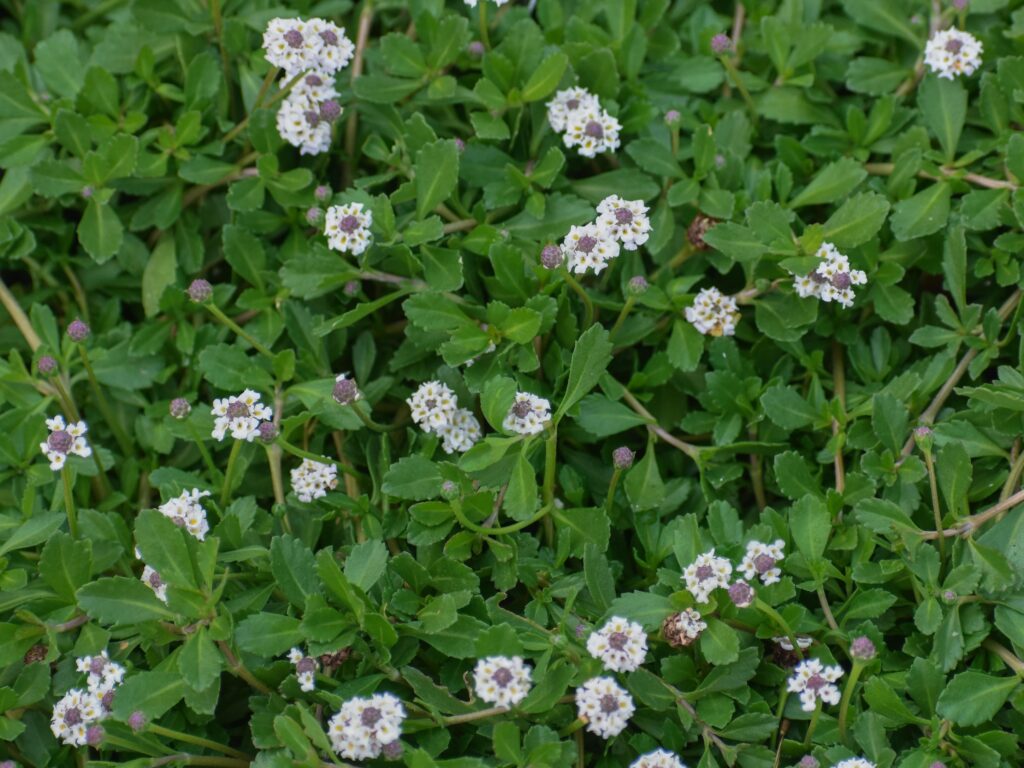
Phyla nodiflora (turkey tangle frog fruit, or common lippia)
Although not an exclusive host like milkweed, Phyla nodiflora is still one of just seven used by the Gray Buckeye butterfly (Junonia grisea), and the only one commonly available to gardeners. It’s in the verbena family which includes numerous great pollinator-attracting plants, and these are no exception. It is a low and densely-spreading groundcover, and when customers seek it out at the nursery, it is quite often as an alternative to a lawn. Its small pink or white flowers are easily discovered and enjoyed by wildlife.
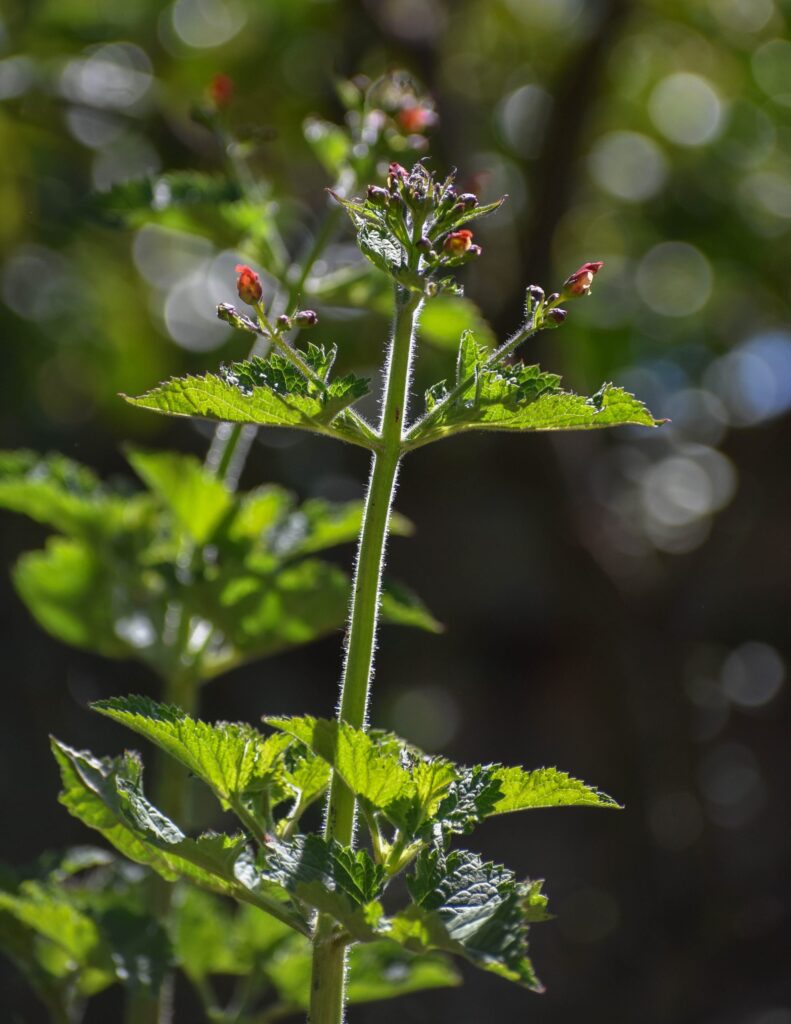
Scrophularia californica (California bee plant)
The diminutive blossoms on this spreading perennial may be subtle, but hummingbirds love them, as do a number of solitary bees tiny enough to have nearly exclusive access. As a larval host, it rivals sticky monkeyflower for the attention of the variable checkerspot butterfly, and it is a key one for a number of other butterflies and moths. It prefers a bit of moisture and may need part shade in warmer areas.
Trees and Shrubs are the ‘Hosts with the Most‘
Planting perennials provides wildlife with mature plants relatively quickly. However, investing the time and space required to grow a tree or large shrub can be exponentially rewarded by the habitat value that they bring. When a California Sister butterfly flits through a yard, chances are it isn’t looking for some bright floral display, but rather the leathery, prickly leaves of a coast live oak (Quercus agrifolia). In this, they are joined by an impressive 122 other butterfly and moth species. Among oaks, this outsized habitat impact is the rule rather than the exception. Valley oaks (Quercus lobata) are host to even more species. In fact, the top larval hosts in terms of Lepidoptera species supported are exclusively trees and woody shrubs from a couple dozen plant genera, such as willows, oaks, cottonwoods, alders, cherries, ceanothus, maples, pines, and brambles.
These are just examples of the hundreds of trees and shrubs native to the San Francisco Bay Area that are necessary to the survival of butterflies and moths, and which also often serve a role in a yard that only they can, such as providing shade, hedging, edible fruit, or bank stabilization:
- Acer negundo (box elder) – Likely host to 63 butterfly and moth species / 24 confirmed
- Alnus rhombifolia (white alder) – 134 likely / 2 confirmed, including, Western tiger swallowtail
- Arctostaphylos manzanita (common manzanita) – 54 / 2
- Arctostaphylos uva ursi (bearberry)- 47 / 6 including The Brown Elfin
- Ceanothus cuneatus (buckbrush) – 86 / 9 including The Brown Elfin; California Tortoiseshell; Hedgerow Hairstreak
- Cercocarpus betuloides (mountain mahogany)- 21 / 10
- Cornus sericea (red twig dogwood) – 29 / 13
- Frangula californica (coffeeberry) – 23 /1 0 including Gray Hairstreak; Pale Swallowtail; Ceanothus Silk Moth
- Pinus ponderosa (ponderosa pine) – 83 / 23
- Populus fremontii (Fremont’s cottonwood) – 134 / 5
- Prunus virginiana var. demissa (chokecherry) –122 / 41
- Quercus agrifolia (coast live oak) –122 /41 including Mournful Duskywing; California Sister
- Quercus lobata (valley oak) – 151 / 17 including Mournful Duskywing
- Rosa california (California wild rose) – 70 / 2 including Gray Hairstreak
- Rubus parviflorus (thimbleberry) – 70 /2
- Salix spp. such as Salix lasiolepis (arroyo willow) – 211/13
- Vaccinium ovatum (evergreen huckleberry) – 50/4
Additional Resources:
The options for a wonderful butterfly habitat garden in California are so extensive that you can likely find a plant that has a dual purpose with any landscaping need. If, however, you just want to make sure that the butterfly you see the most often is well cared for, you may want to check out the California Native Plant Society’s Calscape, which allows you to search for nectar plants and larval hosts by butterfly and moth species. It provided the information for this article on the number of confirmed and likely larval hosts for each plant species.
Note: Additional data comes from an iNaturalist citizen science project called Backyard Pollinators of the Bay Area, that so far has collected thousands of observations.
Unless otherwise attributed, all photos are copyright California Flora Nursery or its staff.
More Gardening Guides